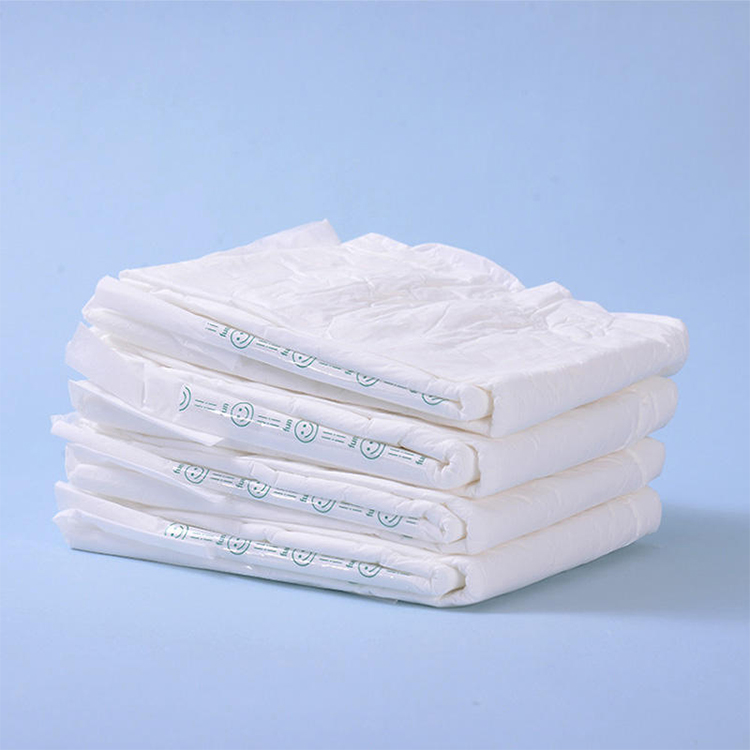
How Seasonality Affects Adult Diaper Breathability and Skin Comfort Demand
Seasonality affects adult diaper demand by changing the microclimate between the product and the skin. High temperatures and humidity increase concern about trapped heat, perspiration, friction, and prolonged dampness, while colder conditions shift attention toward softness, overnight capacity, clothing compatibility, and protection during longer wear periods.
Summer changes everything.
When temperature, relative humidity, clothing, user mobility, absorbent-core saturation, and caregiver change intervals all move in the wrong direction at once, an adult diaper that performed acceptably in March can suddenly generate comfort complaints in July.
Why would the same specification perform identically in two completely different climates?
My blunt view is that many brands misunderstand seasonal adult diaper demand. They assume summer means “sell more thin diapers” and winter means “sell more absorbent diapers.” That is too crude to guide purchasing, product development, or inventory planning.
The more accurate conclusion is this: seasonality often changes the product mix and the reasons people reject a product before it changes total unit consumption.
Seasonality Changes the Product Mix More Than the Basic Need
Urinary incontinence does not disappear when temperatures fall. Nor does it suddenly begin when a heatwave arrives.
The underlying demand is persistent. The US National Institute of Diabetes and Digestive and Kidney Diseases reported that claims-based urinary incontinence prevalence among people aged 65 and older remained approximately 6% to 8% annually between 2012 and 2021. The report also warned that claims data probably understate the true prevalence because patients and healthcare providers may not report the condition consistently.
That creates a large baseline market throughout the year. What changes seasonally is the buyer’s hierarchy of needs.
A hot-weather consumer may move from a thick tab-style brief toward thinner breathable incontinence underwear for daytime use. A nursing home may continue purchasing high-absorbency briefs but request more breathable side panels. A home-care user may keep the same overnight product while looking for a lighter daytime SKU.
The demand is still there. The specification has moved.
Seasonal condition
Likely user concern
Product feature receiving more attention
Procurement implication
Hot and humid summer
Heat, perspiration, dampness, friction
Breathable side panels, low rewet, soft topsheet, lower bulk
Increase lighter daytime options and verify breathability data
Dry summer heat
Heat accumulation and skin dryness
Vapor transfer, soft nonwoven, reduced rubbing
Avoid rough “paper-like” topsheets despite thin construction
Separate climate demand from contract purchasing schedules
I would not publish a claim such as “summer demand increases by 20%” unless the brand had monthly sell-through data to prove it. Public research supports the skin-comfort mechanism, but it does not establish one universal seasonal sales uplift for every country, channel, and adult diaper format.
That distinction matters.
What Heat and Humidity Actually Do Under an Adult Diaper
The relevant environment is not the outdoor temperature by itself. It is the temperature and moisture trapped between the wearer’s skin, topsheet, absorbent core, side panels, underwear, clothing, bedding, and wheelchair or mattress surface.
The US Environmental Protection Agency notes that high humidity makes it harder for the body to cool itself, while older adults are among the populations more vulnerable to extreme heat. Its extreme heat guidance gives buyers a wider context for why heat-management concerns become more visible in older-user categories.
Inside an adult diaper, four factors interact:
Heat accumulation
Plastic films and tightly fitted structures can restrict airflow around covered skin. Add warm clothing, bedding, limited mobility, or prolonged sitting, and the local temperature may feel far higher than the room temperature suggests.
Moisture accumulation
Moisture does not come only from urine. Perspiration, cleansing residue, skin creams, and humid air also contribute to the covered microclimate.
Once the absorbent core becomes heavily loaded, the challenge becomes harder. The wearer may experience increased surface dampness, swelling of the outer skin layer, and more friction during movement or repositioning.
Friction and pressure
Warm, overhydrated skin is less tolerant of rubbing. Poor fit can create repeated friction at the groin, thighs, waist, and buttocks.
This is why simply making a brief thinner does not guarantee better adult diaper skin comfort. A thinner product with unstable leg elastics or poor fluid distribution may create new leakage and rubbing problems.
Urine, feces, and skin pH
Incontinence-associated dermatitis, commonly shortened to IAD, is linked to prolonged exposure to urine or liquid stool, moisture, friction, and changes in the skin environment. It is not merely a “heat rash,” although heat and occlusion can make an already difficult situation worse.
A controlled adult-brief study published in BMC Geriatrics compared a skin-adapted design with a conventional brief. The researchers reported a surface pH of approximately 4.6 in the modified design versus 7.1 in the conventional design after wetting. The breathable nonwoven side material exceeded 1,200 L/m²/s in air permeability, while the plastic film was effectively impermeable.
After four hours, the plastic-film sample produced a substantial increase in measured stratum-corneum moisture. The study also followed 12 patients with existing IAD; lesions resolved in eight after the institutional product switch, although the authors correctly described the clinical sample as small and called for larger studies.
Those numbers do not prove that every breathable adult diaper prevents dermatitis. They do show that side-panel construction, surface pH, occlusion, and moisture management are measurable engineering variables—not decorative marketing language.
“Cloth-Like” Does Not Automatically Mean Breathable
Here is one of the industry’s less comfortable truths: buyers routinely accept “cloth-like backsheet” as proof of breathability.
It proves almost nothing by itself.
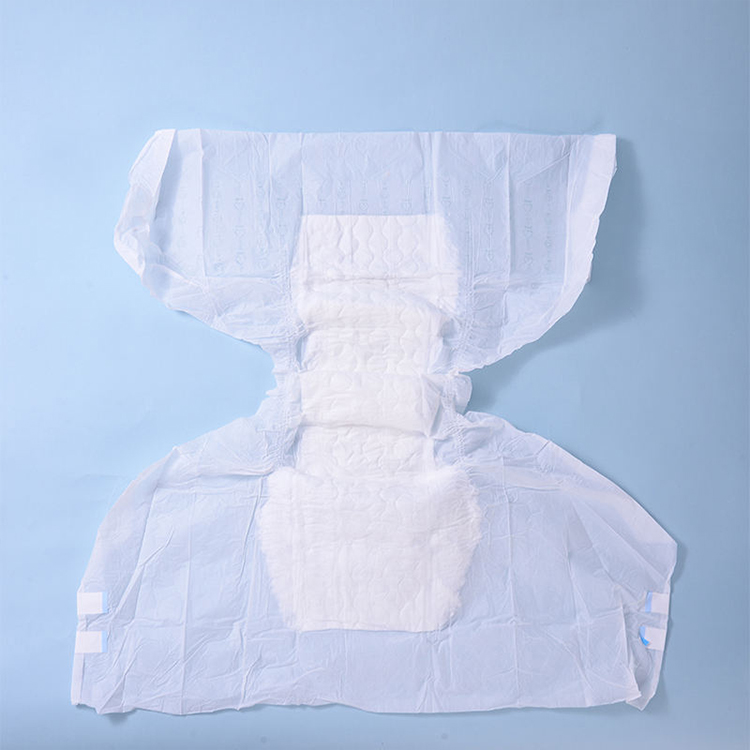
A soft nonwoven layer may be laminated over a polyethylene film. The outer surface feels textile-like, yet actual air movement can remain extremely limited. Even a microperforated film can offer a far lower airflow rate than an open, breathable nonwoven side panel.
So when I review a summer adult diaper specification, I separate tactile softness from functional breathability.
They are related. They are not identical.
A credible evaluation should ask for several measurements:
Test or specification
What it reveals
Why it matters in hot weather
Air permeability
Volume of air passing through a material
Helps compare side-panel ventilation
Water vapor transmission rate
Ability of vapor to move through the barrier
More relevant than touch alone for humidity management
Acquisition time
Speed at which liquid leaves the topsheet
Reduces the duration of immediate surface wetness
Rewet under pressure
Liquid returning toward the skin after loading
Important for sitting, sleeping, and wheelchair users
Retention capacity
Fluid remaining locked inside the core
Prevents absorbed liquid from migrating back
Surface pH after loading
Wet-condition environment at the topsheet
Helps assess compatibility with the skin’s acidic surface
Elastic pressure and fit
Compression around waist and legs
Excessive pressure can raise heat and friction complaints
Loaded-product thickness
Bulk after absorption, not just when dry
Better reflects real wear conditions
The absorbent core also matters. Most disposable products use superabsorbent polymer, often sodium polyacrylate, represented broadly by the repeating structure (C₃H₃NaO₂)n, combined with cellulose fluff.
SAP can lock away substantial fluid, but an impressive theoretical capacity does not automatically produce dry skin. Distribution, acquisition speed, core stability, rewet performance, and fit determine whether the polymer is used effectively.
That is why brands comparing the adult diaper product range should not rank products only by maximum milliliters. The highest laboratory capacity may not be the best summer specification for a mobile user wearing the product for four to six hours.
Hot-Weather Demand Varies by User and Channel
There is no single “best summer adult diaper.” The right design depends on who wears it, who changes it, where it is sold, and how long it remains in use.
Active retail consumers
Active users often value discretion, reduced bulk, quiet materials, underwear-like appearance, and ventilation. For them, pull-up formats may gain share during warmer months because lighter clothing makes thickness and product visibility more noticeable.
But thinner is not enough. The product still needs fast acquisition, controlled rewet, and dependable side leakage protection.
Nursing homes and hospitals
Institutional buyers cannot simply replace every tab-style brief with a pull-up when summer begins. Caregiver access, patient mobility, fecal incontinence, change procedures, and overnight use still favor adult diapers with adjustable tabs.
For these buyers, the better seasonal strategy may be to retain the open-style format while changing:
Side-panel permeability
Topsheet softness
Core distribution
Waist and leg elastic pressure
Daytime versus overnight absorbency
Change-frequency guidance
Home-care users
Home-care purchasing is often fragmented. Family members may buy one high-absorbency product for every situation because managing multiple SKUs feels complicated.
That can be a mistake.
A heavy overnight brief used throughout a humid day may generate unnecessary bulk and heat complaints. A two-SKU system—a lighter daytime product and a higher-capacity overnight product—can improve comfort without weakening nighttime protection.
Distributors and private-label brands
Distributors face a different problem: regional seasonality.
Summer demand in Germany does not occur at the same time as summer demand in Australia. Southeast Asian markets may prioritize year-round humidity performance, while northern European markets may experience sharper seasonal shifts between cold winters and warmer summers.
A global buyer therefore needs a market calendar, not one global “summer SKU.”
Brands developing regional assortments through an adult diaper OEM/ODM program should define climate assumptions during product development rather than adding “breathable” to the package after the product is finished.
How I Would Build a Seasonal Adult Diaper Specification
I would begin with complaint data, not supplier adjectives.
Review at least 12 months of:
Monthly unit sales by SKU and region
Repeat-order intervals
Return reasons
Leakage complaints
Heat, sweating, rash, rubbing, and odor complaints
Daytime versus overnight usage
Size-related complaints
Institutional change frequency
Weather conditions during complaint spikes
Then I would compare the current product against a seasonal development sample.
Summer adult diaper specification priorities
For hot weather incontinence products, I would place greater weight on:
Breathable side panels with test data
Low rewet under realistic pressure
Rapid acquisition after repeated loading
Soft, hydrophilic topsheet performance
Reduced dry and wet bulk
Stable leg cuffs despite a thinner core
Lower elastic pressure without fit loss
Clear daytime wear positioning
Winter adult diaper specification priorities
For winter or air-conditioned institutional settings, I would review:
Softness against dry or fragile skin
Overnight absorption and retention
Flexibility beneath layered clothing
Waist and leg comfort during longer wear
Odor control
Core stability after movement
Leakage protection while lying down
Packaging formats suited to institutional replenishment
The hard part is balancing these variables. Raising film permeability without controlling leakage is not progress. Reducing pulp and thickness without managing SAP distribution is not progress. Increasing absorbency until the product feels rigid is not progress either.
Product development is a trade-off exercise.
Real private-label adult diaper case studies are most useful when they show how a supplier handled these trade-offs through sampling, specification control, testing, and repeat-order management—not when they merely claim that customers were satisfied.
Skin Comfort Claims Need Evidence and Restraint
Adult diapers sold in the United States can fall under the FDA classification for a “protective garment for incontinence” under 21 CFR 876.5920. The FDA describes the product as absorbent padding with a fluid barrier intended to protect a patient’s garment from excreta. Buyers can review the FDA product classification record.
That classification does not give a brand permission to turn a basic comfort feature into an unsupported medical claim.
“Breathable” may describe a material property.
“Helps reduce heat and moisture buildup” may be supportable when backed by relevant testing.
“Prevents dermatitis” is a much stronger statement and demands much stronger evidence.
I would also resist treating adult diaper rash as a single-material problem. Skin condition, urine or fecal exposure, change frequency, cleansing methods, barrier products, nutrition, mobility, medication, infection, fit, and caregiver practice can all affect outcomes.
A better product can support better skin management. It cannot replace appropriate clinical care.
FAQs
How does seasonality affect adult diaper comfort?
Seasonality affects adult diaper comfort by changing the heat, humidity, perspiration, clothing layers, indoor heating, and wear duration surrounding the product, which alters the skin microclimate even when absorbency remains unchanged; summer usually raises demand for ventilation and lower bulk, while winter can raise demand for softness and overnight protection.
In hot and humid conditions, buyers tend to focus more heavily on adult diaper breathability, rewet control, topsheet softness, and fit. In winter, the same users may accept slightly more bulk in exchange for longer protection, although dry skin and friction remain important concerns.
What are breathable adult diapers?
Breathable adult diapers are absorbent incontinence products that allow air or water vapor to move through selected materials, especially side panels or cloth-like backsheets, while still using a fluid barrier, absorbent core, elastic cuffs, and fit system to contain urine and reduce leakage during normal wear.
The term should be supported by measurable material data. A cloth-like surface alone does not confirm meaningful air permeability or water vapor transmission.
Does hot weather make adult diaper rash worse?
Hot weather can increase skin discomfort because higher ambient temperature and humidity reduce evaporative cooling, while perspiration, urine, friction, and an occlusive brief can keep the covered area warm and damp; however, heat alone does not cause every rash, and product fit and change frequency still matter.
Persistent redness, broken skin, pain, infection signs, or recurring dermatitis should be assessed by a qualified healthcare professional rather than treated solely by switching product brands.
What is the best adult diaper specification for summer?
The best summer adult diaper specification combines measurable vapor or air transmission, low rewet, fast acquisition, a soft topsheet, stable leg-cuff sealing, and a fit that avoids excessive compression, because a product that feels airy but leaks or returns moisture to the skin is not a successful hot-weather design.
The appropriate absorbency still depends on the user. Mobile daytime users, bedridden patients, overnight users, and people with bowel incontinence require different product structures.
Should distributors forecast adult diaper demand by season?
Distributors should create separate seasonal forecasts when regional climate, channel behavior, institutional purchasing cycles, or consumer complaints cause the summer and winter SKU mix to diverge, but they should not assume that total annual demand rises without checking sell-through, reorder, return, and complaint data by month.
Forecasting should be performed by country, hemisphere, product format, absorbency level, size, and sales channel. A year-round tropical market should not use the same inventory assumptions as a market with distinct winter and summer conditions.
Turn Seasonal Demand Into a Better Product Brief
Do not ask a manufacturer for a “more breathable adult diaper” and expect a precise result.
Define the target climate, user type, wearing time, absorbency requirement, size range, rewet limit, acquisition target, side-panel material, backsheet structure, topsheet feel, elastic pressure, packaging format, and monthly demand forecast.
Then test the loaded product—not just the dry sample.
For a regional summer line, a lighter daytime brief, or a skin-comfort-focused private-label program, submit your performance requirements through the adult diaper OEM/ODM inquiry process and request comparable samples with measurable breathability, absorption, rewet, and fit data before approving mass production.