Hook-and-Loop Tabs vs Adhesive Tabs for Adult Briefs
Hook-and-loop tabs suit adult briefs that caregivers open and close repeatedly. Adhesive tabs suit products where the brief is fastened once, or only occasionally rechecked, and where cost and a simple construction matter more. Neither tab type is better in every case. Performance depends on the tab, the surface it lands on, the backsheet beneath it, and the care routine around it.
For procurement managers, private-label brands, and institutional buyers, this choice affects side-leak rates, change time, skin complaints, and reorder stability. A tab that holds in a lab can still fail at 2 a.m. after the third refasten. This guide explains how each system works, where each fails, what to test, and what to put in an RFQ so a supplier quotes the right closure.
How Do Adhesive Tabs and Hook-and-Loop Tabs Work?
Both closure types are a two-part system. A tab on the brief’s side wing engages a receiving surface, usually called the landing zone or frontal tape area, on the front of the chassis. The engineering history of diaper closures, as reviewed in International Fiber Journal, shows that both systems need a dedicated counterpart: hooks need a durable loop fabric, while adhesive tapes need a smooth, essentially fiber-free contact patch.
Adhesive tabs carry a pressure-sensitive adhesive that bonds to the landing zone, typically a film or printed frontal tape. They are simple and familiar. Their weakness is the adhesive’s dependence on a clean, dry, undamaged surface. Lifting the tab to check for soiling and pressing it down again can leave the adhesive with less holding power. A published patent for a paper diaper design, US 7766890, describes this problem for tapes that are repositioned on the front sheet, and says peeling is more likely on large adult products. Treat the patent as the applicant’s technical argument, not neutral test data.
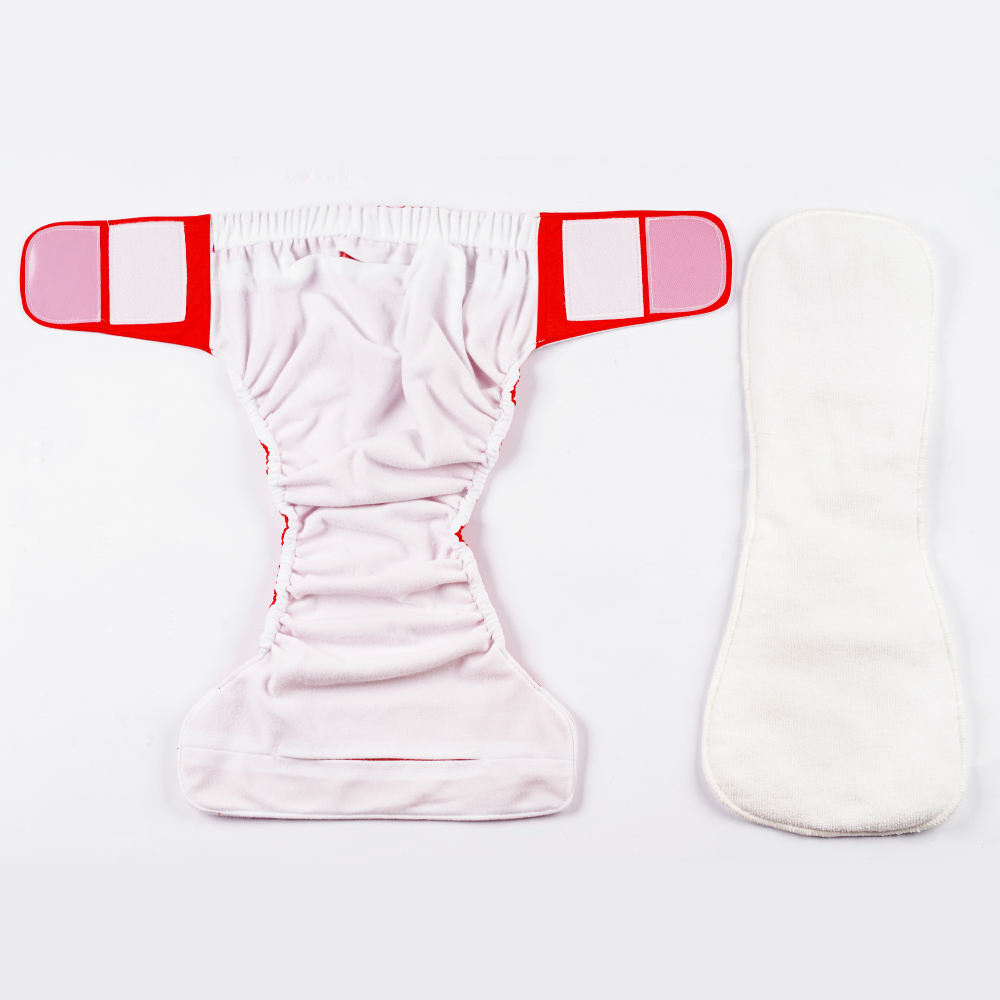
Hook-and-loop tabs use a patch of molded plastic hooks that grips a loop nonwoven. Because engagement is mechanical, repeated opening does not consume the grip the way it can with adhesive. The hook supplier VELCRO Brand’s diaper history states that hook tabs can be opened and closed multiple times and are not affected by powders or lotions. That is a vendor claim, but it matches the general mechanics. Hook tabs still depend on a loop landing zone, and that landing zone adds a component and a lamination or bonding step to the brief.
Hook-and-Loop vs Adhesive Tabs: Comparison for Buyers
The table below is a qualitative comparison. It does not contain measured values, because peel and shear performance vary by tab design, adhesive formulation, hook geometry, and landing-zone material. Treat each row as a question to put to the supplier.
Decision factor
Adhesive tab
Hook-and-loop tab
What to verify
Repeated refastening
Grip can decline after each lift, depending on adhesive and surface
Designed for repeated open-close cycles
Peel and shear after a defined number of cycles
Typical landing zone
Film or printed frontal tape
Loop nonwoven (knit loop or nonwoven loop)
Landing-zone material, size, and bonding method
Sensitivity to powder, lotion, moisture
Higher risk of reduced tack on contaminated surfaces
Less sensitive, per hook suppliers
Test with the barrier creams your end users actually use
Skin and hair contact
Adhesive can stick where it should not
Hook suppliers say hooks do not stick to skin, but hook patch edges still need a hand-feel check
Edge finish and tab placement on the sample
Fit adjustment
Limited if the tape fails when repositioned
Easier to reposition during the same change
Number of adjustments caregivers will realistically make
Component complexity
Fewer parts
Hook tab plus loop landing zone
Quoted bill of materials for both options
Fit with plastic backsheets
Common pairing
Possible with the right hook and landing zone
Whether the closure engages without tearing the backsheet
Fit with cloth-like backsheets
Needs a dedicated tape zone
Common pairing
Backsheet fiber strength under repeated peeling
Best-fit use case
Lower-handling products, price-sensitive programs
Frequent checks, bedridden care, heavy overnight use
The actual care routine, not the product category
Which Factors Should Decide the Tab Type?
How many times will the tab be opened?
This is the most useful single question. Ask the end user or facility how often a caregiver actually opens a brief during a wear period. A mobile adult who fastens a brief once and removes it later has a different need from a bedridden resident whose brief is checked at every round. The related guidance on why bedridden users often need tab-style briefs describes open-flat application and refastening after repositioning as core requirements in bed care. If refastening is routine, a closure that keeps its grip after repeated cycles earns its added complexity. If it is rare, an adhesive tab may be sufficient.
What is the receiving surface?
A tab can only perform as well as the surface it lands on. Hook performance depends on the loop material: the VELCRO history above notes that landing zones moved from straight film to knit loop and then to nonwoven loop over time. Adhesive performance depends on the film or tape zone’s cleanliness and surface energy. In both systems, the backsheet below the landing zone must resist tearing when a caregiver peels the tab. The International Fiber Journal article notes that baby diapers now use backsheet nonwovens with spunbond facings of 15 gsm or less, which leave little structure for a fastener to grip, while incontinence products generally use heavier-duty fabrics. Ask the supplier for the landing-zone material and the backsheet construction in writing instead of accepting “cloth-like” as a specification.
What contaminants and conditions will the tab meet?
Caregivers use barrier creams, powders, and wipes, and skin may be damp. Adhesive tabs are more exposed to contamination because the adhesive has to wet out onto the landing zone. Hook tabs are less exposed, but lint, hair, and dried residue may reduce engagement over time. Ask for testing under the conditions of your market, including warm and humid storage if you ship through tropical routes, since adhesive behavior can change with temperature and aging. Request aged-sample data rather than only fresh-sample data.
What size and load does the brief carry?
Large sizes and heavy overnight products place more stress on the closure: more body mass, more repositioning, and more fluid weight. The page on when tab-style briefs outperform pull-ups in heavy-care settings explains how tab placement and angle control the leg seal in XL and 2XL sizes, where a small leg gap can become a large leak. That makes tab geometry as important as tab type. A well-placed adhesive tab can outperform a badly placed hook tab.
What is the cost of getting it wrong?
A failed closure causes leakage, wasted product, and complaints, not just an open tab. A small unit-cost difference between closure types can be outweighed by a few percentage points of returns or rejected shipments. Compare total landed cost, including complaint rates and waste, rather than unit price alone.
Is Hook-and-Loop Always the Better Choice?
No. The common assumption that hook-and-loop is the premium, refastenable, therefore correct option deserves qualification.
Hook-and-loop adds a landing zone, which the International Fiber Journal article describes as requiring more manufacturing steps, logistics, resource use, and quality control. For a brief that caregivers fasten once and rarely reopen, that extra component may add cost without adding value. An adhesive tab on a well-designed film landing zone can meet that need.
Hook tabs can also fail if the loop zone is undersized, poorly bonded, or contaminated, or if the hook patch edges feel harsh against the user’s skin. One NAFC community forum thread on weak diaper tabs reports that tabs of both types come undone or tear. That is one user’s experience, not representative data. It does show that closure type does not guarantee closure performance.
The defensible rule: choose the tab type from the care workflow and the chassis design, then confirm with data. Heavy, frequent-check, bedridden use favors hook-and-loop. Low-handling or price-sensitive programs can justify adhesive tabs when the landing zone and adhesive are well specified.
Illustrative example (hypothetical, not a customer case): A care-home group is comparing two overnight briefs. Staff open each brief twice per night for skin checks. A sample with adhesive tabs passes the first fastening test but loosens after the second refasten. A hook-and-loop sample holds, but its landing zone is narrow, so the tab can only sit in one position. The buyer should reject neither on type alone: the first needs a better adhesive and zone, and the second needs a wider landing area.
How Should Buyers Test Tab Performance?
Peel and shear are the two forces that matter. Peel is the force that lifts the tab away from the landing zone, which is how a caregiver or a moving body typically loads a tab. Shear is the force that slides the tab sideways along the surface, which holds the brief closed while the wearer sits or turns.
For hook-and-loop, ASTM publishes recognized methods: ASTM D5170 for peel strength (“T” method) and ASTM D5169 for dynamic shear strength of hook and loop touch fasteners. These measure the fastener material under controlled conditions, so they do not replace finished-product tests on the real chassis. They also do not cover adhesive tapes, so for adhesive tabs agree the test method with the supplier in advance.
A practical validation plan should cover:
Peel and shear on the finished brief, not only on the tab material.
Results after repeated open-close cycles, with the cycle count you define from your care routine.
Aged samples that have been through storage and transport conditions.
Performance with typical contaminants such as barrier cream.
A wear test that includes turning, sitting, and refastening.
Visual checks for backsheet tearing and tab edge damage.
The guide on how material changes affect adult diaper performance treats tabs as part of the material system, not hardware added at the end. A brief can pass absorbency testing and still fail in care settings because the closure cannot handle repeated adjustment.
Manufacturing and Supply-Chain Considerations
The closure choice affects more than the tab. Switching from adhesive to hook-and-loop usually changes the landing-zone component, the frontal tape or loop material, the converting setup, and the supplier list. Ask suppliers to quote both options with a line-item breakdown so you can see where the difference sits.
Supply risk matters too. If one tape or hook component becomes scarce, a manufacturer may offer a substitute. Any such change is a material substitution and needs formal change control. The article on managing raw material substitution during adult diaper supply shortages lists tab and tape substitutions among the changes that require peel, shear, and repeated open-close testing before approval. Put the same requirement into your purchase terms: no change of tab, tape, hook, or landing-zone material without written approval and retesting.
Common Mistakes When Specifying Adult Brief Tabs
Choosing the tab type by price alone. The cheapest tab can become the costliest if leakage or complaints rise.
Specifying “strong tabs” without a method. Strength has no meaning without a test method, a cycle count, and an acceptance range.
Ignoring the landing zone. Both systems fail when the receiving surface is too small, weak, or contaminated.
Testing only fresh samples. Adhesive behavior and hook condition can change after storage and transport.
Forgetting the end user. A frail user, a caregiver with limited hand strength, and a facility with night staffing do not need the same tab design.
Accepting a swap without retesting. A “same-looking” replacement tape can behave differently.
What Should Buyers Specify Before Requesting a Quote?
A clear RFQ lets the supplier quote the correct closure and avoids a later redesign. The adult diaper product requirement document guide lists fastening system, sizing, fastening geometry, testing procedures, and requalification triggers among the items a specification should define. For tabs, add the following:
Intended user and setting: hospital, care home, home care, retail, or private label, and whether users are bedridden or mobile.
Expected refastening frequency: how often each brief is opened per wear period.
Tab type: adhesive, hook-and-loop, or request both options quoted.
Landing zone: material, size, and whether it is printed film or loop nonwoven.
Backsheet: film or cloth-like, and any tear-resistance requirement.
Size range: including XL and above, where tab placement and leg seal become more sensitive.
Test methods and acceptance criteria: peel, shear, cycle count, and aged-sample conditions.
Storage and shipping conditions: climate, transit time, and warehouse temperature.
Change control: written approval and retesting for any closure component change.
Sample plan: how many samples, and which care-setting trials, before approval.
For buyers who want an open-style product with refastenable closures, the range of open-style adult diapers with refastenable tabs is described as available with multiple core constructions, waist designs, and tab types. Confirm which tab options apply to a specific size and specification before treating any option as available.
Frequently Asked Questions
Are hook-and-loop tabs better than adhesive tabs for adult briefs?
Not always. Hook-and-loop tabs generally suit frequent refastening, such as bedridden care, because grip is mechanical. Adhesive tabs can suit lower-handling use when the landing zone and adhesive are well specified. The right choice depends on care routine, landing zone, and backsheet.
Can adhesive tabs be refastened?
Often, but with limits. Adhesive tabs can usually be lifted and pressed down again, but grip can decline with each cycle, especially on contaminated or damaged surfaces. Ask the supplier for peel and shear results after a defined number of open-close cycles.
What is a landing zone on an adult brief?
A landing zone is the front-panel surface that the tab engages. For adhesive tabs it is typically a smooth film or printed tape area; for hook-and-loop tabs it is a loop nonwoven. Its material, size, and bonding strongly affect closure performance.
How do I test hook-and-loop tab strength?
Use peel and shear methods such as ASTM D5170 and ASTM D5169 on the fastener material, then validate on the finished brief. Add repeated-cycle, aged-sample, and contaminant tests that reflect your care setting. Standards alone do not define acceptance limits.
Do hook-and-loop tabs work with plastic-backed briefs?
They can, but the hook must engage a suitable landing zone without tearing the backsheet. Plastic film surfaces are commonly paired with adhesive tapes, and cloth-like backsheets with hooks. Request a sample test on the actual construction rather than assuming compatibility.
Does changing the tab type require new product validation?
Yes. A tab, tape, hook, or landing-zone change can alter peel, shear, refastening, and fit. Include requalification triggers in your product requirement document and require written approval and retesting before any closure component is substituted.
Which tab type is better for XL or 2XL briefs?
Neither type wins by size alone. Larger briefs load the closure more, so tab placement, landing-zone area, and wear testing matter as much as tab type. Compare samples in your target sizes using peel, shear, and fit trials.