How to Manage Raw Material Substitution During Adult Diaper Supply Shortages
Shortages expose everything.
When a preferred supplier suddenly extends a 21-day lead time to 75 days, purchasing teams often start hunting for adult diaper material alternatives before engineering has defined which properties must remain unchanged, which compromises are tolerable, and which substitutions could quietly destroy the finished brief.
So who owns the failure when the replacement material arrives on time but leaks in use?
I have a blunt answer: procurement can identify alternatives, but procurement must never approve them alone.
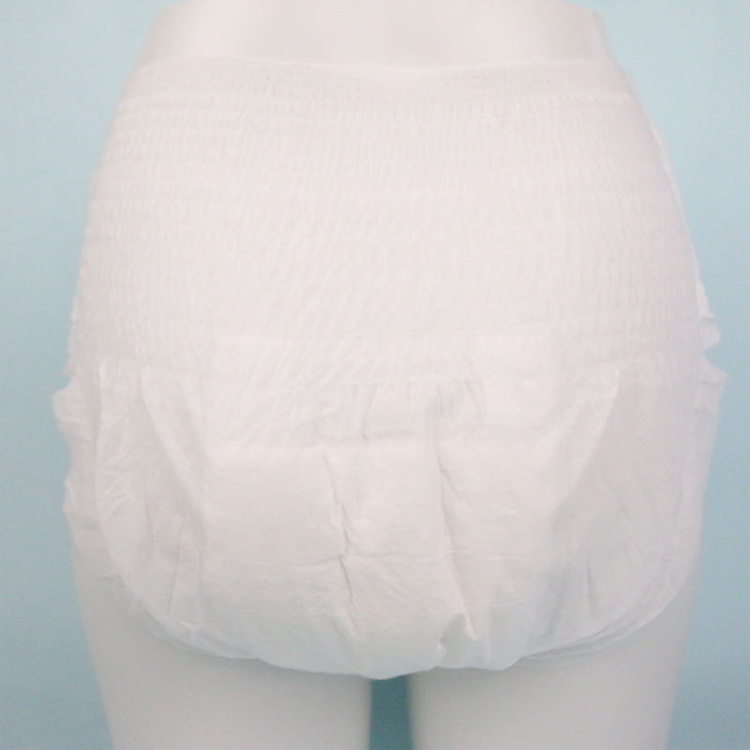
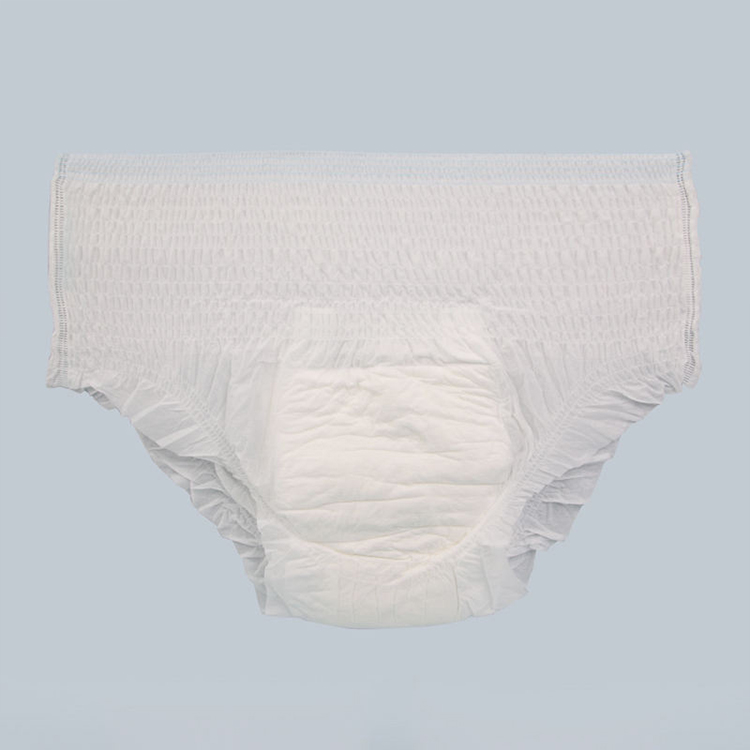
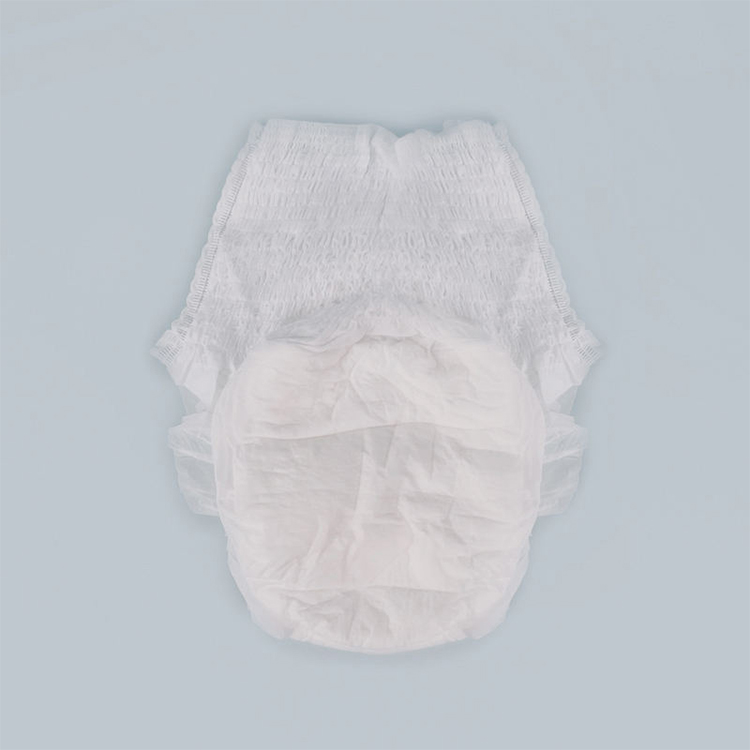
An adult diaper is an interacting fluid-management system. The hydrophilic polypropylene topsheet controls initial intake. The acquisition-distribution layer, or ADL, moves liquid away from the loading point. Fluff pulp creates fluid pathways. Sodium polyacrylate superabsorbent polymer, commonly represented by the repeating unit (C3H3NaO2)n, retains liquid. Leak guards, elastics, adhesives, tapes, and the polyethylene or breathable-film backsheet keep that system attached to a moving human body.
Change one layer and several other layers may behave differently.
That is why raw material substitution must be managed as formal change control, not as an emergency purchasing exception.
The Shortage Is Only Half the Risk
Supply shocks are not hypothetical.
In April 2021, Reuters reported that Procter & Gamble faced $400 million in newly increased costs, including $125 million in after-tax commodity costs and $200 million in higher freight costs. P&G responded with mid-single-digit price increases on products including Pampers diapers. Transport, pulp, and resin were all part of the pressure.
The lesson was not merely that materials became expensive. It was that global hygiene-product supply chains had become tightly coupled: pulp availability, petrochemical output, truck capacity, sea freight, packaging, and working capital could all hit the same production schedule.
Shipping can deliver the same shock. In May 2024, Reuters documented a China-to-North-Europe rate of $4,615 for a 40-foot container, almost 3.5 times the May 1 rate. The China-to-U.S. East Coast spot rate had risen from $2,772 to $6,061 as Red Sea diversions, congestion, and container shortages spread through shipping networks.
A factory can therefore have a technically approved raw material that is commercially unavailable, or an available alternative that is technically wrong.
Both conditions stop production.
But bad substitutions are worse. A stopped line creates an obvious problem. A defective substitution creates finished inventory, distributor claims, damaged trust, and complaints that may not appear until thousands of packs have entered the market.
Divide Adult Diaper Raw Materials Into Three Risk Classes
I would never manage every substitute with the same approval process. A carton-printing ink change is not equivalent to changing the SAP grade inside an overnight adult brief.
Start with three risk classes.
Class A: Performance-Defining Materials
These materials directly affect fluid intake, retention, dryness, leakage, skin contact, or structural integrity:
Superabsorbent polymer
Fluff pulp
Topsheet nonwoven
Acquisition-distribution layer
Backsheet film or breathable laminate
Standing leak-guard nonwoven
Leg and waist elastics
Construction and core adhesives
Refastenable tapes and landing zones
A Class A substitution requires laboratory comparison, production-line validation, retained samples, approval records, and heightened inspection during the first commercial batches.
Class B: Function-Supporting Materials
These materials affect presentation, handling, storage, or secondary performance:
Release paper
Frontal tape printing
Wetness indicators
Inner bags
Polybags
Cartons
Pallet wrap
Labels
Class B changes may not require full absorbency qualification, but they can still affect seal strength, odor, shelf life, barcode readability, pallet stability, or regulatory labeling.
Class C: Non-Product Consumables
These include maintenance supplies and indirect factory consumables that do not become part of the finished diaper. They still require control where contamination or machine damage is possible, but they normally do not justify full finished-product requalification.
The hard truth?
Suppliers sometimes classify a Class A change as “equivalent material” to avoid delaying shipment. Buyers should reject that language unless equivalence has been demonstrated with measurable data.
The site’s guide to how material changes affect adult diaper performance is a useful starting point because it connects individual layers to intake speed, rewet, gel blocking, hydrostatic resistance, tab strength, and core stability.
Adult Diaper Material Substitution Matrix
No replacement should be approved by material name alone. “PP nonwoven,” “fluff pulp,” and “SAP” describe broad material families, not equivalent performance.
Original Material
Possible Alternative
Potential Benefit
Hidden Failure Mode
Minimum Approval Evidence
Standard SAP grade
SAP from a second qualified producer
Restores production capacity and reduces single-source risk
Slower swelling, lower absorbency under load, gel blocking, different particle distribution
CRC or free-swell data, absorbency under load, repeated-dose acquisition, rewet, particle-size data, production trial
This table is not permission to substitute freely. It is a map of where failure hides.
For example, a new SAP may show excellent free-swell capacity while performing poorly under body pressure. A softer topsheet may feel better in a dry hand test while increasing strike-through time after its hydrophilic treatment weakens. A breathable backsheet may report a high water-vapor transmission rate while failing at folds, pinholes, or adhesive-bonded areas.
SAP substitution deserves special treatment because purchasing teams are easily misled by capacity numbers.
Suppose the current formula contains 15 grams of SAP per brief. A replacement supplier offers a grade with a higher headline absorbency and proposes reducing the dosage to 13 grams.
That may look efficient.
It may also fail.
Laboratory free-swell capacity does not tell you how quickly urine enters the core, how the polymer behaves in saline, how much fluid it retains under sitting pressure, or whether swollen particles block access to unused areas. Adult diaper cores need a working relationship between SAP, fluff pulp, ADL, tissue, adhesive pattern, and compression density.
I would require at least:
Particle-size distribution
Residual moisture
Bulk density
Free-swell or centrifuge-retention comparison
Absorbency under load
Initial and repeated acquisition time
Surface rewet under defined pressure
Core integrity after handling
Performance after aging
A full-speed production trial
And I would test the finished diaper with 0.9% saline or another defined synthetic-urine method, not a sales demonstration using tap water.
The situation later became more nuanced. In preliminary results published May 22, 2026, Commerce calculated a 0.00% weighted-average dumping margin for LG Chem for the review period from December 1, 2023, through November 30, 2024. The order and review process still show why buyers must track country of origin, producer identity, customs exposure, and review dates instead of treating SAP as a globally interchangeable commodity.
A technically acceptable SAP can become commercially unattractive after duties, freight, currency movement, or customs delays.
Fluff Pulp Substitutes Can Change More Than Absorbency
Fluff pulp does not merely absorb fluid. It opens the core, transports liquid, supports SAP distribution, and helps the pad survive production, packing, transport, and use.
Replacing one fluff grade with another can alter:
Fiber length
Sheet moisture
Defibration energy
Dust generation
Core density
Wicking speed
SAP distribution
Pad stiffness
Core cracking
Machine speed
A factory may compensate for weak pulp by adding more adhesive, more tissue, more pulp, or lower machine speed. Each correction changes cost or performance somewhere else.
And this is where procurement spreadsheets become dangerous. A cheaper pulp price per metric ton can raise the finished cost per usable diaper if the line loses speed, waste increases, or the core requires additional material.
For temporary substitution, I would compare the new pulp against a retained reference roll and a golden finished sample. The pilot should be run at normal commercial speed, not at a slower demonstration speed chosen to make the material behave.
Watch the waste bins.
If dust, broken cores, misfeeds, or web instability increase during the trial, the material is already telling you what the quotation did not.
Use Equivalence Gates, Not Vague “Pass” Decisions
There is no universal numerical limit suitable for every adult diaper design. A daytime pull-up and a bariatric overnight brief do not need the same intake speed, retention, dimensions, or tab strength.
I therefore prefer equivalence gates tied to the currently approved golden sample.
A practical temporary-change protocol might require:
Total absorption of at least 95% of the approved baseline
Retention under pressure of at least 95% of baseline
First-dose acquisition no more than 10% slower
Third-dose acquisition no more than 15% slower
Rewet no more than 0.3 grams above baseline
Finished-product weight within the approved specification
SAP and fluff distribution within the approved zone
Tab peel and refastening within ±15% of baseline
No new leakage pattern during movement or compression testing
No meaningful increase in line waste or machine stoppage
Those are working change-control gates, not international standards. Each buyer must set limits from product claims, user group, complaint history, regulatory position, and test-method capability.
The important part is the structure: compare the replacement with the approved product under the same method, equipment, conditioning period, liquid, loading sequence, and pressure.
Otherwise, the numbers are decoration.
Run a Controlled Pilot Before Releasing Commercial Production
A courier sample produced by hand is not production evidence.
I would use a five-stage release process.
1. Document the Shortage and Proposed Change
Record:
Original material and supplier
Replacement material and supplier
Reason for substitution
Country of origin
Lot numbers
Technical data sheets
Safety and skin-contact declarations
Expected duration of the change
Affected SKUs and markets
Commercial and regulatory impact
Do not accept “same specification” as the explanation. State what is physically and chemically the same, what differs, and how those differences will be tested.
2. Compare Incoming Material Data
Check basis weight, thickness, moisture, particle size, tensile strength, elongation, hydrophilicity, film integrity, adhesive behavior, or other properties relevant to that material.
Certificates of analysis are useful.
They are not proof of finished-product performance.
3. Produce a Full-Speed Pilot
The pilot must use the intended commercial machine, normal line speed, planned adhesive settings, normal compression, and actual packaging configuration.
Small adjustments may be necessary. Record every adjustment.
A replacement that works only after undocumented machine changes is not equivalent.
4. Test the Finished Product
At minimum, test the functions affected by the substitution. For an absorbent-core change, this means intake, retention, rewet, distribution, leakage, core integrity, and aged performance. For a backsheet change, include hydrostatic resistance, pinholes, bonding, and compression leakage.
Then compare the result with the approved golden sample—not only with a broad specification that both products can technically pass.
5. Apply Heightened Release Controls
The first commercial lots should receive tighter incoming inspection, additional line checks, more finished-product testing, retained samples, and complaint monitoring.
The site’s framework for defining AQL levels for adult diapers and related hygiene products is relevant here, but AQL inspection cannot replace laboratory release testing. Sampling for visual defects will not reliably detect slower acquisition, higher rewet, weak retention under pressure, or chemical-finish variation.
Protect Traceability Before Production Starts
Every substituted-material batch should create an unbroken chain:
Raw material supplier → material lot → receiving inspection → production line → production date → finished-product lot → warehouse release → customer shipment
No gaps.
Without that chain, a complaint involving side leakage or wetness may force the manufacturer to investigate several weeks of production instead of one known material lot.
I would also require:
A distinct internal change-control number
Clearly marked affected batches
Retained raw material samples
Retained finished-product samples
Recorded machine settings
Laboratory reports tied to exact lot numbers
A defined end date or review date
Written rules for returning to the original material
For U.S. programs, intended use also matters. Under 21 CFR 876.5920, a protective garment for incontinence is defined as a device containing absorbent padding and a fluid barrier intended to protect an incontinent patient’s garment from excreta. It is classified as a Class I device, while infant diapers are excluded from that definition.
That does not mean every material adjustment requires a new regulatory submission. It means manufacturers and importers should assess whether the change affects intended performance, labeling, biocompatibility evidence, declarations, risk documentation, or market-specific compliance files.
“Temporary” is not a compliance category.
Build Dual Specifications Before the Shortage Arrives
The best time to qualify adult diaper material alternatives is while the preferred materials are still available.
For each Class A material, create:
One preferred specification
At least one technically approved backup
Approved supplier and manufacturing-site details
Regional sourcing options where practical
Agreed performance-equivalence limits
Current samples and technical documents
A small commercial trial history
Updated landed-cost calculations
Defined minimum safety stock
This is real adult diaper supply chain management. It costs more than maintaining one source on a spreadsheet, but less than approving an unknown SAP or nonwoven while a production line sits idle.
Dual sourcing is not simply finding two sales contacts. Two distributors supplying material from the same upstream plant are still one source.
Map the producer.
Map the plant.
Map the port.
Map the feedstock.
For private-label programs, involve the manufacturer before the shortage reaches emergency status. A capable adult diaper OEM/ODM manufacturing partner should be able to explain alternative material structures, sample timing, production implications, test methods, and traceability controls instead of presenting the cheapest available replacement as a finished decision.
FAQs
What is raw material substitution in adult diaper manufacturing?
Raw material substitution in adult diaper manufacturing is the controlled replacement of an approved component—such as SAP, fluff pulp, hydrophilic nonwoven, ADL, backsheet film, adhesive, elastic, or tape—with another material that has been documented, tested, piloted, and shown to maintain the finished product’s required safety, fit, dryness, and leakage performance.
It should be handled through formal change control. Purchasing availability alone does not prove technical equivalence, and a supplier’s statement that two materials are “the same” should never replace finished-product testing.
Can one superabsorbent polymer be replaced with another SAP grade?
One superabsorbent polymer can replace another only when the proposed grade has been compared under identical conditions for particle distribution, saline absorption, retention under pressure, swelling speed, gel blocking, repeated-dose acquisition, surface rewet, core integrity, production behavior, aging, and performance inside the exact adult diaper construction being sold.
Do not compare SAP only by free-swell capacity or price per kilogram. The interaction between SAP, fluff pulp, ADL, core density, adhesive pattern, and compression determines whether liquid reaches the full core or becomes trapped near the loading point.
What are the safest fluff pulp substitutes for diapers?
The safest fluff pulp substitutes are qualified virgin fluff grades whose fiber length, moisture, sheet density, defibration behavior, dust level, wicking, absorbency, and core-strength characteristics remain close to the approved grade and have been validated at normal production speed inside the manufacturer’s existing SAP, tissue, adhesive, and compression system.
Recycled fiber, tissue-only structures, airlaid systems, and higher-SAP cores may be useful in redesigned products, but they are not automatic drop-in substitutes for conventional fluff pulp.
How should a factory approve nonwoven fabric alternatives?
A factory should approve nonwoven fabric alternatives by matching the replacement to the layer’s actual function, then comparing basis weight, fiber structure, tensile strength, softness, lint, hydrophilic treatment, strike-through, rewet, finish durability, bonding behavior, skin-contact documentation, machine performance, and finished-product results against an approved production reference.
A soft topsheet can still perform badly if it slows liquid transfer. A leak-guard nonwoven can feel identical while having weaker tensile strength or poor elastic bonding. Layer location determines the test plan.
Should customers be told about a temporary raw material change?
Customers should be notified when a temporary raw material change affects an agreed specification, approved sample, declaration, product claim, appearance, dimensions, country-of-origin assessment, regulatory file, performance limit, or contractual change-notification clause, even when the manufacturer believes the replacement will produce equivalent finished-product performance.
The notification should identify what changed, why it changed, which lots are affected, what qualification was completed, and whether the change is temporary or permanent. Hiding a substitution may preserve one shipment while destroying the commercial relationship when complaints appear.
Secure Your Backup Material Plan Before the Next Shortage
Do not wait for the line to stop.
List every Class A adult diaper raw material, identify the upstream producer and plant, calculate real lead time, qualify at least one backup, define equivalence gates, and run a commercial-scale pilot while the preferred material is still available for direct comparison.
Then keep the evidence.
Before approving a substituted SAP, fluff pulp, nonwoven, film, adhesive, elastic, or tape, review the available adult diaper test reports and quality documentation and require the supplier to connect every test result to the exact raw material lot and finished-product batch.