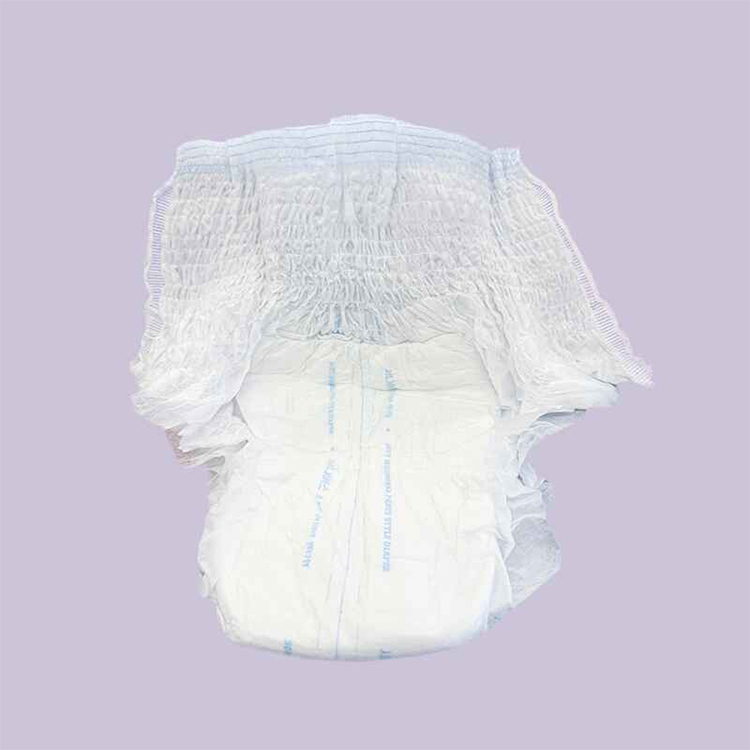
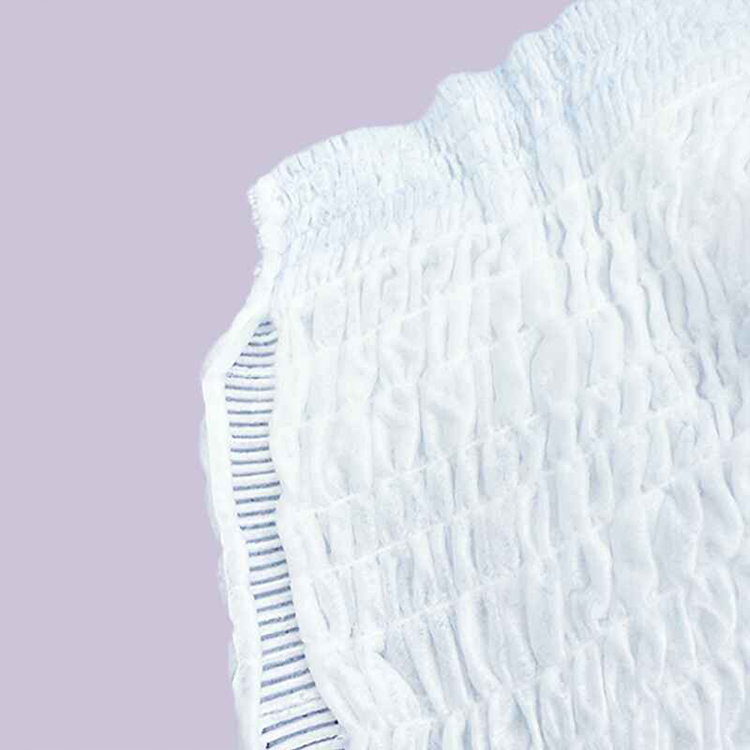
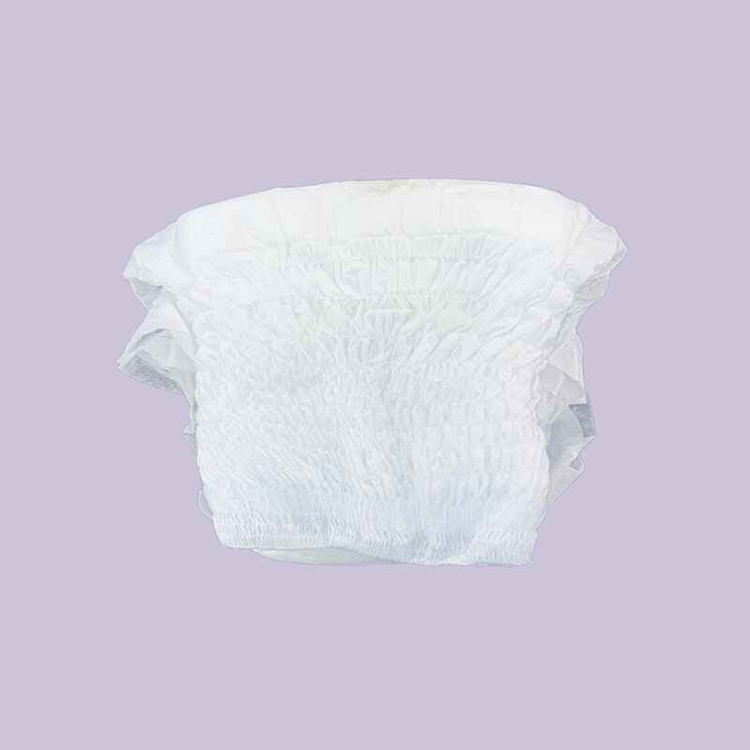
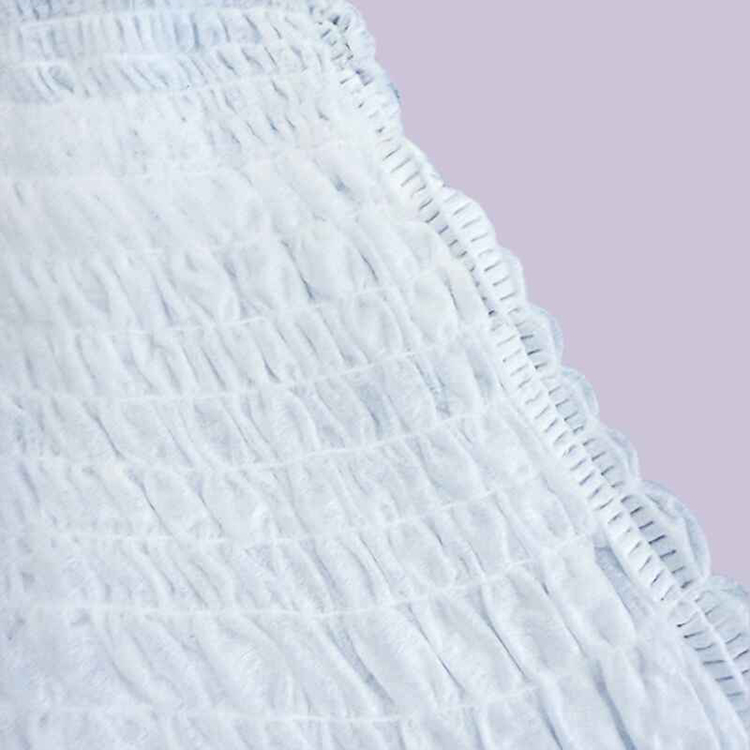
How MOQ Changes When You Customize Adult Diaper Sizes, Materials, and Packaging
Most buyers ask, “What is your MOQ?” as though a factory keeps one permanent number in a drawer.
It does not.
MOQ is structural.
When a buyer changes waist dimensions, core weight, sodium polyacrylate content, nonwoven softness, backsheet film, bag count, artwork, language, or carton layout, the order stops being one product and becomes a chain of separate purchasing, setup, printing, conversion, testing, and inventory commitments.
So which commitment sets the minimum?
Usually, the highest one.
A useful sourcing formula is:
Final MOQ = the highest minimum created by the production line, raw materials, printed packaging, quality-control plan, or logistics configuration.
That is the hard truth behind adult diaper MOQ. A sales representative may quote one attractive total, while the actual contract contains a minimum per size, per absorbency build, per printed bag, per language, or per shipping mark.
Demand is not the issue. The World Health Organization’s ageing data projects that one in six people worldwide will be 60 or older by 2030, up from 1 billion in 2020 to 1.4 billion. The commercial opportunity is real; the procurement problem is designing a range that can be produced and reordered without trapping cash in slow-moving SKUs.
Adult Diaper MOQ Is a Production Equation, Not a Sales Number
I read an MOQ quote as a map of factory constraints. The lowest headline number is rarely the most useful number.
A standard product may already use an approved chassis, established cutting dimensions, known elastic positions, available topsheet and backsheet rolls, an existing absorbent-core recipe, and packaging that fits the factory’s normal sealing equipment. That is why an ODM starting point generally carries less MOQ pressure than a fully engineered OEM program.
The distinction matters. The site’s guide to adult diaper OEM versus ODM explains that OEM production follows the buyer’s specifications, while ODM adapts an existing product platform. That is not vocabulary trivia; it determines how many parts of the supply chain must be restarted for one order.
Five minimums commonly compete:
Machine minimum: The run length needed to stabilize speed, glue application, elastic tension, cutting, sealing, and reject rates.
Material minimum: The smallest roll, bale, batch, width, color, or formulation an upstream supplier will sell.
Packaging minimum: The printed-film, plate, cylinder, bag-making, carton, and artwork quantity.
Quality minimum: The number of units needed for sampling, destructive testing, retention samples, and lot release.
Logistics minimum: The carton and container mix needed to avoid shipping air or creating unstable pallet patterns.
A factory can absorb a small setup cost once. It cannot repeatedly buy half a master roll, print a fraction of a cylinder run, or warehouse dozens of leftover materials for a buyer who may never reorder.
How Custom Adult Diaper Sizes Push MOQ Up
Changing the size label is easy. Changing the physical size is not.
A “custom XL” may require changes to product length, front and rear width, core length, core placement, elastic position, standing leak-guard height, tape landing zone, waist-panel geometry, and bag dimensions. If the existing line can adjust these parameters within its installed range, MOQ may rise only moderately. If new tooling, cutting patterns, or dedicated materials are needed, the increase can be sharp.
The most expensive mistake is confusing a new label with a new fit system. A product called 2XL is not automatically a true bariatric brief. Buyers should compare the actual dimensions, user waist or hip range, side coverage, fastening reach, core position, and leakage performance across the adult diaper product range before requesting a private-label size chart.
The diaper chassis may use four size configurations, but packaging procurement now sees sixteen separate artwork combinations. Even when the total order looks large, each printed bag may fall below its own production minimum.
And that is where buyers get blindsided.
My blunt view: a five-size launch is often ego disguised as market coverage. Unless the buyer has channel data showing meaningful demand at both ends of the range, three well-chosen sizes with clear overlap can produce better stock turns, cleaner replenishment, and fewer emergency substitutions.
How Adult Diaper Material Customization Changes MOQ
Material customization raises MOQ when the requested component is not already stocked in the correct specification, width, basis weight, treatment, or color.
An adult diaper is a material system, not one absorbency number. Common variables include:
SAP: Superabsorbent polymer, commonly sodium polyacrylate with a repeating structure represented as [–CH₂–CH(COONa)–]ₙ
Fluff pulp: Cellulose fiber used for liquid distribution, core structure, and fluid storage
ADL: Acquisition-distribution layer used to move liquid away from the point of impact
Topsheet: Usually hydrophilic polypropylene nonwoven in a specified GSM and softness level
Backsheet: Polyethylene film or cloth-like laminated film, breathable or non-breathable
Elastics: Leg, waist, and leak-guard elastic with specified tension behavior
Fasteners: Adhesive tape, hook-and-loop tabs, frontal tape, or landing-zone systems
Adhesives: Hot-melt systems selected for construction, positioning, and elastic attachment
The site’s overview of what an adult diaper ODM factory can customize correctly separates core, skin-contact layers, fit, packaging, and documentation. Changing one component can alter intake speed, rewet, bulk, noise, breathability, sealing behavior, or line stability; changing several at once creates a new validation problem, not merely a new quote.
Why a “Small Material Upgrade” May Create a Large Minimum
Suppose a buyer asks for a softer 18 GSM topsheet instead of the factory’s normal grade. The converter may need to purchase a full master roll in a specific width. If that material serves only one buyer, the unused balance becomes stranded stock.
The same logic applies to a printed breathable backsheet, a custom-colored frontal tape, an uncommon ADL width, or a special odor-control additive. MOQ rises because the factory is no longer buying a universal input; it is financing a buyer-specific inventory position.
Raw-material exposure also changes quickly. In April 2026, Reuters reported that pulp producer Suzano expected price increases for tissues and diapers as transport and chemical costs rose. That does not automatically change a factory’s unit MOQ, but it can change quotation validity, deposit requirements, material-reservation rules, and the willingness to hold custom inputs between orders.
This is why serious buyers should separate “must-have performance variables” from “nice-to-have material language.” A different embossing pattern may look distinctive. A controlled rewet result matters more.
Why Custom Adult Diaper Packaging Often Sets the Highest MOQ
Packaging is frequently the real MOQ boss.
A buyer can sometimes place a standard diaper into a neutral bag at a low starting quantity. But once the request includes reverse-printed PE film, multiple colors, matte effects, carry handles, zipper features, custom pack counts, multilingual warnings, separate barcodes, market-specific claims, and printed master cartons, each element creates another production threshold.
For a private label adult diaper MOQ, packaging questions should include:
Is the bag plain, sticker-labeled, digitally printed, or gravure printed?
Is the film structure standard PE, laminated film, or another approved construction?
How many artwork colors are required?
Does every size have separate artwork?
Does every country require separate language or compliance text?
Are retail and institutional pack counts different?
Does the carton use generic shipping marks or full-color printing?
Who owns and stores the printing cylinders or plates?
What happens to unused printed film after the order?
Can the same bag dimensions serve more than one size?
Packaging Compliance Can Make “One Design” Impossible
For the United States, the FDA identifies protective garments for incontinence under product code EYQ as Class I medical devices associated with 21 CFR 876.5920. That classification does not mean every marketing claim is automatically acceptable; intended use, labeling, registration, listing, and the responsible commercial parties still need to be reviewed for the actual program. The FDA product classification database identifies the classification, product code, and regulation number.
For the European Union, the European Commission’s Packaging and Packaging Waste Regulation overview states that Regulation (EU) 2025/40 entered into force on February 11, 2025, and will generally apply from August 12, 2026. It covers packaging regardless of material or origin and establishes requirements related to manufacturing, composition, recyclability, and waste prevention. Artwork and film choices made for an EU launch in 2026 therefore deserve legal review before cylinders are engraved and thousands of bags are printed.
Here is the unpopular opinion: custom packaging is often approved too early. Buyers sign off on a beautiful pouch before the size range, pack count, claims, barcode ownership, importer details, disposal marks, or carton dimensions are stable. Then every correction becomes scrap, delay, or a new printing minimum.
Adult Diaper MOQ Comparison by Customization Level
The table below is a planning model, not a supplier quotation. Actual adult diaper MOQ depends on line configuration, material availability, bag-printing method, carton design, testing requirements, and the number of SKUs.
Project Configuration
Size Status
Material Status
Packaging Status
Relative MOQ Pressure
Main Reason
Existing ODM product in neutral packaging
Standard
Standard
Plain or shared
Low
Few buyer-specific inputs
Existing ODM product with one branded bag
Standard
Standard
One custom artwork
Low to medium
Printed-film minimum may exceed diaper-run minimum
Existing product with upgraded topsheet or backsheet
Standard
Partly custom
Standard or shared
Medium
Dedicated master roll or component batch
Existing chassis with multiple absorbency levels
Standard
Custom core builds
Separate pack identification
Medium to high
More recipes, testing groups, and SKU segregation
Custom physical dimensions in one size
Custom
Mostly standard
Custom-size bag
High
Line settings, fit validation, and dedicated packaging
Four custom sizes with two pack counts
Custom
Custom or semi-custom
Eight or more artworks
Very high
SKU multiplication across product and packaging
Full OEM range for several countries
Custom
Custom
Multi-language and market-specific
Very high
Separate compliance, artwork, inventory, and reorder risk
The lesson is simple: total quantity is not the same as executable quantity.
A 100,000-piece order split across ten SKUs may be less attractive to a factory than a 60,000-piece order concentrated in two repeatable SKUs. Why? Because setups, material changes, print versions, inspections, and warehouse positions occur by SKU, not by PowerPoint total.
The Hidden MOQ Terms Buyers Must Force Into the Quote
A professional RFQ should never ask only for “MOQ and price.”
It should request a matrix showing:
Quote Field
What the Buyer Needs Stated
Total order MOQ
Minimum across the complete purchase order
Per-size MOQ
Minimum for M, L, XL, 2XL, or other sizes
Per-material MOQ
Minimum for each topsheet, backsheet, core, tape, or color
Per-artwork MOQ
Minimum for every bag design and language version
Per-pack-count MOQ
Minimum for 10-count, 20-count, institutional, or sample packs
Carton MOQ
Plain versus printed carton minimum
Tooling charge
Dies, cylinders, plates, molds, or special line parts
Leftover ownership
Who owns unused film, nonwoven, tape, and cartons
Reorder minimum
Whether repeat orders have the same threshold
Change-control rule
What happens if a material is substituted or discontinued
This is also why the adult diaper manufacturer selection checklist for importers should be used before price comparison, not after a complaint. The cheapest quote is meaningless when the build, per-SKU minimum, substitution policy, and retention-sample process are vague.
And ask one more question:
Which MOQ is binding today?
A supplier may quote a machine MOQ while ignoring that the printed-bag supplier requires more film. Another may quote the packaging MOQ but omit that a custom backsheet must be purchased by master roll. The binding constraint can move after artwork, materials, and size plans are finalized.
How to Reduce Adult Diaper MOQ Without Weakening the Product
Reducing MOQ is not about pressuring a factory to “be flexible.” It is about removing unnecessary uniqueness.
Start From an Existing ODM Chassis
Use a proven product platform, then customize only the variables that define your market position. The adult diaper OEM and ODM services page outlines a practical route for adapting absorbency, sizing, materials, and packaging without treating every project as blank-sheet development.
Keep Physical Sizes Standard During the First Launch
Change the size chart only when fit evidence justifies it. A stock L, XL, and 2XL range with clear measurement guidance is usually safer than inventing five dimensions based on competitor labels.
Use One Core Build Across Adjacent Sizes
Where performance allows, keep the same SAP/fluff philosophy, ADL family, topsheet, backsheet, and fastening system across the range. Scale dimensions rather than creating a different material recipe for each SKU.
Reduce Artwork Fragmentation
Use one brand system, one primary language strategy, one pack count per channel, and shared visual architecture. Avoid separate artwork for minor claims that could be handled through compliant secondary labeling, provided local law and the responsible regulatory party approve it.
Delay Premium Effects
Metallic inks, matte soft-touch effects, custom handles, zippers, windows, unusually thick films, and fully printed cartons may improve shelf appearance, but they can also make packaging the binding MOQ.
Launch the product first. Decorate the supply chain later.
Consolidate the Pilot Order
Do not spread the first purchase across every possible size, absorbency, pack count, and country. Select the fastest-moving combinations, test real sell-through and complaint data, then expand.
Negotiate Leftover-Material Treatment
A factory may accept a smaller finished-goods run if the buyer prepays the full custom-material minimum and the unused balance is stored for a defined reorder window. This does not remove MOQ; it moves part of the commitment from finished units to reserved materials.
That distinction matters.
FAQs
What Is Adult Diaper MOQ?
Adult diaper MOQ is the smallest commercially workable order a manufacturer will accept after considering machine run length, component purchasing, printed packaging, quality-control sampling, SKU separation, and shipping efficiency; it may apply to the total order, each size, each material build, each bag design, or each language version.
A buyer should therefore request both the total MOQ and every per-SKU minimum in writing.
How Does Custom Sizing Affect Adult Diaper MOQ?
Custom sizing increases adult diaper MOQ when new dimensions require dedicated cutting settings, elastic positions, core placement, fastening geometry, fit validation, or bag dimensions; the increase becomes larger when several custom sizes are launched together because each size creates its own production setup, testing group, packaging artwork, and inventory position.
Using existing line-compatible dimensions generally lowers the starting risk.
Why Does Adult Diaper Material Customization Increase MOQ?
Adult diaper material customization increases MOQ because nonwoven, film, SAP, fluff pulp, ADL, elastic, tape, and adhesive components are purchased in supplier-defined rolls, bales, widths, colors, or batches; when a specification is unique to one buyer, the factory must finance and store material that cannot easily serve other orders.
The strongest way to reduce this minimum is to customize fewer performance-defining components.
Does Custom Packaging Raise MOQ More Than Product Customization?
Custom packaging can raise MOQ more than product customization when printed film, multiple artwork versions, several pack counts, language-specific labels, special bag structures, or printed cartons require separate production runs; in many projects, the packaging converter’s minimum becomes higher than the diaper line’s minimum and therefore controls the final order quantity.
Ask for the packaging MOQ per artwork, not only per order.
How Can a Private Label Brand Reduce Adult Diaper MOQ?
A private label brand can reduce adult diaper MOQ by starting with an existing ODM chassis, limiting the first launch to proven sizes, sharing materials across SKUs, using one pack count per channel, reducing language and artwork versions, postponing decorative packaging effects, and reserving custom inputs for later orders after sell-through is verified.
The objective is fewer unique commitments, not a lower-quality diaper.
What Information Should an Adult Diaper RFQ Include?
An adult diaper RFQ should define target users, waist or hip ranges, product dimensions, absorbency and rewet expectations, core and skin-contact materials, fastening system, backsheet type, pack count, artwork versions, destination markets, labeling responsibilities, test requirements, forecast demand, per-SKU quantities, and acceptable treatment of leftover custom materials.
Without this information, MOQ and price comparisons are usually misleading.
Your Next Step: Build the MOQ Matrix Before Asking for a Unit Price
Do not begin with, “How much per piece?”
Begin with one controlled specification and one SKU matrix showing size, absorbency build, materials, pack count, artwork, language, carton, destination market, pilot quantity, and 12-month forecast. Then ask the manufacturer to identify the binding minimum for every row.
That single document will expose whether your custom adult diaper MOQ is being driven by the production line, a master roll, a printed bag, a carton, testing, or simple SKU overload.
For a project-specific review, send your size plan, material priorities, packaging formats, target markets, and estimated demand through the adult diaper OEM quotation form. Ask for the total MOQ, per-SKU MOQ, tooling charges, unused-material policy, and reorder minimum separately.