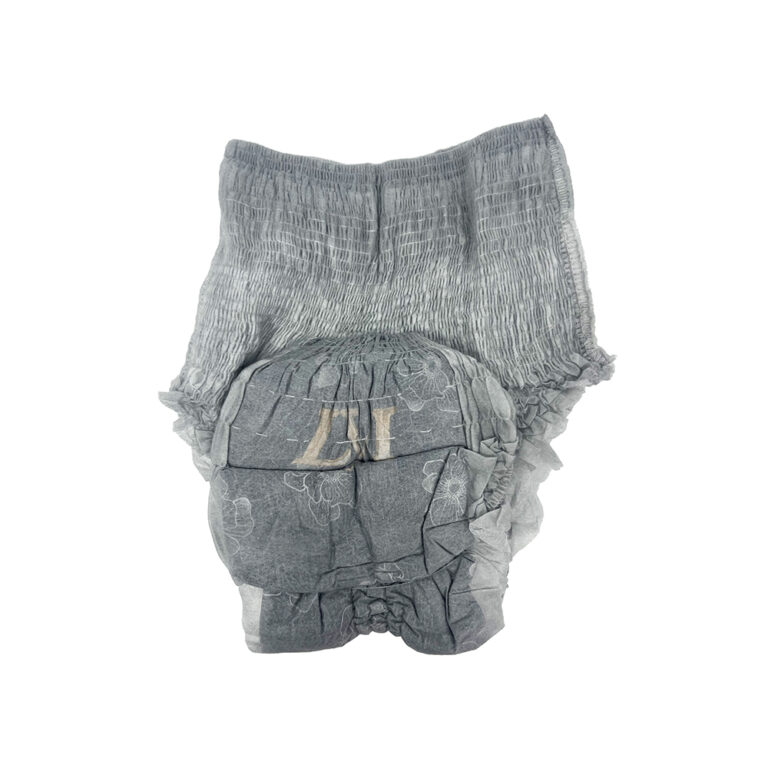
Japan Adult Incontinence Market: Product Formats Buyers Should Research
Japan’s adult incontinence market does not work like a single “adult diaper” category. Products are sold and used as a system: an outer garment (pull-on pants or open tape-style briefs) usually worn with a separate absorbent pad inside it, plus a distinct light-incontinence segment of thin pads and liners. For an importer, private-label brand or OEM buyer, that structure changes what you should research first. A format that looks minor in a catalog can account for most of the pieces consumed in a care facility. A format that looks like the obvious entry point may be only one half of a two-part purchase. This article explains the main product formats in Japan, what current data does and does not show about each, and how to turn that research into a clearer RFQ.
Why Format Matters More Than Total Market Size
Headline market numbers are easy to find and hard to use. What a buyer needs is the split by format, user condition and channel, because that is where specifications, pricing and complaint risk differ.
Some scale context helps. According to a trade-press report citing Japan Hygiene Products Industry Association (JHPIA) statistics, adult diaper production in Japan reached 9.077 billion pieces in 2023, down 2.4% from the previous year. The association’s managing director attributed the dip to raw material costs, including pulp, which led manufacturers to restrain output and draw on inventory. The same report says production rose about 4% the following year. It also says light-incontinence products have been growing at roughly 10% a year, faster than adult diapers overall.
Those figures count pieces, not value, and they combine every format. Two other points in the same report matter more for format research. Combining a diaper body with a pad is the mainstream way of using adult diapers in Japan, and manufacturers keep widening the variations of each product to fit different conditions. For a buyer, the unit of analysis is the combination, not the single SKU.
The Main Adult Incontinence Product Formats in Japan
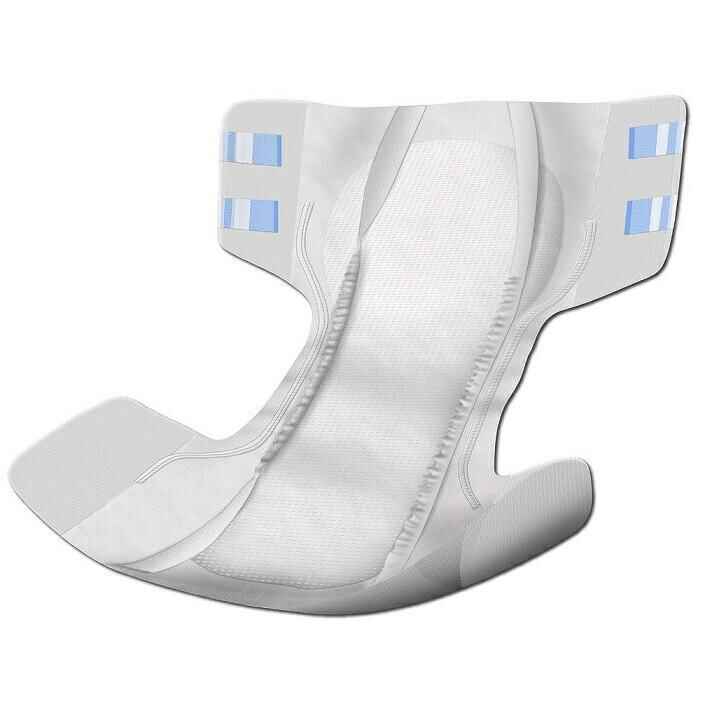
Japanese manufacturers describe the category in two layers. Daio Paper’s Elleair Attento guidance divides adult paper diapers into outer garments and inner pads. Outer garments are pants-type and tape-type. Inner pads come in versions for pants and for tape-type products. It recommends pants-type products for people who can stand or sit with assistance. It recommends tape-type products for people who spend most of their time lying down or who mainly void while in the diaper.
Pants-type (pull-on) products
Pants-type products are worn like underwear, which supports independence and discretion. They suit users who can stand, walk or transfer with limited help. The JHPIA managing director quoted in the trade-press report also points to slim pants designed not to show under clothing as a growing area. Mild leakage can lead people to avoid going out, and products that remove that worry have strong latent demand.
Technical points to check include waist stretch range and size labelling, leg-cuff and waistband design, and thickness versus absorbency. Also confirm whether the product is intended to be used alone or with a pad. Buyers who want a supplier view of this format can review OEM incontinence underwear with a 360° elastic waistband and tear-away side seams. The supplier lists it alongside bladder-control, bowel-incontinence, reusable and washable variants. Reusable and washable underwear is a different product class from disposable pull-ups, with different performance claims, so keep it separate in any Japan market research.
Tape-type (open-style) products
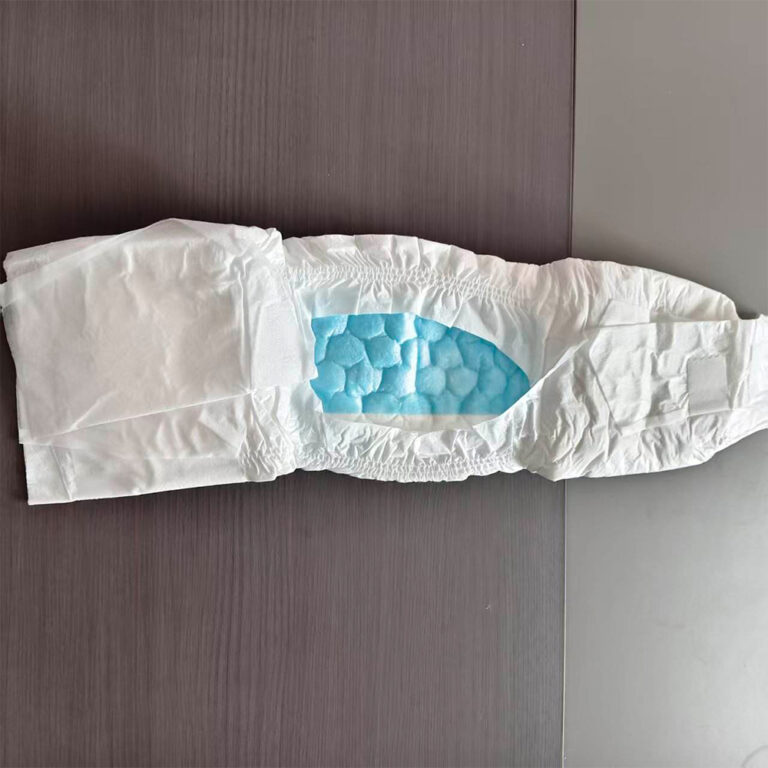
Tape-type briefs open flat and fasten with tabs, which lets a caregiver change a person who is lying in bed. The relevant variables are tab material and refastenability, waist design, backsheet breathability, leg gathers and fit across larger size ranges. Buyers evaluating this format can look at refastenable-tab adult diapers with customizable core constructions, waist designs and tab types. Then ask how each option performs when paired with a pad.
A statistical caution: JHPIA’s paper diaper statistics page explains that its “pants type” category includes both tape-type and pull-on pants. Data labelled “pants type” in some reports may therefore not isolate pull-ups. Read the definition before using any share figure.
Pads used inside pants or tape-type diapers
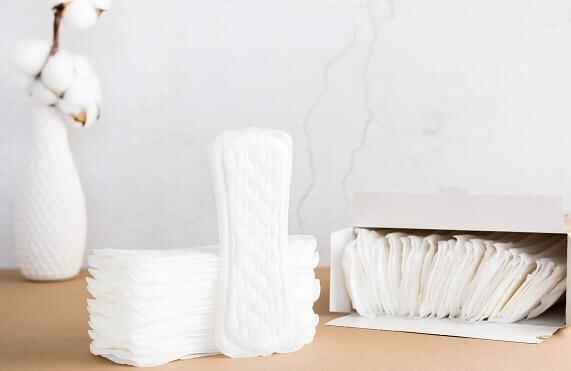
Urine pads are the consumable in the combination. JHPIA’s statistics page says pad products spread quickly alongside pants-type diapers because they are easy to change and cost less per piece, and that they grew about threefold over ten years. The page does not state the period’s dates, so treat that as a directional statement.
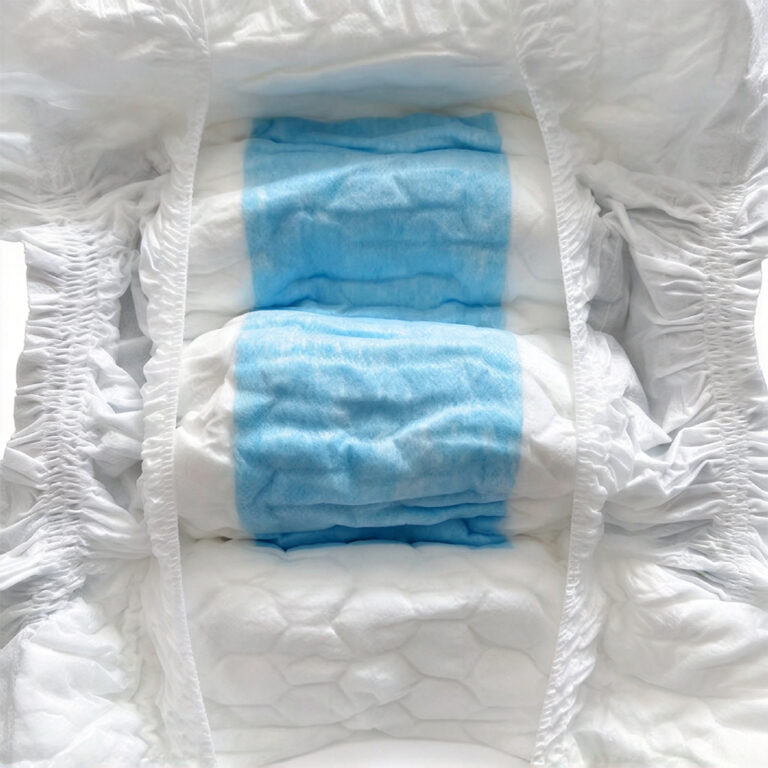
For buyers, the key questions are the pad’s length class, absorbency tier and adhesive-strip behavior inside the outer garment. Also ask whether it is shaped for pants-type or tape-type use. Wholesale pad options are shown on the supplier’s incontinence pads page with customizable length, width, absorbency and top-sheet material, including booster pads for use inside adult diapers.
Light-incontinence pads and liners
This segment serves people with small leaks who wear regular underwear. It is a separate buying journey, closer to consumer packaged goods. Expectations differ for thinness, discretion, odor control and pack design. It is also the segment the JHPIA managing director singled out for faster growth. Treat it as its own research track rather than a thin version of facility pads.
Flat-type products
JHPIA describes flat-type diapers, used with a separate cover, as holding level while other formats grow. They are unlikely to be a priority for a new importer, and none of the supplier pages reviewed for this article are dedicated to them.
What the Facility Data Shows About Pad Volume
The most useful quantitative signal I found for format mix comes from a Japanese research firm’s facility panel. In a care facility panel survey published by Hanbai Sokushin Kenkyusho, special nursing homes and geriatric health facilities used an estimated 1.695 billion adult paper diapers a year. That covered 945 facilities from October 2022 to September 2023, with a purchase-value market of about 60.8 billion yen. By quantity, the format split was:
Tape-type: 13%
Pants-type: 7%
Small pads (under 55 cm): 23%
Large pads (55 cm or longer): 56%
Other: 1%
Pieces used fell 3% year on year while spending rose 4%.
Scope matters here. The survey covers two types of institutional facility and measures pieces rather than revenue. It says nothing about home care, pharmacy or online sales, and the release does not give a value-share split by format. What it does show is that in this channel, pads make up roughly four of every five pieces consumed. A supplier quoting only outer garments is therefore quoting a minority of the unit flow.
The assumption worth qualifying
A common distributor heuristic holds that pull-ups are the better first product and pads the weaker, commoditized one. The supplier’s own article on pull-ups versus pads as a distributor entry point argues that case from distributor economics, severity fit and channel behavior. That logic can hold for a retail or e-commerce launch. The facility data shows why it should not be applied mechanically to Japan. In institutional care, pads are the highest-frequency purchase, and the outer garment is the platform that determines which pad fits.
A more defensible position for Japan is to treat the outer garment as the anchor product and the pad as the recurring consumable, and to evaluate them as a pair. Piece share is not margin share, and a low per-piece price can still create stable repeat volume. The trade-off is that pads are easier to substitute. Differentiation therefore comes from fit with the outer garment, fluid handling and consistent quality, not from the pad alone.
Comparing Formats Before You Commit to a Range
The table below is qualitative. It summarizes how each format typically functions, based on the manufacturer and association sources above, and lists what a buyer should verify. It contains no measured performance data.
Format
Typical role in Japan
Likely user situation
Main channel signal
Verify with supplier
Main risk
Pants-type (pull-on)
Outer garment
Can stand or sit with assistance; independence matters
Home care, retail, active-user care
Size/waist range, thickness vs absorbency, pad compatibility
Overselling to heavy or bedridden users
Tape-type (open)
Outer garment
Mostly lying down; caregiver changes
Care facilities, home care
Tab refastenability, fit across sizes, backsheet breathability
Poor fit leading to side leakage
Pads for pants/tape
Replaceable inner absorbent
Moderate to heavy use; frequent changes
Care facilities (strong volume signal), home care
Length class, absorbency tier, adhesive, shape for outer type
Three channels shape specifications in different ways. These are inferred from the sources above rather than quantified.
Care facilities buy for staff workload and consistency. The facility data points to heavy pad use alongside tape-type and pants-type outers. The practical questions are how quickly a caregiver can change a person and how reliably the pad stays in position. The trade-press report also notes that manufacturers are targeting caregiver burden through better absorption and breathability, which reduces cleaning and change work.
Home care is mixed. Family caregivers may buy the same outer-plus-pad system but need simpler guidance. The trade-press report says manufacturers support this with selection flowcharts because a wider range makes choosing harder. A supplier whose range is confusing is a liability here.
Retail and light incontinence depend on discretion and appearance. Pants and light pads are the primary formats, and the shopper is usually the user.
Pad-to-outer compatibility. The facility survey divides pads at 55 cm, so length is a recognized segmentation line in Japanese facility purchasing. Ask which outer garments each pad is designed for. Request test or sample confirmation that the pad stays aligned inside those garments.
Absorbency labelling. On the Japanese retail listings I reviewed (a handful, not a sample), absorbency was typically expressed as a number of voids, such as “two voids” for a daytime pad or “eight voids” for an overnight pad, rather than in millilitres. Pack counts on those listings were small, roughly single digits to a few dozen pieces per pack. Both observations are anecdotal. Ask your Japanese importer or legal adviser how absorbency claims and labels must be presented, and ask the supplier what test method supports the claim.
Fit and size labelling. The listings used size bands such as M-L, L-LL and 3L. Waist and hip ranges behind those labels vary by brand, so compare dimensional drawings, not size names.
Cost drivers. The trade-press report names pulp prices and the continuing weak yen as pressures. It says price increases alone are hard for customers to accept, so manufacturers compete on function. For an OEM buyer, a bid should therefore reflect core design, the SAP and fluff-pulp balance, nonwoven and backsheet choices, and packaging, not only a low unit price. Ask for a component-level cost breakdown when comparing quotes.
Product-specific failure modes. Typical issues to test include side leakage in tape-type products with poor leg gathers, pad shift or bunching inside pull-ons, adhesive failure, and under-specified absorbency in overnight use. Request sample testing under realistic wear conditions rather than relying on specification sheets alone.
What Should You Specify Before Requesting a Quote?
A Japan-focused RFQ is stronger when it describes the combination, not a single product. Prepare these items:
Channel and user profile: care facility, home care, retail or light incontinence, and the user’s mobility level.
Formats requested: outer type (pants or tape), pad type and any booster pad, with the intended pairing between them.
Dimensions: pad length and width, waist range by size, and the size naming convention for the Japanese market.
Absorbency: target tier for each product and how it will be expressed on the pack.
Materials and features: topsheet, backsheet breathability, leg cuffs, wetness indicator if wanted, adhesive type and individual wrapping.
Pack architecture: pieces per pack and per case, language and design for Japanese labelling, and storage conditions.
Samples and testing: the evaluation method you will use and who will test it, ideally with input from caregivers or facility staff.
Commercial terms: order quantity, delivery schedule and shipping method. Ask the supplier directly for MOQ and lead time rather than assuming figures.
Also ask the supplier which of these it can customize. The pages reviewed for this article describe customizable pad dimensions and absorbency, tab and waist designs for tape-type diapers, and waist styles and packaging for underwear. They do not state Japan-specific compliance, certification or MOQ information, so confirm those directly.
Frequently Asked Questions
What are the main adult incontinence product formats in Japan? The main formats are pants-type pull-ons, tape-type open briefs, urine pads used inside either, light-incontinence pads and liners, and flat-type diapers used with covers. Pads are typically combined with pants or tape-type outers rather than sold as stand-alone replacements.
Are pads or pants more common in Japanese care facilities? Pads are more common by piece count. A facility panel covering special nursing homes and geriatric health facilities found large and small pads made up 79% of pieces used, versus 13% tape-type and 7% pants-type. The survey does not cover home care or retail.
Why are pads used together with adult diapers in Japan? JHPIA states that pads spread because they are easy to change and cost less per piece, and a trade report calls the combination mainstream. The practical implication, an inference, is that the pad can be changed more often than the outer garment.
Which format should a new exporter research first for Japan? It depends on the channel. For care facilities, research the outer-plus-pad pairing together. For retail or light incontinence, research slim pants and light pads. Choose by the buyer you can serve, not by a general rule that one format always wins.
How is absorbency usually labelled on Japanese products? On the retail listings reviewed, absorbency was commonly given as a number of voids rather than millilitres. This was a small, non-representative observation. Confirm labelling requirements with a Japanese importer or adviser, and ask suppliers for the test method behind each claim.
What should an RFQ for the Japanese market include? Include channel, user mobility level, outer and pad formats and pairing, dimensions, absorbency tier, materials, pack counts, labelling language, sampling plan and delivery terms. Describe the outer and pad together so the supplier can quote compatible products.