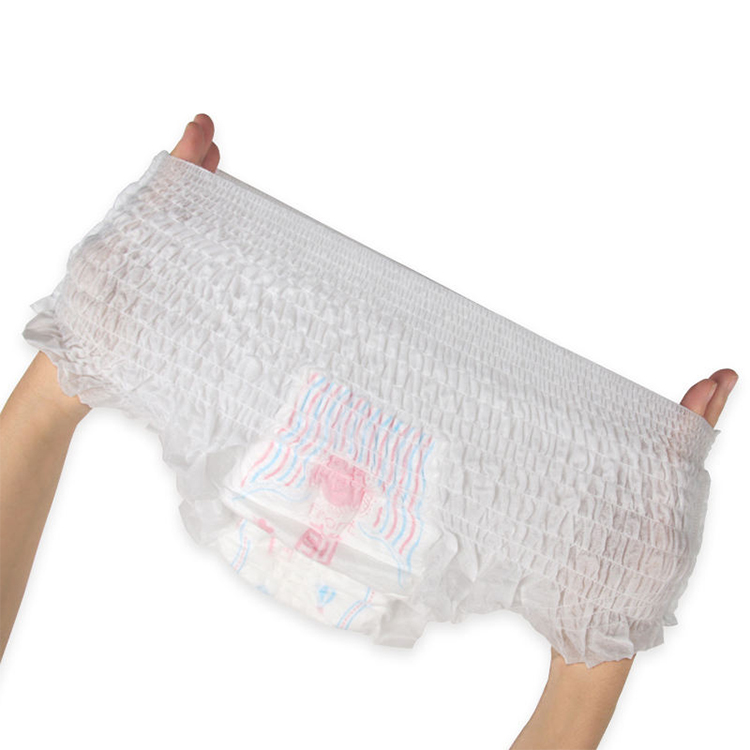
How to Measure Waist, Hip, and Rise for Adult Diaper Sizing
Fit beats capacity.
Even a high-absorbency brief can fail when the waistband sits in the wrong place, the hip area pulls the chassis backward, the rise is too short, or open leg gaps give liquid an easier exit than the absorbent core.
Why keep blaming absorbency when the geometry is wrong?
Adult diaper sizing is often presented as a simple waist-range decision. I think that advice is incomplete. Waist circumference matters, but so do hip circumference, abdominal shape, front-to-back rise, mobility, fastening position, and the posture in which the product will be worn.
The need for better sizing is not small. The U.S. National Institute of Diabetes and Digestive and Kidney Diseases reports that approximately 54% of women aged 20 and older and 15% of surveyed men reported urinary incontinence during the previous 12 months. The same agency estimates that one in ten U.S. adults experiences daily urinary incontinence. NIDDK’s urologic disease statistics show why accurate fit affects a very large and highly varied population.
The demographic pressure will keep growing. According to the World Health Organization’s 2025 ageing data, the global population aged 60 or older is projected to rise from 1 billion in 2020 to 1.4 billion by 2030 and 2.1 billion by 2050. One universal “Large” was never going to fit that population reliably.
Adult Diaper Sizing Is a Fit System, Not a Letter
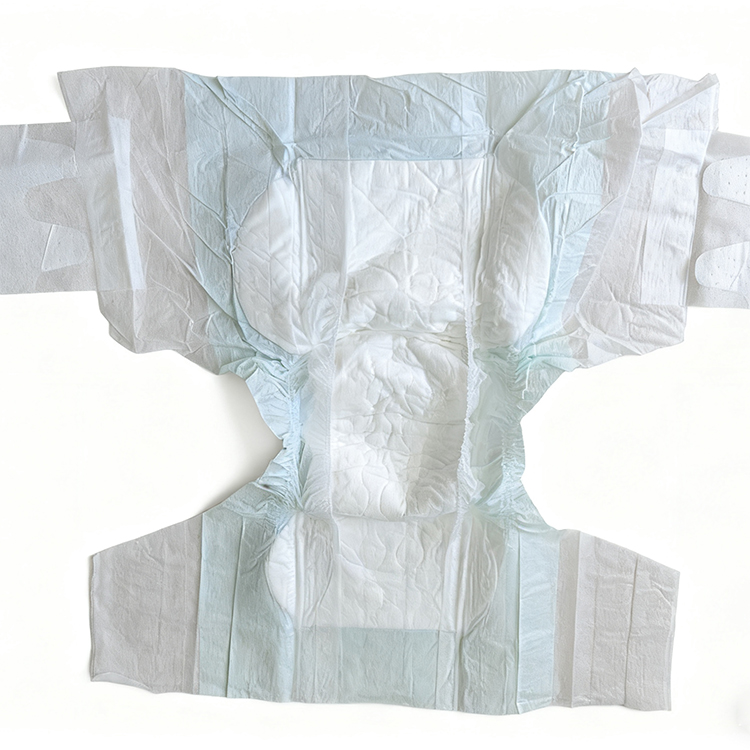
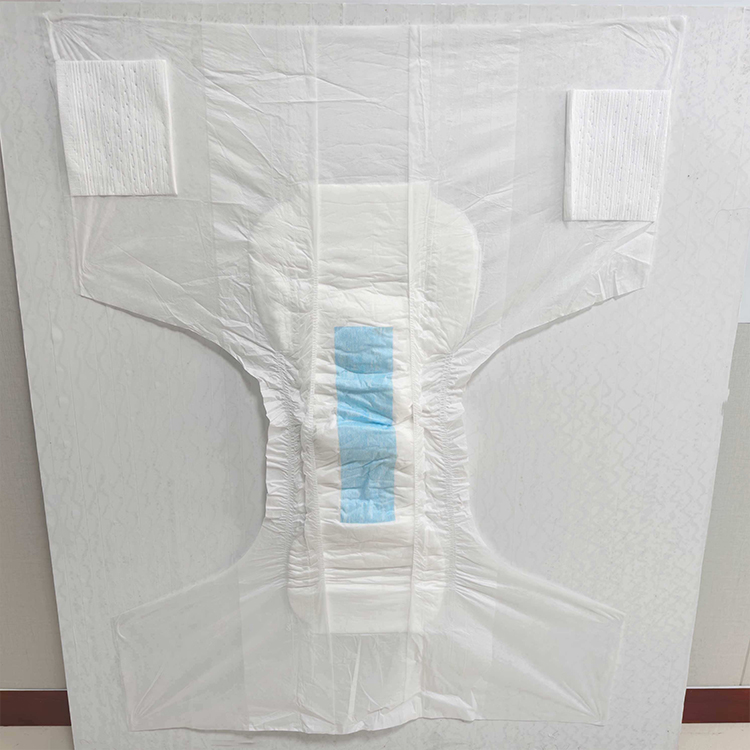
An adult diaper size is not merely S, M, L, XL, 2XL, or 3XL. Those letters are merchandising labels. The actual fit comes from the relationship between the wearer’s body and the product’s chassis length, waist panel, hip coverage, leg openings, elastic tension, fastening zone, and core position.
The regulatory treatment also tells us that these are functional care products rather than ordinary clothing. The U.S. Food and Drug Administration identifies protective garments for incontinence under product code EYQ, device class 1, and regulation number 21 CFR 876.5920. The FDA device listing includes adult diapers, disposable underwear, incontinence pads, and related protective products.
But regulation does not give every manufacturer one universal adult diaper size chart. A Medium from one product line may overlap with a Large from another. Even two products from the same manufacturer can fit differently when one is a low-profile pull-up and the other is a high-rise tab brief.
That is why I would never select a product using pants size alone.
What You Need Before Measuring
Use the following equipment:
A flexible tailor’s measuring tape
A mirror or a second person who can help
Light, close-fitting clothing or underwear
Paper or a phone for recording centimetres and inches
The current size chart for the exact product being considered
Samples of adjacent sizes when the measurements fall near a boundary
Take the measurements without pulling the tape into the skin. The tape should follow the body without hanging loose, twisting, or compressing soft tissue.
Record the numbers in both centimetres and inches when sourcing internationally:
Inches = centimetres ÷ 2.54
Centimetres = inches × 2.54
Measurement discipline matters. ISO 8559-1:2017 establishes anthropometric definitions for body measurements used in garment sizing, including waist and hip girths. Adult diapers are not conventional clothing, but the standard’s basic principles—defined landmarks, horizontal tape placement, normal breathing, and consistent posture—are still useful.
How to Measure Waist, Hip, and Rise Correctly
Measurement
Where to Measure
Correct Technique
Common Error
Likely Fit Problem
Waist
Where the diaper waistband will actually sit
Keep the tape level and comfortably snug
Using trouser size or measuring too high
Loose waist, tab strain, rolling or sagging
Abdominal waist
Around the largest belly circumference when relevant
Measure while standing naturally and breathing normally
Pulling the stomach inward
Tabs fail to reach or front panel folds
Hip and seat
Around the widest part of the hips and buttocks
Keep feet together and tape parallel to the floor
Measuring only across the hip bones
Insufficient rear coverage or tight side panels
Total rise
Front waistband point, through the crotch, to the back waistband point
Follow the body curve without pulling tightly
Measuring in a straight line or confusing rise with height
Low back coverage, sagging core or tight crotch
Step 1: Measure the Adult Diaper Waist
The adult diaper waist measurement should be taken where the product’s waistband is expected to sit, not automatically at the narrowest point of the torso.
For many wearers, this point is near or slightly below the navel. For people with a prominent abdomen, abdominal fold, surgical appliance, hernia support, or unusual body shape, the practical waistband position may be different.
Follow this method:
Stand in a relaxed position.
Breathe normally rather than holding the abdomen in.
Wrap the tape around the intended waistband location.
Keep it horizontal around the entire torso.
Allow the tape to touch the body without digging into it.
Record the result.
Measure the largest abdominal circumference separately when it is noticeably larger.
That second abdominal number is often ignored. It should not be.
A wearer may have a 102 cm natural waist but a 116 cm lower abdominal circumference. Choosing from the smaller number can leave the front panel under constant tension even when the printed size chart appears technically correct.
Step 2: Measure the Full Hip and Seat
For adult diaper hip measurement, place the tape around the fullest part of the hips, buttocks, and seat.
Keep the person’s feet close together. Move the tape slightly upward and downward until the largest circumference is found. Check the tape in a mirror to confirm that it remains parallel to the floor.
Do not measure only across the upper hip bones.
That shortcut underestimates the space needed for rear coverage. It can produce a brief that closes around the waist but pulls tightly across the buttocks, lowers the back panel, distorts the leg openings, or drags the absorbent core away from its intended position.
When the hip measurement exceeds the waist measurement, the hip may become the limiting dimension. Both measurements should fall within the selected product’s stated range whenever the chart supplies both.
Step 3: Measure the Front-to-Back Rise
Adult diaper rise measurement is the curved distance from the intended front waistband position, down through the crotch, and up to the intended back waistband position.
Use this process:
Identify where the front waistband should sit.
Place the tape at the centre of that point.
Guide it downward between the legs.
Follow the crotch contour rather than stretching the tape through open space.
Continue up the centre of the buttocks.
Stop at the intended back waistband level.
Record the full front-to-back distance.
The measurement may be easier with a helper.
Rise is where many adult diaper size charts become vague. Yet a short rise can pull the rear panel downward, crowd the crotch, flatten standing leak guards, and place the fastening wings too low. An excessively long rise can let the core sag, bunch, or shift during walking and bed turning.
The site’s guide to 2XL and 3XL adult diaper size-range planning makes the same point: waist, hip, rise, tab overlap, cuff geometry, and back coverage must be treated as connected fit variables, especially in larger sizes.
Standing Measurements Are Not Always Enough
A standing measurement gives a baseline. It does not reproduce every care situation.
For wheelchair users, bedbound patients, people with abdominal compression while seated, or wearers who spend long periods on their side, repeat the fit assessment in the posture that dominates actual use.
Recheck the Waist While Seated
Sitting can increase the effective abdominal circumference and change where the waistband rests. A brief that appears comfortable while standing may roll, cut into the abdomen, or pull open at the back when the wearer sits.
You do not necessarily need to select a larger product immediately. First determine whether the problem comes from:
Incorrect waistband position
Insufficient rise
Poor tab placement
Limited side-panel reach
A product type that does not suit the wearer’s mobility
Compare Tab Briefs and Pull-Ups Honestly
For active users who can dress independently, pull-up incontinence underwear provides a 360-degree elastic waistband and an underwear-like application method. That construction offers convenience, but its tension is largely predetermined.
By contrast, adult diapers with tabs can be opened flat and adjusted while the wearer is standing, sitting, or lying down. Refastenable tabs allow caregivers to modify waist and leg tension, which is useful when body shape, swelling, posture, or repeated checks make fixed-waist products difficult to manage.
Neither format is universally superior. But pretending they fit the same way is bad advice.
How to Read an Adult Diaper Size Chart
Start by locating the waist and hip ranges for the exact product. Do not use a general brand chart unless the manufacturer explicitly applies it to that SKU.
Then use this decision sequence:
Confirm that the waist falls inside the stated range.
Confirm that the hip or seat also falls inside the range.
Check whether the product supplies rise, chassis length, or high-rise information.
Determine whether tabs will land within the intended fastening zone.
Review the intended user posture and care setting.
Trial the product while standing, sitting, walking, lying down, or being repositioned.
Inspect the skin and bedding after realistic wear.
Some charts instruct users to choose by the larger of the waist or hip measurements. That can be a useful starting rule, but it is not permission to ignore the other number. A large abdomen with comparatively narrow thighs may need different cuff tension from a pear-shaped body with a smaller waist and fuller seat.
What to Do When Two Sizes Overlap
Suppose the current chart shows:
Medium: 80–110 cm
Large: 100–135 cm
A person measuring 106 cm is technically inside both ranges. The printed ranges do not tell you which product will create the better leg seal, tab position, rise, or rear coverage.
Test both.
Choose the size that provides:
Complete front and rear coverage
Flat, symmetrical fastening
Tabs landing securely on the target zone
Upright inner leak guards
Closed leg openings without deep pressure marks
A core that remains close to the body
Stable fit after sitting and moving
The hard truth is that ordering a full case before testing an overlapping size is avoidable gambling.
The Fit Test That Exposes Bad Sizing
After applying the diaper, check the entire system rather than staring at the waist label.
Waist and Tab Check
The waistband should remain close to the body without cutting into the skin. Tabs should lie flat and at similar positions on both sides.
Watch for:
Tabs fastened at the extreme edge
One tab significantly higher than the other
Curled side wings
A folded front panel
Deep or persistent red marks
A waistband that falls away from the back
Tabbed products provide more adjustment than pull-ups, but adjustment has limits. The site’s comparison of adult briefs versus pull-ups notes that tabs offer a broader fit window for changing waist conditions, while fixed-waist pull-ups provide one primary tension profile.
Leg-Cuff and Leak-Guard Check
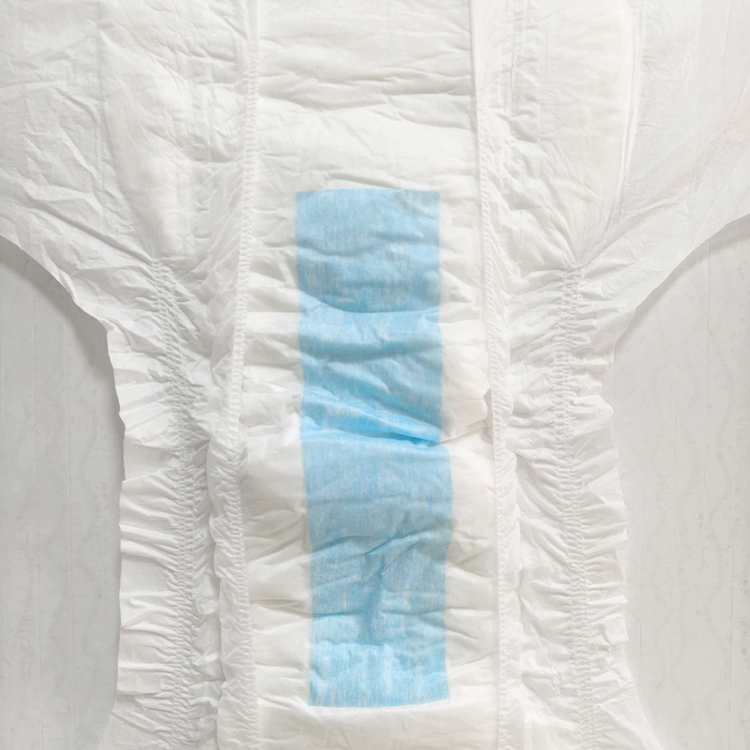
Run a finger around the outside of each leg opening to confirm that the outer cuff is unfolded. Check that the inner standing leak guards have not been trapped beneath the wearer or flattened into the core.
The waistband stabilizes the chassis, while leg cuffs and leak guards close the pathways around the thighs. Adult-diaper.com’s explanation of how leak guards, leg cuffs, and waist design reduce side leakage correctly treats these components as one system rather than isolated selling points.
Movement Check
Ask the wearer to perform movements that are safe and relevant:
Sit down and stand up
Walk several steps
Bend slightly
Lie on the back
Turn onto one side
Raise the knees while seated or lying down
After movement, inspect whether the waistband rolled, tabs shifted, back coverage dropped, core twisted, or leg gaps opened.
Skin and Moisture Check
Fit is also a skin-management issue. It should not be treated as leak prevention alone.
The U.S. Agency for Healthcare Research and Quality recommends high-absorbency briefs or pads that wick moisture away from the skin, together with skin barriers, scheduled voiding, linen checks, and other continence-management practices. AHRQ’s clinical implementation guidance also advises healthcare teams to obtain samples and trial products with their patient population.
A prospective study involving 98 nursing-home residents with fecal incontinence reported an incontinence-associated dermatitis incidence of 41%, or 40 of 98 participants. That study does not prove that diaper size alone caused the dermatitis, but it does show why prolonged moisture, contamination, friction, cleansing practices, and product performance deserve serious attention. The NIH-hosted study is a useful reminder that containment failures have consequences beyond wet clothing.
Seven Adult Diaper Sizing Mistakes I Would Reject
1. Using Pants Size
A 40-inch trouser size is not automatically a 40-inch diaper waist. Clothing may sit at a different point, use vanity sizing, stretch differently, or ignore the fullest abdominal circumference.
Measure the body.
2. Measuring Only the Natural Waist
The belly, hips, or seat may be larger than the natural waist. Record all relevant circumferences rather than choosing the smallest number.
3. Pulling the Tape Tight
Compressing soft tissue produces a measurement that the actual waistband cannot maintain comfortably during hours of wear.
4. Ignoring Rise
A correct circumference cannot rescue a brief that is too short from front to back.
5. Sizing Up for More Absorbency
A larger size may contain a larger core in some product lines, but increased dimensions can also open leg gaps. Select absorbency by the product specification and wear requirement, not by intentionally creating a loose fit.
6. Using One Brand’s Chart for Another Brand
Letter sizes are not universal. Re-measure and reopen the chart whenever the product changes.
7. Buying Bulk Before a Wear Trial
Test realistic movement, output, change intervals, sleep posture, clothing, and caregiver application before approving a case, pallet, tender, or private-label specification.
What B2B Buyers Should Put in an Incontinence Brief Sizing Guide
Retailers, distributors, care institutions, and private-label buyers need more than a wide waist range printed on the bag.
A useful incontinence brief sizing guide should include:
Waist range in centimetres and inches
Hip or seat range
Intended rise profile
Product length and width where appropriate
Tab landing or overlap guidance
Leg-opening or thigh-fit information
Day, overnight, mobile, wheelchair, or bed-care positioning
Application diagrams for standing and lying changes
Clear signs of undersizing and oversizing
A sampling procedure before bulk approval
For larger-size programs, the buyer should also review whether 2XL and 3XL use independently engineered chassis patterns or merely widened side wings. The adult diaper sizing guide for 2XL and 3XL programs identifies tab geometry, landing-zone length, core position, cuff angle, rear coverage, and movement testing as separate specification points.
That level of documentation may look excessive to a marketing team. It looks completely reasonable after the first wave of returns.
FAQs
How do you measure for adult diapers?
To measure for adult diapers, use a flexible tape to record the waist where the brief will sit, the fullest hip and seat circumference, and the total front-to-back rise through the crotch, keeping the tape level, flat, and comfortably snug rather than compressed.
Record centimetres and inches, then compare every measurement with the size chart for the exact product rather than relying on clothing size.
Should I use waist or hip measurement for adult diaper sizing?
Use both waist and hip measurements for adult diaper sizing, because the correct size should accommodate the largest relevant circumference while still allowing the waistband, tabs, leg cuffs, and absorbent core to remain correctly positioned during standing, sitting, walking, turning, or assisted care.
When a chart instructs buyers to use the larger number, follow that rule but still verify leg seal and rise through a wear test.
What is adult diaper rise measurement?
Adult diaper rise measurement is the curved distance from the intended front waistband position, down through the crotch, and up to the intended back waistband position, showing whether the brief has enough front and rear coverage without sagging, pulling, or placing the absorbent core too far forward or backward.
It is not the wearer’s height and should not be measured as a straight line through open space.
What should I do when measurements fall between two sizes?
When a wearer falls between adult diaper sizes, compare both measurements with the exact product chart, check whether the waist and hips fit inside one range, and trial the two neighboring sizes before ordering a full case, prioritizing secure coverage, comfortable tab placement, and closed leg gaps over the printed letter.
The larger option is not automatically safer because excess width can create thigh gaps and chassis movement.
How should an adult diaper fit?
A properly fitted adult diaper sits smoothly against the body, covers the front and back fully, keeps standing leak guards upright, closes the thigh openings without visible gaps, allows normal movement and sitting, and avoids deep pressure marks, rolled wings, twisted tabs, sagging, or an absorbent core that shifts away from the target area.
Recheck the fit after movement because a product can look correct immediately after application and fail once the wearer sits or turns.
Are adult diaper sizes the same across brands?
Adult diaper sizes are not standardized across brands, because labels such as Medium, Large, XL, 2XL, and 3XL can represent different waist ranges, hip limits, chassis lengths, rise profiles, landing zones, elastic tensions, and intended wear situations, so every product must be checked against its own current size chart.
Never transfer a successful size automatically from one brand or product format to another.
Does a larger adult diaper absorb more?
A larger adult diaper is not automatically more absorbent, because size describes body fit while absorbency depends on the core design, superabsorbent polymer and fluff distribution, acquisition speed, rewet control, leak guards, and intended wear period; sizing up can create leg gaps and cause leakage even when the larger product holds more liquid.
Select the required absorbency level first, then choose the correct body size within that performance category.
Measure Twice, Then Test the Fit
Record the wearer’s practical waist, largest abdominal circumference, fullest hip and seat, and total front-to-back rise. Compare all four numbers with the current product chart. Then test the selected brief while the wearer stands, sits, walks, lies down, or receives assisted care.
For distributors, institutional buyers, and private-label brands, send the target measurement ranges, mobility profiles, usage scenarios, absorbency requirements, and packaging plan through the adult diaper OEM and ODM service team.
Do not approve a size because the tabs happen to close.
Approve it because the waistband stays stable, the rise provides complete coverage, the cuffs remain sealed, the core stays correctly positioned, and the product survives real movement without avoidable leakage.