How Leak Guards, Leg Cuffs, and Waist Design Reduce Side Leakage
Side Leakage Is a Design Failure Before It Is an Absorbency Failure
Leaks tell truth.
After reviewing the mechanics behind side leakage, I would argue that the real fight is not between “thin” and “thick” diapers, but between an engineered seal system and a lazy absorbency brick that lets urine hunt for the weakest side exit.
Why are buyers still rewarding bulk?
Here is my unpopular opinion: many leak complaints are misdiagnosed. A customer says, “This diaper is not absorbent enough.” A procurement team hears, “Order a heavier SKU.” A brand manager hears, “Add more SAP.” But the body is not a laboratory beaker. It bends, sweats, turns, compresses, and creates gaps at the thigh crease and waistline.
That is where diaper leakage prevention actually starts.
The CDC/NCHS report on older Americans found that 50.9% of noninstitutionalized people aged 65 and older reported urinary leakage and/or accidental bowel leakage, while 43.8% reported urinary leakage specifically. In care homes, the operational burden is not abstract; it shows up as linen changes, interrupted sleep, skin complaints, and staff time.
And yes, we should talk about product dignity. But I care less about soft marketing copy and more about whether the leak guard stands up at 2:40 a.m. when someone turns onto their side.
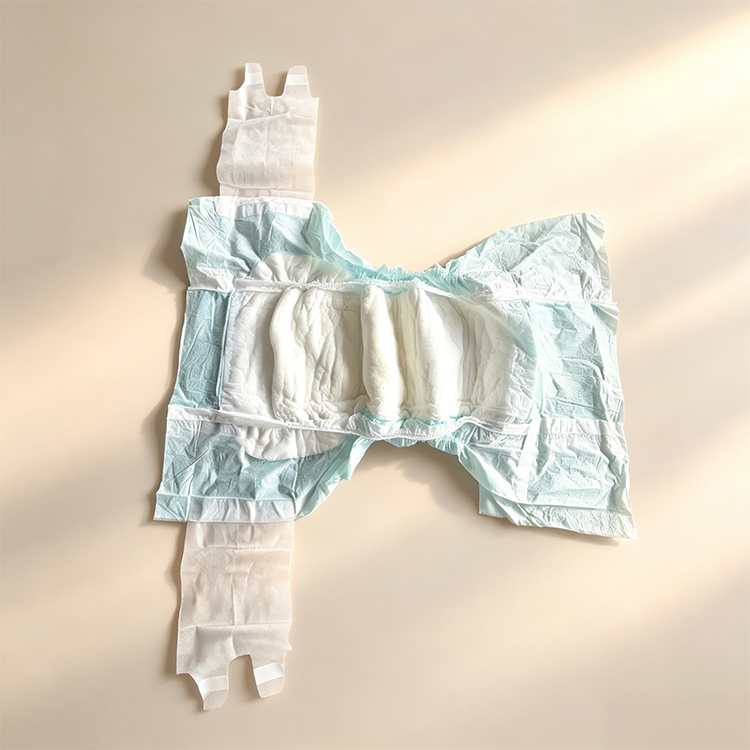
For users with moderate to heavy output, the first product path I would put in front of a buyer is not a generic pull-up. It is a properly fitted adult diaper with tabs because tab-style briefs give caregivers more control over waist tension, leg seal, and re-fastening during checks.
Table of Contents
The Leak Path: Where Urine Escapes When the Chassis Gets Lazy
Side leakage usually starts when liquid reaches the side channel faster than the core can pull it downward, or when the leg opening creates a physical gap during movement. The villain is not always low absorbency. Sometimes it is poor acquisition speed. Sometimes it is a collapsed cuff. Sometimes it is a waistband that looks snug while the hip line is actually loose.
I would audit the diaper in this order:
Side-Leak Control Point
What It Should Do
What Goes Wrong in Cheap Designs
What I Would Check First
Leak guards
Create raised internal walls that block lateral flow
Guards collapse, fold inward, or sit too low
Are the guards standing upright after application?
Leg cuffs
Seal the thigh crease during walking, sitting, and turning
Elastic is weak, over-stretched, or too tight in the wrong place
Is there a visible thigh gap when the user moves?
Waist design
Stabilize the chassis and stop front/back drift
Waistband slides, rolls, or cuts into skin
Does the waist stay snug without red marks?
Core intake layer
Pull urine down before it reaches the edge
Surface pooling creates a “river effect” toward the side
Does liquid spread fast or sit on top?
SAP/fluff distribution
Hold liquid without creating one swollen hotspot
Overloaded center pushes fluid sideways under pressure
Does the core bunch after 2–3 hours?
Tab placement
Control fit tension across belly and hips
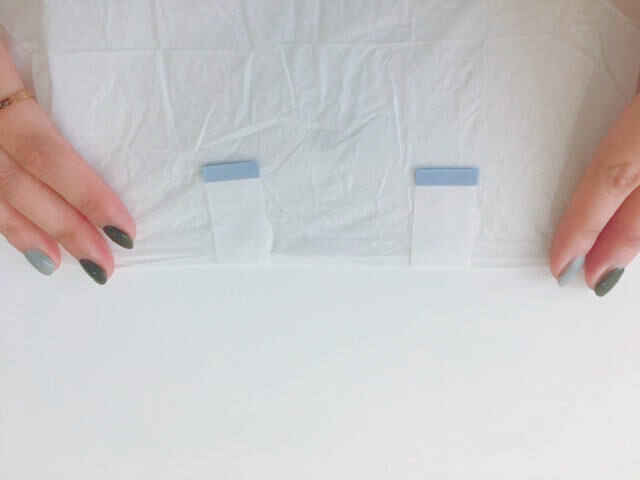
Tabs twist, angle badly, or create a banana-shaped side gap
Are tabs flat, symmetrical, and re-fastenable?
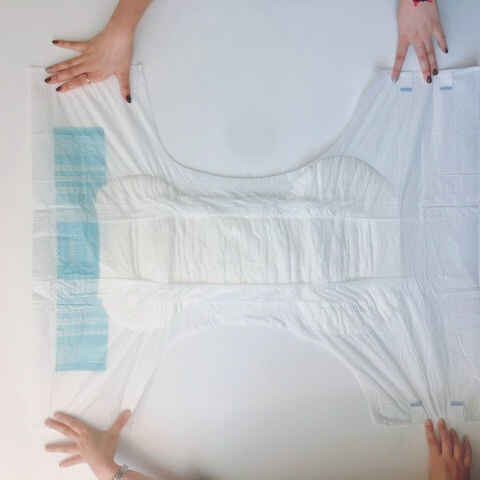
The adult diaper sizing and fit guide on this site already gets one thing right: side leaks are often a fit problem before they are a capacity problem. I would make that point louder. Waist, hip, leg opening, and cuff position are not “comfort details.” They are the leak-control architecture.
Leak Guards Are Not Decoration. They Are Side Walls.
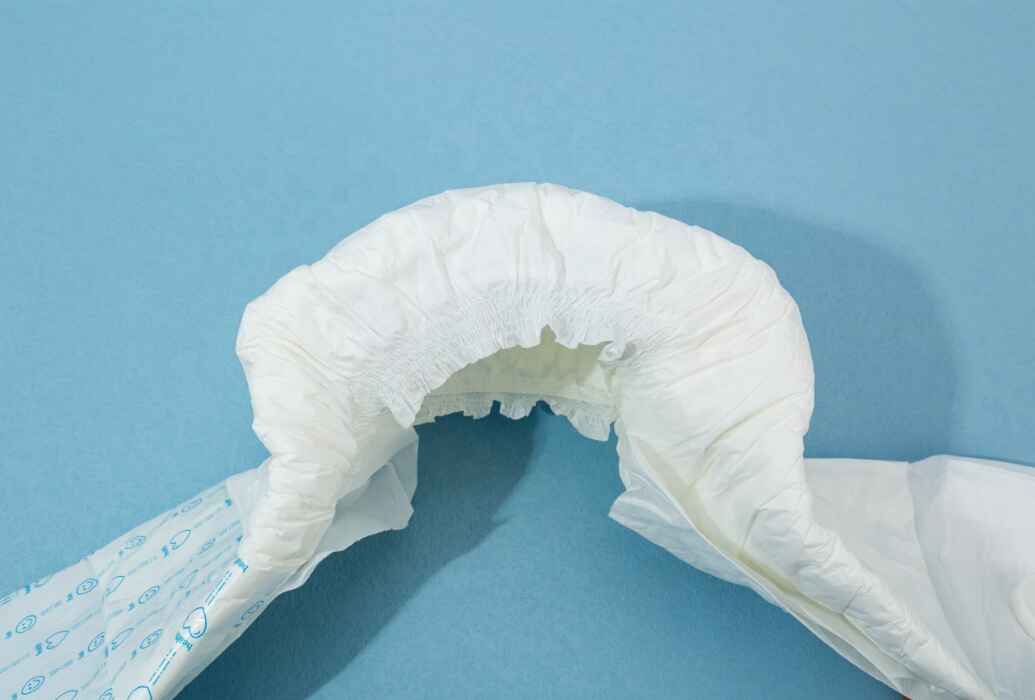
A leak guard is a raised inner barrier, usually made from hydrophobic nonwoven material, designed to stop urine from moving sideways before the absorbent core can take it in. The best versions stand vertically, resist folding, and keep their shape when the wearer sits, rolls, or transfers from bed to chair.
That sounds simple.
It is not.
A weak leak guard may look acceptable in a product photo, but under real compression it collapses like wet cardboard. Once that happens, liquid does not politely stay in the center channel. It moves toward the thigh crease, then into clothing, bedding, or a chair pad.
The International Continence Society abstract on ISO 11948-1/Rothwell testing reviewed 141 diapers and inserts, with nearly 24,000 used pads saved and weighed; it concluded that Rothwell absorption capacity can help predict leakage performance, but also warned purchasers not to create rigid rankings from small lab differences. That warning matters because lab capacity alone does not explain fit, comfort, and movement behavior.
So here is the hard truth: “leak proof diapers” is often sloppy SEO language unless the product design supports the claim with upright leak guards, reliable leg cuffs, stable waist elastic, and a core that pulls fluid away fast enough. No adult diaper is truly leak-proof in every body position. A serious brand should say “leak-resistant” or “designed to reduce leakage” unless it has real test data.
Leg Cuffs Decide Whether the Side Seal Survives Movement
Leg cuffs are elasticized side seals that sit around the thigh opening and help close the gap between the diaper and the body. In diaper side leakage, cuffs are often the part that fails first because thighs move constantly: walking, sitting, standing, side sleeping, wheelchair transfers, and caregiver repositioning all stress the same narrow seal.
This is why I dislike oversized briefs. Bigger is not safer. Oversizing creates droop, and droop creates a leak path.
For active adults, incontinence underwear can make sense because pull-up style products are easier for independent changes. But for heavy leakage, limited mobility, or caregiver-assisted use, pull-ups often lose the side-seal battle. The product may be discreet, but discretion does not clean a wet mattress.
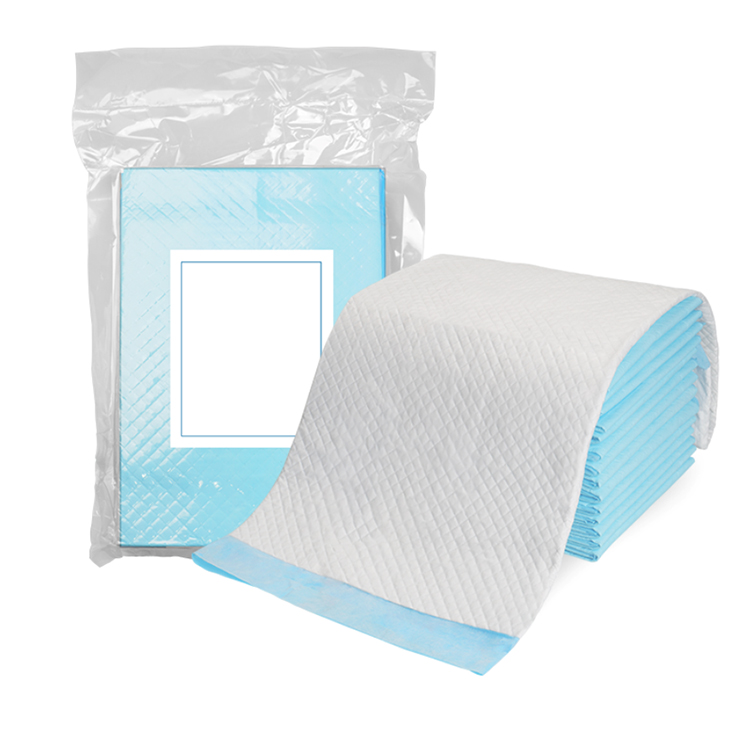
For bedbound users, I would rather see a properly applied tab brief paired with disposable underpads for adults than a proud claim of “maximum absorbency” with no backup layer. Underpads are not an admission of failure. They are risk control.
Waist Design Is the Silent Engineer Behind Diaper Leakage Prevention
The waist does more than hold the diaper up. It stabilizes the entire chassis.
When the waist is too loose, the brief shifts downward and opens the leg channel. When it is too tight, it can distort the absorbent core, pull the leak guards out of position, or leave red pressure marks. When the front and back rise are poorly matched to body shape, side leakage appears even though the absorbent pad still has unused capacity.
That is the part buyers hate hearing: unused absorbency does not mean good performance.
A good waist design should maintain contact during three moments:
Sitting
The belly folds, the hip angle closes, and the front panel may wrinkle. If the waist lacks recovery, the diaper sags.
Side Sleeping
Gravity changes the leak path. Urine can run toward the hip instead of down into the core. This is where leak guards and leg cuffs either work as a system or fail together.
Transfers
Bed-to-chair movement pulls the chassis diagonally. If tabs and waist elastic are weak, one side loosens first. That is when the “mystery side leak” appears.
For longer wear windows, I would add booster pads for adult diapers only after the base brief fits correctly. A booster pad can add capacity, but it cannot fix a thigh gap. Worse, a badly chosen insert can raise the core too high and push the cuffs away from the body.
The Skin Evidence Buyers Ignore Until Complaints Start
Leakage is not only a laundry problem. It is a skin problem.
The NIH/NIDDK 2024 Urologic Diseases in America report estimated claims-based urinary incontinence prevalence among people aged 65 and older at 6–8% annually from 2012 to 2021, while noting that claims data likely reflects underreporting. Translation: the real user base is bigger than the medical paperwork makes it look.
That underreporting creates bad procurement behavior. People buy quietly. Care teams improvise. Families wait too long to upgrade. Then skin problems arrive.
The systematic review on incontinence-associated dermatitis among older adults reviewed research from January 2010 to December 2020 and found that prevention strategies included assessment, incontinence management, cleansing, skin barrier products, body positioning, nutrition, education, and outcome evaluation. It also noted skin cleansing pH ranges of 4.0 to 6.8 in care strategies.
Wounds International describes healthy skin’s acidic pH as roughly 4.5–5.5 and explains that urine and feces can shift skin toward a more alkaline state; urea can be converted by skin bacteria into ammonia, weakening the acid mantle and increasing irritation risk. That is why leakage control, pH-balanced cleansing, and dry-surface performance belong in the same conversation.
This is where adult body wipes belong naturally in the care routine. Not as an upsell. As part of the skin-protection system.
The Medicaid Case That Exposed the Real Status of Incontinence Supplies
The industry likes to pretend adult diapers are just consumer goods. The courts and Medicaid policy are saying something more serious.
In October 2024, Disability Rights Florida reported that Florida Medicaid began covering medically necessary incontinence supplies for adults over 21 after a class action lawsuit against Florida’s Agency for Health Care Administration. The covered supply examples included disposable briefs, adult diapers, protective underwear, pull-ons, liners, shields, guards, pads, and undergarments.
That is not a small policy footnote. It is a signal.
If adult incontinence products are medically necessary for some users, then side leakage is not just a “bad customer experience.” It can mean skin breakdown, infection risk, lost sleep, caregiver overload, and dignity loss. So yes, I judge diaper leakage prevention harshly. Brands should too.
What I Would Demand From a Side-Leak-Resistant Adult Diaper
I would not approve a product line on absorbency grams alone.
Here is my working checklist:
Leak Guard Height and Recovery
The guard should stay upright after compression. If it folds inward during application, the design is already weak.
Cuff Elastic Strength
Leg cuffs should hug the thigh without cutting. Red marks mean pressure. Visible gaps mean leakage.
Waist-to-Hip Fit
Measure both. Choose by the larger number. Adult bodies are not uniform cylinders, and sizing only by waist is a lazy mistake.
Core Intake Speed
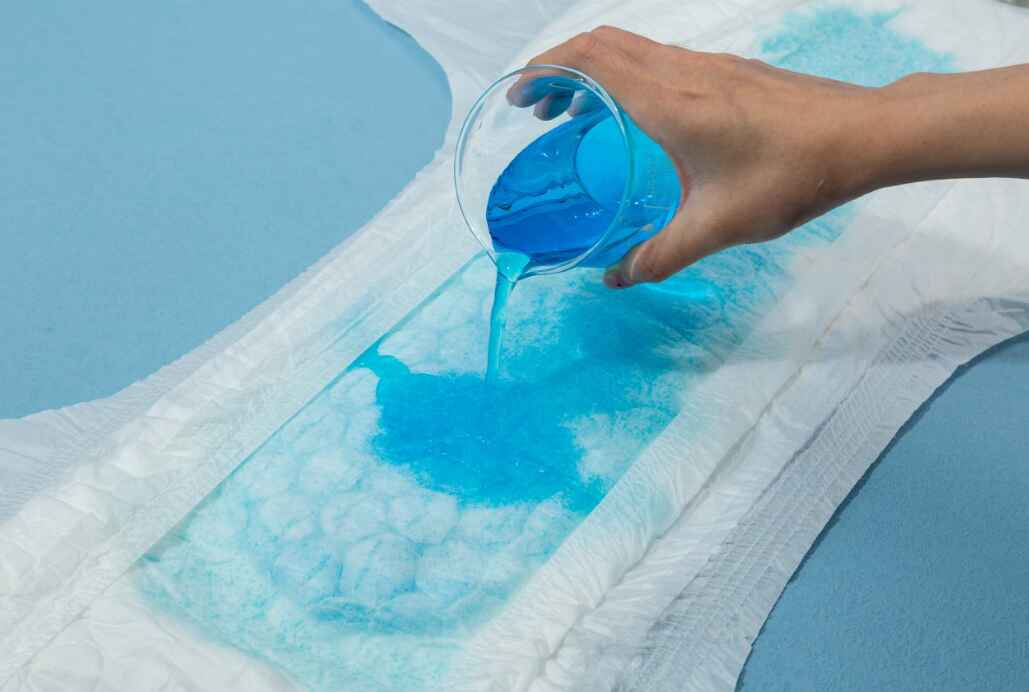
A slow core lets urine pool. Pooling feeds side leakage, especially during gush episodes.
Rewet Control
A wet surface increases skin risk and user discomfort. High SAP does not matter if the topsheet stays damp.
Use-Case Matching
A mobile adult, a side sleeper, a bariatric user, and a bedbound patient do not need the same chassis. Pretending otherwise is how brands get returns.
FAQs
How do leak guards reduce diaper side leakage?
Leak guards reduce diaper side leakage by acting as raised inner barriers that slow lateral urine movement before liquid reaches the leg opening, giving the absorbent core more time to pull fluid downward and helping protect clothing, bedding, and chairs during sitting, turning, or transfers.
In plain terms, they buy time. The core still has to do its job, but a standing guard blocks the fast side escape route. If the guard collapses or folds under the body, the whole system becomes weaker.
What is the fastest way to prevent diaper side leakage?
The fastest way to prevent diaper side leakage is to match the diaper to the user’s larger waist-or-hip measurement, stand the leak guards upright, smooth the leg cuffs outward, and confirm the waistband sits snugly without cutting into the skin.
Do not start by buying the thickest option. Start by checking the fit. A heavy brief with a thigh gap can leak faster than a lighter brief with a better seal.
Are leg cuffs or waist design more important for diaper leakage prevention?
Leg cuffs and waist design are equally important because cuffs seal the thigh opening while the waist stabilizes the whole diaper chassis; if either part fails, movement can shift the absorbent core, collapse the leak guards, or open a side channel where urine escapes.
I would never isolate one feature and call it the answer. The winning design is a system: cuff, guard, waist, tab, core, and user fit working together.
Can booster pads stop adult diaper side leakage?
Booster pads can help adult diaper side leakage only when the main brief already fits correctly, because they add absorbent capacity and improve liquid distribution, but they cannot close leg gaps, fix loose waistbands, or rescue collapsed leak guards caused by poor sizing or application.
Use boosters when the problem is longer wear time or heavy first-hour output. Do not use them as a cover-up for a bad chassis.
Why do adult diapers leak at night even when they are high absorbency?
Adult diapers leak at night because sleep position, side pressure, slow intake speed, waist drift, and leg-cuff gaps can redirect urine toward the edges before the absorbent core captures it, even when the product still has unused theoretical capacity.
Night is harsher than daytime. A side sleeper can expose every weakness in the waist, cuff, and leak guard geometry.
Your Next Steps: Audit the Seal Before You Blame Absorbency
Stop chasing puff.
If you are sourcing, buying, or evaluating adult diapers, test the leak path before you approve the absorbency claim. Measure waist and hips. Apply the brief. Stand the leak guards. Check the cuffs after sitting and turning. Review whether the user is mobile, bedbound, side-sleeping, or caregiver-assisted.
Then build the care system around reality: a well-fitted tab brief for heavy needs, pull-up underwear for independent users, booster pads for longer wear time, underpads for bed protection, and pH-balanced wipes for skin care.
My blunt advice: before you order a “higher absorbency” diaper, prove that your current one is not leaking through the side because of fit, cuff collapse, or waist drift. That single audit may save more complaints than another layer of SAP.