Disposable underpads should be changed immediately whenever they become wet, soiled, contaminated, torn, bunched, or unable to keep the contact surface dry. For people with fragile skin, restricted mobility, frequent leakage, or fecal incontinence, caregivers should check the pad at least every two to three hours and replace it whenever needed.
That is the useful answer.
Not “every eight hours.” Not “once per shift.” And certainly not “when it finally leaks through.”
My rule is simple: the condition of the pad determines the change, while the clock determines when someone checks it. A dry, clean, flat underpad may remain usable. A damp pad is finished, even if its waterproof backing has successfully protected the mattress.
This article provides general care and product-selection guidance. An individual clinical care plan, facility protocol, wound-care instruction, or healthcare professional’s recommendation should always take priority.
The Real Rule: Change by Condition, Not by Clock
Wet means done.
A disposable underpad may still look acceptable from the blue or cloth-like backsheet while the topsheet has already begun returning moisture under body pressure, which means the bed stays protected but the user remains exposed to dampness, heat, friction, and residue.
What exactly is being protected—the mattress or the person?
The US Agency for Healthcare Research and Quality recommends checking incontinence pads frequently, including every two to three hours for patients with significant moisture exposure, and changing them as needed. Notice the wording. It says check frequently and change as needed, not discard every pad automatically at the two-hour mark. The distinction matters for both skin protection and product waste. See the AHRQ pressure-injury prevention guidance. disposable underpad immediately when it is:
Wet from urine, sweat, cleaning liquid, wound drainage, or another fluid
Contaminated with stool, blood, vomit, or potentially infectious material
Damp or cool to the touch when light pressure is applied
Producing noticeable odor
Torn, punctured, or leaking through the backsheet
Folded, wrinkled, curled, or bunched beneath the user
Swollen or clumped in one area
Wet near the edges, even if the center appears usable
Removed from its original position during a care procedure
A disposable product is a single-use product. Once it has absorbed fluid or has been removed following a contamination event, it should not be dried, turned over, or put back into service.
A Practical Underpad Change Schedule
There is no universal underpad change frequency that works for every user. Output volume, mobility, skin condition, positioning, continence product fit, room temperature, stool exposure, and the underpad’s actual rewet performance all change the answer.
Here is the schedule I would use as a starting framework.
Care situation
When to check
When to change
Main reason
Occasional light urinary leakage
After a known leak and during regular care
Immediately when wet or damp
Prevent prolonged moisture exposure
Bedbound user with fragile skin
At least every 2–3 hours or according to the care plan
At the first sign of wetness, soiling, bunching, or surface rewet
Skin cannot easily escape pressure or moisture
Fecal incontinence or diarrhea
Immediately after every episode
Immediately, without waiting for the next scheduled round
Stool creates a higher skin and contamination burden
Overnight bed protection
Before sleep, during planned toileting or repositioning, and on waking
Whenever wet, soiled, leaking, odorous, or uncomfortable
“Overnight” does not mean “leave until morning”
Wheelchair or recliner use
At transfers and regular skin checks
When damp, folded, displaced, or contaminated
Sitting pressure can force retained moisture back upward
Procedure, wound-care, or hygiene use
During and immediately after the task
After contamination or completion of the procedure
Disposable hygiene and contamination control
Dry, unused bed pad
At routine care intervals
Keep only while completely clean, dry, flat, and intact
Avoid unnecessary disposal without ignoring hidden moisture
This table is a starting point, not a substitute for observation.
But it exposes a common industry mistake: companies sell “eight-hour protection” as though an absorbency claim were permission to ignore the pad for eight hours. It is not. Laboratory capacity, sometimes measured under free-swelling conditions, does not tell you how dry the topsheet remains beneath a person who is lying, turning, or sitting on the absorbed core.
Why a Wet Underpad Becomes a Skin Issue
A disposable bed pad protects furniture and linen. It does not automatically protect skin.
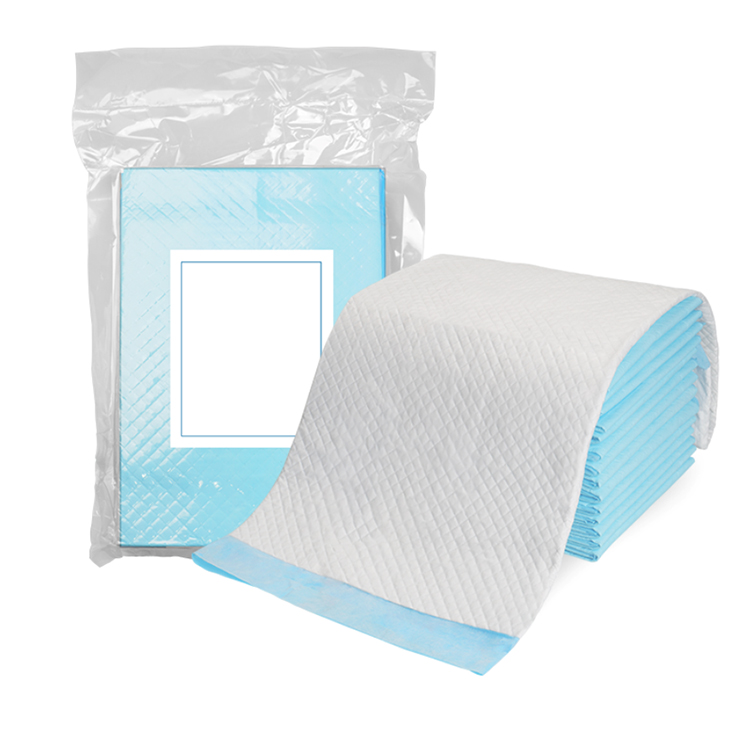
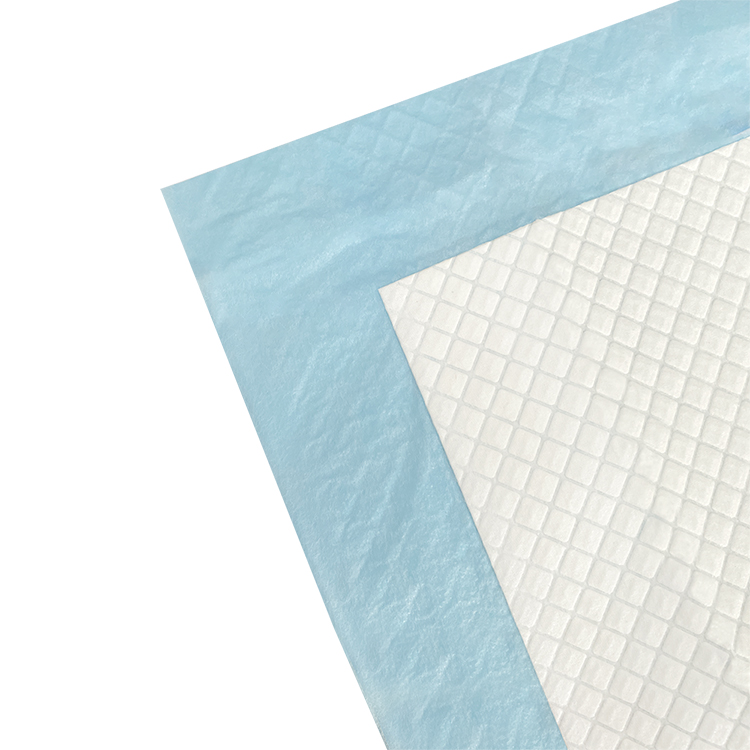
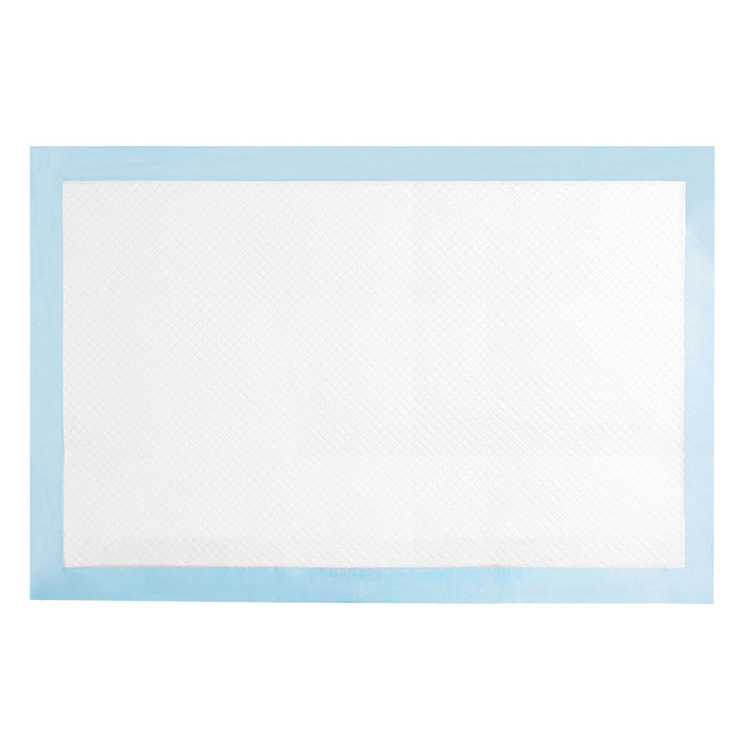
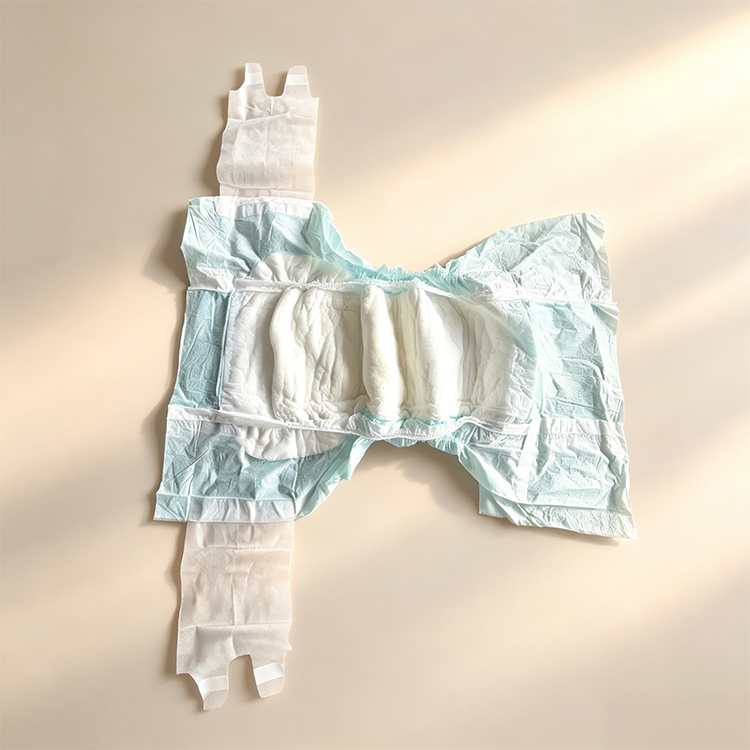
The typical product contains a nonwoven topsheet, an absorbent core made from fluff pulp and superabsorbent polymer, and a waterproof polyethylene or cloth-like backsheet. Sodium polyacrylate, commonly written as the repeating polymer unit (C₃H₃NaO₂)ₙ, helps retain liquid inside the core.
That sounds reassuring.
But retention is only half the test. Fluid must enter the core quickly, spread without flooding the edges, stay locked under pressure, and avoid returning to the surface when body weight compresses the pad. Buyers who need the technical distinction should review this guide to underpad intake speed versus retention.
A pad can therefore fail in three separate ways:
Strike-through failure
Liquid does not pass through the topsheet quickly enough. It pools, moves sideways, or escapes before the core can absorb it.
Retention failure
The core absorbs the initial fluid but cannot hold it when the user sits, turns, or lies on the wet area.
Rewet failure
Fluid moves back toward the topsheet under pressure. The waterproof backing may remain perfectly dry while the contact surface becomes damp again.
That third failure is widely misunderstood. A dry mattress does not prove that an underpad is still suitable for continued contact.
What the Data Says About Moisture and Caregiver Burden
This is not a small housekeeping issue.
A May 2024 point-prevalence study across three residential-care settings in Ireland examined 191 older adults. Researchers reported that 86.4% were incontinent, while incontinence-associated dermatitis affected 11.5% of the total group and 13.3% of incontinent residents. The authors defined the condition as inflammation caused by contact with urine, feces, or both. Read the 2024 residential-care study on PubMed. ages are uncomfortable for a reason. They show that moisture exposure is routine in long-term care, while visible skin damage is far from rare.
A separate peer-reviewed PLOS ONE study, published on March 7, 2024, mailed surveys to 743 caregivers in Komatsu City, Japan, and received 402 responses. Almost 99% of the older adults represented in the study used absorbent incontinence products. Among family caregivers, leakage from absorbent products was the most frequently reported physical toileting burden, affecting 46.5%.
The same study found that combining urinary pads with diapers was associated with greater leakage burden, with an adjusted odds ratio of 2.837 and a 95% confidence interval of 1.262–6.377. The researchers did not study disposable bed underpads specifically, but their findings expose the larger problem: adding more absorbent material without matching fit, flow direction, product structure, and change timing can produce more failure rather than less.
And here is my harder opinion: whenever a facility responds to leakage simply by adding another pad, it is delaying the real investigation. Is the body-worn product the wrong size? Is the user lying on one saturated zone? Is the underpad too small? Is the intake speed too slow? Are checks being missed?
Those are less comfortable questions. They are also the useful ones.
When Should Disposable Underpads Be Changed After Urine?
Change the underpad as soon as urine reaches it.
Do not wait until the entire absorbent area changes color, becomes heavy, or leaks through. Urine may be concentrated in one section beneath the pelvis or hips, especially when a person remains in one position. That wet zone can stay in contact with the same skin area even though most of the underpad still looks unused.
For light leakage, caregivers sometimes argue that the pad “has more capacity.” Technically, it may. Operationally, that is the wrong question.
The better questions are:
Does the topsheet still feel dry under light pressure?
Is fluid spreading toward the edges?
Is the user lying or sitting directly over the wet zone?
Does the user have fragile skin, reduced sensation, or limited mobility?
Will the next inspection happen soon enough?
When the answer is uncertain, change the pad.
For readers who first need to distinguish surface protection from body-worn containment, the guide to what disposable underpads are used for explains where bed pads, adult diapers, pull-ups, booster pads, and washable underpads fit within the care routine.
When Should Underpads Be Changed After Stool?
Immediately.
Stool exposure requires prompt removal of the underpad, gentle skin cleansing, drying, inspection, and application of an appropriate barrier product when included in the person’s care plan. Waiting for the next two-hour check is not acceptable once fecal contamination has been identified.
The AHRQ guidance recommends mild cleansing methods, packaged cleanser wipes, moisture barriers, and frequent pad checks for moisture-exposed patients. A suitable adult wipe for incontinence care can support the cleaning stage, but wipes do not replace skin assessment or clinical treatment when damage is present. ive scrubbing. More friction is not better cleaning.
And avoid assuming every red area is ordinary “diaper rash.” Persistent redness, maceration, pain, open skin, blistering, unusual odor, or worsening damage should be assessed by a qualified healthcare professional.
How Often Should Underpads Be Changed Overnight?
Overnight underpads should be checked during planned nighttime care and replaced whenever wet or soiled. They should not automatically be left in place until morning simply because the packaging uses words such as “overnight,” “maximum,” or “heavy absorbency.”
Nighttime creates several hidden problems:
The user may remain in one position for hours.
Body pressure may increase rewet.
Nocturia may cause multiple smaller leaks.
A body-worn brief may shift during turning.
Caregivers may delay checks to preserve sleep.
Diarrhea or fecal leakage may go unnoticed.
Heat and perspiration can make the surface damp without a major urine event.
A sensible overnight routine starts with a clean, dry underpad before sleep. It then coordinates pad checks with scheduled toileting, brief changes, medication rounds, repositioning, or other necessary care rather than waking the person repeatedly without purpose.
That is the balance: protect sleep without using sleep as an excuse for prolonged moisture exposure.
Should Underpads Be Changed After Every Use?
Yes—after every actual contamination or absorption event.
But “use” needs a clear definition. A disposable underpad that has been placed on a bed but remains completely dry, clean, flat, intact, and uncontaminated has not necessarily completed its useful life. There is no evidence-based reason to throw away a dry pad every two hours solely because two hours have passed.
Once it has absorbed urine, contacted stool, caught wound drainage, become wet during washing, or been removed following a contamination event, its single use is finished.
Do not:
Turn a wet underpad over
Place a second pad on top to hide moisture
Dry it and use it again
Move a contaminated pad from a bed to a chair
Reapply a pad that touched the floor
Keep using it because the backsheet has not leaked
Disposable means single-use, not unlimited-use-until-leakage.
How to Change a Disposable Underpad
The exact method depends on the person’s mobility, transfer requirements, clinical condition, and care plan. In routine home or facility care, the process should protect dignity while avoiding unnecessary dragging, friction, and exposure.
1. Prepare the replacement first
Have a clean underpad, gloves when required, cleansing supplies, a waste bag, fresh clothing or linen, and any prescribed skin-protection product within reach.
2. Explain the change
Tell the person what is happening, even when cognitive impairment is present. Close doors or curtains and keep unnecessary body areas covered.
3. Remove the contaminated pad carefully
Fold the wet or soiled surface inward so it does not spread contamination onto clothing, linen, equipment, or the caregiver.
4. Clean, dry, and inspect
Clean urine or stool from the skin using the method specified in the care plan. Pat dry rather than rubbing aggressively. Check for redness, maceration, pain, breaks, rash, or pressure-related discoloration.
5. Position the new underpad correctly
Place the soft absorbent surface upward and the waterproof backsheet against the bed or chair. Center the absorbent zone beneath the area most likely to receive leakage.
6. Remove wrinkles
A pad should lie flat. Folding a large bed pad into a wheelchair or allowing it to bunch under the hips may create discomfort, instability, and harder-to-detect wet zones.
7. Dispose and document when required
Discard the pad according to local waste rules. In professional care, document relevant output, skin findings, repeated leakage, diarrhea, blood, unusual odor, or a change in the normal pattern.
Why Underpad Quality Changes the Schedule
A good change protocol cannot rescue a poorly matched product.
And a high-capacity pad cannot rescue a poor protocol.
The best disposable underpads for adults combine suitable dimensions with rapid strike-through, low rewet, stable fluid distribution, sealed edges, adequate backsheet strength, and enough core capacity for the intended leakage pattern.
Buyers should investigate:
Specification
What it reveals
Finished dimensions
Total coverage on the bed, chair, or wheelchair
Absorbent-zone dimensions
Whether the supplier has reduced the actual core area
Strike-through time
How quickly fluid enters through the topsheet
Rewet result
How much moisture returns under pressure
Core distribution
Whether fluid stays concentrated or spreads effectively
SAP and fluff balance
Retention versus acquisition behavior
Edge-seal quality
Resistance to side seepage
Backsheet strength
Resistance to tearing and strike-through
Surface stability
Whether the pad shifts, curls, or bunches
Pack and case configuration
Storage, replenishment, and caregiver access
The buyer who asks only for total milliliters is buying a laboratory headline. The buyer who asks about strike-through, rewet, core mapping, edge sealing, and use conditions is buying performance.
For a deeper comparison of single-use and laundry-based care systems, review disposable versus washable underpads. Disposable products usually win when speed, contamination control, travel, or limited laundry capacity matter. Washable products can make more sense when stock rotation, laundering, drying, and replacement inventory are properly managed.
Warning Signs That the Current Change Routine Is Failing
A failed underpad routine does not always begin with a soaked mattress. It often begins with smaller signals that purchasing teams and caregivers dismiss.
Watch for:
Recurring redness in the same contact area
Damp skin despite a dry mattress
Corners curling during movement
Repeated leakage from one edge
Strong urine odor before the next planned check
Core material gathering into lumps
Frequent full linen changes
Caregivers stacking pads
Users sliding on chairs or recliners
Overnight leakage despite buying a thicker product
Staff reporting that the pad feels wet “too soon”
Higher usage without fewer leakage incidents
These are not merely product complaints. They are diagnostic clues.
When I review a hypothetical care protocol, I would never accept “change every six hours” without also asking what happens after stool, how wetness is checked, who documents skin changes, what product performance was tested, and what staff should do when the planned schedule clearly fails.
A timetable without triggers is bureaucracy. A trigger without regular inspection is wishful thinking.
FAQs
How often should disposable underpads be changed?
Disposable underpads should be changed immediately when they become wet, soiled, contaminated, torn, bunched, or unable to keep the contact surface dry; for people with fragile skin, limited mobility, or frequent incontinence, the pad should also be checked at least every two to three hours and changed whenever needed.
The two-to-three-hour period is an inspection interval for higher-risk situations, not permission to leave a known wet pad in place. Facility protocols and individual care plans may require more frequent observation.
Should underpads be changed after every use?
Disposable underpads should be discarded after any actual use involving urine, stool, blood, wound drainage, cleansing fluid, or visible contamination, but a pad that was placed correctly and remains completely dry, clean, flat, and intact does not automatically require replacement solely because a fixed number of hours has passed.
Once removed after contamination, the pad should not be reused, turned over, transferred to another surface, or allowed to dry for later use.
Can a disposable underpad last all night?
An overnight disposable underpad can remain in place only while it stays dry, flat, intact, and comfortable, but it should be checked during planned nighttime toileting or repositioning and replaced immediately after leakage, stool exposure, edge seepage, strong odor, or any sign that moisture is returning to the surface.
“Overnight absorbency” describes the intended capacity tier. It does not guarantee that the surface will remain suitable for every user until morning.
Is it safe to layer two disposable underpads?
Layering disposable underpads is generally a poor substitute for choosing the right size and absorbency because the top pad may shift, wrinkle, hide saturation, increase heat, and make checks harder, while the lower pads add cost without improving how quickly the first surface accepts fluid.
Layering may also encourage caregivers to remove only the top pad while leaving unnoticed moisture or contamination beneath it. Use one correctly specified underpad unless a clinical protocol says otherwise.
How can I tell when an underpad is saturated?
A disposable underpad is saturated when liquid spreads toward the edges, the top feels cool or damp under light pressure, the core swells or clumps, the pad becomes heavy, odor increases, or moisture begins to return to the surface even though the waterproof backsheet has not leaked.
Do not rely only on visible color. Pressure from the hand or body can reveal rewet that is not obvious during a quick visual check.
What are the best disposable underpads for adults?
The best disposable underpads for adults are pads matched to leakage volume, body position, mobility, surface dimensions, skin risk, and the planned change interval, with fast strike-through, low rewet, stable core distribution, sealed edges, and a backsheet strong enough to stay intact during routine care.
A thin economy pad may suit short procedures or light chair protection. Bedbound, overnight, heavy-leakage, and long-sitting applications usually require a different construction rather than simply a larger outer sheet.
When should skin redness be assessed by a professional?
Persistent redness, burning, pain, maceration, open skin, blistering, unusual odor, or worsening rash after incontinence exposure requires clinical assessment because these signs may reflect incontinence-associated dermatitis, pressure injury, infection, allergy, or another condition that cannot be solved simply by changing underpad brands.
People should also seek medical advice when incontinence starts suddenly, changes significantly, includes blood, causes pain, or disrupts daily life. The NHS urinary incontinence guidance recommends discussing any urinary incontinence with a healthcare professional rather than assuming it is an unavoidable part of aging. Step: Build a Change Protocol That Survives 2 A.M.
Start by writing one operational rule:
Check frequently. Change immediately when wet, soiled, contaminated, damaged, displaced, or no longer dry at the surface.
Then test the rule against the real care setting. Is the underpad being used on a bed, wheelchair, recliner, examination table, or during hygiene care? Is the user mobile, assisted, bedbound, or experiencing diarrhea? Does the pad remain dry under pressure? Are caregivers recording repeated leaks and skin changes?
For purchasing teams, compare samples from the disposable underpads product range using strike-through, rewet, edge leakage, backsheet strength, surface stability, and real positioning conditions—not pack price alone.
And for private-label, distribution, pharmacy, or institutional programs, define the expected use setting and change routine before requesting quotations through the adult incontinence OEM and ODM service.