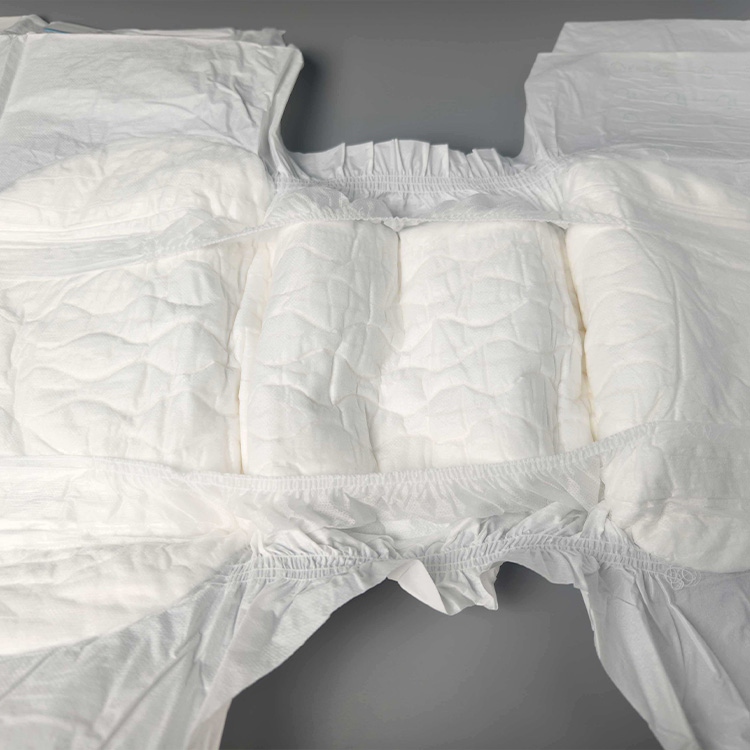
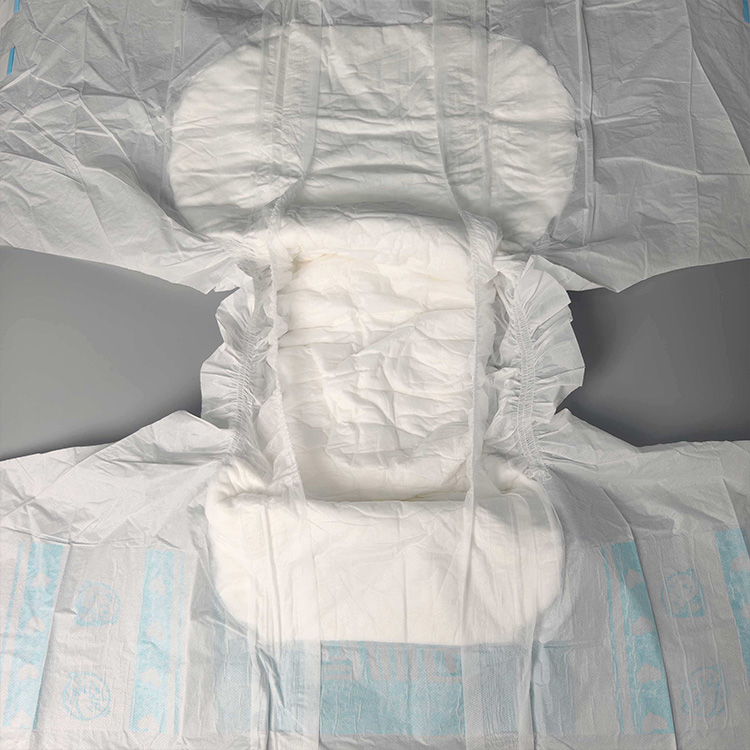
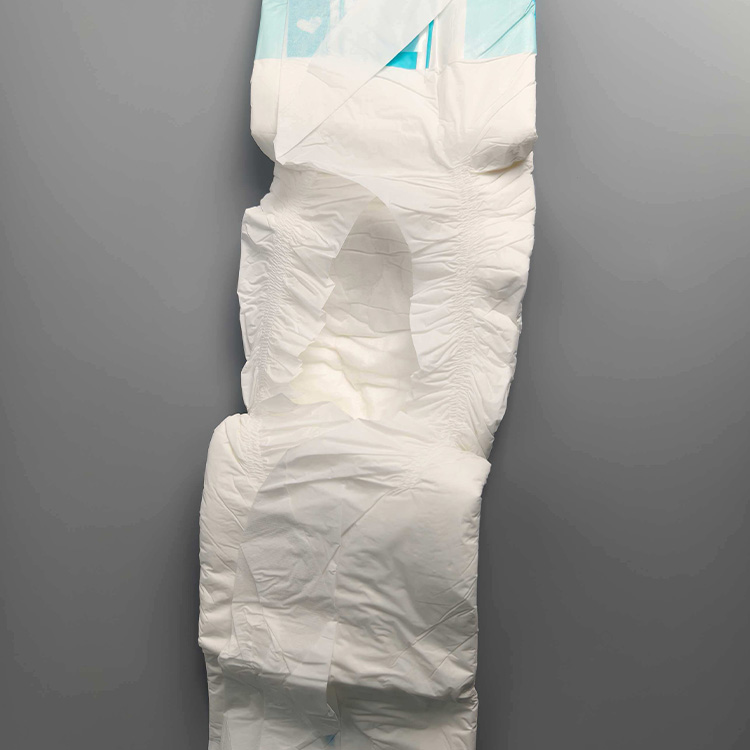
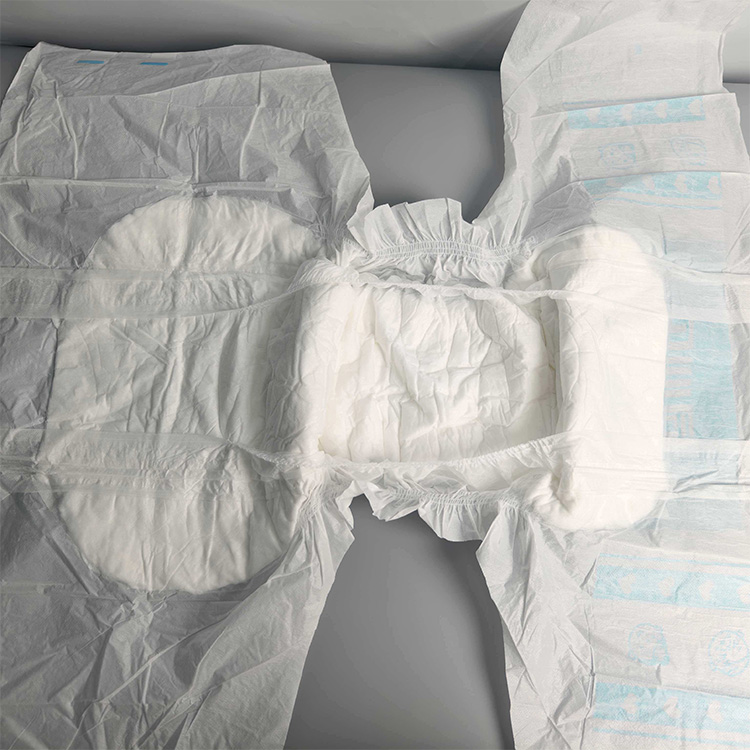
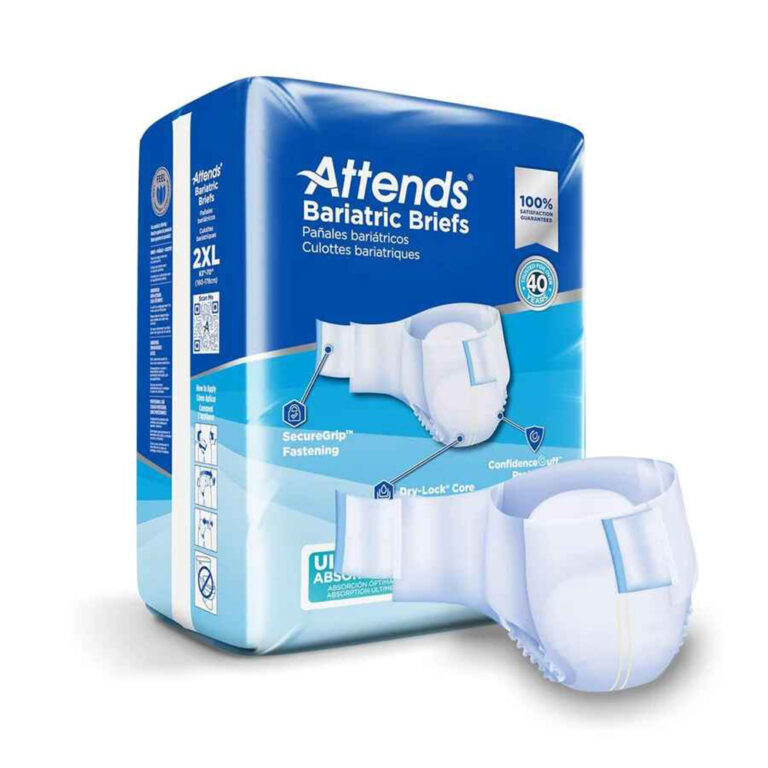
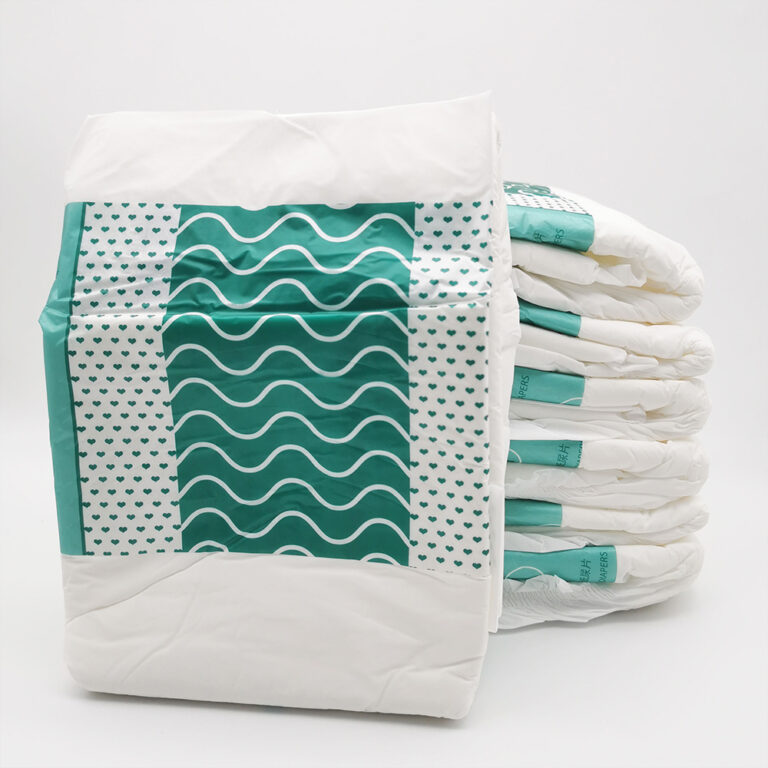
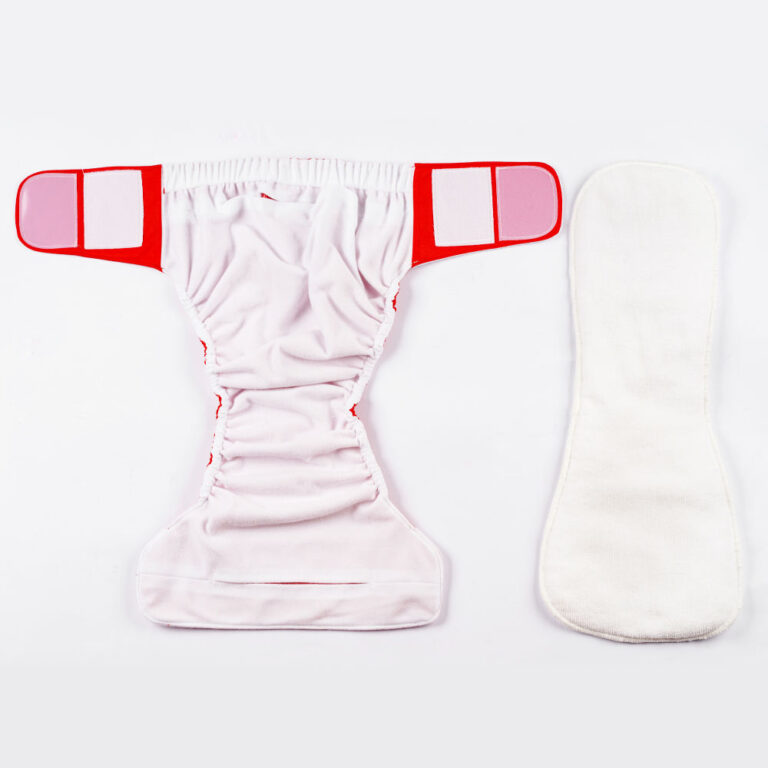
Can Thinner Adult Diapers Reduce Shipping Emissions Without Reducing Performance?
Yes—but conditionally.
Thin can work.
But only when the redesigned adult diaper moves liquid quickly, retains it under body pressure, remains stable after packaging compression, and increases the number of usable products transported per carton, pallet, or container without creating more leaks, changes, returns, or discarded stock.
Otherwise, what exactly has been reduced?
The uncomfortable answer is that thickness alone proves almost nothing. A supplier can remove fluff pulp, squeeze the folded product harder, reduce the bag size, and describe the result as a sustainable adult diaper. That does not establish lower emissions. It may simply move the environmental cost into product failures, wet linen, replacement briefs, damaged cartons, or emergency replenishment orders.
My rule is blunt: a thinner adult diaper earns a carbon claim only after both performance data and logistics data improve.
The Evidence Supports Lightweighting, Not Blind Thinning
The strongest public lightweighting evidence I found comes mainly from baby-diaper research rather than adult briefs. That distinction matters. Adult products have larger dimensions, different void volumes, longer wear periods, stronger compression from sitting, and more varied body shapes.
Still, the underlying material and freight mechanisms are relevant.
A peer-reviewed UK Environment Agency life-cycle assessment reported that the average disposable nappy became 13.5% lighter between 2001/02 and 2006. The study associated that change, together with reduced manufacturing energy, with an approximately 12% reduction in global-warming impact. Its sensitivity analysis estimated that a further 10% product-weight reduction could lower global-warming impact by about 8%.
That is meaningful. But notice what the report measured: a life-cycle change, not a marketing adjective.
The 2021 UNEP Life Cycle Initiative report on single-use nappies reviewed a glueless product design that weighed 23% less than its standard comparison. The lower material inputs reduced transport, packaging, and waste-management impacts, while a 15% raw-material reduction was estimated to reduce global-warming potential by 12% to 15%, depending on the design.
The same UNEP review also reported an awkward detail that sustainability departments often omit: fluff pulp and superabsorbent polymer accounted for 70% of the standard product’s weight and between 44% and 85% of its raw-material impacts. Materials production—not the ship alone—was the dominant issue.
And the European Commission Joint Research Centre reached a similar conclusion. Its European diaper assessment found that lighter designs and superabsorbent polymers had delivered environmental improvements, but it also warned that product malfunction could increase consumption and erase part of the benefit.
That warning should sit at the top of every thin adult diaper specification.
How Thinner Adult Diapers Actually Reduce Shipping Emissions
Shipping emissions fall when fewer transport movements are required for the same number of successfully used products.
That sounds obvious. Procurement teams still get it wrong.
A thinner folded brief can create four possible logistics gains:
More pieces inside the same retail or institutional bag.
More bags inside the same master carton.
More saleable pieces on the same pallet.
More saleable pieces inside the same container or truck.
But each step must be demonstrated. A 15% reduction in product caliper does not automatically create a 15% reduction in freight emissions.
Packaging geometry interferes. So do pallet limits, carton compression strength, gross-weight limits, SKU mixing, ventilation gaps, stretch wrap, damaged-product allowances, and warehouse handling rules.
A Simple Freight Example
Assume an existing carton holds 80 adult diapers. A redesigned thin adult diaper allows the same external carton to hold 96 pieces without exceeding weight limits or damaging the absorbent core.
The carton now carries 20% more products.
If the number of cartons per container remains unchanged, emissions per shipped brief fall by approximately 16.7%:
1 − (80 ÷ 96) = 16.7%
The container did not become cleaner. The shipment became more productive.
Now change one assumption. Suppose the thinner product still ships 80 pieces per carton because the company keeps the old bag count, carton dimensions, and pallet configuration. Freight emissions per brief barely move.
That is why I reject claims based only on millimeters.
Shipping Scenario
Baseline Brief
Thin Brief
Likely Freight Result
Pieces per carton increase from 80 to 96
80
96
About 16.7% lower emissions per brief, assuming the same trip and container load
Product is thinner but carton count is unchanged
80
80
Little or no per-piece freight reduction
More units fit, but gross-weight limit is reached first
80
Potentially 96
Benefit may be smaller than the volume calculation suggests
Cartons are compressed until products deform
80
96
Apparent freight gain may be offset by leakage, core damage, or returns
Product failure raises use from four to five briefs daily
4 per day
5 per day
A 25% consumption increase can overwhelm modest logistics savings
Packaging redesign reduces both carton volume and material
Standard
Reduced
Potential freight and packaging benefit, subject to verification
The U.S. EPA SmartWay program gives shippers methods for calculating CO₂, nitrogen oxides and particulate emissions using carrier and freight-performance data. That is a better basis for an adult diaper carbon footprint than multiplying product thickness by a generic “green” percentage.
Thin Adult Diapers Are a Fluid-Management Problem
A thick core has room to hide mediocre engineering. A thin core does not.
Most disposable adult diapers combine cellulose fluff pulp with a superabsorbent polymer, commonly sodium polyacrylate, represented by the repeating structure [−CH₂−CH(COONa)−]ₙ. The fluff initially receives and distributes liquid. The SAP swells, forms a gel, and retains much of that liquid.
Removing fluff can reduce bulk. But it also removes part of the fluid-distribution network.
So the manufacturer usually needs a better acquisition-distribution layer, controlled SAP placement, stronger core wrapping, suitable channel geometry, and enough void space for the polymer to swell without blocking incoming liquid.
The engineering explanation is covered in more detail in the site’s guide to adult diaper material upgrades for softer, thinner, and more stable products. The central point is worth repeating: reducing fluff while raising SAP concentration can work, but the intake system must be redesigned rather than merely downsized.
The Gel-Blocking Trap
SAP is powerful. It is not magic.
If particles near the wetting zone swell too quickly, they can form a gel barrier that slows liquid movement into the remaining dry core. A static capacity test may still look impressive because the product eventually absorbs the test solution.
Real voiding is less patient.
Fluid arrives rapidly, the user may be seated, and the wet core is compressed between the body and a chair, mattress, or wheelchair cushion. If liquid pools before entering the core, it escapes through the leg opening. If the gel releases moisture under pressure, rewet rises. If the core shifts, dry capacity remains stranded where the liquid cannot reach it.
That is why adult diaper leakage and product design should be evaluated alongside thickness. Leakage is often driven by intake speed, fit, cuff geometry, compression, body position, and product format—not a lack of theoretical capacity.
Compression Can Save Space and Damage the Product
Manufacturers commonly compress hygiene products for bagging and transport. Reasonable compression helps shipping efficiency. Excessive compression can deform acquisition layers, flatten standing cuffs, weaken elastic recovery, shift core materials, or prevent the product from recovering its intended shape after opening.
Core stability deserves particular attention in thin high-SAP designs. The site’s analysis of how high-absorbency adult diapers prevent clumping and core breakage explains why SAP distribution, fluff strength, core bonding, package pressure, and wet-state testing must be considered together.
A compressed carton that produces distorted briefs is not a low-carbon success. It is a quality complaint waiting at the destination port.
Performance Must Be Defined Before Thickness Is Reduced
“Performance” is too vague for a purchase specification.
Does it mean total capacity? First-void containment? Overnight leakage? Surface dryness? Core stability after eight hours? Fit on a seated user? Skin contact after compression?
A supplier and buyer can both claim that performance was maintained while measuring completely different things.
The current ISO 11948-1 whole-product test, confirmed by ISO in 2023, provides a method for determining the absorption capacity of the core in body-worn urine-absorbing aids. It is a useful capacity reference. But total absorption alone cannot prove fast intake, low rewet, side-sleeper protection, cuff stability, or clinical leakage performance.
I would not approve a thin adult diaper from one capacity number. I would require a test matrix.
Test Area
What Should Be Measured
Why It Matters to Thin Adult Diapers
Dry thickness
Caliper at a defined pressure and recovery time
Confirms the product is genuinely thinner rather than temporarily compressed
Whole-product capacity
Consistent laboratory absorption method
Establishes maximum core capacity
Acquisition speed
Time required to accept first and repeated doses
Exposes pooling and slow intake
Rewet under pressure
Liquid returned to the topsheet under a defined load
Indicates surface dryness during sitting or lying
Retention under load
Fluid held while the swollen core is compressed
Tests SAP performance under realistic pressure
Repeated-dose distribution
Front, center and rear saturation pattern
Reveals unused capacity and overloaded strike zones
Wet-core integrity
Clumping, cracking, sagging and SAP migration
Shows whether the thin structure survives use
Leak-guard recovery
Cuff height and position after unpacking and wetting
Checks whether compression damaged side protection
Real-use leakage
Standing, walking, seated, supine and side-lying trials
Connects laboratory data to user conditions
Packaging recovery
Product dimensions after 24–72 hours outside the bag
Detects permanent compression deformation
Logistics efficiency
Pieces per bag, carton, pallet and container
Establishes the actual shipping benefit
Consumption rate
Briefs used per person per day
Identifies performance rebound
The final row is the one many suppliers avoid.
A product may pass laboratory testing but require more frequent changes because users or caregivers distrust it, because the wetness indicator is unclear, or because the thinner chassis sags after one large void. If daily use rises from four briefs to five, consumption increases 25%.
A modest freight saving will not survive that arithmetic.
A Defensible Adult Diaper Carbon Footprint Needs a Functional Unit
Carbon claims become slippery when the functional unit is vague.
“Emissions per diaper” rewards any reduction in material, even when the resulting product performs less work. “Emissions per kilogram” may reward a heavier but more efficient shipment. “Emissions per container” says little when container fill rates differ.
For low-carbon incontinence products, I would use at least two functional units:
Kilograms of CO₂ equivalent per 1,000 delivered adult diapers.
Kilograms of CO₂ equivalent per 1,000 successfully used adult diapers meeting the agreed leakage and change-rate target.
The second number is harder. It is also more honest.
Record the Baseline Before Redesign
A buyer should record:
Finished product weight by size.
Dry and folded thickness.
Pieces per bag and carton.
External carton dimensions and gross weight.
Cartons per pallet.
Pallets or cartons per container.
Container utilization by volume and weight.
Origin, destination, transport mode and distance.
Carrier-specific or recognized freight-emission factors.
Damage, rejection and return rates.
Average products used per person per 24 hours.
Leakage and unplanned-change rates.
Then repeat the calculation for the thinner version.
Do not compare one theoretical container to one real shipment. Use matching routes, modes, container types, load factors, allocation methods, and production volumes.
And disclose whether the shipment is volume-limited or weight-limited. Thin adult diapers help most when the load runs out of cubic space before reaching its allowable weight.
Where Sustainable Adult Diaper Claims Usually Collapse
The first failure is selective accounting.
A brand announces 18% less packaging volume but does not disclose that pieces per carton remain unchanged. Another advertises 12% less fluff pulp without reporting increased SAP weight, acquisition-layer material, adhesive use, scrap rate, or production energy.
The second failure is transferring baby-diaper results directly to adult diapers.
The material principles are related, but an adult brief may face heavier voids, longer wear, larger surface area, more severe sitting pressure, caregiver application errors, and side-lying leakage. A percentage from an infant product cannot simply be pasted onto an adult SKU.
The third failure is confusing shipping emissions with the entire product footprint.
The European Commission research found that raw materials were more influential than packaging and transport in the overall life-cycle results it studied. A lighter adult diaper may therefore reduce emissions mainly because it uses fewer materials, while the shipping benefit is smaller. That is still valuable. It should simply be described accurately.
The fourth failure is ignoring care-system consequences.
A weak brief can create extra laundry, underpad use, caregiver time, skin-care products and emergency stock movements. Those secondary impacts may sit outside a narrow factory-to-port calculation, but they do not disappear in the care home.
So here is my controversial opinion: the industry should stop calling products sustainable when the evidence ends at the factory gate.
What Procurement Teams Should Demand From Suppliers
A serious RFQ should not ask, “Can you make this diaper thinner?”
It should ask:
What is the baseline and proposed product weight by size?
Which materials are being reduced, increased or replaced?
What are the SAP and fluff weights, not just their ratio?
How does the acquisition layer change?
What are the first, second and third acquisition times?
What is the rewet result under a defined pressure?
How does the wet core perform after sitting and movement?
How much packaging compression is applied?
How many more pieces fit per carton, pallet and container?
Does the improvement remain after gross-weight and pallet-height limits?
What is the measured change in daily consumption or leakage?
Which carbon-accounting method supports the final claim?
For brands developing private-label specifications, adult diaper OEM/ODM development should therefore connect product engineering with packaging trials, quality limits, freight configuration, sample validation and repeat-order change control. Treating those as separate departments is how a promising thin-core project turns into an expensive complaint file.
FAQs
Can thinner adult diapers reduce shipping emissions?
Thinner adult diapers can reduce shipping emissions when their lower folded volume or mass allows more usable pieces per carton, pallet, or container without increasing transport frequency, product failure, change frequency, packaging waste, or returns; the carbon benefit comes from verified logistics efficiency, not from reduced caliper alone.
Buyers should compare pieces per shipment and CO₂ equivalent per 1,000 successfully used briefs. A thickness percentage without corresponding carton and container data is not sufficient evidence.
Do thin adult diapers absorb as much as thick adult diapers?
Thin adult diapers can match or exceed the practical performance of thicker briefs when the absorbent core combines suitable superabsorbent polymer, fluff pulp, acquisition-distribution layers, core bonding, leak guards, and chassis fit, then proves fast intake, low rewet, wet-core stability, and leakage control under realistic body pressure.
Total capacity is only one measurement. A high-capacity product may still leak if liquid cannot enter and spread through the core quickly enough.
What is absorbent core technology in adult diapers?
Absorbent core technology is the engineered system that receives, spreads, stores, and retains urine inside an adult diaper, typically using sodium polyacrylate superabsorbent polymer, cellulose fluff pulp, tissue or core wrap, and an acquisition-distribution layer arranged to prevent pooling, gel blocking, sagging, and rewet.
Thin cores usually depend more heavily on controlled SAP placement and fluid distribution because they contain less bulky fiber to transport liquid through the product.
How should an adult diaper carbon footprint be calculated?
An adult diaper carbon footprint is the total greenhouse-gas impact assigned to a defined functional unit—such as 1,000 usable briefs or one month of protected care—across raw materials, manufacturing, packaging, transport, use-related replacement, and end-of-life, calculated with transparent assumptions and route-specific freight data.
The calculation should disclose product weight, material composition, carton configuration, container utilization, transport mode, distance, emission factor, damage rate and daily consumption.
What tests should buyers require for thin adult diapers?
Buyers should require a test package that covers whole-product absorption capacity, acquisition speed, repeated-dose performance, rewet under pressure, wet-core integrity, leakage in multiple body positions, dimensional consistency, packaging recovery, carton count, pallet configuration, and container loading, because neither a thickness reading nor one capacity figure proves performance.
Testing should compare the proposed thin brief against the current approved product using the same methods, dose volumes, pressure conditions and pass limits.
Is a higher SAP ratio always better?
A higher SAP ratio is not automatically better because superabsorbent polymer must receive liquid quickly, swell under pressure, remain distributed, and avoid gel blocking; removing too much fluff or weakening the acquisition layer may produce a thin brief that stores fluid well in a static test yet leaks during a rapid void.
The better specification balances SAP, fluff, acquisition speed, distribution, pressure retention and wet-state structure rather than maximizing one material percentage.
How do thinner adult diapers reduce shipping emissions?
Thinner adult diapers reduce shipping emissions by increasing the number of functional products carried during each transport movement, thereby allocating the truck, rail, air or ocean-shipping emissions across more saleable and successfully used briefs, provided volume—not weight—is the limiting factor and packaging dimensions are genuinely reduced.
The reduction should be calculated from actual carton, pallet and container loading records rather than an estimated thickness-to-carbon conversion.
Build a Thinner Brief That Earns the Carbon Claim
Do not begin with a target such as “make it 20% thinner.”
Begin with a performance floor.
Lock the current intake speed, rewet, leakage rate, wet-core integrity, fit range and daily usage. Then redesign the absorbent core, verify packaging recovery, load real cartons and calculate how many additional saleable pieces fit into each pallet and container.
Finally, publish both sides of the result: the performance data and the carbon calculation.
For distributors, care suppliers and private-label brands, the next step is practical: request matched samples of the current and proposed thin adult diapers, run identical laboratory and user trials, and require a carton-to-container loading comparison before approving any low-carbon claim.