Adult Diaper Material Upgrades: Softer, Thinner, More Stable
The polite marketing story is wrong
Three words first.
Most copy lies.
When suppliers talk about “premium” adult diapers, they usually blur three different engineering jobs into one pretty sentence, even though the skin-contact layer, the absorbent core, and the outer chassis solve different problems, fail in different ways, and should never be judged by touch alone. Why do so many buyers still let marketing departments grade a product that should be judged like a system?
Here is the hard truth I have learned from too many sourcing decks and too many complaint logs: adult diapers are not judged by softness on day one; they are judged by wet-back at hour three, side leakage under pressure, and whether the brief stays where the body moves. The U.S. regulatory definition is blunt for a reason. Under 21 CFR 876.5920, a protective garment for incontinence is a device with absorbent padding and a fluid barrier, not a lifestyle accessory. And the user base is not niche theater either. A 2024 NCBI StatPearls review on urinary incontinence notes that about 423 million adults worldwide experience some form of urinary incontinence, with nursing-facility prevalence at 50% or higher and more than 75% among long-term residents.
That matters.
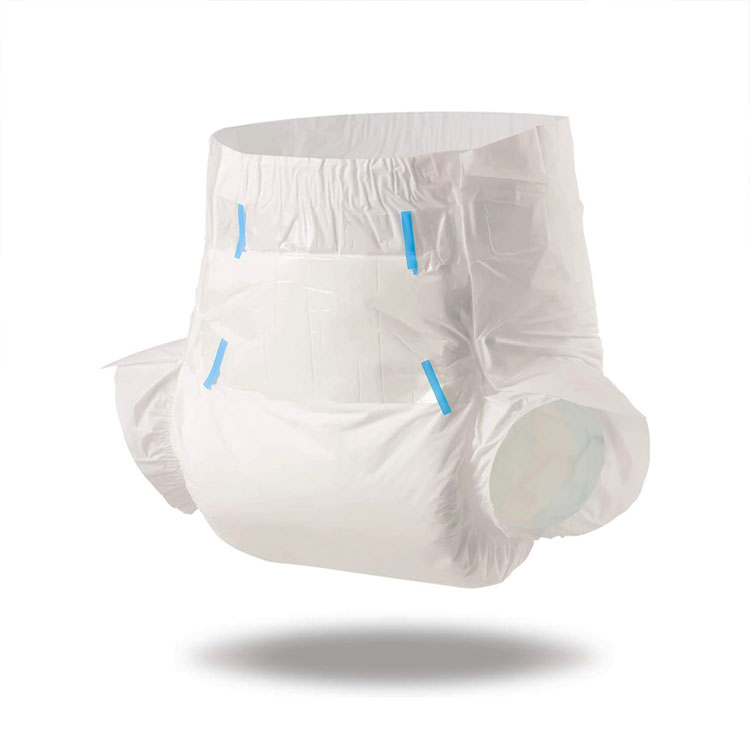
If your H1 promises softer, thinner, and more stable adult incontinence briefs, you are really promising better material sequencing, smarter fluid handling, and less chassis failure under real movement. On this site, the strongest supporting path starts with the commercial hub for adult diapers with a soft topsheet and breathable backsheet, then moves into the material logic of fast-dry vs soft-feel topsheets, then into the care-setting reality of why hospitals often prefer tab-style adult diapers, because that sequence mirrors how real buyers think: layer, performance, workflow.
Table of Contents
Softer topsheets help, but microclimate decides the verdict
Soft sells instantly.
Skin judges later.
A soft-feel surface in adult diaper materials is usually some variation of polypropylene nonwoven, often spunbond or SMS, tuned through fiber choice, bonding, finish chemistry, and basis weight so it feels less scratchy and less noisy against the skin, but that tactile win can collapse fast if the layer slows intake or lets moisture rebound under sitting pressure. Isn’t that the oldest trick in the hygiene business?
I’m blunt here because I’ve seen it too often: “soft” is the easiest claim to fake in soft adult diapers. The site’s own fast-dry vs soft-feel topsheets article gets the logic right when it says fast-dry is a performance claim, not a material claim. I agree. If the topsheet does not move fluid quickly into the absorbent core, the wearer feels wet no matter how nice the first touch seemed in the showroom. And for anyone chasing the keyword best adult diapers for sensitive skin, the real enemy is not roughness alone. A 2024 systematic review on urinary incontinence prevention and management found five randomized controlled trials with 644 participants, and the interventions significantly reduced incontinence-associated dermatitis. That is the part lazy marketers hate: skin outcome depends on the whole routine and the whole product, not just the hand-feel label.
So what do I trust?
I trust a topsheet only when the supplier will discuss strike-through, rewet, and surface treatment in the same breath as comfort, because a breathable adult diaper that traps humidity at the skin is not “gentle,” it is just quieter while it fails. That is also why articles like why hospitals often prefer tab-style adult diapers matter internally: institutional buyers care about rapid acquisition, rewet control, leg cuffs, and caregiver handling, not soft-focus copywriting.
Thin adult diapers win only when the absorbent core stops cheating physics
Thin is possible.
Thin is harder.
A modern absorbent core is not just fluff pulp pressed into a fat pad anymore; the thinner builds that actually work rely on higher superabsorbent polymer loading, often sodium polyacrylate, plus an acquisition distribution layer, or ADL, that grabs the first surge and spreads it before the core chokes. Want the ugly version? When brands cut thickness without upgrading fluid speed, they don’t create discreet protection. They create a leak on a schedule.
This is not guesswork. A 2022 U.S. International Trade Commission staff report on superabsorbent polymers spells it out: the market moved toward thinner diapers by using more SAP and less fluff, and as that transition happened, an ADL was added for faster initial fluid intake and better spreading to drier parts of the core. The same report notes P&G’s use of “SAP-8” for a less bulky core. That is the real story behind thin adult diapers. Not magic. Materials engineering.
Here is the comparison I would actually put in front of a buyer before they sign off on any absorbent core claim:
Layer or Function
Old-school brief
Upgraded brief
What the user notices
What I would ask the supplier
Topsheet
Basic PP nonwoven sold as “soft”
Hydrophilic PP/SMS or tuned soft-feel layer
Less scratch, faster intake, lower wet feel
Strike-through time and rewet result
Acquisition layer
None or weak fluff transfer
ADL or high-loft transfer layer
Faster first void handling
ADL gsm, placement, and saturation behavior
Absorbent core
Heavy fluff, lower SAP loading
Higher SAP-to-fluff ratio with better distribution
Less bulk, better lock-in if engineered well
SAP %, core weight, retention after pressure
Backsheet
Loud PE film
Breathable cloth-like film or breathable laminate
Less heat, less noise, more comfort
MVTR or breathability claim with proof
Stability system
Weak elastics, vague fit
Standing cuffs, stronger tabs, reinforced landing zone
Fewer side leaks, less sagging
Cuff height, tab peel strength, MD/CD tensile
That table is my synthesis of what the site is already hinting at in adult diapers with a soft topsheet and breathable backsheet and what the USITC laid out on SAP, fluff, and ADL mechanics. The message is simple: thinner adult diapers are better only when the absorbent core is faster, not merely smaller.
And there is a supply-chain angle that too many content writers ignore.
Bloomberg Law reported on July 10, 2024 that U.S. paper makers warned the EU a new traceability law risked disrupting $3.5 billion in trade and raising prices for diapers, pads, and related hygiene goods because fluff pulp supply chains are hard to trace tree by tree. So yes, raw material selection is a performance question, but it is also a sourcing risk question. If your brief depends on fluff pulp, SAP, PE film, elastic strands, and adhesive systems sourced across multiple regions, “stable” starts long before the carton reaches a warehouse. Bloomberg Law’s report on fluff pulp and diaper pricing risk deserves more attention than it got.
Stability is not a feeling, it is chassis engineering
This gets missed.
Then it gets expensive.
The market loves to talk about absorbency because absorbency sounds measurable, but most real-world failures in adult incontinence briefs happen because the brief shifts, gaps, sags, rolls, or loses seal integrity at the leg and waist, especially under turning, sitting, transfer, and repeat fastening. If a brief slides out of the target zone, who cares how advanced the polymer was?
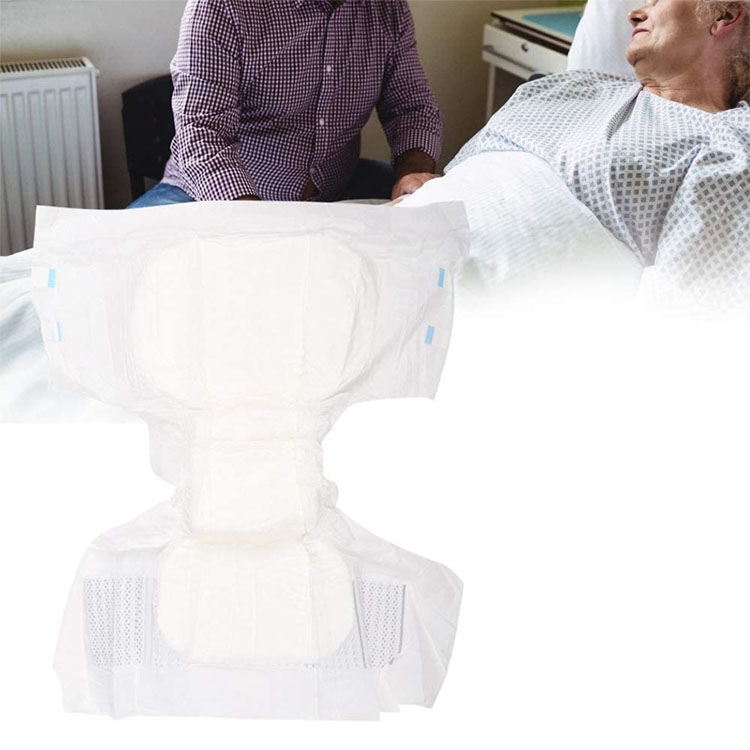
I always push this point because it annoys people who want an easy story: stable adult diapers are built from geometry, not adjectives. Refastenable tabs, front-panel reinforcement, cuff height, elastic placement, chassis cut, and size accuracy matter just as much as the absorbent core. The site already supports that argument across why hospitals often prefer tab-style adult diapers and briefs vs pull-ups by channel. Hospitals choose tab-style adult diapers when patients need caregiver-assisted changes, frequent checks, and heavier protection because workflow and fit stability matter more than the illusion of “normal underwear.” That is not romance. That is operations.
And I’ll go one step further.
For heavy or bedridden care, I would rather buy a slightly thicker brief with better cuff architecture and tab integrity than a thinner brief that wins on shelf appeal and loses during the night shift. That is why the internal-link cluster should not stop at materials talk. It should carry the reader into scenario-specific pages, then into proof pages like adult diaper test reports and certifications, because serious buyers eventually ask for ISO 13485-aligned documentation, REACH/SVHC declarations, and batch-consistency evidence. The site already exposes that compliance proof. Smart internal linking should force readers to see it.
What buyers should demand before they trust a “premium” brief
No more adjectives.
Ask for numbers.
When a supplier claims softer, thinner, and more stable adult diaper materials, I want the conversation dragged out of branding and into test language: topsheet composition, SAP percentage, fluff basis weight, ADL presence, strike-through time, rewet under pressure, cuff height, tab peel, elastic recovery, and breathability evidence. Why settle for “ultra soft” when you can ask whether the topsheet is hydrophilic PP, whether the backsheet is PE or cloth-like laminate, and whether the core is using a fluff-heavy or SAP-heavy architecture?
Adult diaper materials are the layered components that make a brief work, typically including a skin-contact topsheet, an acquisition-distribution layer, an absorbent core made from fluff pulp and sodium polyacrylate, leak guards, elastics, tabs, adhesives, and a fluid-blocking backsheet that may be polyethylene or cloth-like breathable film. That first sentence is the answer most pages bury. The real buying question is whether those layers are balanced for dryness, friction control, and fit stability rather than just cost.
Are thin adult diapers as absorbent as thick ones?
Thin adult diapers can be as absorbent as thicker briefs when the core uses higher superabsorbent polymer loading, a competent acquisition layer, and good fluid distribution, but thin products fail fast when brands remove fluff and bulk without fixing intake speed, rewet, and chassis stability. I do not trust “thin” as a benefit by itself. I trust thin only when the supplier can explain the ADL, the SAP ratio, and the pressure-performance tradeoff.
What makes the best adult diapers for sensitive skin?
The best adult diapers for sensitive skin are the briefs that reduce prolonged wetness, surface friction, trapped heat, and chemical irritation by combining a skin-friendlier topsheet, fast fluid transfer, breathable backing, correct fit, and a disciplined change-and-cleansing routine rather than relying on softness claims alone. That is the uncomfortable answer, because it means no single layer saves the day. Skin health is a system result. The 2024 review with five randomized trials and 644 participants points the same way.
How are adult diapers made?
Adult diapers are made by layering a topsheet, optional acquisition layer, absorbent core, leak guards, elastics, tabs, adhesives, and a fluid barrier backsheet into a chassis that is then cut, sealed, folded, and packed to controlled size and performance specifications for different care settings. That sounds simple on paper. It is not. Most production problems show up in bonding, material variance, cuff geometry, and core consistency, which is why serious buyers ask for adult diaper test reports and certifications before they talk price.
My advice is not subtle: stop buying “soft,” “thin,” and “stable” as adjectives. Buy them as measurable outcomes. Ask for PP or PE layer details, ask for SAP and fluff logic, ask for ADL confirmation, ask for rewet data, ask for tab integrity, and ask what fails after repeated movement. That is how you separate a decent adult diaper from a future refund.