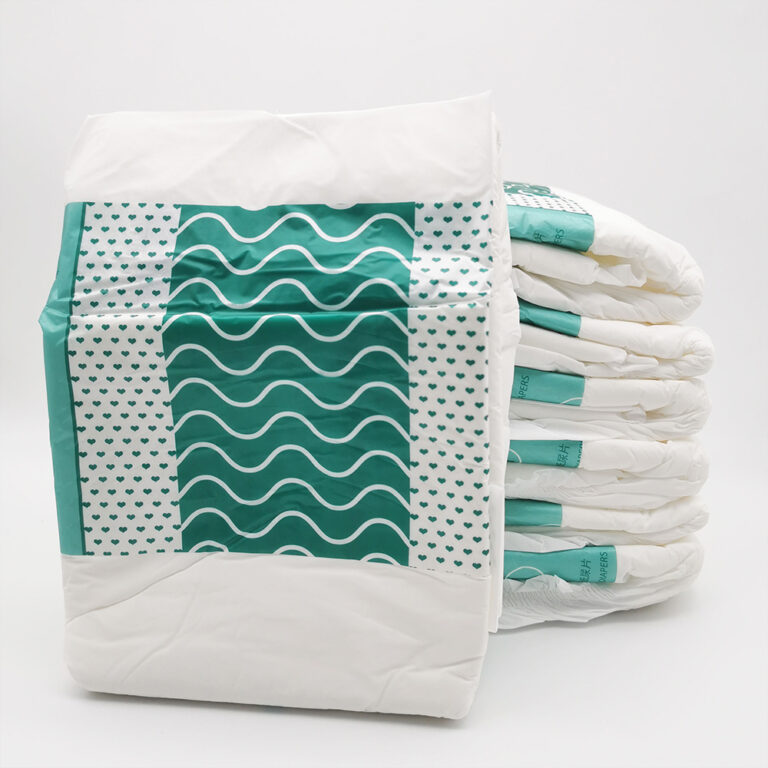
Why Hospitals Often Prefer Tab-Style Adult Diapers
Workflow beats aesthetics.
I’ll be blunt: hospitals do not prefer tab-style adult diapers because somebody in procurement has old-school tastes, and they definitely do not prefer them because “briefs” sounds more professional than “pull-ups”; they prefer them because once a patient is weak, post-op, bedbound, cognitively impaired, or dealing with bowel incontinence, the product stops being retail merchandise and becomes part of the nursing workflow. Why does that matter so much?
Because labor is thin.
In April 2024, CMS finalized a minimum staffing rule for long-term care that set a baseline of 3.48 hours per resident day, including 0.55 RN hours and 2.45 nurse aide hours, plus a 24/7 RN onsite requirement; that rule was then dragged into court, while a separate 2023 Reuters report said 30% of more than 18,000 nurses surveyed were looking to leave the profession. Acute care is not identical to long-term care, obviously, but the signal is the same: caregiver time is expensive, unstable, and painfully finite. So when a product saves touches, saves re-fastening, and saves a full linen reset, hospitals notice.
Table of Contents
Hospitals buy labor efficiency before they buy absorbency
Here is the hard truth I wish more brands would admit: “best adult diapers with tabs” is the wrong question for institutional care. The real question is uglier and more useful: which product cuts the number of touches per episode, lowers leak risk during repositioning, and lets one caregiver finish the job without turning it into a wrestling match?
That is where tab-style adult diapers pull ahead.
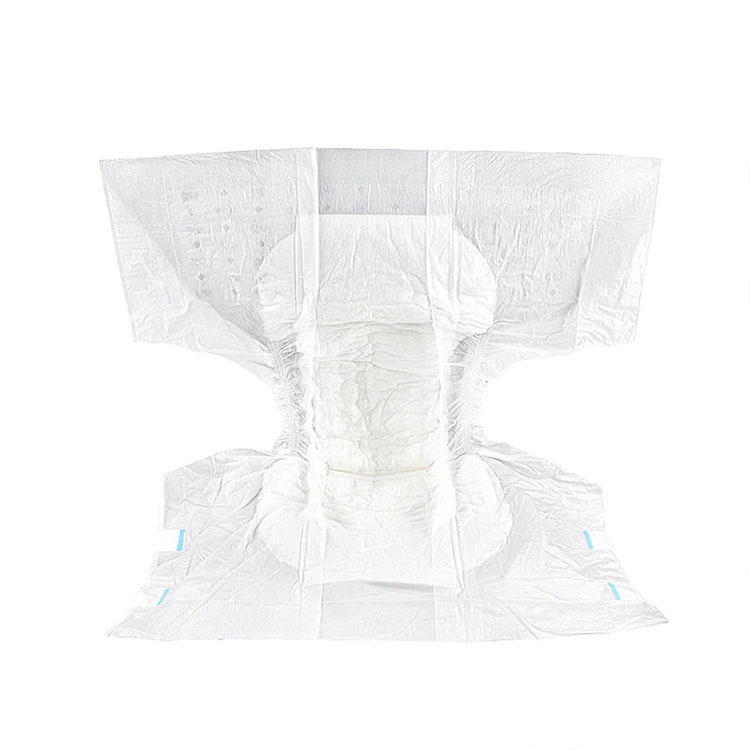
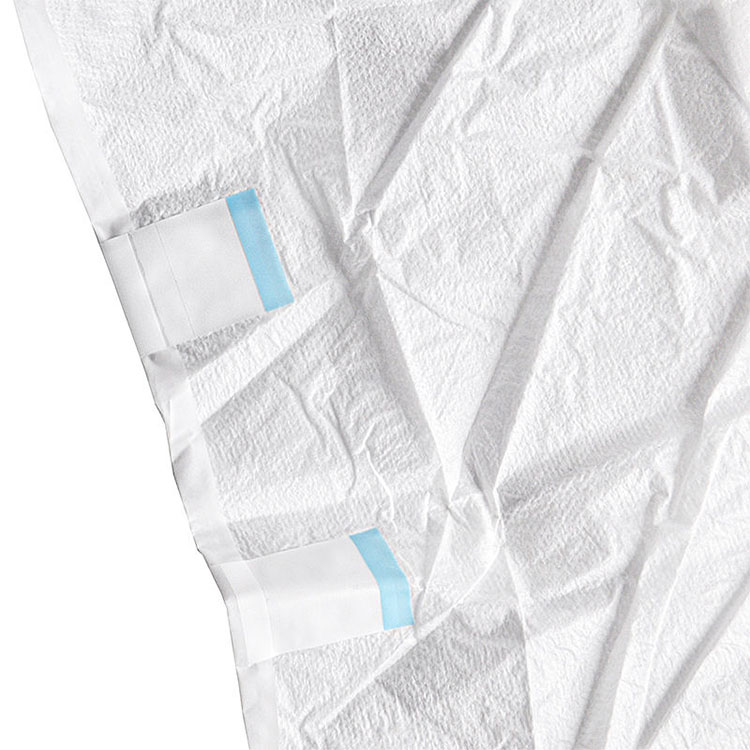
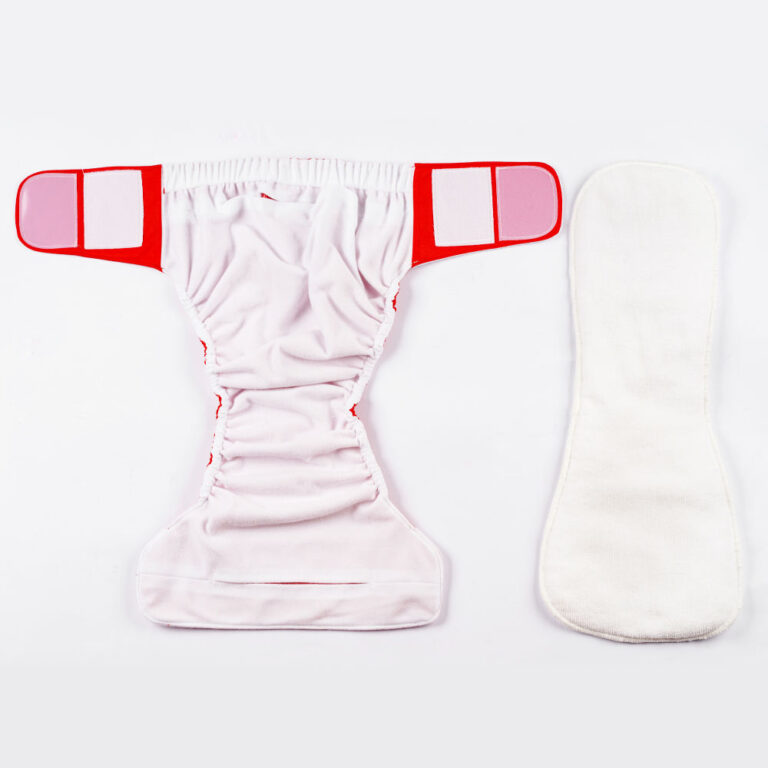
A pull-up can work for a mobile patient who toilets independently or only needs light prompting. But once the patient is lying down, wearing compression gear, attached to lines, or too weak to stand safely, a pull-up becomes awkward fast. A tab brief opens flat, slides under the body during a side turn, allows a visual skin check, and can be re-secured without fully undressing the patient. I do not buy the marketing fluff here; this is simple mechanics. The institutional logic is the same one your own site already hints at in adult diapers with tabs for hospital care and in the stronger use-case page on why tab-style briefs win for heavy and bedridden care.
One extra leak is never just one extra leak
A leak event is not a leak event. It is a pad change, a brief change, a wipe-down, maybe a gown change, maybe a fitted sheet change, maybe a barrier cream reapplication, maybe an apology to a patient who is already embarrassed and half-asleep.
That stack-up is why hospitals keep coming back to adult briefs and incontinence briefs with tabs. Refastenable tabs matter during spot checks. Flat-open application matters during bed turns. Adjustable waist and leg fit matter when edema, body habitus, or output volume changes across a shift. And yes, overnight stability matters more than brochure copy. Anyone who has watched a side sleeper defeat a mediocre leg cuff at 2:13 a.m. understands the argument immediately.
The operational comparison nobody should pretend is complicated
I prefer to reduce this to a simple decision table, because buyers waste too much time arguing abstractions.
Care scenario
Tab-style adult diapers
Pull-ups
What the hospital usually values most
Bedbound or post-op patient
Best fit
Weak fit
Flat-open application without full undressing
Frequent checks and resealing
Best fit
Weak fit
Refastenable tabs and fewer wasted products
Bowel incontinence
Best fit
Mixed
Faster cleanup and tighter containment
Overnight heavy output
Strong
Mixed
Better control of waist and leg seal
Mobile, self-toileting patient
Mixed
Best fit
Independence and underwear-like feel
Repositioning or side-sleeping risk
Strong
Mixed
Fewer side leaks and fewer linen turns
That table is not ideology. It is workflow. And if you want a supporting internal path for readers who are still stuck on the wrong comparison, the cleanest bridge on your site is briefs vs pull-ups by channel, because it frames the issue the way institutional buyers actually think: by care setting, not by vanity language.
Skin damage is where the debate gets real
Skin failure is expensive.
In a 2024 multisite hospital study on PubMed Central, researchers assessed 1,897 patients across six hospitals and found that a structured intervention bundle reduced hospital-acquired incontinence-associated dermatitis from 6.71% to 4.27%, a 36.3% reduction, even though the post-intervention group had higher acuity and more double incontinence. The bundle was not “just use a better diaper”; it combined assessment, education, the GLOBIAD tool, skin protection, fewer unnecessary bed protection layers, and appropriate continence aids. That is exactly the point. Adult diapers with tabs win in hospitals when they are used as part of a system, not as a magical standalone SKU.
And patients feel it.
A separate 2024 qualitative hospital study indexed by PubMed interviewed 45 people across 18 wards in six acute/subacute hospitals and found that patients described incontinence as interrupting every aspect of life, actively concealing it, and experiencing anxiety, embarrassment, shame, burning, itching, and desperation for relief when IAD was involved. That matters because the industry still talks about absorbency like the patient is a mattress. The patient is not a mattress. The patient is often humiliated, silent, and trying not to bother staff who already look overloaded.
Product design still matters, but not in the way retail copy suggests
I’ve read enough product pages to know the usual script: soft top sheet, breathable backsheet, high absorbency, leak guards. Fine. All true. Also incomplete.
For hospital adult diapers, the meaningful details are less glamorous: acquisition speed into the core, rewet control, cuff geometry, tab hold under repeated fastening, and whether the brief stays aligned after turns. Add the support layer and the picture gets clearer: pH-balanced cleansing, barrier protection such as zinc oxide (ZnO), and bed protection that does not turn into a swamp. That is why your site should keep pairing brief content with support-SKU content like disposable vs washable underpads rather than treating underpads as a separate universe. The brief handles containment on-body; the underpad handles failure margin off-body. Smart buyers want both.
The site architecture should mirror the buyer’s brain
I would rather have five links that move a skeptical buyer deeper into the decision than twelve links that exist only to satisfy an internal-link spreadsheet. Hospitals do not buy from link graphs. People do. And those people want fewer wrong turns, fewer vague claims, and faster proof.
What hospitals are really saying when they choose adult briefs
They are saying mobility is low.
They are saying output is heavy, checks are frequent, and a one-piece underwear-style product is no longer the easiest tool for the room, even if it looks nicer in a DTC ad. They are also saying that the cost center is not the brief alone; it is the brief plus the nurse aide minute, the missed turn, the wet linen, the skin complaint, the patient distress, the family complaint, and the wound-care escalation nobody wants on Friday afternoon. Is that a harsh way to put it? Yes. Is it wrong? Not really.
So when hospitals often prefer tab-style adult diapers, what they are really preferring is control: control of fit, control of caregiver movement, control of contamination, control of overnight drift, and control of failure costs under staffing pressure. That is the insider version. The brochure version is shorter, prettier, and less honest.
FAQs
Why do hospitals use tab-style adult diapers instead of pull-ups?
Hospitals use tab-style adult diapers instead of pull-ups when patients need caregiver-assisted changes, frequent skin checks, heavier absorbency, or bed-level care, because tabs open flat, reseal quickly, and usually reduce the extra lifting, undressing, and leak risk that make routine care slower and messier. In plain English, tabs win when the patient cannot manage the product alone.
Are tab-style adult briefs better for bedridden patients?
Tab-style adult briefs are generally better for bedridden patients because caregivers can apply them while the patient is lying down or turned to one side, adjust the waist and leg seal without full removal, and manage bowel incontinence with fewer movements, fewer interruptions, and less strain on fragile skin. That is why they show up so often in institutional care plans.
Do adult diapers with tabs help prevent skin damage?
Adult diapers with tabs do not prevent skin damage by themselves, but they support better prevention when combined with correct sizing, timely changes, pH-balanced cleansing, barrier protection, and an absorbent core that pulls fluid away from the skin instead of letting urine or stool sit against it. The brief is one layer in a full skin-integrity system, not the entire system.
How should a hospital choose adult diapers with tabs?
The best adult diapers with tabs for hospitals are the ones that match patient acuity and staff workflow, meaning they combine flat-open application, refastenable tabs, strong leg cuffs, rapid acquisition and rewet control, breathable materials, and a sizing range wide enough to avoid improvised fit. If the brief works only in a brochure photo, it is the wrong brief.
Your Next Move
Audit the category honestly.
Take your current incontinence lineup and split it into three buckets: mobile patients, assisted patients, and fully bedridden patients. Then trace the leak events, linen turns, skin complaints, and overnight failures against each bucket for the last 30 to 60 days. If your heaviest-care patients are still being pushed into pull-ups because the packaging looks friendlier, fix that first.
Then rebuild the content path to match the buying path: start with the core page for adult diapers with tabs, move readers into the heavy-care scenario article, answer the pull-ups-vs-briefs objection, and only then introduce underpads and proof documents. That is how you write for buyers who have seen too much marketing and trust too little. Frankly, they are the right audience to write for.