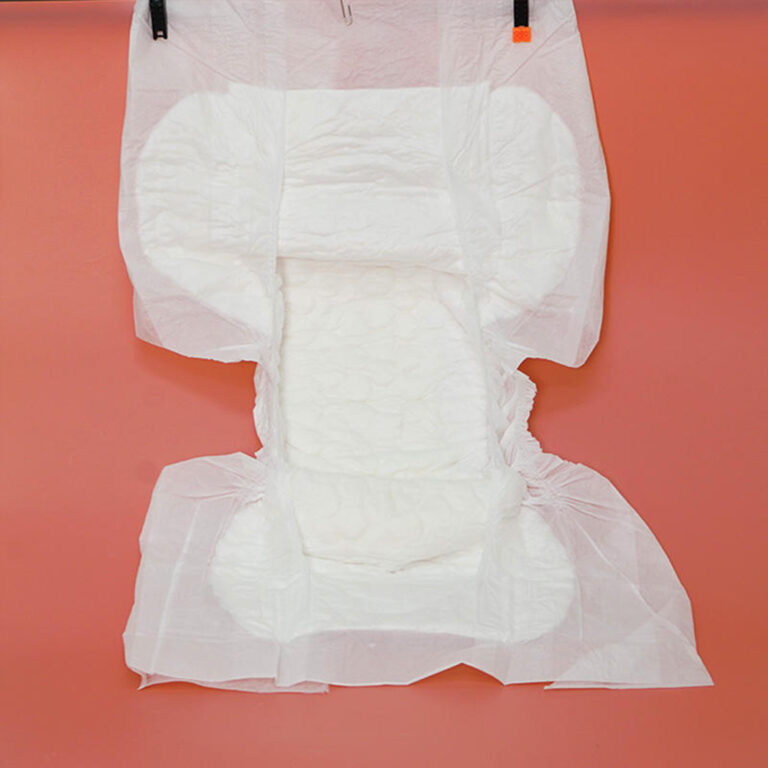
How to Compare Underpad Performance: Intake Speed vs Retention
If you’re sourcing underpads for a nursing home, a home-care service, a hospital ward, or your own private label, you’ve heard the same pitch: “Bigger absorbency means better.”
In real life, that idea falls apart fast.
Underpads don’t fail because “capacity” is too low on paper. They fail because liquid doesn’t go in fast, or it comes back up when someone sits, turns, or transfers. That’s the whole game: intake speed vs retention. Nail both and your users feel drier, staff does fewer linen turns, and your brand gets fewer angry messages.
We manufacture underpads as part of an OEM/ODM program at LOVINHUG (bulk, custom, wholesale only). If you’re building a product line, you can pair underpads with matching essentials like Adult Diapers, Adult Diapers with Tabs, Incontinence Pads, and Adult Wipes. And yep, it’s way easier to sell a “system” than random SKUs.
Underpad performance: intake speed vs retention
An underpad is a simple-looking stack: topsheet, absorbent core, waterproof backsheet. But the “simple” part ends right there. In use, you’re fighting three problems at the same time:
Intake speed (how fast fluid goes down)
Retention (how well the core locks it in)
Leakage control (whether it escapes from edges/backsheet)
Intake speed (strike-through time)
Intake speed is basically strike-through time: how quickly liquid passes thru the topsheet into the core.
Why you should care:
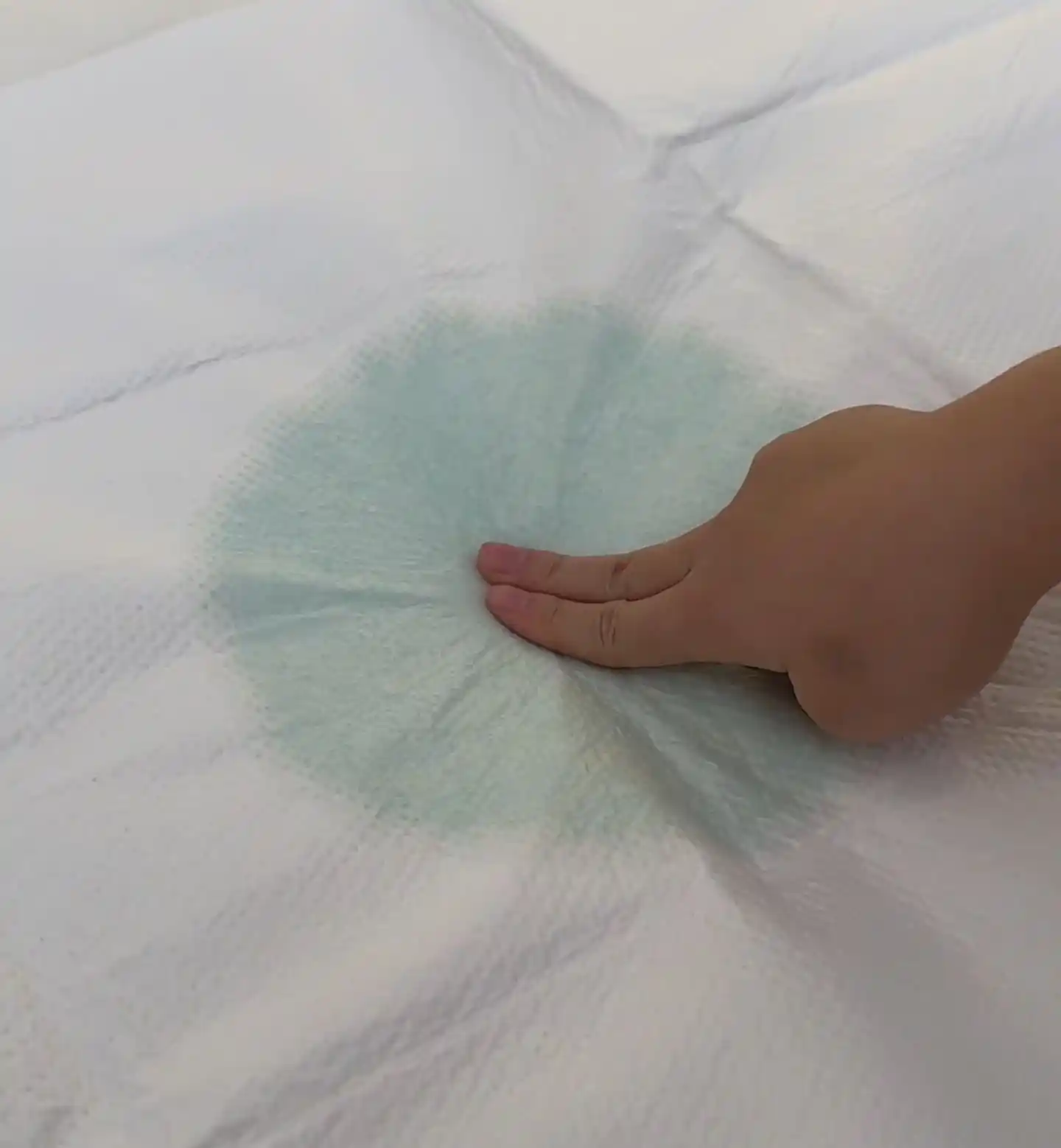
Fast intake reduces pooling on top.
It lowers side run-off during the first gush.
It cuts cleanup time when staff is busy.
In facility talk, slow intake creates the “river effect.” Liquid spreads sideways, finds an edge, and then your bed is done.
If you’re comparing products, don’t just test once. Hit it twice. A pad can look great on the first pour and then choke on the second.
Care teams call the pain point rewet or wet-back. The pad absorbs, then pressure pushes moisture back up to the surface. You see it when:
a resident shifts weight
staff repositions or turns
someone sits up after a brief change
you do transfers to wheelchair
A pad can drink fast but still feel damp later. That’s a retention problem, not a capacity problem.
Here’s the blunt rule: If it re-wets, the surface isn’t really dry. It don’t matter what the label says.
Leakage control (backsheet barrier)
Leakage control is your last line of defense:
waterproof backsheet quality
edge sealing
correct size for the use-case
Even a strong core can’t save you if the barrier layer is weak or the pad is undersized for the job. This is why buyers who only chase “absorbency” end up paying with extra linen and extra labor (and a lot of complaining).
Capacity is “how much it can hold in theory.” Users care about “how it behaves on the bed.”
Two pads can claim similar absorbency. One stays comfy and dry. The other turns into a damp sponge after pressure. That’s why you should compare speed + lock-up, not just total volume.
Think of it like this:
Intake speed = how quickly you dodge a mess
Retention = whether the mess comes back
If you’re buying for nursing homes, hospitals, or home-care agencies, that difference shows up in your day-to-day ops. Staff won’t say “this pad has great capacity.” They’ll say “this one keeps the sheets clean.”
Quick comparison table: intake speed vs retention vs leakage control
Use this table in sourcing calls. It keeps the conversation honest.
Metric
What it means in plain English
What fails when it’s weak
Typical customer complaint
What to request for OEM/ODM
Intake speed
Liquid goes down fast instead of sitting on top
Pooling, side run, early leaks
“It feels wet right away”
Test 1st + 2nd load intake behavior
Retention (rewet / wet-back)
Core holds fluid under pressure
Damp surface after sitting/turning
“It absorbed but still feels wet”
Ask for low rewet focus + core options
Leakage control
Backsheet + edge seal stops escape
Wet corners, soaked linens
“Edges leak during movement”
Confirm backsheet type + sealing + sizing
Underpad test checklist for buyers: intake speed, retention, leakage
You don’t need a fancy lab to catch 80% of real issues. You need a repeatable routine.
Simple bench test template for nursing homes, hospitals, and distributors
Below is a practical scoring sheet you can run on samples. Keep your method consistent. If you change the method, your “data” becomes vibes.
Test item
How to do it (simple)
Record
Pass signal
Fail signal
Load 1 intake speed
Pour a measured amount at center
Seconds to absorb
Fast drop-in, minimal spread
Pooling on top
Load 2 intake speed
Repeat after first settles
Seconds + notes
Still absorbs clean
Slows down hard
Rewet check
Press with weight 60 sec
Dampness score 1–5
Surface stays mostly dry
Wet-back feeling
Edge leak check
Light tilt + movement
Yes/No + where
No edge run
Wet corners/edges
Removal check
Pick up after use
Tear/No
Stays intact
Rips, messy
Pro tip: test on a chair too, not just a bed. Pressure + motion exposes weak retention faster than anything.
Real-world scenarios: where intake speed vs retention shows up
Nursing home night shift scenario (turning + long intervals)
Night shift is brutal. Fewer hands. Longer gaps. More repositioning.
Slow intake creates puddles and side leaks.
Weak retention creates rewet during turning.
That’s when you get the dreaded “full bed change at 2 a.m.” Nobody wants that. Your pad choice can literally change staffing stress.
Home care and wheelchair transfer scenario (pressure spikes)
Transfers are pressure spikes. Pressure spikes cause wet-back.
If your retention isn’t solid, families notice immediately. They’ll say stuff like: “It’s wet again after he sits.” That’s not picky. That’s real.
Hospital and clinic table scenario (fast turnover)
Clinics want speed and clean removal. A pad that pools slows down workflow. A pad that tears makes cleanup worse. Intake speed keeps things moving, and a stable structure keeps it neat.
OEM/ODM underpads for private label: spec keywords that matter
If you’re doing bulk buying, distribution, import, or e-commerce private label, you need spec language that matches your channel. Here are the keywords buyers actually use on calls.
Core structure: fluff pulp vs fluff + SAP blend
Fluff pulp: basic absorption, can work for light use
Fluff + SAP: better lock-up for many builds, often better retention
But watch for gel blocking (yeah, that’s the slang). Some builds absorb fast at first, then slow down because the gel clumps and blocks flow. That’s why load 2 matters.
Topsheet and acquisition layer: fast intake without splash-back
You want:
quick strike-through
even spread into the core
less surface wet feel
This matters a lot for nursing homes and home-care providers where movement is constant.
Backsheet: PE vs cloth-like barrier
Backsheet choice changes:
leak protection confidence
noise/feel
brand positioning (medical vs retail vibe)
Also, size and edge sealing are not “small details.” They’re the difference between a clean bed and a rewash.
LOVINHUG: how to sell underpads as part of a full incontinence lineup
If you’re a distributor, importer, wholesaler, or a facility supplier, bundling helps you grow faster. Underpads become an easy add-on next to:
LOVINHUG focuses on OEM/ODM, bulk programs, and private label support from a China-based factory setup (ISO & FDA positioning, flexible MOQ, and fast delivery windows depending on the program). If you’re building a brand, you can start with samples and a spec brief.
If you want to talk sizing, core options, backsheet feel, and pack formats, use: Contact Us.
Takeaway: the buying rule for underpads
When you compare underpads, don’t start with “how much it holds.” Start with how it behaves: