Why Complete Incontinence Care Systems Outperform Single-Product Selling
Single SKUs stall.
When a supplier offers only one adult diaper, pad, or pull-up, it makes the buyer solve surface protection, skin cleaning, mobility, overnight leakage, fit, and replenishment through separate searches, vendors, specifications, and purchase orders.
Why make the customer assemble the care system after the sale?
A complete incontinence care system outperforms single-product selling because it covers the entire job: contain leakage, protect surfaces, clean skin, match mobility, and replenish predictable consumables. That creates legitimate attachment purchases, broadens channel coverage, supports retention, and makes the supplier harder to replace—provided the range is properly matched rather than merely enlarged.
Buyers Purchase Fewer Failures, Not More Products
I have reviewed too many catalogs built around what a factory happens to produce rather than what a caregiver, distributor, pharmacy, or nursing home actually needs.
The customer is not searching for cellulose fluff, SAP, polyethylene film, or spunbond nonwoven fabric. The customer wants fewer wet beds, fewer embarrassing leaks, faster changes, cleaner skin, predictable monthly costs, and products that arrive before existing stock runs out.
That is the first commercial advantage of a system: it lets the seller say “this product is wrong for that user” without losing the customer.
Demand Is Growing, but One SKU Cannot Cover It
The demographic direction is not subtle. The U.S. Census Bureau reported in June 2025 that the American population aged 65 and older reached 61.2 million in 2024, rising 3.1% in one year. This group represented 18.0% of the population, up from 12.4% in 2004.
From 2020 through 2024, the older population grew 13.0%. Working-age adults grew only 1.4%.
But age alone does not define the assortment. A 68-year-old with stress leakage during exercise, an 86-year-old requiring assisted overnight changes, and a postoperative patient protecting a bed for two weeks do not need the same product.
The NIDDK Urologic Diseases in America 2024 report estimated claims-based urinary incontinence prevalence among people aged 65 and older at approximately 6%–8% annually from 2012 through 2021. It also warned that claims data understate the burden because fewer than 40% of adults with self-reported incontinence tell a physician.
The underlying segments are even more revealing:
Medicare fee-for-service prevalence reached 10.6% among people aged 85 and older in 2021.
An average of 651,446 people aged 65 and older were newly identified with urinary incontinence each year from 2015 through 2021.
Among older Medicare fee-for-service patients with incontinence in 2021, 83% also had hypertension, 41% had a urinary tract infection, and 36% had diabetes.
That is not one homogeneous diaper market. It is a collection of mobility levels, body shapes, clinical conditions, change methods, absorbency requirements, and purchasing channels.
A single-product seller sees volume. A system supplier sees distinct care routines.
Real Evidence Favors Correct Product Systems
Here is where I become skeptical of the usual “sell more items” advice. Complete care does not mean placing every available product into every order.
Correct matching wins.
A 2024 PLOS ONE study of caregiver burden surveyed 743 caregivers of older adults receiving continence-product subsidies in Komatsu City, Japan. Of the 402 respondents, 260 were family caregivers and 142 were nursing-home staff.
Urinary or fecal leakage from absorbent products was the most frequently reported physical burden among family caregivers, cited by 46.5%. The researchers linked that burden partly to inappropriate combinations of urinary pads and diapers.
Think about what that means commercially. The buyer already owned multiple products, yet the care system still failed because selection and fitting guidance were weak.
After the evidence-based protocol was implemented:
Use of treatment and prevention products rose from 55.2% to 82.8%.
Use of underpads and bed pads fell from 28.5% to 12.9%.
Mean product cost per care episode decreased from AU$2.64 to AU$2.35, an approximately 11% reduction.
The AU$0.15 increase in total care cost per episode was not statistically significant at p = 0.344.
This was a hospital-care study, not a retail cross-selling trial. I would not misuse it as proof of a guaranteed sales lift. What it does show is that coordinated assessment, cleansing, protection, and product selection can improve resource use without simply piling on more absorbent products.
Why the Economics Usually Beat Single-Product Selling
Several Honest Reorder Cycles Replace One
A tab-style brief might be reordered according to daily wear. Wipes follow the number of changes. Underpads follow surface exposure. Pads and pull-ups follow the user’s mobility and leakage pattern.
Those consumption cycles are related, but they are not identical.
That matters because a distributor selling only one primary product depends on one reorder event. A complete incontinence care system gives the distributor several legitimate reasons to remain in contact with the account.
The result can be:
Higher average order contribution through relevant attachments
More frequent replenishment opportunities
Lower dependence on one hero SKU
Better coverage of retail, home-care, institutional, and e-commerce channels
Greater switching friction because specifications and packaging are coordinated
I call this workflow retention. The customer stays because moving six properly matched products is harder than replacing one commodity brief.
A Transparent 1,000-Customer Model
The following model is illustrative, not published market data. Contribution means selling price minus landed product cost, before fixed overhead. Replace every assumption with actual account data before approving inventory.
Monthly contribution component
Assumption
Single-product seller
System seller
Core absorbent product
1,000 customers × $28
$28,000
$28,000
Underpad attachment
35% × $8 contribution
$0
$2,800
Adult-wipe attachment
45% × $6 contribution
$0
$2,700
Booster or secondary pad attachment
20% × $5 contribution
$0
$1,000
Total monthly contribution
Before added fixed costs
$28,000
$34,500
Modeled contribution lift
($34,500 − $28,000) ÷ $28,000
—
23.2%
The model produces $6,500 in additional monthly contribution. But that is not automatically profit.
If extra warehousing, low-volume packaging, obsolete stock, customer support, freight fragmentation, and financing cost more than $6,500, the portfolio expansion failed. Simple.
This is why I distrust suppliers who boast about having 300 SKUs without disclosing how many sell through twice a year.
Portfolio Data Improves Future Selling
A system also produces better demand signals. Sellers can see whether heavy-absorbency briefs drive underpad attachment, whether pull-up buyers prefer discreet wipes, and whether overnight users reorder booster pads sooner than expected.
Track the relationships:
Attachment rate by primary SKU
Days between first and second order
Gross contribution per order
Complaint rate per 10,000 pieces
Return or credit rate by size
Stockout rate
Weeks of inventory cover
Percentage of SKUs with no sale during 60 or 90 days
Without these numbers, “complete system” is just branding.
The Hard Truth: More SKUs Can Create a Worse Business
An incontinence product bundle fails when it is designed around factory capacity instead of user need.
I would reject a new product if it cannot answer at least one of these questions:
Does it prevent a known failure?
Does it save caregiver time?
Does it serve a distinct leakage or mobility segment?
Does it create a repeat purchase with measurable demand?
Can it reach minimum order quantity without producing dead inventory?
Can its quality be controlled across repeat production?
Technical discipline matters here. A product brief should define more than “high absorbency.” It may need target dimensions, absorbent-core distribution, acquisition speed, rewet, SAP weight, fluff-pulp weight, topsheet GSM, cuff height, elastic range, tape peel strength, backsheet breathability, pack count, and carton configuration.
SAP commonly refers to sodium polyacrylate, represented as ((C_3H_3NaO_2)_n). More SAP does not automatically produce a better brief. Poor distribution can slow intake, cause gel blocking, or create an unstable core.
Regulatory language also needs restraint. In the United States, the official 21 CFR 876.5920 definition treats a protective garment for incontinence as a Class I device consisting of absorbent padding and a fluid barrier intended to protect a patient’s garment from excreta, subject to the regulation’s stated exemptions and limits.
So no, a colorful package and a vague “medical grade” claim are not a compliance strategy.
How I Would Build a Complete Incontinence Product Range
Days 1–15: Segment the Care Jobs
Start with buyers, not products:
Mobile retail users with light or moderate leakage
Booster pads only where additional capacity is technically appropriate
Do not launch every possible size, color, absorbency, fragrance, and pack count at once. Begin with the combinations supported by confirmed accounts or channel research.
Days 31–60: Test Products as a System
Test each item individually and in its intended routine.
A strong brief paired with a weak underpad can still create a wet bed. A soft wipe that tears during fecal cleanup is not a successful cleansing product. A booster pad with the wrong backing can block liquid transfer and increase leakage.
Evaluate fit, intake, rewet, core stability, side leakage, packaging usability, carton strength, and lot consistency. For inspection planning, define critical, major, and minor defects separately rather than writing “AQL passed” with no sampling plan or defect list.
Days 61–90: Pilot, Measure, and Remove Weak SKUs
Run a controlled launch by channel. Compare system buyers with single-product buyers over the same period.
Measure:
Primary-to-secondary product attachment rate
30-, 60-, and 90-day reorder rate
Contribution per account
Complaint and leakage reports
Size-exchange frequency
Inventory turns
Forecast accuracy
Sample-to-order conversion
If a support SKU does not attach, repeat, or solve a documented problem, remove it. Portfolio pruning is not failure. It is management.
FAQs
What is a complete incontinence care system?
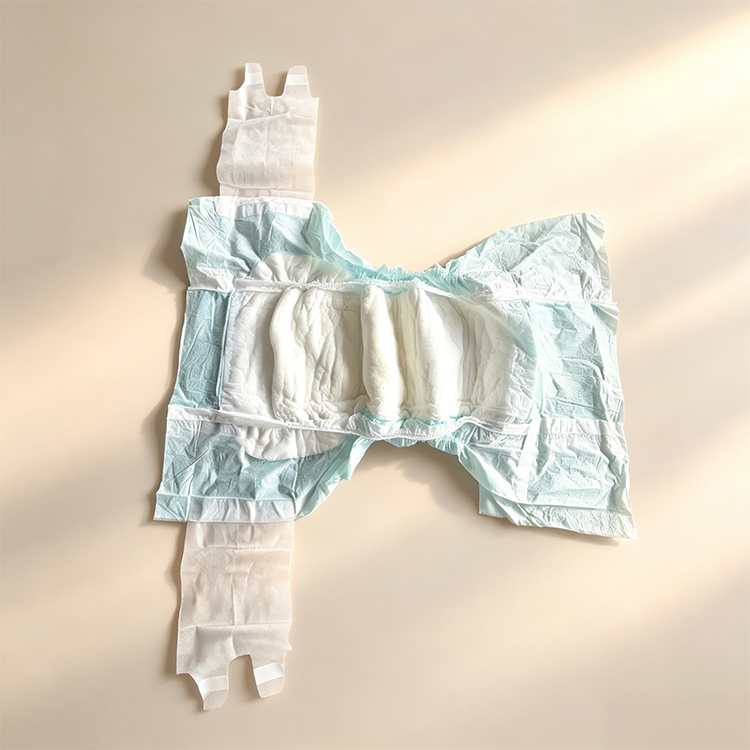
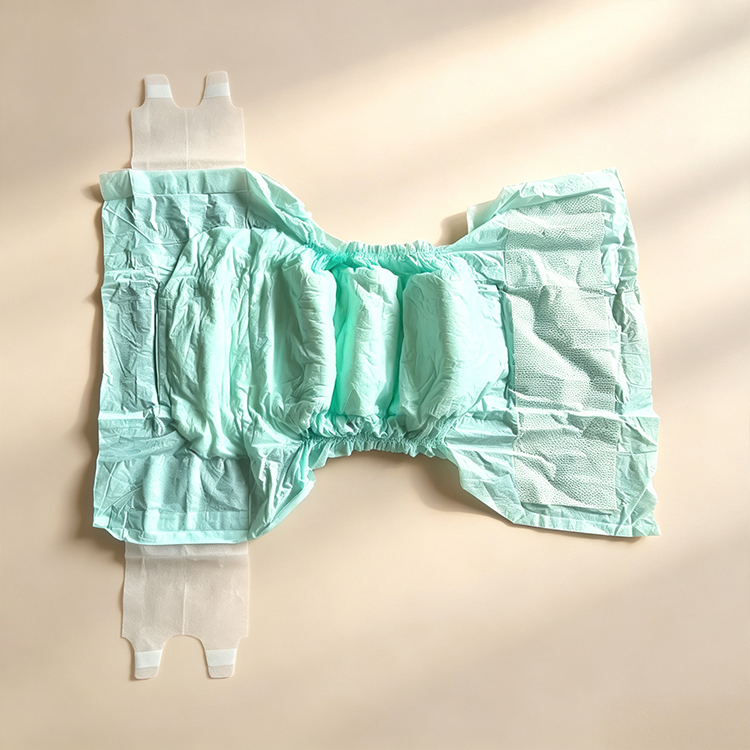
A complete incontinence care system is a coordinated range of body-worn absorbent products, surface-protection items, cleansing products, and optional skin-care support, matched by leakage level, mobility, change method, day or night use, size, packaging, and buyer channel so the customer can complete the full care routine.
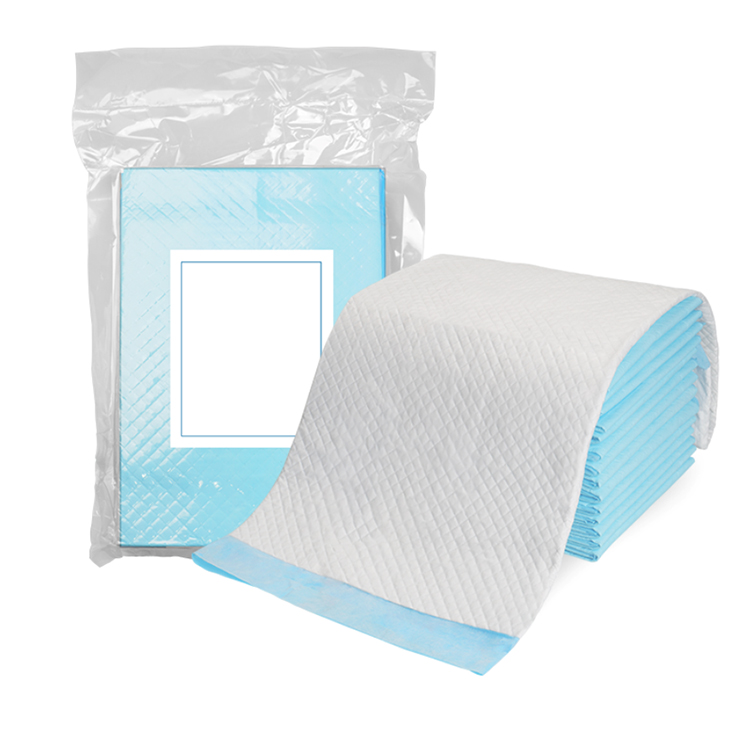
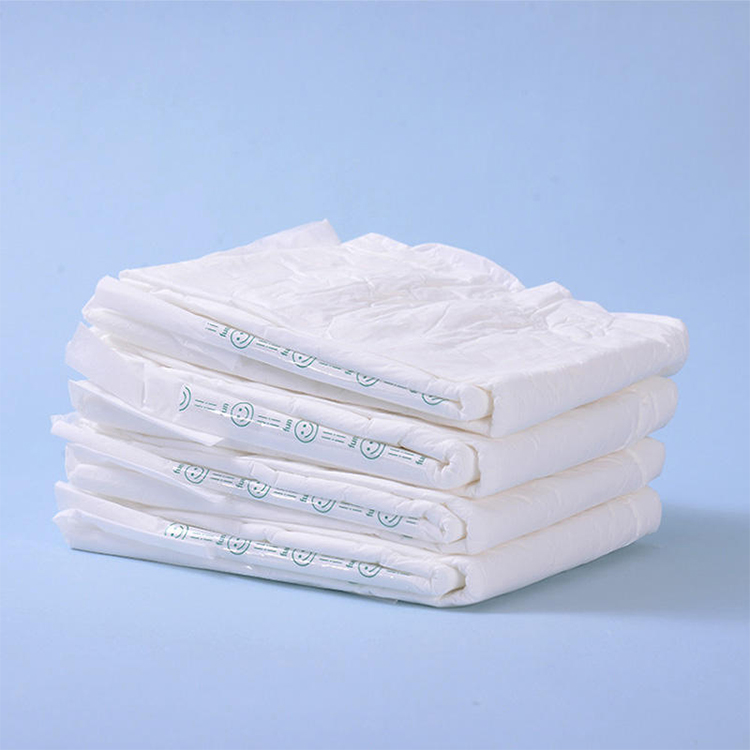
It may include pads, pull-up underwear, tab-style briefs, booster pads, disposable underpads, adult wipes, and selected barrier products. Not every user requires every category.
Why do complete incontinence care systems increase sales?
Complete systems usually outperform single-product selling because they solve more of the buyer’s actual job, create legitimate attachment purchases, reduce shopping across competing suppliers, support more user profiles, and give distributors several repeat-purchase cycles instead of depending on one diaper, pad, or pull-up SKU.
The increase must still be verified through attachment rate, contribution margin, reorder frequency, inventory turns, and complaint data. No universal sales percentage applies to every market.
Which products belong in an incontinence product portfolio?
A practical incontinence product portfolio normally includes light-to-moderate pads, pull-up underwear for mobile users, tab-style briefs for assisted or heavy care, disposable underpads for beds and chairs, adult wipes for cleansing, and selected booster or skin-care products when the intended channel and customer routine justify them.
Sizes, absorbency tiers, packaging, and product claims should then be adjusted for retail, e-commerce, home-care, hospital, pharmacy, or nursing-home buyers.
Does product bundling always increase profit?
Bundling does not automatically increase profit; a profitable incontinence bundle is a deliberately matched set whose added contribution margin exceeds extra inventory, packaging, freight, returns, and support costs while improving the customer’s care routine, rather than a forced multipack that adds irrelevant products or hides poor core-product performance.
Test bundles with real accounts before committing to large packaging MOQs. Contribution per customer matters more than the number of items in the catalog.
How should a distributor build a complete incontinence product range?
A distributor should build a complete incontinence product range by segmenting buyers first—mobile retail users, assisted home-care users, institutional heavy-care users, and overnight users—then assigning absorbency, fit, size, pack count, replenishment rate, quality limits, and support products to each segment before negotiating MOQ or artwork.
Begin with a minimum viable assortment, conduct product and packaging trials, measure 30- to 90-day results, and remove combinations that do not attach or reorder.
Build a Care System Buyers Can Reorder
Stop asking only, “What adult diaper can we sell?”
Ask which leakage level, mobility profile, changing method, surface risk, cleansing routine, packaging format, and replenishment schedule your buyer must manage. Then build the smallest coordinated range that handles those jobs reliably.
Send your target country, sales channel, size range, absorbency requirements, pack counts, monthly forecast, and price position to the LOVINHUG adult diaper OEM/ODM team. Request matched samples for the complete routine, test them together, and approve each SKU by function—not by catalog appearance.