Landing Zones in Adult Diapers: Film, Nonwoven, and Refastenability
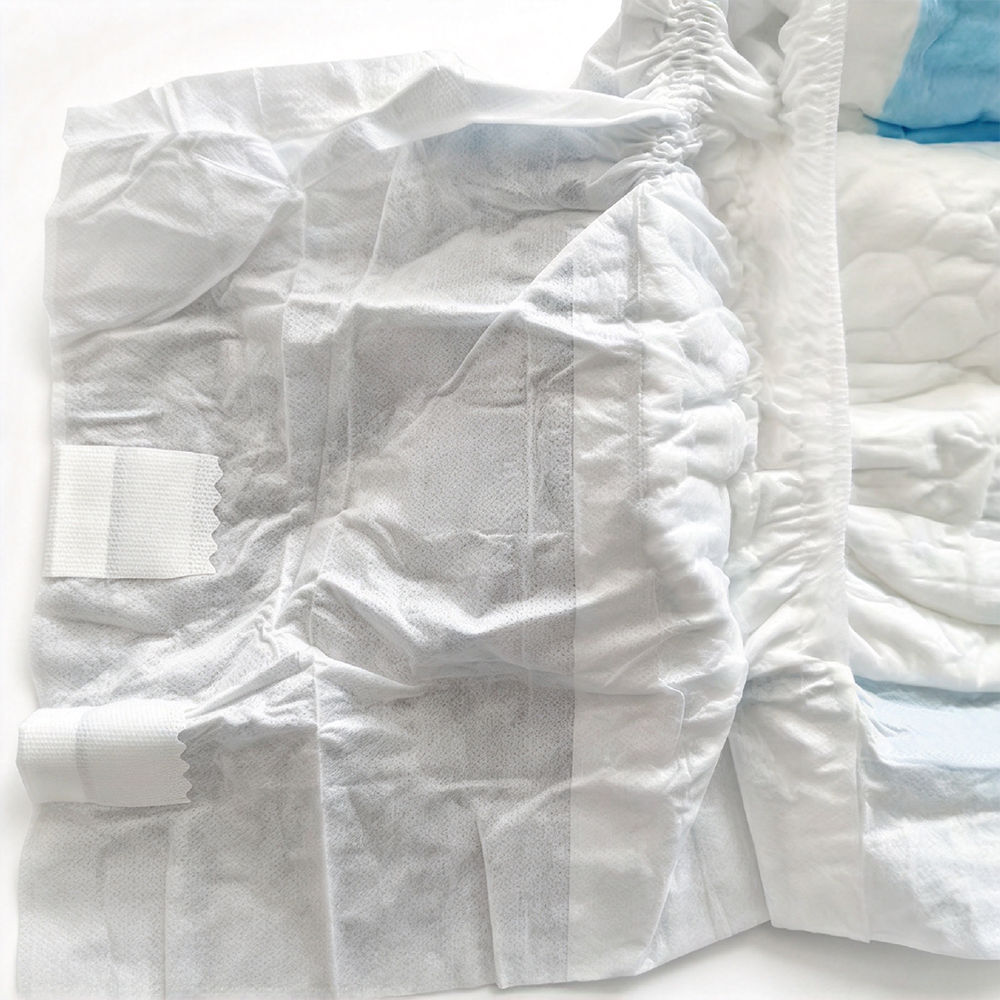
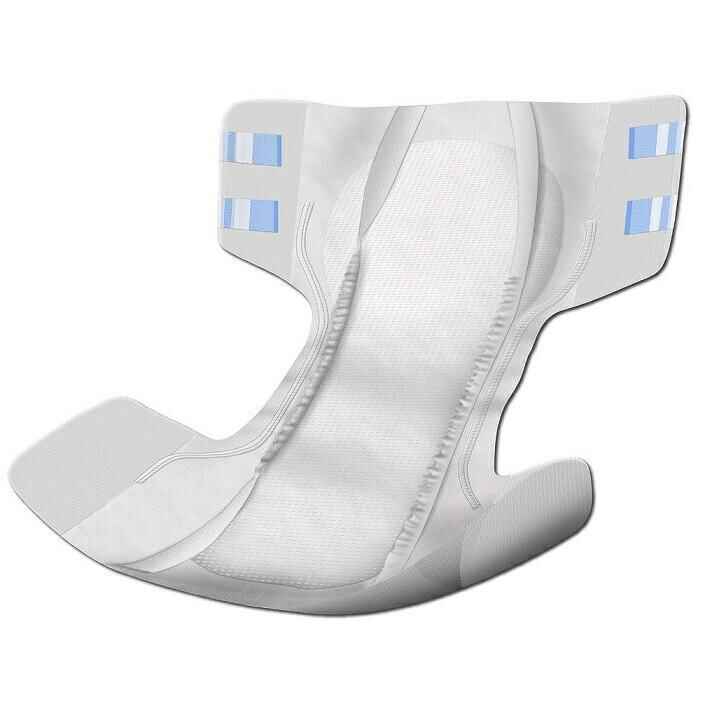
A landing zone is the front-panel surface that the closure tabs of an adult diaper fasten to. It is usually a polymer film for adhesive tabs and a loop nonwoven for hook tabs, and its construction largely decides whether tabs can be opened, repositioned, and closed again during a change. For sourcing teams, choosing between film and nonwoven is rarely a question of material alone. The choice sets the compatible tab type, the feel and noise of the front panel, the print options, the converting requirements, and the component cost. This guide compares film and nonwoven landing zones, explains what “refastenable” should mean in a specification, and lists the tests and RFQ details that turn it into something a supplier can quote and a laboratory can verify.
What Is a Landing Zone, and Why Does It Control Refastening?
The landing zone, also called the frontal tape or frontal landing area, is the receiving half of a two-part closure. The tab on the side wing is the other half. Neither half performs on its own, so a refastening result always belongs to a pairing: tab, zone, and the chassis layer beneath them.
Two families dominate:
Film landing zones are used with adhesive tabs. Avery Dennison’s description of adhesive closures says these systems use a release-coated frontal film or frontal tape so the closure can be reopened and reclosed without damaging the backsheet. That page covers baby diapers, so treat it as a statement of the mechanism. Adult briefs carry higher loads and need their own verification.
Loop nonwoven landing zones are used with hook tabs. The hooks grip fibers mechanically. Some loop zones carry a film laminated on the back for stability, and some are open nonwoven with no film.
For the tab-side decision that sits upstream of this choice, the supplier’s comparison of hook-and-loop tabs vs adhesive tabs for adult briefs covers care workflow, contamination, and test methods in more depth.
Film vs Nonwoven Landing Zones: What Changes for the Buyer?
The table below is qualitative. It contains no measured values because peel, shear, softness, and cost depend on the specific film, fiber, bonding pattern, adhesive, and hook. Treat each row as a question for the supplier.
Decision factor
Film landing zone (adhesive tab)
Film-backed loop (hook tab)
Open nonwoven loop (hook tab)
What to verify
Closure partner
Pressure-sensitive adhesive tab
Hook tab
Hook tab
Tab and zone quoted as one matched system
Refastening mechanism
Adhesive re-wets a release-coated surface
Hooks re-engage loop fibers
Hooks re-engage loop fibers
Peel and shear after a defined cycle count
Air permeability at the zone
Low, because the film is continuous
Low, because of the film layer
Higher, because no film is laminated on the back
Whether breathability at the front panel matters for your market
Hand feel and noise
Can feel stiff or crinkly
Varies by loop and film
Typically positioned as softer
Feel on the actual backsheet, in the target size
Print options
Frontal films can be printed
Often printable; confirm per grade
Zone can be printed; artwork beneath it may show through
Print method, layer position, and ink coverage
Converting behavior
Familiar, simple web handling
Stable, because the film adds body
High air permeability can complicate vacuum handling on some lines
Line trial or supplier’s converting confirmation
Component cost direction
Usually the simplest build
Adds hook and loop components
Adds hook tab and a loop material that can raise cost
Line-item quotation for each option
Main risk
Grip loss after repeated lifting or contamination
Zone stiffness and cost
Peel performance depends heavily on the loop grade
Aged-sample and contaminated-sample results
Several rows draw on Avery Dennison’s open nonwoven loop documentation, which describes open loop zones as having no film laminated to the back, giving air permeability and a soft look, with artwork beneath the zone visible and the zone itself printable. That is a supplier’s product page, so it describes one vendor’s construction rather than every nonwoven zone on the market.
How Do Film Landing Zones Behave With Adhesive Tabs?
A film landing zone works because the adhesive contacts a smooth, controlled surface. Three variables decide the result.
Surface condition. The zone must stay clean and undamaged where the tab lands. Barrier cream, powder, skin oils, and dust all reduce what the adhesive can wet out onto. Surface treatment and any print layer also change the contact surface. Napco National’s PE frontal tape listing names polyethylene and biaxially oriented polypropylene as landing-zone materials for its adhesive frontal tape, a reminder that “film” is a family of materials, not a single specification.
Release behavior. The zone needs to release the adhesive cleanly. If it releases too easily, the tab slips. If it bonds too hard, the zone can lift from the chassis or tear on opening. A photograph cannot show this.
Adult-size loads. Larger sizes and heavy overnight products put more tension on each tab. A film zone that holds on a small chassis may need more length and a different tab position on a 2XL or 3XL. The supplier’s guide to clear and printed landing zones for ABDL briefs covers the print and tape-grip questions that apply when the film zone carries artwork.
Film zones also carry a feel trade-off. A stiff film can be noisy, which some ABDL customers accept or prefer and many institutional buyers do not.
How Do Nonwoven Loop Landing Zones Behave With Hook Tabs?
A loop nonwoven works by giving hooks a field of fibers to catch. Because engagement is mechanical, it does not depend on a tacky surface, and repeated opening does not consume the grip in the same way an adhesive can lose it.
The variables that matter are fiber type and thickness, how the fibers are bonded, whether a film backs the nonwoven, how the zone is attached to the chassis, and which hook is paired with it. A loop grade that works with one hook can underperform with another. Avery Dennison positions its open loop as matched to its own hook tapes, which illustrates why zone and tab should be approved as a pair.
Performance has also changed over time. A 2015 Nonwovens Industry feature on diaper closure systems, written by an Avery Dennison marketing and R&D director, reports that peel performance in first-generation nonwoven loop systems was lower than in film-backed loop systems, and that manufacturers wanted film-backed peel levels with nonwoven softness and breathability. It also notes that greater material volume can raise closure cost and that high air permeability can create processing complications. The article is a decade old and vendor-authored, so use it to frame questions rather than to rank current products.
What Does Refastenability Mean in an Adult Diaper Specification?
Refastenability is the ability of the closure to be opened and closed a defined number of times while still meeting agreed peel and shear limits, without damaging the zone or the backsheet. A brief that is described only as “refastenable” has no verifiable requirement behind it.
A usable requirement has five parts:
The tab and landing-zone combination, named by material and construction.
A cycle count that reflects real handling, not an arbitrary number.
Peel and shear limits at the start and at the end of the cycle count.
The conditions: fresh versus aged samples, clean versus contaminated surfaces.
A damage criterion, such as no zone lift, film tear, or backsheet rupture.
Is a Nonwoven Landing Zone Always the Better Refastenable Choice?
No. The assumption that nonwoven loop is the premium, refastenable answer and film is the budget compromise deserves qualification.
Nonwoven loop has real advantages in softness and air permeability, and hooks do not depend on a clean adhesive contact. But it adds a component, may add cost, and its performance depends on the loop grade and its pairing with the hook. A film zone with a well-matched release-coated surface and adhesive can serve a brief that is fastened once and rarely reopened, and it is the simpler build. The Nonwovens Industry article also describes the film-plus-adhesive combination as a conventional closure still used in value tiers of some emerging markets.
The better question is how many times the closure will be opened in a real wear period, by whom, and in what conditions. Frequent checks in bed care favor a closure that holds after many cycles. Low-handling or price-sensitive programs can justify film if the zone and adhesive are specified and tested.
Illustrative example (hypothetical, not a customer case): A private-label brand moves from a film zone to an open nonwoven loop to get a quieter front panel. The fresh samples pass. After a simulated storage period and several cycles with barrier cream on the user’s hands, the hooks hold less well on one loop grade. The brand does not need to return to film. It needs to compare two or three loop grades under its own test conditions and approve the one that holds.
Which Specification Variables Change Landing Zone Performance?
Zone size and placement
Length and width should follow the size range. Tabs need room to land, be repositioned, and still sit flat. Specify dimensions per size and the allowed placement variation relative to the chassis centerline. Placement is one of the characteristics a vision system can check; the supplier’s article on in-process quality checks on an adult diaper production line explains that cameras can verify tape position but cannot verify bond strength, so peel and shear need laboratory sampling.
Attachment to the chassis and aging
A zone that lifts from the backsheet under peel fails even if the zone surface itself is fine. Ask how the zone is bonded, what adhesive add-on applies, and whether the bond was tested under peel after aging. Adhesive and bond behavior can shift with heat, humidity, and time, so request aged-sample results as well as fresh ones if the product ships through warm or humid routes. Ask also whether the backsheet beneath resists tearing under repeated peeling.
Print and surface treatment
Print on a film zone changes the surface the adhesive meets. On a loop zone, ink coverage and position can change the fiber surface or the visual effect. Request test results on the printed version rather than assuming it behaves like the plain one.
Tolerances
Zone dimensions, placement, basis weight or film thickness where relevant, and bond strength all need a nominal value, a permitted range, and a named method. Tighter is not automatically better, because limits that exceed what the process can hold raise cost and rejects without improving field performance.
How Do You Test Landing Zone Refastenability?
Use a two-level approach: component tests to compare materials, then finished-product tests to approve the brief.
At component level, standards give a common vocabulary. ASTM D3330 covers peel adhesion of pressure-sensitive tape, and its scope includes measuring adherence to a standard steel panel or to another surface of interest, which allows testing against a candidate film. ASTM D5170 is a peel-strength method for hook and loop touch fasteners using a constant-rate-of-extension tensile tester. Neither standard defines acceptance limits for an adult brief, neither replaces testing on the finished product with the real chassis, and the edition and any adaptation should be agreed in writing.
At finished-product level, run these on each landing-zone option:
Peel and shear on the finished brief, before and after the cycle count.
Repeated open-and-close cycles that mirror the care routine.
Aged samples after storage conditions that match the shipping route.
A contamination test using the barrier creams, powders, or wipes the end user applies.
A visual check for zone lift, film tear, ink transfer, fiber pull-out, and backsheet damage.
A wear trial that includes turning, sitting, and repositioning in the largest size sold.
The table below links common symptoms to likely causes. It is a diagnostic aid based on closure mechanics, not measured field data.
Symptom after refastening
Likely cause to investigate
First check
Tab loosens on second or third closure (adhesive)
Contaminated or damaged film surface; adhesive and release mismatch
Peel after cycles, with and without barrier cream
Tab slides under load
Low shear from a small zone or poor tab placement
Zone dimensions and tab landing position
Hooks stop gripping (loop)
Loop grade mismatch, flattened or clogged fibers, lint
Hook and loop pairing; inspection of used samples
Zone lifts from the chassis
Weak zone-to-backsheet bond
Peel of zone from backsheet, fresh and aged
Backsheet tears on opening
Backsheet too weak for the closure
Backsheet construction and peel direction
Front panel feels stiff or noisy
Film zone or film-backed loop
Hand-feel sample on the final backsheet
How Should Landing Zone Changes Be Controlled?
A substitute film, a different loop grade, a new adhesive, or a revised print can change refastening without changing how the brief looks. The supplier’s article on how material changes affect adult diaper performance makes the same point for the wider material set. Write a rule into the contract: no change to tab, hook, adhesive, film, loop material, ink, or bonding method without written notice, retesting against the approved criteria, and buyer approval.
What Should Buyers Specify Before Requesting a Quote?
A complete RFQ lets suppliers quote the correct construction at the first attempt. Include:
Closure system: adhesive tab, hook tab, or both options to be quoted.
Landing-zone type: film, film-backed loop, or open nonwoven loop, with your hand-feel and noise preference.
Dimensions: zone length, width, and placement per size, especially XL and above.
Backsheet: plastic-feel, cloth-like, or hybrid.
Print: artwork files, colors, placement, and whether you will accept surface print.
Refastening requirement: expected openings per wear period, cycle count, and end-user setting.
Acceptance criteria: peel and shear limits, method, aging conditions, and damage criteria.
Approval flow: pre-production sample, golden sample, and pilot production check.
Change control: retesting rules for any component substitution.
Order structure: quantity per design, MOQ per artwork or zone type, and reorder lead time, to be confirmed in the quotation.
Collect these items in one controlled document. The supplier’s guide to what to include in an adult diaper product requirement document shows how to define intended use, materials, test methods, and acceptance criteria so the landing-zone requirement is not buried in an email thread.
Frequently Asked Questions
What is a landing zone on an adult diaper?
A landing zone is the front-panel area that closure tabs attach to. It is typically a film or frontal tape for adhesive tabs and a loop nonwoven for hook tabs. Its material, size, and bonding affect grip and refastening.
Is a film or nonwoven landing zone better for refastenable adult briefs?
Neither wins in every case. Nonwoven loop is generally softer and more air-permeable, while film is simpler and often lower in component count. Choose based on how often the tab will be reopened, the backsheet, and test results on the finished brief.
Can adhesive tabs be refastened on a film landing zone?
Often, yes. Adhesive tabs on a release-coated film zone are designed to be reclosed, but grip depends on adhesive, film, contamination, and cycle count. Request peel and shear results after a defined number of openings, using fresh and aged samples.
Does a nonwoven landing zone need a matching hook tab?
Yes, the two should be approved as a pair. Hook geometry and loop construction interact, so a loop grade that works with one hook may underperform with another. Ask the supplier to name both components and test them together.
How many refastening cycles should an adult diaper be tested for?
There is no universal figure. Set the count from how many times caregivers or wearers realistically open the tab during one wear period, then add a margin agreed with your supplier. Define the count, method, and acceptance limits in writing.
Does printing on the landing zone affect tape performance?
It can change the contact surface, so it should not be assumed equal to an unprinted zone. Ink coverage, coating, and layer position matter. Ask for peel and shear results on the printed finished brief, including after repeated refastening.
What should I put in an RFQ about landing zones?
State the tab type, zone material and size per size, backsheet, print requirements, expected opening frequency, test methods and limits, and change-control rules. Also request line-item quotes for each landing-zone option so cost differences are visible.