How Mobility Levels Should Shape an Adult Incontinence Product Portfolio
Mobility changes everything.
When a buyer groups every adult with bladder leakage under one neat absorbency ladder, the resulting portfolio ignores whether the wearer can stand, pull clothing down, pivot safely, tolerate a long change, or depend on a caregiver at 2:00 a.m.
Why would one product format serve all of them?
It cannot.
The adult incontinence industry still talks too much about “light, moderate, and heavy” protection. Those labels matter, but they answer only one question: how much fluid must the core manage?
They do not tell us how the product gets onto the body.
They do not tell us whether the wearer can reach a toilet, whether a nurse must perform the change in bed, or whether a frail adult is rushing across a dark room with an urgent bladder. Yet these practical facts decide whether adult incontinence products work outside a laboratory.
My position is blunt: mobility should determine product format before absorbency determines product tier.
Mobility Is a Product Specification, Not a Demographic Detail
Functional urinary incontinence is leakage caused by physical, cognitive, or environmental barriers that prevent a person from reaching or using a toilet. That definition matters because it shifts part of the problem away from bladder capacity and toward movement, access, clothing management, balance, and care support.
A 2025 PubMed study of 1,628 women over age 65 reported a mean participant age of 79.6 ± 8.2 years. Functional urinary incontinence appeared in 7.6% of participants by itself, with additional participants experiencing functional incontinence alongside urgency or stress incontinence. Those affected had poorer Tinetti balance and gait scores, weaker handgrip strength, lower Basic Activities of Daily Living scores, and slower Timed Up and Go performance.
That is not a packaging insight. It is a portfolio instruction.
Another longitudinal study, published through PubMed using data from the Study of Women’s Health Across the Nation, found that urinary incontinence was associated with later disability, particularly in mobility, communication, and life activities. Larger leakage amounts were associated with almost three times the odds of difficulty in the mobility domain compared with leakage measured as drops.
The relationship runs both ways: impaired mobility can make toileting harder, while persistent leakage can restrict activity and social participation.
So why do so many catalogs still begin with gender, package color, and a vague absorbency icon?
Because those categories are easy to sell. Mobility is harder. It forces the supplier to understand what actually happens during a change.
Four Mobility Levels, Four Different Product Jobs
The best adult incontinence products for different mobility levels are not necessarily the thickest products. They are the formats that create the least friction between the wearer, the toilet, the caregiver, and the changing environment.
Independent and Fully Ambulatory Adults
These users can usually walk, stand, transfer, manage trousers or skirts, and complete toileting without physical assistance.
For light leakage, slim incontinence pads and liners may be enough. They preserve normal underwear use, minimize bulk, and support frequent toilet access.
For moderate leakage or reduced warning time, pull-up incontinence underwear for active adults becomes the stronger core SKU. The site’s current underwear range uses an underwear-like chassis, a 360-degree elastic waistband, and tear-away side seams for removal.
Independence sells.
But the pull-up must still be tested while walking, bending, sitting, climbing stairs, and repeatedly lowering the waistband. A product that performs well while standing motionless may roll at the waist, open a leg gap after twenty minutes in a chair, or tear when pulled over the hips.
Ambulatory but Frail, Slow, or Urgency-Prone Adults
This is the segment most portfolios mishandle.
The user can walk, but perhaps only with a cane, rollator, grab rail, or furniture support. Transfers take longer. Hand strength may be reduced. Urinary urgency may cause the person to rush.
The updated CDC falls data states that more than one in four adults aged 65 and over falls each year, with walking and balance difficulties listed among the recognized risk factors. That does not prove a pull-up prevents falls, and marketers should not make that claim. It does mean that product handling must not create unnecessary toileting steps or prolonged standing.
For this group, I would stock easy-stretch pull-ups with clear front/back identification, soft tear-away seams, low dressing resistance, and an absorbency level that provides backup without encouraging delayed toileting.
A tab brief may be appropriate at night or after a fall, operation, stroke, or rapid loss of function. Mobility is not static. Portfolios should allow users to move between formats without abandoning the brand.
Wheelchair Users and Transfer-Assisted Adults
These users may move independently in a wheelchair but need help standing, pivoting, transferring, or managing clothing.
This is where the simplistic “active equals pull-up” rule breaks.
Physics still wins.
Once standing requires a hoist, transfer board, two-person assist, or repeated weight shifting, removing a saturated pull-up can demand more handling than the product’s underwear-like appearance justifies, especially when trousers, shoes, orthoses, or compression garments must also be removed.
Why make the change harder?
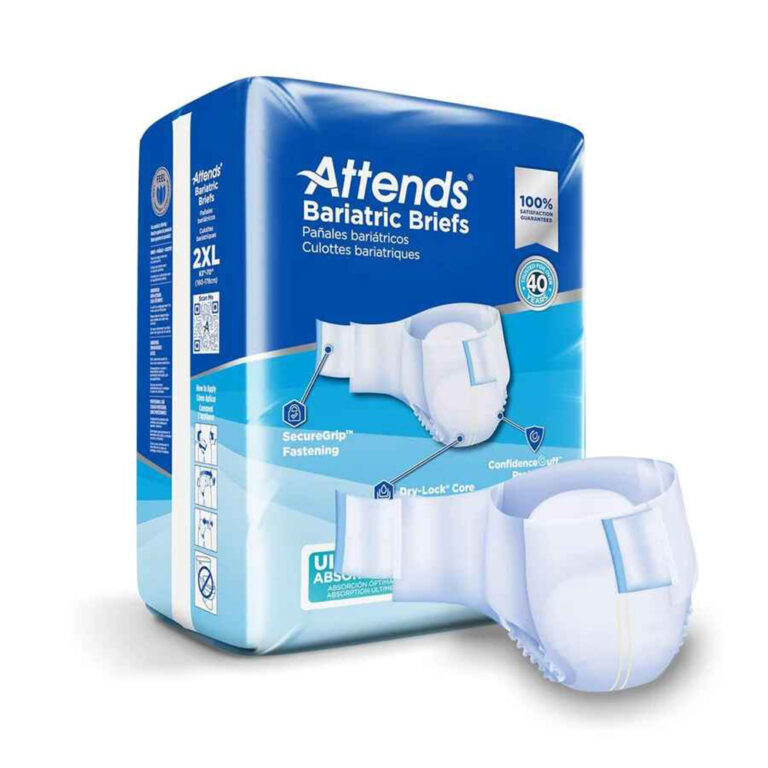
A hybrid assortment works best: pull-ups for users who can complete reliable supported standing transfers, and adult diapers with refastenable tabs for users who need seated, side-lying, or caregiver-controlled changes.
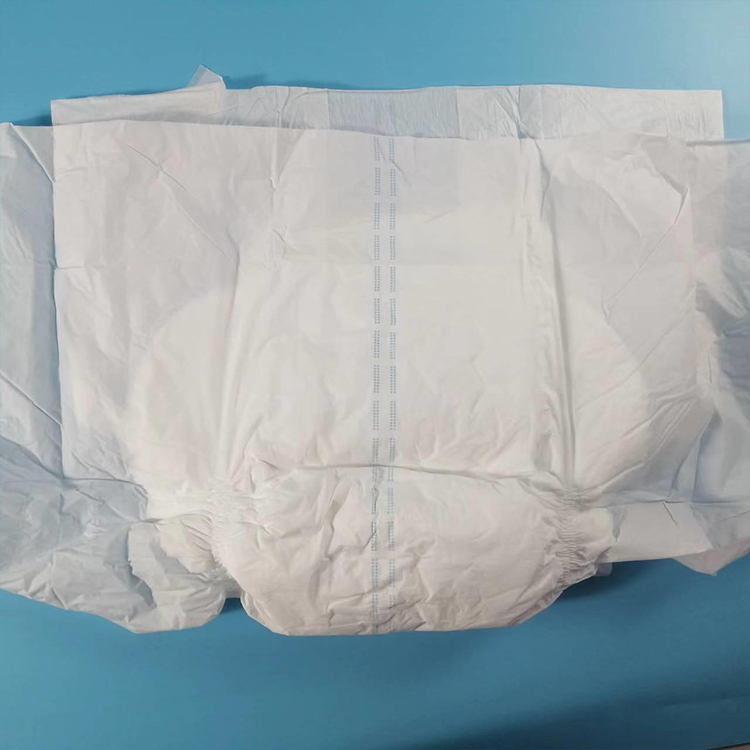
Tab-style briefs open flat and can be adjusted while the wearer is standing, sitting, or lying down. Refastenable side tabs also allow the caregiver to correct tension after a transfer rather than accepting whatever fit survives the movement.
Bedbound and Fully Assisted Adults
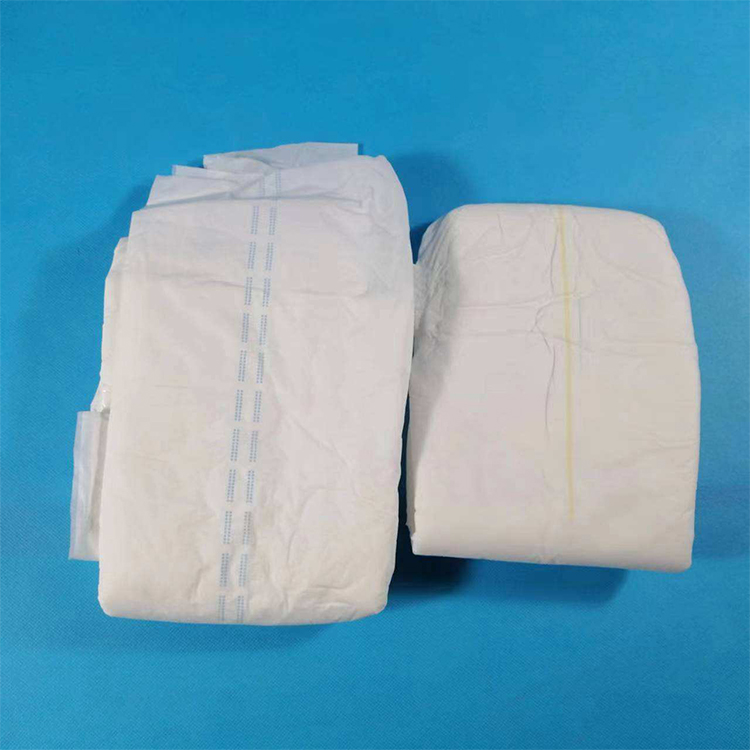
For bedbound users, tab-style briefs should be the portfolio backbone.
Not the backup. The backbone.
Pull-ups force the product over the legs and hips. That may be manageable for an independent walker, but it is inefficient during bed-level care, bowel cleanup, skin inspection, or repeated checks.
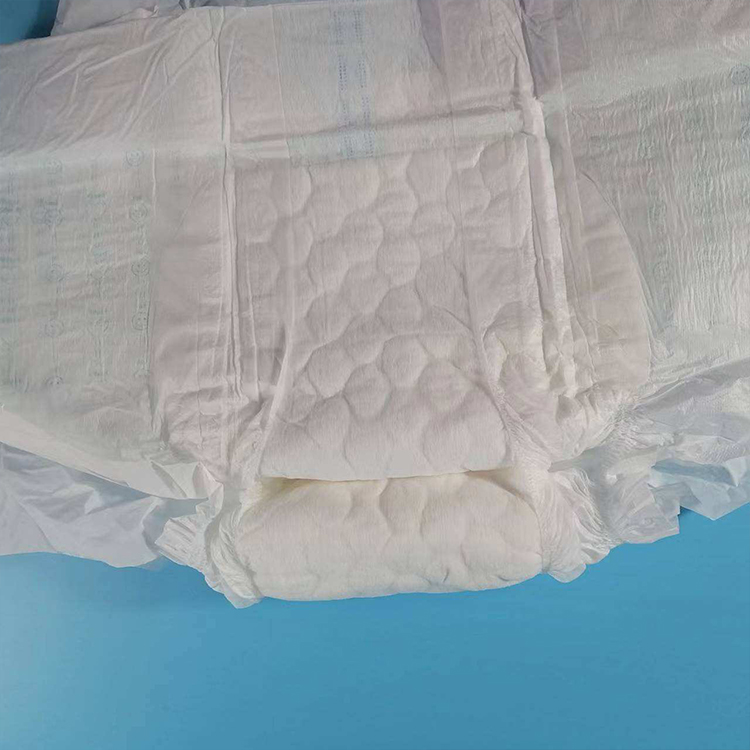
The better chassis opens flat, provides full rear coverage, uses standing inner leak guards, and allows the tabs to be reopened without destroying the side panel. Bed-care ranges should also include disposable or reusable underpads and appropriately sized adult cleansing wipes, because containment, surface protection, cleansing, drying, and skin observation form one operating system.
Treating maximum absorbency as the only requirement
Build the Range Around Workflow, Not Package Claims
The weakest adult incontinence product portfolios are built like supermarket shelves: one light product, one medium product, one heavy product, and an overnight pack with a moon printed on it.
That is merchandising, not continence care product selection.
A professional range should answer five operational questions:
Can the wearer apply and remove the product without assistance?
Can the product be changed while seated or lying down?
Can a caregiver inspect the skin without completing a full change?
Does the chassis remain sealed after walking, transferring, or turning?
What supporting products are needed when the primary product reaches its limits?
Start With a Mobility Matrix
Separate users into at least four groups: independent, ambulatory with limitations, transfer-assisted, and bedbound.
Then divide each group by leakage pattern, wear window, body size, and care setting.
This prevents SKU inflation. Instead of launching eight nearly identical pull-ups with different marketing names, the buyer can create one clear daytime pull-up, one higher-capacity pull-up, one standard tab brief, and one high-performance bed-care brief, each with a documented user and workflow.
Treat Day and Night as Different Use Cases
A user may be independent during the day and fully assisted at night.
That is normal.
Medication, fatigue, nocturia, arthritis, cognitive changes, and the absence of daytime caregivers can change what the person can safely manage after dark. A dual-format recommendation—pull-up by day and tab brief at night—is often more honest than forcing one SKU to perform both jobs badly.
Specify the Chassis Before Increasing the Core
Superabsorbent polymer, commonly sodium polyacrylate with the repeating formula (C₃H₃NaO₂)ₙ, helps retain liquid inside disposable absorbent products. But adding more polymer and fluff pulp does not repair weak leg elastics, poor acquisition speed, a low rear rise, narrow crotch geometry, or tabs that detach during repositioning.
More core is not always more protection.
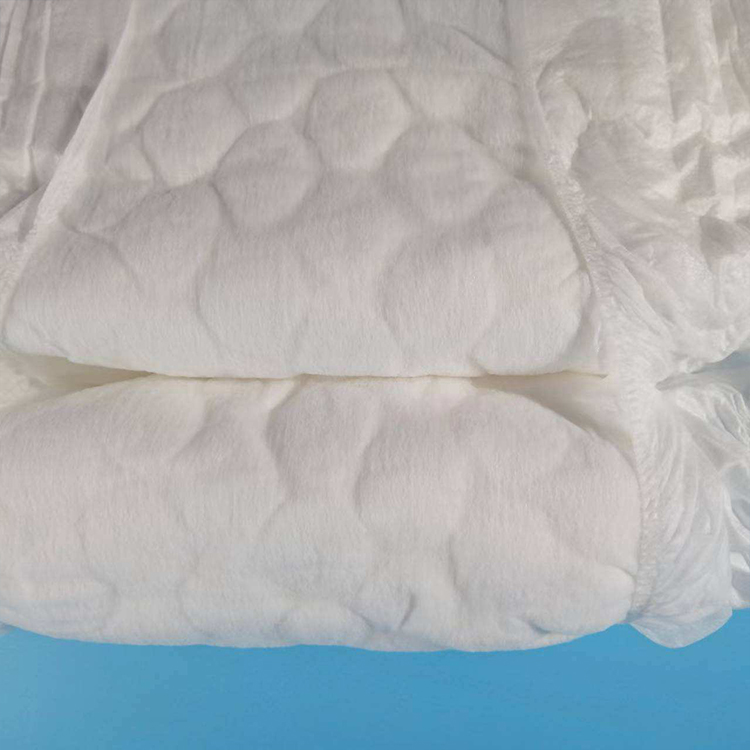
The acquisition-distribution layer must move fluid away from the strike zone. The standing leak guards must remain upright. The elastic system must recover after movement. The topsheet must limit rewet under sitting and side-lying pressure.
I would reject any adult diaper portfolio whose technical file leads with a maximum capacity number but provides no evidence from wear trials, repeated fastening, seated compression, side-lying, or caregiver application.
The Procurement Math Most Buyers Ignore
The cheapest unit price can create the most expensive care routine.
A low-cost pull-up that requires complete undressing during an assisted change may consume more staff time than a slightly higher-priced tab brief. A poor leg seal can add sheets, mattress protection, laundry, room cleaning, complaint handling, and emergency replenishment.
The CDC’s national report on incontinence among older Americans found that mobility impairment is one of the interacting factors associated with bladder and bowel incontinence. It also reported that 50%–75% of the measured costs were tied to routine management such as absorbent products, protection, and laundry, although the underlying cost data are historical and should not be presented as current market pricing.
That caveat matters. Old dollar figures should not be dressed up as 2026 economics.
The operating logic, however, remains valid: procurement must measure the system cost, not merely the pack price.
For a commercial trial, I would track leakage incidents per 100 wear periods, unplanned changes, bedding changes, minutes per assisted change, product damage during application, skin complaints, user refusals, returns, and reorder rate.
Those figures expose weak products quickly.
Skin Access Should Influence the Portfolio
Moisture management is not the same as skin care.
AHRQ’s pressure-injury prevention guidance calls for comprehensive skin assessment, standardized risk assessment, and a tailored care plan. It also tells clinicians to assess moisture level and skin integrity and to distinguish moisture-associated skin damage from pressure injuries.
That has direct product consequences.
A fully assisted user may need a brief that can be opened for inspection and closed again. A bedbound user may require a wetness indicator that staff can read without unnecessary handling. A bowel-incontinent user needs fast access and enough rear coverage to control cleanup.
And no, “breathable” printed on a package does not settle the issue.
Breathability depends on film construction, vapor transmission, core saturation, fit, room temperature, clothing, and wear duration. It should be treated as a measurable material characteristic, not a moral virtue.
A Smarter SKU Architecture
A practical mobility-led adult incontinence product portfolio could contain:
Tier 1: Independent Living
Light liners, shaped pads, discreet pull-ups, gender-positioned options, and individually wrapped formats for work or travel.
Tier 2: Supported Mobility
Easy-on pull-ups with softer stretch, higher-capacity daytime underwear, clear orientation markings, and a compatible night brief.
Tier 3: Assisted Care
Standard tab briefs, high-capacity tab briefs, XL–3XL options, booster pads validated for flow-through performance, chair pads, underpads, and large cleansing wipes.
Tier 4: Bed and Heavy Care
High-rear-rise tab briefs, stronger refastenable systems, bowel-containment options, overnight cores, large underpads, and cleansing products sized for bed bathing.
Brands developing these tiers through an adult diaper OEM/ODM program should write mobility into the product brief alongside waist range, core weight, SAP ratio, topsheet, elastic count, packaging, and target price. The manufacturer’s current service pages describe customization across pull-ups, briefs, pads, underpads, and wipes, making a mobility-led family architecture technically possible.
Do not ask the factory for “a premium diaper.”
Ask for a product that completes a named job for a named user under a named changing routine.
That request can be tested.
“Premium” cannot.
FAQs
How should mobility levels affect adult incontinence product selection?
Mobility level is the wearer’s practical ability to stand, walk, transfer, toilet, manage clothing, and participate in a change; it should determine whether the portfolio leads with pads, pull-up incontinence underwear, tab-style briefs, or bed-care support products before absorbency tiers are assigned.
After format selection, compare leakage volume, wear duration, fit, skin condition, dexterity, cognitive ability, and access to caregiver support.
What adult incontinence products are best for active adults?
Pull-up incontinence underwear is a step-in, 360-degree elastic-waist product designed primarily for adults who can stand, walk, lower and raise clothing, and complete most toileting tasks independently, making it the best daytime format for many active or mildly mobility-limited users.
Pads and liners may be more discreet for light leakage. Users with heavier leakage may need a higher-capacity pull-up, but the product must still support normal toileting rather than replace it.
Are tab-style briefs better for adults with limited mobility?
Tab-style briefs are open-flat, refastenable adult incontinence products designed for users who need caregiver help, seated or bed-level changes, repeated fit adjustment, bowel cleanup, or heavier overnight containment, because the brief can be positioned without requiring the wearer to step through leg openings.
They are not automatically better for every wheelchair user. The deciding factor is transfer ability and participation in changing, not the wheelchair itself.
How many mobility-based SKUs should a portfolio include?
An adult incontinence product portfolio should usually contain mobility-led good-better-best options across pads, pull-ups, tab briefs, and bed-protection accessories, but each SKU needs a distinct job, user group, change routine, and price point rather than a cosmetic packaging difference.
A focused range of well-separated products usually serves buyers better than a crowded assortment whose absorbency names overlap and confuse caregivers.
Is mobility more important than absorbency when choosing adult diapers?
Mobility and absorbency should be treated as separate selection axes: mobility determines the product format and changing method, while leakage volume, void pattern, wear time, body shape, and skin condition determine the core capacity, intake speed, leak-guard design, and supporting accessories.
Choosing absorbency first often produces a technically powerful product that the wearer or caregiver cannot apply efficiently.
How should adult incontinence products be tested for different mobility levels?
Mobility-led product testing is a protocol that evaluates fit and leakage during real movements—walking, sitting, standing, wheelchair transfers, side-lying, turning, and caregiver changes—rather than relying only on static laboratory capacity figures that cannot reveal waistband roll, leg-gap formation, tab failure, or rewet under pressure.
Trials should document both user outcomes and workflow measures, including application time, unplanned changes, leakage, skin observations, product damage, and wearer acceptance.
Build a Mobility-Led Product Range Now
Stop building the portfolio around package adjectives.
Map the target users by independent walking, frailty, transfer assistance, wheelchair use, and bed-level care. Assign pads, pull-ups, tab briefs, underpads, and wipes to those workflows. Then test each product during the movements and changes it is expected to survive.
For private-label development, send the manufacturer a mobility matrix with target waist sizes, wear windows, leakage patterns, change positions, caregiver involvement, and required supporting products.