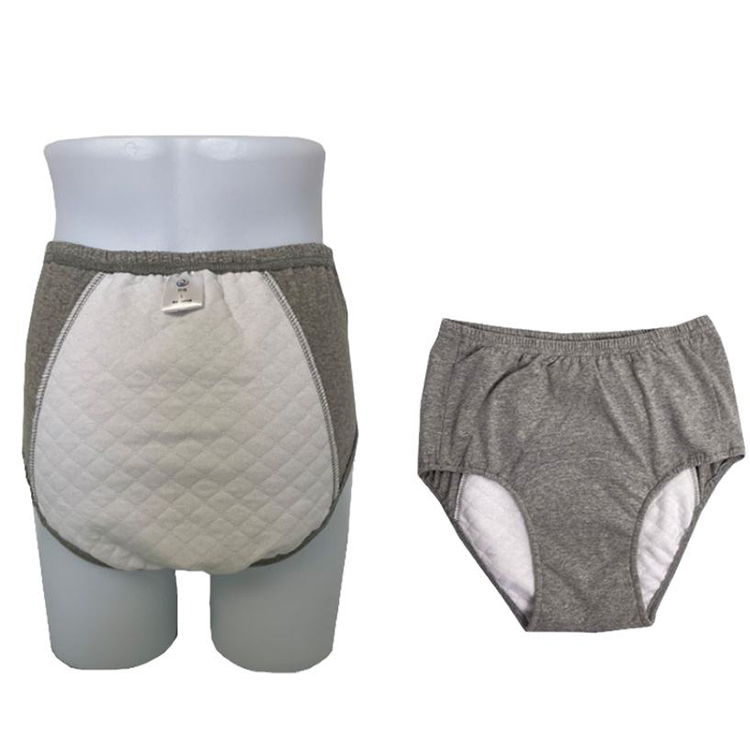
How to Design Men’s Incontinence Underwear for Real Use Cases
Most men’s incontinence underwear is not genuinely designed for men.
It is a generic adult pull-up with a charcoal waistband, a masculine package, and perhaps the word “active” printed in large type. The absorbent core remains nearly symmetrical. The crotch remains too wide. The front target zone receives little additional intake capacity. Then the supplier wonders why men report front leakage while much of the rear core is still dry.
That is not a capacity failure. It is a design failure.
The market is also larger and more varied than many product teams assume. The U.S. National Institute of Diabetes and Digestive and Kidney Diseases reports that as many as one in three men over 65 may experience accidental urine leakage, while approximately half of men seeking treatment for lower urinary tract symptoms experience urinary incontinence. These users are not one homogeneous group. They include mobile workers, drivers, postoperative users, side sleepers, men with urgency, and men who need assistance changing.
A single “maximum absorbency” pull-up cannot serve all of them well.
Stop Designing a Generic Pull-Up and Painting It Gray
The starting point for men’s incontinence underwear design should not be grams of fluff pulp or sodium polyacrylate. It should be the failure event.
What happens immediately before the leak?
Does urine arrive as a fast urge-related release while the wearer is standing? Does the garment leak at the front waistband while he is seated in a car? Does moisture return to the surface after two hours in an office chair? Does the leg opening open during walking? Does the core sag after repeated movement?
Those questions determine the product.
Fit comes first.
Because a pull-up can post an impressive laboratory capacity while still failing during walking, bending, prolonged sitting, or side sleeping, the development team must treat body contact, front-core location, elastic recovery, intake speed, and pressure rewet as one interconnected containment system rather than isolated components.
Why would any serious buyer approve the product from a soak-capacity number alone?
Moderate daytime leakage for independent, mobile users
Heavier or repeated leakage requiring extended protection
And there is a boundary manufacturers should admit: a pull-up is not always the correct format. Men with very heavy leakage, bowel incontinence, limited mobility, or caregiver-assisted changing may be better served by products from a broader men’s incontinence product portfolio, including tab-style briefs or dedicated pads.
Trying to force every user into a pull-up may increase sales of one SKU. It also increases leakage complaints.
Table of Contents
Build the Garment Around Male Wetting Patterns
Move the working core forward
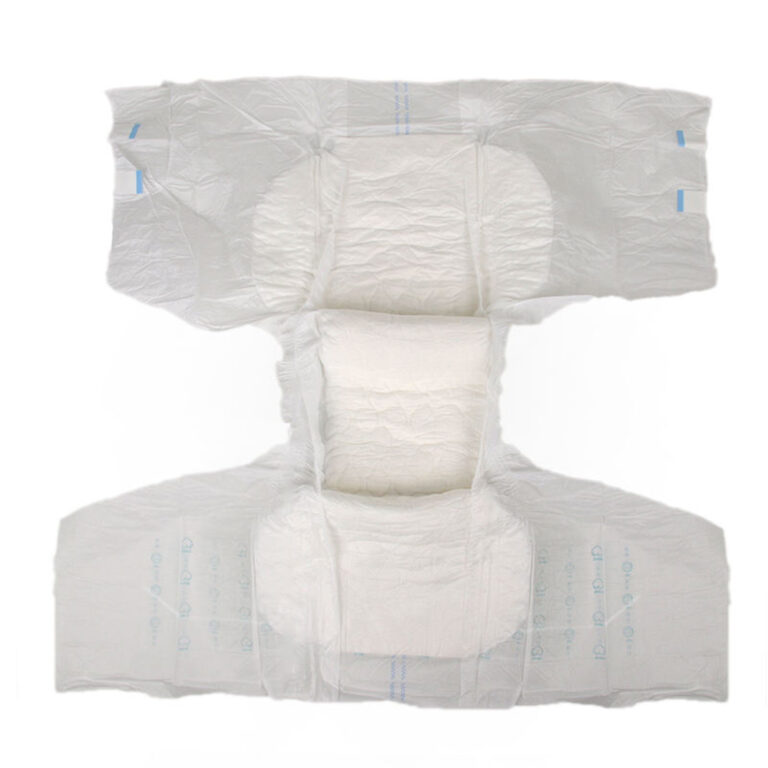
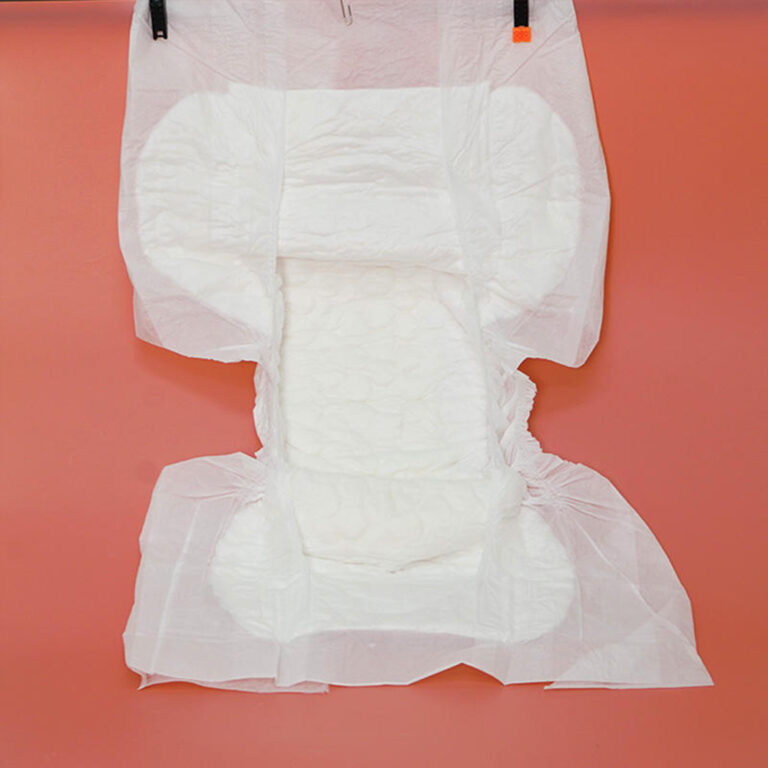
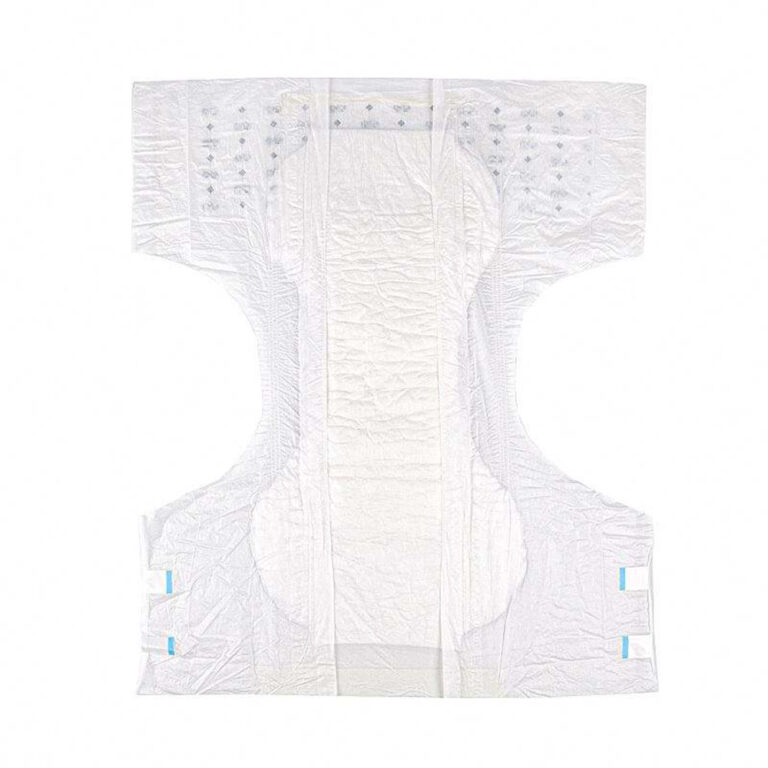
The absorbent core in male incontinence underwear should not merely be longer. It should be positioned correctly.
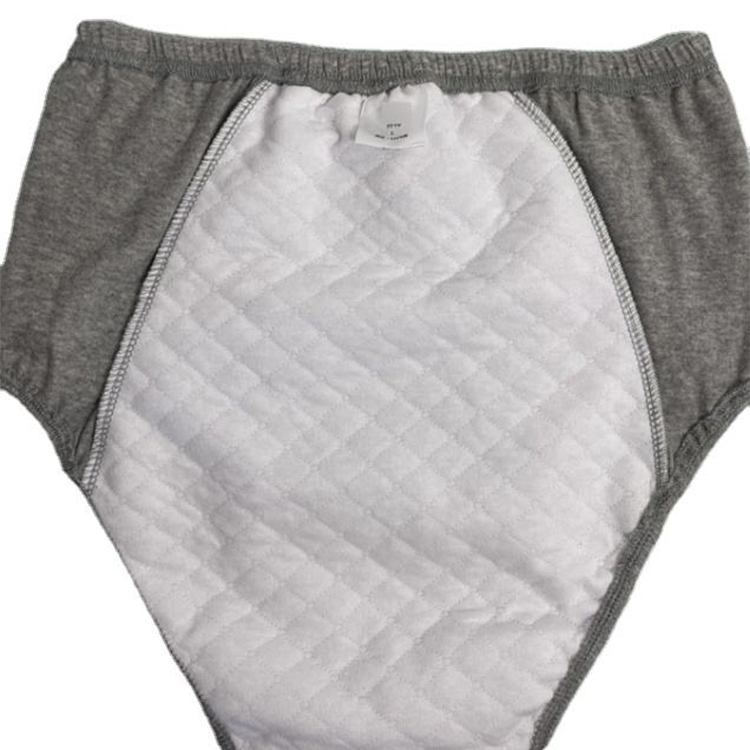
For many male wearers, initial wetting occurs toward the front and front-center of the garment. That calls for a reinforced target zone extending upward from the crotch rather than a uniform rectangular pad with equal material spread from front to rear.
A practical core may combine:
Hydrophilic polypropylene topsheet
Acquisition and distribution layer, often abbreviated ADL
Breathable polyethylene film laminated to a cloth-like outer layer
Sodium polyacrylate can be represented by the repeating structure [–CH₂–CH(CO₂Na)–]ₙ. It provides strong fluid retention, but adding more SAP is not a complete design strategy. Excessive or poorly distributed SAP may slow liquid penetration, harden the wet core, create gel blocking, or concentrate swelling in one area.
My rule is blunt: use SAP to retain fluid, not to hide weak distribution engineering.
The front zone needs fast intake before it needs impressive theoretical capacity. An effective ADL should spread liquid longitudinally and laterally before the first wet point becomes saturated. The rear core still matters for seated wear and fluid migration, but it should not consume material merely to make the product look substantial when unfolded.
Design for the first ten seconds
Urine can reach the leg opening before the SAP has time to swell.
That is why acquisition speed matters. The NWSP 70.9 acquisition and rewet method evaluates how quickly an incontinence product accepts 0.9% saline solution and how much liquid returns under pressure. It is much closer to the questions buyers should ask than a single dry-versus-wet weight comparison.
A development team should record:
First-dose acquisition time
Second- and third-dose acquisition time
Fluid spread pattern
Rewet mass under defined pressure
Leakage location
Core deformation after dosing
Surface dryness at the front target zone
Repeated doses matter because many poor products pass the first dose and collapse on the second.
For an internal prototype screen, a brand might use repeated fixed doses—such as three equal applications of 0.9% saline—followed by pressure rewet and movement checks. The exact volume must match the intended use case and should not be presented as a universal industry threshold.
Treat elastics as performance components
Leg elastics are frequently purchased as a low-cost commodity. That is a mistake.
The elastic system determines whether the garment stays against the body when the wearer walks, sits, climbs stairs, or bends. A strong core cannot stop liquid that has already found an open channel between the thigh and the product.
Key variables include:
Number and position of elastic strands
Extension ratio
Retraction force
Adhesive placement
Leg-opening geometry
Cuff height and standing angle
Waistband recovery after repeated stretching
Too little tension creates gaps. Too much causes red marks, rolling, and wearer rejection.
And body shape matters. Waist circumference alone does not predict the fit of male incontinence underwear. Hip circumference, thigh size, abdominal shape, rise, crotch width, and mobility should all influence the size specification.
Control bulk, noise, heat, and visual exposure
Discretion is not a cosmetic bonus. It is part of functional performance.
The garment should remain difficult to detect under trousers when dry and after partial loading. A swollen front core, noisy backsheet, high waistband, or visible blue wetness indicator may expose the product even when it does not technically leak.
For the best incontinence underwear for active men, evaluate:
Dry and wet thickness
Rustling during walking
Waistband height above trousers
Core sag after movement
Heat and moisture accumulation
Ease of pulling the garment up and down
Side-seam tear force during removal
A product that contains fluid but discourages the wearer from leaving home has not fully succeeded.
Real-Use Design Matrix for Men’s Adult Pull-Up Underwear
Real Use Case
Likely Failure Mode
Recommended Design Response
Validation Priority
Light post-void dribble
Local front wetness and unnecessary bulk
Slim front absorbent zone, soft topsheet, low-profile core
Front-zone rewet, discretion, garment thickness
Active work or travel
Leg gaps, core shift, slow gush intake
360° waistband, stable leg elastics, fast ADL, reinforced front core
Walking test, repeated-dose intake, seam strength
Long periods of sitting
Compression rewet and front-side leakage
High-retention SAP distribution, pressure-resistant core, controlled crotch width
Rewet under load, seated mannequin or wear test
Urgency-related release
Surface pooling before absorption
Rapid acquisition layer, open core structure, standing leak guards
Consider tab-style brief rather than forcing a pull-up
Caregiver trial, change time, leakage comparison
The table exposes an uncomfortable truth: “maximum absorbency” is not a use case.
It says nothing about where the liquid arrives, how quickly it arrives, whether the wearer is standing or seated, or how long the garment remains under compression.
Absorbency Labels Are Not Engineering Specifications
Light. Moderate. Heavy. Maximum. Overnight.
These words may help shoppers compare packages, but they are not reliable technical specifications across manufacturers. One brand’s “maximum” may perform below another brand’s “moderate,” and two products with similar whole-product capacity can behave very differently during actual use.
The published ISO 11948-1:1996 whole-product test, reviewed and confirmed in 2023, measures the absorption capacity of the absorbent core of body-worn urine-absorbing aids. It remains useful for controlled comparisons, but it does not represent every movement, body position, cuff interaction, or compression condition encountered by a wearer.
A 2018 investigation by Cottenden and Macaulay compared ISO testing and other laboratory methods against the in-use performance of 12 experimental products tested by 55 nursing-home residents across six laboratories. ISO 11948-1 produced repeatable results and reasonable correlation with actual use, but it failed to detect measurable benefits from leg cuffs. The authors advised caution when using capacity data as the sole predictor of leakage. The published study is available through the Journal of Engineering in Medicine.
That finding should change how procurement teams work.
A second major evaluation, led by Mandy Fader and funded through the UK Health Technology Assessment programme, compared key absorbent product designs using randomized crossover trials. It found substantial differences between designs and considerable variation in individual user preferences. The practical conclusion was not “find one winning format.” It was to allow different product designs for different circumstances. The research record is indexed by PubMed.
This is exactly why brands should study the mechanics described in common causes of adult diaper leakage and request evidence beyond a supplier’s headline absorbency claim.
Prototype, Wear-Test, and Approve with Measurable Gates
A men’s incontinence underwear project should move through controlled development stages.
1. Write the use-case statement
Do not begin with “We need an L-size pull-up with high absorbency.”
Write something measurable:
A disposable male pull-up for independently mobile users, intended for moderate daytime urinary leakage during six to eight hours of work, with reinforced front intake, discreet appearance under trousers, and easy toilet use.
That statement gives the engineer something to build.
2. Freeze the product dimensions
Record both relaxed and stretched measurements:
Total garment length
Front and rear rise
Waist width
Maximum stretched waist
Crotch width
Leg-opening circumference
Core length and width
Distance from core front edge to waistband
ADL position
Cuff height
Side-seam dimensions
Do not accept size names without actual dimensions. “Large” is not a unit.
3. Establish a controlled liquid protocol
Use 0.9% saline or another documented test liquid. Fix the dose volume, flow rate, dosing position, interval, product conditioning, pressure load, and pass/fail criteria.
Then keep them fixed between prototypes.
Changing the protocol after every poor result is not development. It is result shopping.
4. Test more than total capacity
At minimum, compare:
Acquisition time
Rewet
Leakage before capacity
Core integrity
Front and side containment
Elastic recovery
Seam strength
Wet thickness
Breathability
Odor performance
Wearer dressing and removal
The site’s adult diaper test reports and certification support can provide a useful framework for requesting absorption, rewet, leakage, breathability, material declarations, lot traceability, and third-party documentation.
5. Conduct controlled wearer evaluations
Laboratory data should eliminate obvious failures. Wear trials should expose everything the laboratory missed.
Include men with different:
Waist-to-hip ratios
Thigh circumferences
Abdominal shapes
Mobility levels
Leakage patterns
Daily routines
Clothing styles
Ask where the product leaked, but also ask whether it rolled, rustled, sagged, felt hot, showed above trousers, or became difficult to pull down after wetting.
6. Lock the approved sample
The approved sample must become the production reference.
Freeze the bill of materials, component suppliers, core weight, SAP-to-pulp distribution, elastic specification, adhesive pattern, dimensions, packaging count, and test tolerances. Any substitution should trigger controlled review rather than an informal factory decision.
An FDA training example explains that an adult diaper intended to manage adult incontinence meets the definition of a medical device, while an infant diaper generally does not, because infant elimination is not treated as a medical condition. The example identifies protective garments for incontinence under 21 CFR 876.5920 and product code EYQ.
So packaging language cannot be treated as a last-minute marketing task.
Claims such as “prevents infection,” “protects damaged skin,” “clinically proven,” or “eliminates odor-causing bacteria” may create evidence or regulatory obligations beyond basic containment claims. Market classification also varies by jurisdiction.
Use qualified regulatory advice before launch. A factory certificate does not automatically legalize every claim printed on the package.
What Buyers Should Put in the RFQ
A serious request for quotation should include more than size, color, and package count.
Specify:
Intended user and leakage pattern
Disposable or reusable construction
Target wear duration
Front-core reinforcement requirement
Required size range and body measurements
Core composition and distribution
Topsheet and ADL construction
Backsheet breathability
Waist and leg elastic requirements
Leak-guard configuration
Acquisition and rewet protocol
Whole-product capacity method
Wear-test expectations
Packaging format
Market-specific labeling
Required declarations and test reports
Change-control procedure for repeat orders
And ask for the data behind every adjective.
“Soft,” “breathable,” “high absorbency,” and “leak-proof” mean very little until the supplier explains the material, method, unit, test condition, and tolerance.
FAQs
What is men’s incontinence underwear?
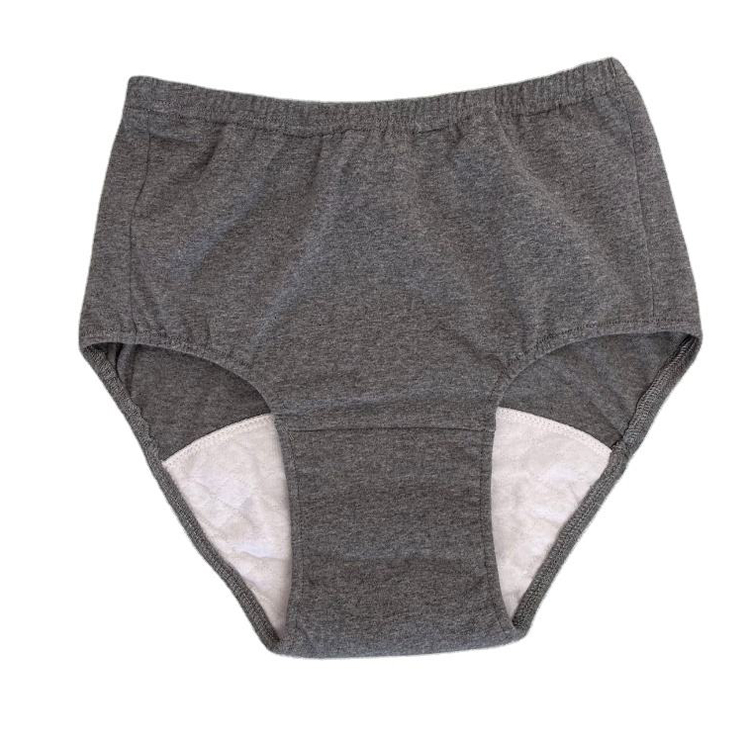
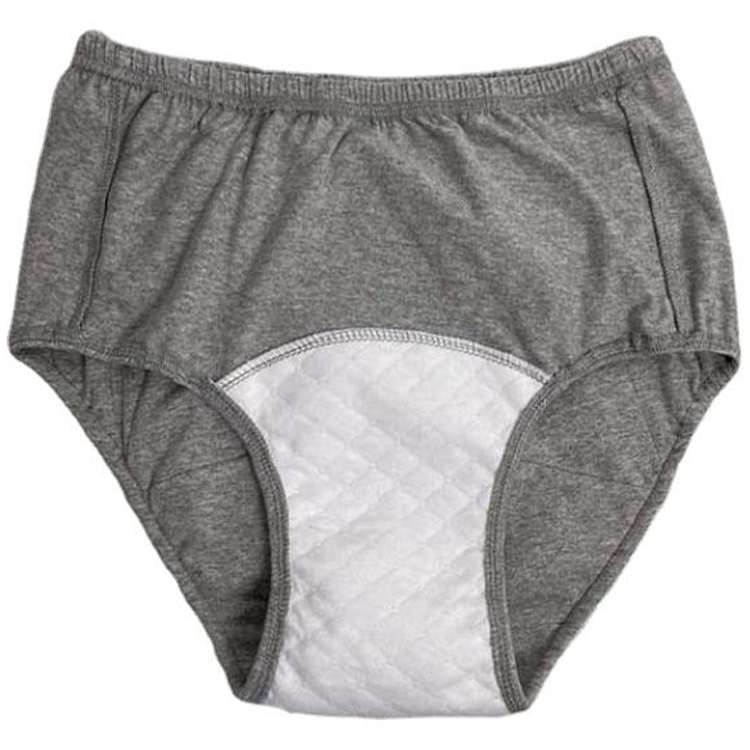
Men’s incontinence underwear is a disposable or reusable pull-on garment engineered around male anatomy, with absorbency concentrated toward the front, elastic containment at the waist and legs, and a fluid-resistant outer layer that helps manage urine leakage while resembling ordinary underwear.
Unlike a generic unisex pull-up, a male-focused design should consider front wetting, seated compression, thigh shape, ease of toilet use, and discretion under men’s clothing.
What absorbency level should male incontinence underwear have?
The correct absorbency level is the lowest profile that safely handles the user’s typical void volume, flow rate, wear time, body position, and movement pattern while maintaining low surface rewet; it should be specified through repeated-dose testing rather than vague labels such as light, maximum, or overnight.
Higher laboratory capacity is not automatically better. Excess bulk can worsen fit, heat, core movement, and leg gaps.
Is front-loaded absorbency better for men?
Front-loaded absorbency is a male-focused core design that places more intake and retention capacity in the front and central target zone, where many men first wet the garment, while preserving enough rear coverage for seated use, migration, movement, and changes in sleeping position.
The exact distribution should be validated through dosing and wearer trials. Moving all absorbency to the front would create a different failure during sitting or overnight use.
How should leak-proof underwear for men be tested?
Leak-proof underwear for men should be tested as a complete garment through acquisition-speed, rewet-under-pressure, repeated-dose, fit, cuff, movement, and mannequin or controlled wear evaluations, because a high total-capacity result alone cannot reveal side leakage, waistband gaps, core shift, or poor surface dryness.
Testing should use a written protocol with controlled liquid, dosing position, flow rate, pressure, conditioning, and pass/fail limits.
What is the best incontinence underwear for active men?
The best incontinence underwear for active men is a close-fitting pull-up with fast front-zone intake, stable leg elastics, low bulk, quiet materials, a breathable outer cover, and sufficient capacity for the actual wear interval, confirmed through walking, sitting, bending, and repeated-dose testing.
The best product is therefore use-case specific. A thin product may suit short trips, while longer workdays may require greater retention and stronger wet-core stability.
Your Next Step: Build a Use-Case Sample, Not a Catalog Clone
Do not ask a supplier to send its “best men’s pull-up.”
Send a real use-case brief. Define the wearer, leakage pattern, body measurements, wear interval, front-zone requirement, packaging market, testing method, and unacceptable failure modes. Then compare prototypes using the same protocol.
That process takes more work than selecting a catalog SKU.
It also produces a product people are far more likely to trust, repurchase, and recommend.