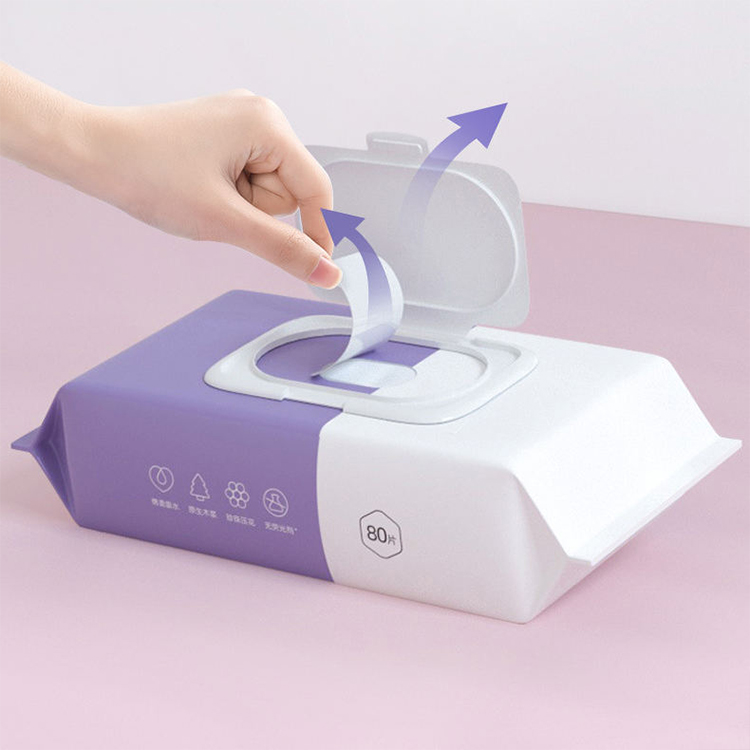
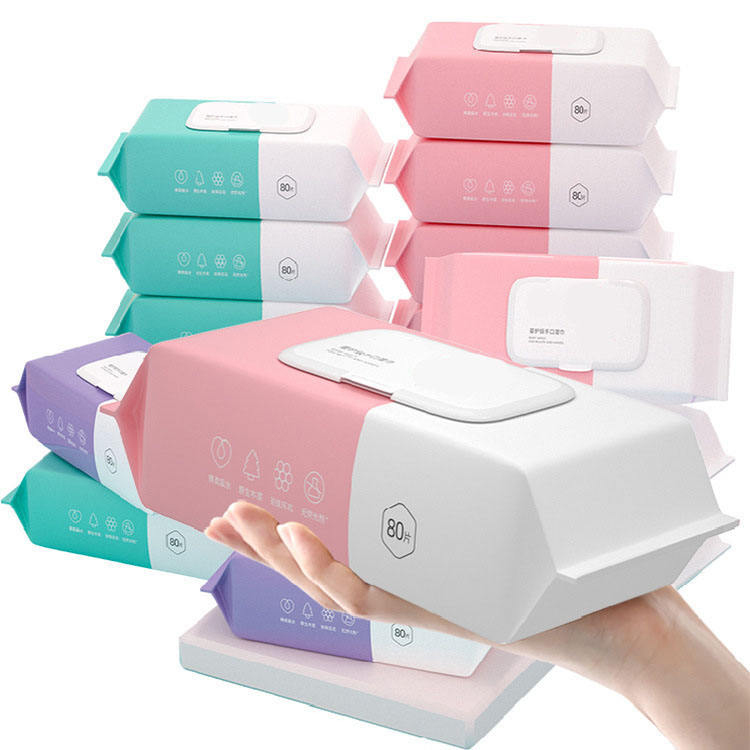
Adult wipes for sensitive skin are large, pre-moistened cleansing sheets designed to remove urine, fecal residue, sweat, and odor with less rubbing than conventional washing. The better products combine soft, wet-strength material with a simple fragrance-free formula, controlled pH, reliable preservation, and packaging that prevents contamination or drying.
Skin remembers everything.
When fragile adult skin is exposed several times a day to moisture, digestive enzymes, urine, stool, cleansing chemicals, absorbent products, caregiver handling, and repeated wiping, even a small weakness in the hygiene routine can become redness, burning, discomfort, or visible skin breakdown. So why do buyers still judge wipes mainly by scent and pack price?
My blunt view is that sensitive-skin wipes are not a cosmetic accessory. They are one component of a skin-management system.
Sensitive Adult Skin Is Not Just “Dry Skin”
Sensitive skin is often described too casually. In adult care, the term can cover older skin with a thinner epidermis, skin repeatedly exposed to incontinence, eczema-prone skin, post-procedure skin, or skin affected by limited mobility and prolonged contact with absorbent products.
Incontinence adds another layer. Urine increases moisture exposure, while fecal material can introduce enzymes and microorganisms. Repeated wetness causes overhydration of the stratum corneum, making it easier for friction and irritants to damage the surface.
The numbers are not trivial. A large multisite analysis involving 5,342 patients reported an overall incontinence-associated dermatitis prevalence of 21.3%. Among the 2,492 patients who were incontinent, prevalence reached 45.7%. That is not a niche problem hiding at the edge of care. It is a purchasing and protocol problem sitting in plain sight. See the multisite incontinence-associated dermatitis study for the full findings.
A separate intervention study, known as InSPiRE, compared a structured skin-care protocol with standard care. Incontinence-associated dermatitis occurred in 15% of the intervention group, compared with 32% of the control group. The products alone did not create the outcome; the result came from combining appropriate products with a repeatable care process.
That distinction matters. A good wipe used badly can still create problems. A poor wipe used frequently almost guarantees unnecessary friction.
Table of Contents
Why Gentle Adult Wipes Can Be Better Than Traditional Washing
Soap, water, towels, and washcloths sound harmless because they are familiar. Familiar does not always mean gentle.
Traditional washing may require several separate actions: wetting the skin, applying cleanser, rubbing, rinsing, drying, moving the patient, replacing water, and handling used cloths. Every extra pass creates another friction event. Hot water and alkaline soap can also remove surface lipids and leave already vulnerable skin feeling tight or irritated.
A Cochrane review found that two included trials showed soap and water performing poorly in the prevention and treatment of incontinence-associated dermatitis. Some structured cleansing products and disposable washcloth systems appeared more effective, although the authors also noted that the overall evidence base needed stronger trials.
One published review cited estimated costs of approximately $0.85 per incontinence episode for a no-rinse cleanser, compared with $3.62 for a soap-and-water routine. Those figures are not universal 2026 market prices, and labor costs vary widely, but they expose the hidden expense: staff time and handling can cost more than the cleansing product itself.
This is where properly designed adult wipes for incontinence and body cleansing earn their place. They reduce the number of preparation steps and deliver a measured amount of cleansing lotion through a disposable sheet intended for one-way cleaning.
The wipe still has to be large enough.
Trying to clean an adult with an undersized sheet often means using more wipes, folding them repeatedly, touching contaminated surfaces, or applying extra pressure to compensate for poor coverage. The site’s guide to adult wipes versus baby wipes for adult care explains why adult sheet size and wet strength are practical performance specifications rather than marketing details.
What “Gentle Adult Wipes” Should Actually Mean
“Gentle” is not a test method. It is a claim that should be broken into measurable parts.
I would never approve a sensitive-skin wipe merely because the packaging uses pale colors, a leaf icon, or the word “soothing.” Procurement teams should request the finished formula, material data, stability results, preservative information, microbiological specifications, and physical sheet measurements.
Evaluation Point
Strong Sensitive-Skin Specification
Weak or Risky Signal
Fragrance
Fragrance-free formula with full ingredient disclosure
“Unscented” with undisclosed masking fragrance
Alcohol
No ethanol or isopropyl alcohol used as a harsh cleansing solvent
Vague “freshening” or sanitizing language
Finished-product pH
Actual tested range disclosed by the supplier
“pH-balanced” with no target or test report
Preservative system
Identified system supported by challenge and stability testing
“Preservative-free” claim without contamination controls
Sheet material
Soft non-woven with documented wet strength
Thin sheet that stretches, pills, or tears
Sheet size
Sized for intended adult body or perineal use
Baby-wipe dimensions sold as adult care
Lotion load
Enough liquid for low-friction cleansing without dripping
Dry first sheets or excessive liquid pooling
Packaging
Repeatable seal integrity and one-hand dispensing
Label lift, lid failure, or rapid pack dry-out
Microbiological control
Defined limits, batch testing, and traceability
Reliance on smell and visual inspection
Claims
Specific, supportable wording
“Medical-grade,” “healing,” or “100% allergy-free” without evidence
The site’s pH-balanced, alcohol-free adult body wipes can be specified with soft non-woven sheets, fragrance-free formulas, aloe, chamomile, vitamin E, different sheet sizes, and pack counts ranging from small travel formats to institutional packs. Those are useful customization options, but each still needs validation against the intended user group and market.
Ask for the Actual pH Number
“pH-balanced” is one of the industry’s favorite incomplete statements.
Balanced to what?
Healthy skin normally maintains a mildly acidic surface. A widely cited study reported an average natural skin-surface pH below 5.0 and associated lower pH values with better barrier-related measurements than values above 5.0. Other dermatology literature commonly discusses a skin-compatible range around pH 4.7 to 5.75.
That does not mean every adult wipe must be exactly pH 5.0. It means buyers should request the measured finished-product range, test tolerance after production and aging, and stop accepting “pH-balanced” as a complete specification.
Sheet Softness Is Only Half the Story
A wipe can feel soft when dry and become rough, stretchy, or fragile after lotion saturation.
Buyers should test:
Wet tensile strength in both machine and cross directions
Surface smoothness after full saturation
Linting and fiber release
Edge roughness
Fold and dispensing consistency
Lotion distribution from the first wipe to the final wipe
Force required to clean dried residue
Number of sheets consumed per change
The goal is not maximum thickness. The goal is controlled cleansing with minimal passes.
A heavy wipe that drags across the skin is not gentle. A thin wipe that tears and forces the caregiver to start again is not gentle either.
Fragrance-Free, Unscented, and Hypoallergenic Are Not the Same
Labels get slippery fast.
The FDA explains that “unscented” wipes may contain masking fragrance ingredients that hide the odor of the base formula. “Fragrance-free” generally indicates that fragrance ingredients have not been added, but the FDA does not have a specific regulation defining these wipe-label terms. Buyers still need the ingredient list and supplier confirmation. Read the FDA guidance on disposable wipes for the agency’s current explanation.
For frequent perineal cleansing, I would make fragrance-free the default.
Not because every fragrance is dangerous. That claim would be lazy and inaccurate. The reason is simpler: fragrance adds another exposure variable without improving the physical removal of urine, stool, or sweat. The FDA notes that certain fragrance components can cause allergies or sensitivities in some individuals and advises concerned consumers to select fragrance-free products and examine ingredient lists.
The detailed comparison of fragranced versus fragrance-free adult wipes reaches the same practical conclusion: scented products may have a place in selected retail or travel channels, but fragrance-free products are easier to defend for institutional, high-frequency, or mixed-sensitivity use.
The Hard Truth About “Hypoallergenic”
“Hypoallergenic” sounds scientific. In the United States, it is not a standardized federal safety grade.
The FDA states that there are no federal standards or definitions governing the term. Manufacturers are not required to submit evidence of hypoallergenicity to the agency merely because they print the claim on a cosmetic label.
There is also a legal backstory. In Almay, Inc. v. Califano, 569 F.2d 674 (D.C. Cir. 1977), the U.S. Court of Appeals invalidated an FDA regulation that attempted to define and require comparative testing for “hypoallergenic” cosmetics. The ruling helped leave the market with the vague claim system buyers face today.
So do not purchase the adjective. Purchase the evidence.
Ask for:
Complete INCI ingredient declaration
Human repeat-insult patch test or equivalent tolerance data when appropriate
Dermatological test protocol and sample size
Known fragrance and preservative allergens
Finished-formula stability data
Microbiological challenge-test results
Complaint and adverse-event procedure
Country-specific label review
A claim can help shoppers understand positioning. It cannot replace a technical file.
Alcohol-Free Does Not Mean Risk-Free
Alcohol-free adult wipes are generally preferred when the aim is repeated gentle cleansing rather than disinfection. Ethanol and isopropyl alcohol can sting damaged skin and may increase dryness in some users.
But removing alcohol does not automatically create a safe product.
A water-rich wipe still requires a functioning preservation system. Water, botanical extracts, surfactants, warm storage, repeated opening, and contact between hands and the pack can all create microbiological challenges. Preservative selection must balance product protection with skin tolerance.
This trade-off became impossible to ignore on June 5, 2026, when the FDA posted a voluntary recall of multiple Up & Up baby-wipe pack sizes after testing identified Burkholderia cepacia complex and Burkholderia gladioli. This was an adjacent baby-wipe case, not an adult-wipe recall, but the manufacturing lesson applies across wet-wipe categories: “fragrance-free” and “gentle” mean very little if microbiological controls fail.
The opposite extreme is not acceptable either. Loading a formula with unnecessarily aggressive preservatives just to make stability testing easy can undermine the sensitive-skin position.
Good formulation is a balancing act. Cheap formulation is usually a shortcut.
How to Choose Adult Wipes for Sensitive Skin
The best adult wipes for sensitive skin should be selected through a documented process, not an informal smell-and-touch test.
1. Define the Use Case First
A travel wipe used once per day is not exposed to the same conditions as a wipe used during six or eight incontinence changes.
Document:
Perineal care, body cleansing, or both
Average changes per day
Urinary or fecal incontinence
Home, hospital, nursing home, or retail use
Independent or caregiver-assisted use
Intact skin or known high-risk population
Required pack size and dispensing style
2. Start With a Simple Formula
For a sensitive-skin baseline, I would begin with:
Fragrance-free
Free from ethanol and isopropyl alcohol
Mild cleansing surfactants
Disclosed finished-product pH
Minimal unnecessary colorants
Validated preservative system
Clear ingredient declaration
Aloe vera, chamomile, glycerin—chemical formula C₃H₈O₃—or vitamin E may support product positioning, but botanical language should not distract buyers from preservative compatibility, allergen review, and stability testing.
“Natural” is not a synonym for non-irritating.
3. Test the Whole Pack, Not One Laboratory Sheet
An approval sample taken from the middle of a freshly produced pack may perform beautifully. Commercial packs have to survive manufacturing, warehousing, ocean freight, hot delivery vehicles, repeated opening, and months of consumer use.
Test the first, middle, and final sheets for:
Moisture consistency
pH
Odor
Discoloration
Dispensing
Sheet strength
Microbial limits
Pack-seal recovery
Lid or label adhesion
The FDA advises consumers to keep wipe containers tightly closed, let skin dry after wiping, follow intended-use instructions, and check ingredients when sensitive skin or known allergies are involved.
4. Run a Controlled Use Trial
A seven- to fourteen-day trial is more useful than asking five employees whether the wipe “feels premium.”
Track:
Sheets used per cleansing episode
Time per change
Redness or sting reports
Residue left on skin
Drying time
Wipe tearing
Pack dry-out
One-hand dispensing
Odor complaints
Compatibility with barrier creams containing zinc oxide, ZnO, or dimethicone
User and caregiver preference
Do not test only on healthy office staff and then claim suitability for fragile older skin. The intended user population matters.
5. Connect Wipes With the Absorbent Product System
Gentle cleansing cannot compensate for a saturated brief that remains against the skin for too long.
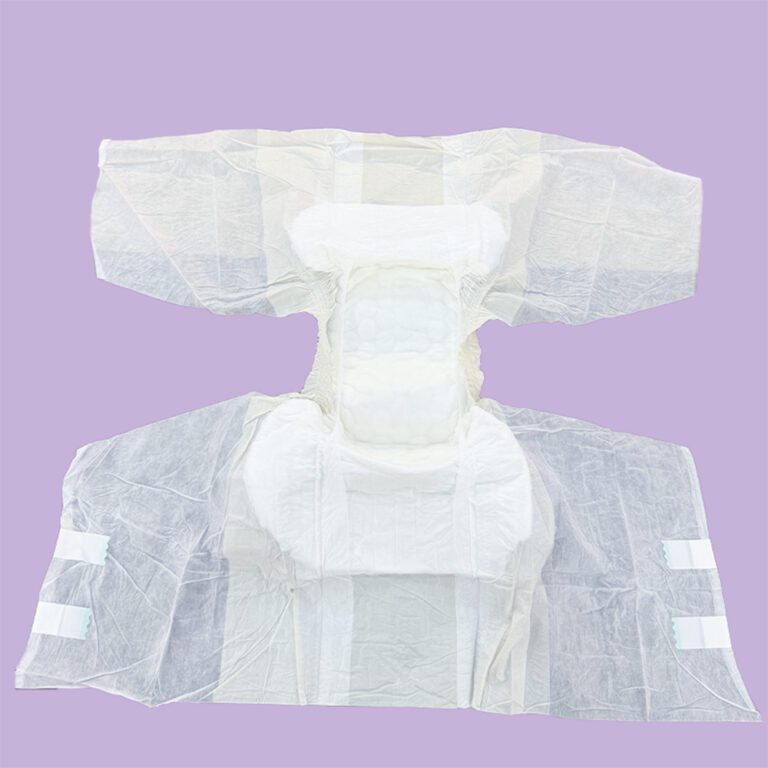
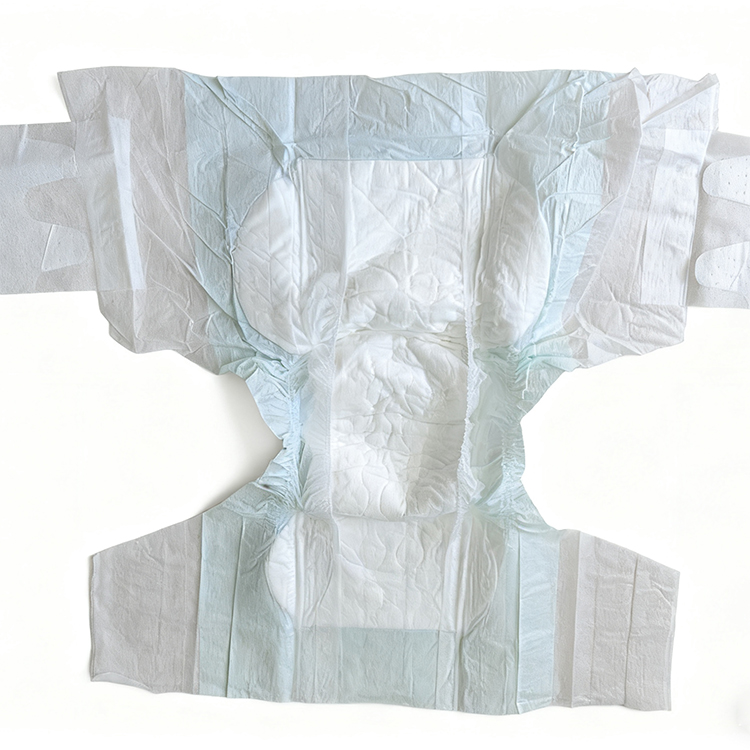
Adult wipes should be planned alongside appropriately fitted adult diapers and incontinence briefs, pull-up underwear, pads, underpads, changing frequency, skin inspection, drying, and barrier-care protocols.
That is the system.
What B2B Buyers Should Put in an Adult-Wipe RFQ
An effective request for quotation should include more than pack count and target price.
Specify:
Intended market and product classification
Fragrance-free, unscented, or scented requirement
Restricted or excluded ingredients
Target finished-formula pH
Wipe dimensions and acceptable tolerance
Non-woven material and target GSM
Wet tensile-strength requirements
Lotion load per sheet
Preservative and microbial limits
Stability and challenge-test expectations
Packaging format and closure type
Wipes per pack and packs per carton
Shelf-life target
Ingredient-label language
“Do Not Flush” or validated flushability requirement
Batch coding and traceability
Adverse-event and complaint-handling process
Pre-production and shipment sample approvals
Under the U.S. Modernization of Cosmetics Regulation Act of 2022, responsible persons must report serious cosmetic adverse events to the FDA within 15 business days and retain relevant follow-up information. Whether a particular adult wipe falls within a cosmetic framework depends on its intended use and claims, but any private-label buyer entering the U.S. market should understand the reporting and documentation obligations before launch.
For customized formula, sheet, pack-count, artwork, and multilingual labeling projects, buyers can review the site’s adult incontinence OEM/ODM manufacturing services. The factory page describes support for formula selection, private-label packaging, test-report workflows, samples, and repeat-order programs.
But buyers should reconcile conflicting or outdated factory figures across website pages before placing them in contracts. Purchase orders, audit reports, certificates, capacity data, and technical agreements should contain one consistent set of verified information.
FAQs
What are the best adult wipes for sensitive skin?
The best adult wipes for sensitive skin are large, soft, strong-when-wet wipes made with a simple fragrance-free, alcohol-free cleansing lotion, a disclosed finished-product pH, controlled preservative levels, and validated microbiological quality, because gentleness depends on the entire formula-sheet-pack system rather than one front-label claim.
Buyers should also check sheet dimensions, lotion distribution, wet tensile strength, dispensing consistency, ingredient disclosure, pack-seal performance, and compatibility with the intended cleansing routine. “Hypoallergenic” alone is not enough because the FDA has no standardized federal definition for that cosmetic claim.
Why are gentle adult wipes better than soap and water for frequent cleansing?
Gentle adult wipes are often better than soap and water for repeated incontinence cleansing because they reduce preparation, rinsing, towel friction, patient repositioning, and repeated handling while delivering a controlled amount of cleanser in one step; however, they still require correct technique, skin inspection, drying, and barrier protection when clinically appropriate.
Clinical reviews have found traditional soap-and-water routines performing poorly in some incontinence-associated dermatitis studies, although product choice must remain part of a structured care protocol rather than being treated as a stand-alone cure.
Are fragrance-free adult wipes better for sensitive skin?
Fragrance-free adult wipes are generally the safer default for sensitive or frequently cleansed skin because they remove one avoidable source of potential irritation or allergy, while “unscented” wipes may still contain masking fragrance and “hypoallergenic” has no federally standardized meaning in the United States.
A fragrance-free wipe can still cause problems if its preservative system, surfactants, botanical extracts, pH, sheet texture, or microbiological quality are unsuitable. Ingredient review and controlled use testing remain necessary.
How should B2B buyers test adult wipes before bulk production?
Buyers should evaluate adult wipes by reviewing the complete ingredient list, finished-formula pH, preservative system, sheet size and GSM, wet tensile strength, lotion load, pack-seal performance, microbiological limits, stability data, and complaint-testing plan, then run a documented seven- to fourteen-day use trial before approving bulk production.
The trial should compare samples under realistic conditions and record wipe consumption, skin complaints, cleaning performance, tearing, drying time, pack dry-out, dispensing failures, and compatibility with diapers, underpads, gloves, and barrier products.
Can adult wipes be used on broken or severely irritated skin?
Adult wipes should not automatically be used on broken, infected, bleeding, or severely irritated skin because suitability depends on the product directions, wound status, intended use, ingredients, and professional care plan; when the skin barrier is compromised, users should follow the label and seek guidance from a qualified healthcare professional.
The FDA advises using wipes only for their intended purpose and notes that some labels warn against use on broken or irritated skin. Wipes intended for ordinary cleansing should not be presented as wound-care products without the necessary evidence and regulatory basis.
Build a Sensitive-Skin Wipe Specification That Can Survive Scrutiny
Sensitive skin care needs gentle adult wipes because repeated cleansing is not a minor event. It is a repeated chemical and mechanical exposure.
The right wipe reduces avoidable friction, cleans efficiently, supports a more consistent care routine, and gives caregivers a practical alternative to repeated soap-and-water washing. The wrong wipe adds perfume, vague claims, poor sheet strength, dry-out, or contamination risk to skin that is already under pressure.
Do not begin with package design.
Begin with the user, the cleansing frequency, the complete ingredient list, the finished pH, the preservative strategy, the non-woven specification, and the evidence behind every claim.
Then test it.
For a private-label adult-wipe project, prepare an RFQ covering formula restrictions, wipe dimensions, GSM, pack format, stability testing, microbiological limits, labeling, batch traceability, and target market. Submit those requirements through the LOVINHUG OEM/ODM inquiry page and request technical samples before approving packaging or bulk production.