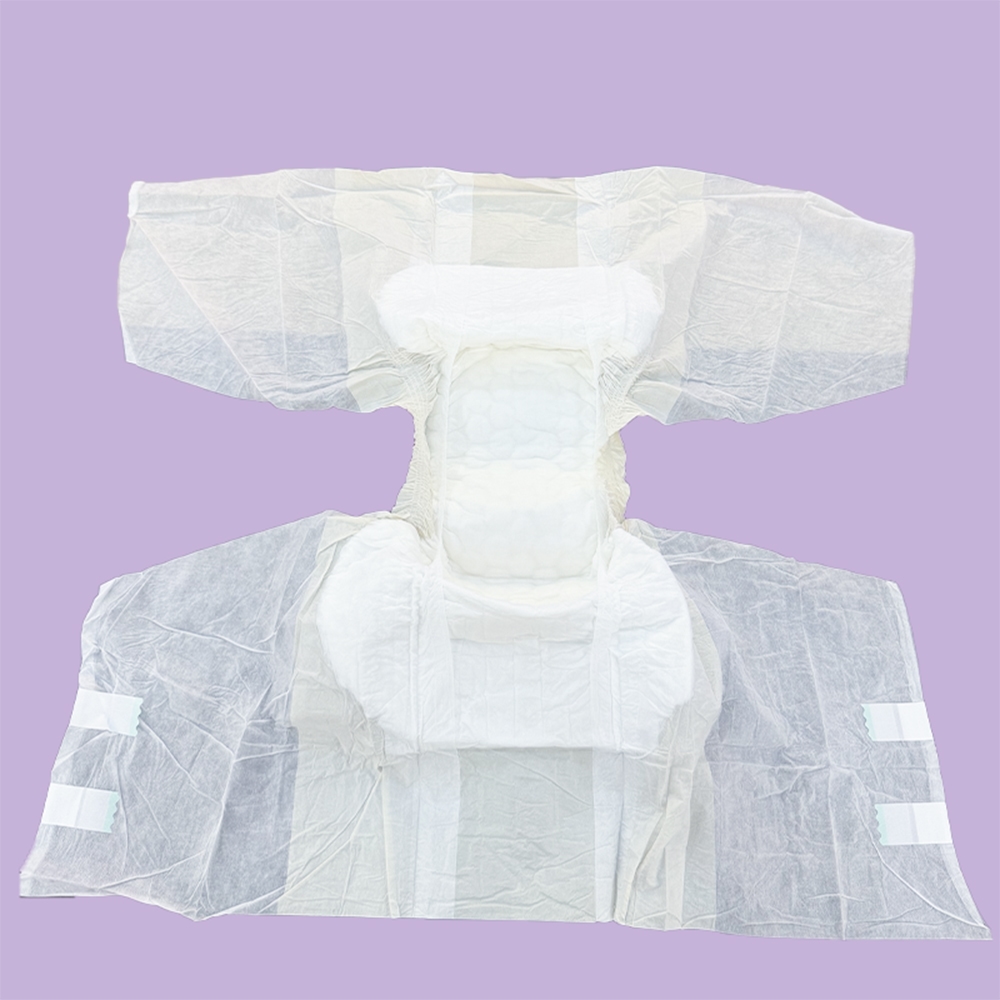
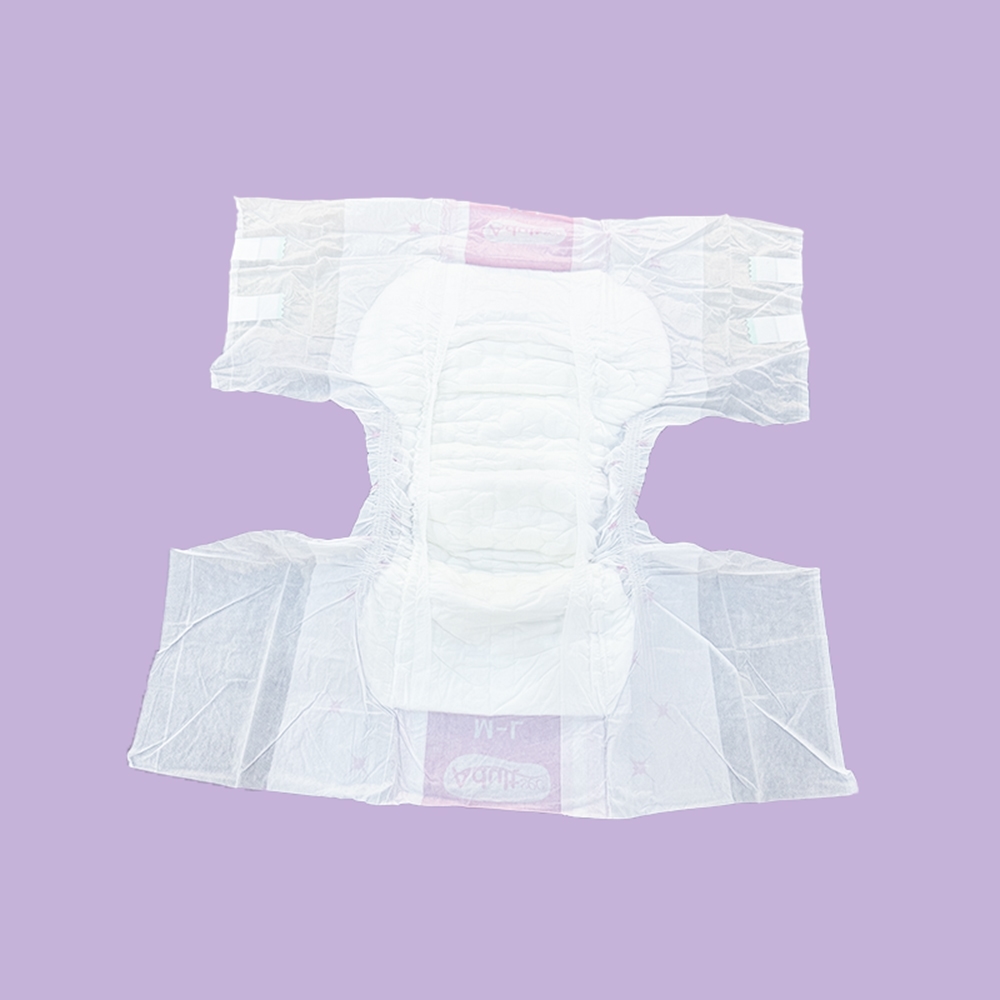
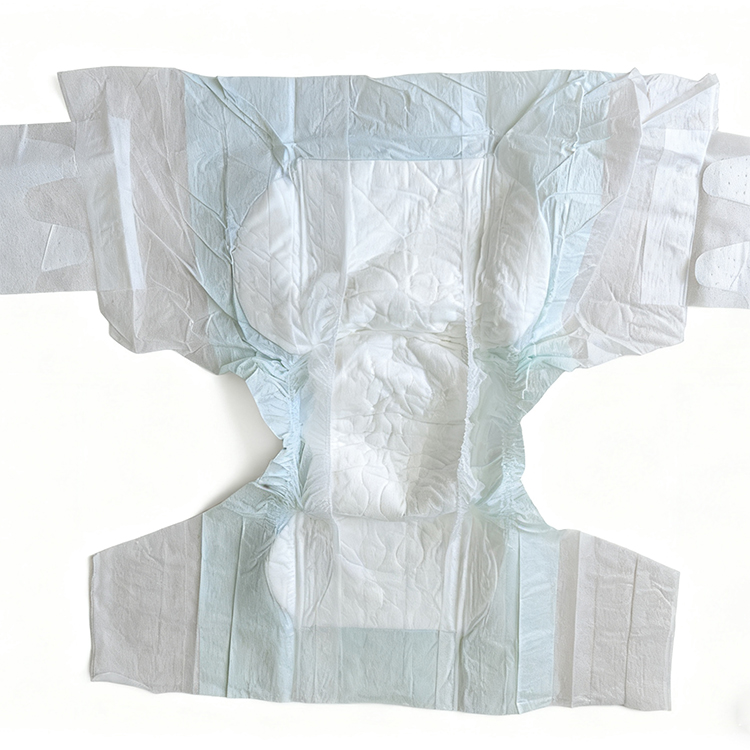
Odor Control in Adult Diapers: Absorption, pH, and Ventilation
Odor tells stories.
An adult diaper can advertise exceptional absorbency, contain sophisticated superabsorbent polymers, and feature a premium breathable backsheet, yet still develop a noticeable smell because its construction does not adequately address the chemical and biological processes occurring after urine enters the absorbent core.
So what separates genuine adult diaper odor control from clever packaging?
The answer is not simply more absorbent material.
Effective odor control depends on three interconnected factors: absorption that rapidly captures and retains urine, pH management that can influence bacterial odor formation, and ventilation that helps regulate the moisture environment around the skin.
But these mechanisms do different jobs. They should not be treated as interchangeable.
For manufacturers, caregivers, and private-label buyers, understanding those differences is the first step toward selecting an adult diaper that performs beyond the laboratory brochure.
Why Adult Diapers Develop Odor: The Chemistry Manufacturers Cannot Ignore
Fresh urine is not inherently associated with the strong ammonia smell commonly found in used incontinence products.
That odor can develop when microorganisms produce urease, an enzyme that breaks down urea—CO(NH₂)₂—into ammonia (NH₃) and carbon dioxide (CO₂).
As ammonia accumulates, the surrounding chemical environment can become more alkaline. Higher pH also favors the conversion of dissolved ammonium (NH₄⁺) into volatile ammonia (NH₃), increasing its potential to escape into the air.
This matters because urine absorption and ammonia suppression are not the same process.
A diaper can retain significant volumes of liquid without preventing odor-producing bacterial activity.
Researchers introduced bacteria into synthetic urine and examined how different chemical conditions affected odor development.
In the reference samples at pH 6.0, measured ammonia concentrations reached approximately:
200–300 ppm after six hours
1,500–1,600 ppm after eight hours
At pH 4.5, the researchers detected little or no ammonia production at those same time points.
That is a substantial laboratory difference.
However, the researchers used controlled inoculation and laboratory conditions. These ammonia concentrations should not be interpreted as typical exposure levels inside adult diapers during everyday use.
The evidence demonstrates that pH can influence ammonia generation. It does not establish that every acidic diaper will eliminate odor in real-world conditions.
And ammonia is only one piece of the problem.
Used incontinence products can release other volatile organic compounds, meaning a successful odor-control design must consider more than a single molecule.
Absorption: Why High-Capacity Adult Diapers Can Still Smell
Absorbency is necessary. It is not sufficient.
I would be skeptical of any manufacturer claiming superior odor control based solely on the maximum amount of liquid its absorbent core can hold.
A large laboratory capacity figure tells buyers how much fluid a material may absorb under specified conditions. It does not reveal how quickly the diaper handles repeated urination, how much moisture remains near the surface, or whether fluid escapes under pressure.
Superabsorbent Polymers: What They Actually Do
Most modern high absorbency adult diapers rely on superabsorbent polymers (SAP), commonly based on sodium polyacrylate.
The polymer contains hydrophilic groups that allow its cross-linked structure to swell and retain aqueous liquid.
Its main benefit is straightforward: fluid becomes immobilized within the absorbent structure rather than remaining freely available at the skin-facing surface.
However, SAP performance depends on several factors:
Fluid composition and salt concentration.
Polymer particle size and distribution.
Absorption under pressure.
Core structure and available expansion space.
Interaction with surrounding cellulose fibers.
Adding more SAP does not automatically improve performance.
Excessive localized swelling may contribute to gel blocking, restricting the movement of subsequent liquid into unused regions of the core.
The better question is whether the entire diaper manages fluid efficiently throughout repeated use.
Why the Acquisition Layer Matters
The acquisition-distribution layer (ADL) helps transfer liquid from the topsheet into the absorbent core.
But acquiring liquid and distributing it are different functions.
A product can absorb the first urine application quickly while concentrating too much liquid in one area. Subsequent fluid may then pool near the surface or escape through the leg openings.
For odor management, effective fluid handling can reduce the amount of exposed urine and limit prolonged surface wetness.
That is an indirect benefit—not proof that SAP itself destroys odor molecules.
Rewet Performance Is Often More Revealing Than Capacity
Rewet refers to the liquid that returns toward the diaper surface after absorption, usually when pressure is applied.
A diaper may retain urine inside its core but still feel wet when the wearer sits, lies down, or changes position.
That matters for comfort, containment, and skin exposure.
Our discussion of adult diaper rewet testing explains why repeated liquid applications and pressure testing should be included in product evaluation.
For buyers assessing odor control incontinence briefs, I would request acquisition time, repeated-dose performance, and rewet results alongside any stated absorbency rating.
Maximum capacity alone is not enough.
pH Balanced Adult Diapers: The Evidence Is More Complicated Than Marketing Suggests
pH affects both bacterial activity and skin conditions.
Human skin generally maintains a mildly acidic surface environment, which contributes to its barrier function. Prolonged exposure to moisture, urine, and stool can disturb this environment and increase the risk of irritation.
That explains why pH management matters in adult incontinence products.
But does lowering pH always reduce odor?
Not necessarily.
Lower pH Can Suppress Some Odors While Increasing Others
Researchers used synthetic urine inoculated with four bacterial strains and measured volatile compounds through gas chromatography.
They examined four odorants:
3-methylbutanal
Guaiacol
Diacetyl
Dimethyl disulfide (DMDS)
The laboratory method generated concentrations ranging from approximately 50 to 600 ng/L.
When researchers reduced pH from 6.0 to 4.9, concentrations of 3-methylbutanal, guaiacol, and DMDS decreased significantly.
But diacetyl increased.
That is the finding I would want every product developer to remember.
Lower pH is not a universal odor-elimination mechanism. Its effectiveness depends on which compounds are being measured.
The same research found that activated carbon significantly reduced all four investigated odorants under the tested conditions.
This makes activated carbon an interesting candidate for odor-control formulations, but its performance in a commercial diaper still depends on dose, location, contact conditions, and finished-product construction.
The study also evaluated EDTA, which reduced all four compounds in the laboratory. Neither finding should be treated as a blanket recommendation to add these materials without further safety and product testing.
Skin-Friendly pH and Odor-Control pH Are Different Claims
This distinction deserves more attention.
A manufacturer might measure pH at the skin-facing topsheet while another measures the absorbent core.
Those results answer different questions.
For a meaningful comparison, buyers should ask:
Which layer was tested?
Was the measurement taken before or after wetting?
What test liquid and method were used?
Did the manufacturer also measure ammonia or other odor compounds?
A pH balanced adult diaper may offer a more favorable surface environment without demonstrating superior odor performance.
Product development should address both outcomes, not assume that one proves the other.
Ventilation: Breathable Adult Diapers Manage Moisture, Not Just Smell
Breathability is regularly promoted as an odor-control feature.
The relationship is more complicated.
Breathable adult diapers typically use materials that permit some water-vapor movement while maintaining resistance to liquid leakage.
This can help limit excessive heat and moisture accumulation around the skin.
But allowing vapor transmission does not automatically prevent volatile odor molecules from escaping.
What Clinical Research Says About Breathable Materials
A 2010 study published inBMC Geriatrics examined an improved adult incontinence brief designed to support skin conditions through modified absorbent layers and breathable side panels.
Researchers reported:
A skin-facing diaper surface pH of approximately 4.6 for the modified product, compared with 7.1 for the conventional design.
Stable acidic surface conditions after repeated wetting over five hours.
Reduced excessive skin hydration with tested nonwoven side panels having air permeability above 1,200 L/m²/s, compared with impermeable plastic films.
The study also followed 12 patients with existing incontinence-associated dermatitis over 21 days. Skin lesions resolved in eight patients after switching to the modified briefs.
However, that clinical observation was a small, uncontrolled case series. It cannot establish that the diaper alone caused the improvement.
The air-permeability result applies to the specific side-panel materials and test conditions, not every diaper backsheet.
Most importantly, the research investigated skin-related outcomes rather than directly measuring odor reduction.
The Breathability Trade-Off
More ventilation is not automatically better.
A breathable film must balance moisture-vapor transmission with liquid containment, material durability, and comfort.
If airflow is prioritized without considering the overall construction, the product may not provide the expected protection against odor escape.
Fit also matters.
Poorly fitting briefs can create gaps, leaks, and localized moisture accumulation regardless of backsheet quality.
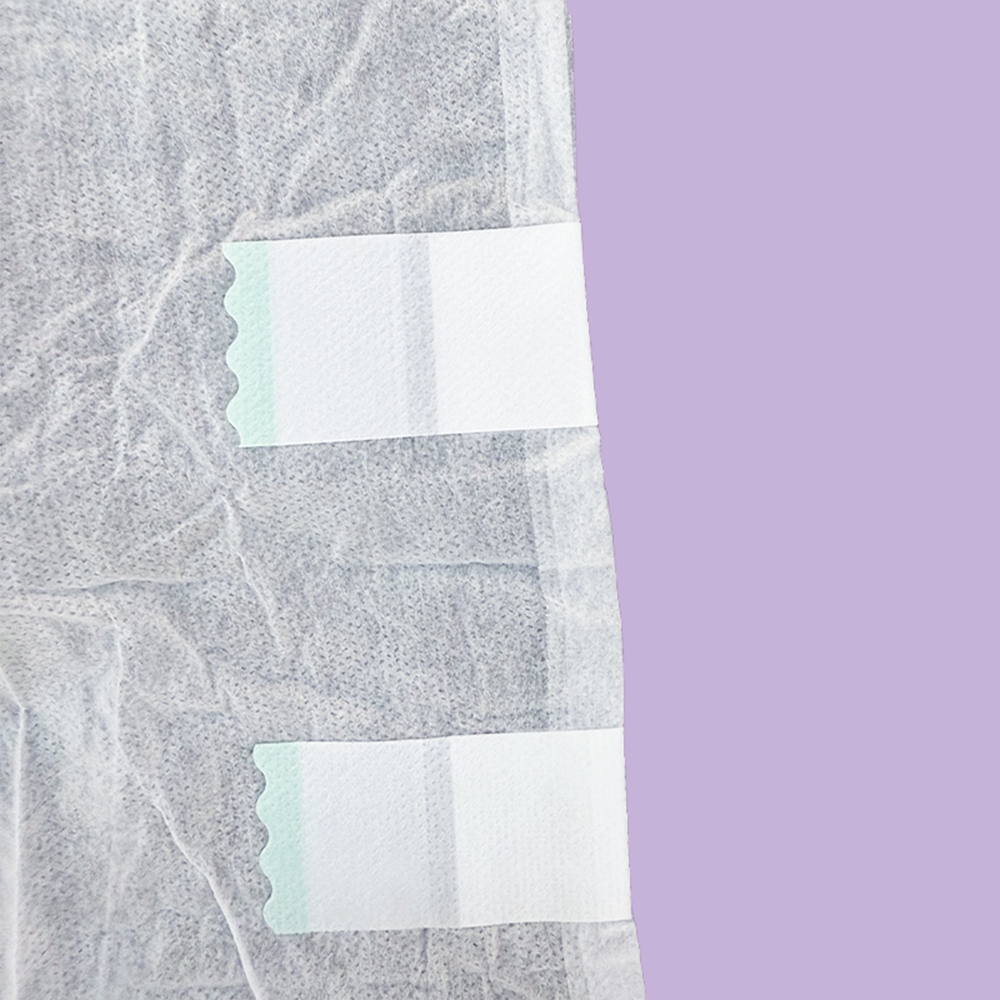
For assisted care or high-volume incontinence, properly fitted adult diapers with adjustable tabs may offer practical advantages for changing and containment.
Still, breathability should be evaluated as a measurable material property—not inferred from a soft, cloth-like appearance.
Absorption, pH, and Ventilation: What Actually Controls Odor?
The three systems work together, but their primary contributions are different.
Technology
Primary Function
Potential Odor Benefit
What It Cannot Guarantee
SAP absorbent core
Retains liquid inside the diaper
Reduces free urine and surface wetness
Direct neutralization of ammonia
Acquisition-distribution layer
Moves fluid away from the loading area
Helps prevent pooling and localized saturation
Suppression of bacterial odor production
pH-management technology
Influences chemical and biological conditions
Can suppress certain odor-forming processes
Reduction of every odor compound
Breathable materials
Manage heat and water vapor
Improve the moisture environment
Complete containment of volatile odors
Activated carbon
Adsorbs certain odor compounds
Can reduce selected volatile compounds under suitable conditions
Equal effectiveness against all odors in every product
The commercial implication is straightforward.
An absorbent core optimized for retention may need additional odor-control functionality. A pH-modifying component may reduce some compounds but not others. Breathable materials may improve skin comfort without measurably reducing odor.
No single performance claim replaces testing the finished diaper.
For OEM and private-label sourcing, a practical testing specification should distinguish between three groups of measurements.
Fluid management: Repeated-dose acquisition, retention under pressure, rewet, and leakage.
Skin and material performance: Wet surface pH, air permeability or water-vapor transmission, and material compatibility.
Actual odor performance: Measured ammonia or relevant volatile compounds, supported where appropriate by controlled sensory evaluation.
Buyers should request the test method, conditions, sample size, comparator product, and complete results—not simply a pass/fail claim.
I would also ask whether the test evaluated a finished adult diaper or an isolated piece of material.
The difference can be substantial.
How to Prevent Odor in Adult Diapers During Everyday Use
Even a carefully engineered diaper depends on appropriate product selection and hygiene.
The best adult diapers for odor control should match the wearer’s actual needs, rather than simply offering the highest advertised absorbency.
Choose the Right Absorbency and Fit
Match the product to the frequency and volume of leakage.
An overnight product may require greater retention and repeated-dose capacity than a daytime brief changed more frequently.
Avoid relying only on waist size or a generic small-to-extra-large label. Hip measurements, rise, and body shape can influence fit.
Our adult diaper sizing guide explains the measurements that help reduce gaps and improve containment.
Change Soiled Products Promptly
Prolonged exposure to urine or stool can contribute to odor, skin irritation, and hygiene problems.
Change products promptly after bowel movements, leakage, or excessive wetness.
For urinary incontinence, changing schedules should reflect individual needs, skin condition, and the product’s actual performance.
No absorbency rating justifies leaving stool against the skin.
Maintain Gentle Skin Care
Cleanse contaminated skin gently during changes and use suitable skin-care products.
Avoid aggressive scrubbing or excessive use of fragranced products on sensitive skin.
If irritation or broken skin develops, seek appropriate clinical advice.
And remember that persistent changes in urine odor can sometimes reflect hydration, diet, medication, or health conditions rather than diaper construction alone.
FAQs
How does absorption help control odor in adult diapers?
Absorption helps control odor in adult diapers by moving urine away from the skin-facing surface and retaining liquid inside the absorbent core, where it is less likely to remain exposed or leak, although this process does not independently eliminate bacteria or chemically neutralize all odor compounds.
The most useful indicators are acquisition speed, repeated-dose retention, and low rewet—not maximum capacity alone.
Do pH balanced adult diapers prevent ammonia odor?
pH balanced adult diapers are absorbent products engineered to influence the chemical environment of the diaper surface or core, potentially reducing certain bacterial processes associated with ammonia formation while supporting skin compatibility, although actual odor performance depends on the specific materials, formulation, and conditions under which the product is tested.
Laboratory research has shown substantial ammonia suppression at lower pH, but finished-product testing is still necessary.
Are breathable adult diapers better for odor control?
Breathable adult diapers are incontinence products made with materials that allow some water vapor or air movement to help regulate heat and humidity around the skin, improving the moisture environment without necessarily preventing ammonia or other volatile odor compounds from escaping through the product structure during use.
Breathability should therefore be considered alongside absorption, fit, skin compatibility, and measured odor performance.
What are the best adult diapers for odor control?
The best adult diapers for odor control are products that provide rapid liquid acquisition, reliable absorption and retention, low rewet, secure fit, and suitable moisture management while demonstrating measurable odor-reduction performance when specific odor-control claims are made, rather than relying only on fragrance, theoretical capacity, or marketing descriptions.
For professional buyers, comparative test reports are more useful than unqualified odor-control labels.
Final Thoughts: Build Odor Control Into the Product, Not the Packaging
Adult diaper odor control should begin with a clear understanding of what causes odor and which technologies address it.
Absorption controls liquid.
pH influences chemical and bacterial processes.
Ventilation manages the skin microclimate.
And dedicated odor-control technologies may provide additional benefits when validated in the finished product.
The mistake is assuming these functions are interchangeable.
For manufacturers and private-label brands, the strongest approach combines suitable materials with defined testing procedures, repeatable manufacturing quality, and evidence appropriate to each claim.
Looking to develop adult diapers with better fluid management, breathable construction, and differentiated product specifications?