Secret Examining Factors for Elastic Waistbands in Adult Pull-Ups
The Waist Is Where Adult Pull-Ups Win or Die
Fit kills commitment.
I know purchasers like to talk about absorbency, SAP loading, fluff pulp proportions, and over night capability, but the hard reality is simpler: if the waist stops working, the Adult Pull-Ups stop working prior to the core even obtains a sporting chance to work. A pull-up can claim 900 ml, 1,200 ml, or 1,800 ml absorption ability on a spec sheet. Penalty. Yet what takes place when the waistband relaxes after three hours of walking, sitting, flexing, sweating, and being took down for toileting?
That is the genuine test.
The grown-up incontinence market is not a little side classification anymore. The United State National Institute of Diabetes and Digestion and Kidney Conditions reports that about half of all females experience urinary system incontinence, and as numerous as 1 in 3 males over age 65 may shed urine by mishap according to its bladder control facts. Reuters also reported in July 2024 that Japan’s grown-up baby diaper market is anticipated to expand 16% over 5 years to 98.9 billion yen, while the infant diaper market is anticipated to agreement, as makers shift toward grown-up treatment products in an aging society.
So why are some purchasers still authorizing Adult Pull-Ups with nothing more than a wonderful item photo, a soft-touch example, and an unclear “strong elastic” insurance claim?
Because waistbands are simple to take too lightly.
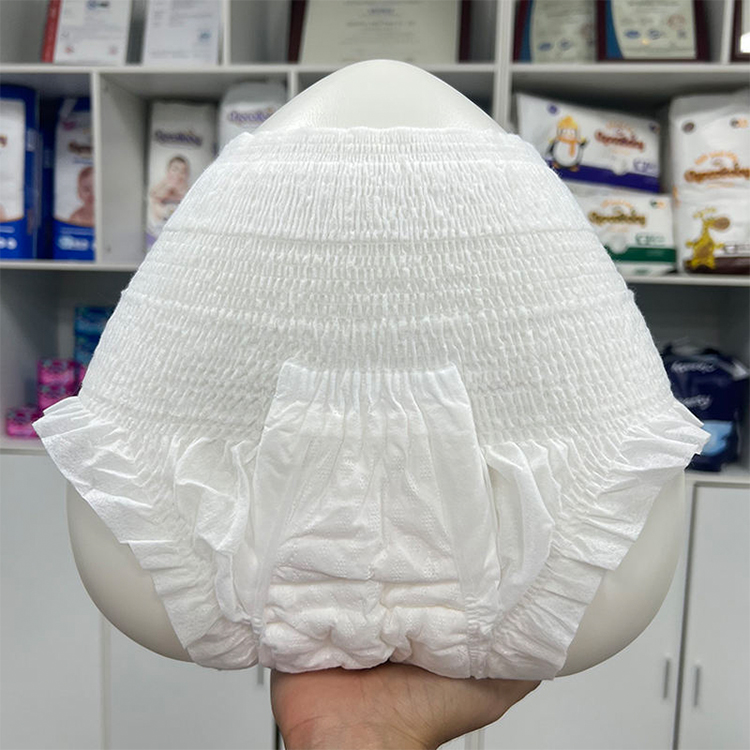
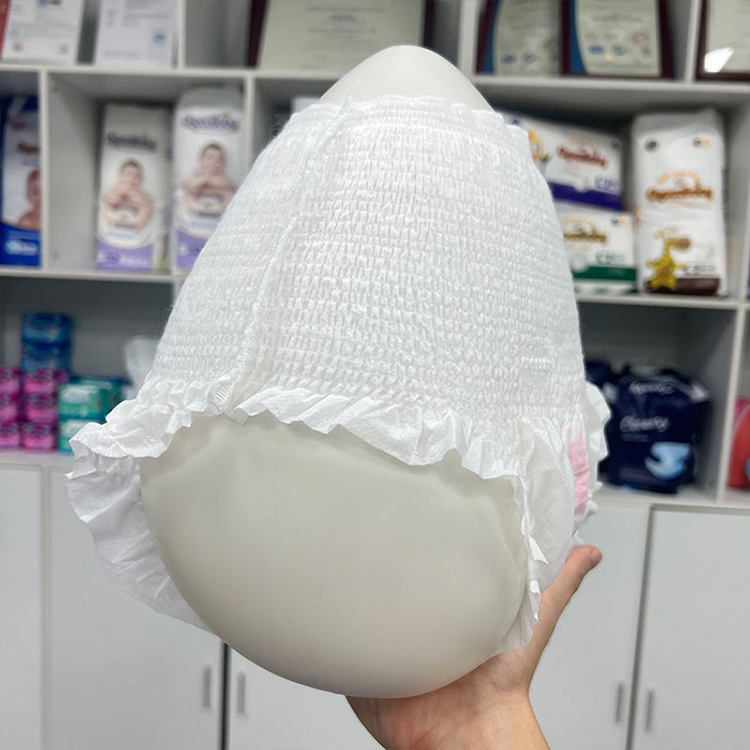
On a great Grownup Pull-Up, the waist is not decoration. It is the mechanical bridge between self-respect and disaster. It regulates exactly how the product remains on the tummy, how it follows the hips, just how it survives side activity, and exactly how well the leak guards remain near to the body. On grown-up incontinence underclothing with 360 ° flexible waist, the waistband is what allows the item act like underclothing instead of an affordable absorptive bag.
And indeed, I am mosting likely to be candid: lots of waistband failings are not uncovered in the lab. They are discovered by caregivers at 2:00 a.m., by retail consumers leaving upset reviews, or by representatives looking at return containers they assumed they had avoided.
Table of Contents
What the Elastic Waist Actually Needs To Confirm
The flexible waist in Adult Pull-Ups has five tasks: hold the product up, recuperate after stretch, avoid skin damage, maintain leak-barrier position, and endure manufacturing variation. Miss one, and the whole item begins looking low-cost.
Adult Pull-Ups are not infant diapers scaled up. The body mass is various. The stride is various. The self-respect problem is different. The individual may walk independently, sit in a mobility device, sleep on one side, or draw the item backwards and forwards several times before disposal. That suggests waist testing must surpass “does it stretch?”
A professional adult diaper waistband testing plan must analyze the waistband as a load-bearing, skin-contact, leak-control system.
Stretch Recovery After Repetitive Pulling
A waist that extends when is not excellent. A rubber band can do that.
The more useful question is how much recovery stays after repeated prolongation. In adult protective underwear convenience fit testing, I would check out expansion and healing after 5, 10, and 20 cycles, because actual users do not wear the product like a mannequin. They change it. They pull it. They rest, stand, flex, and occasionally pull it down for toileting.
A weak waistband may pass the first fit check and still sag later. That is the unpleasant component. It falls short late.
For elastic waist adult pull-ups, the minimal inner test needs to include:
First waist circumference
Area after controlled stretch
Circumference after repeated stretch cycles
Recuperation portion after resting time
Visual check for damaged flexible hairs or adhesive creep
If the waistband does not recoup cleanly, the absorbent core drops. When the core drops, the leak guards lose contact. When the leak guards lose call, urine adheres to gravity and motion. That is not a secret. That is auto mechanics.
Midsection Stress Without Red Marks
Below is my unpopular opinion: some “premium snug fit” Grownup Pull-Ups are just over-tight products with far better product packaging.
A tight waist can really feel secure during a 30-second sample fitting, yet expanded wear informs an additional tale. Too much local stress can leave red marks, especially on older skin, bariatric users, and individuals with restricted motion. Insufficient pressure creates gapping. The art is not making the waist limited. The art is making pressure even.
The CDC/NCHS report on incontinence amongst older Americans made use of information from huge treatment populations, including over 2.4 million retirement home locals in the Long-term Care Minimum Data Establish, which is a pointer that adult urinary incontinence items are usually used by people whose skin and flexibility risks are not theoretical.
For waist testing, I wish to see stress distribution, not simply a pass/fail stretch number. Inspect the front waist, back waist, side panels, and leg-opening interaction. If the front waist digs in while the back gaps open, the product is acting to fit.
Seam Stamina and Side-Panel Security
The side joint is where advertising language goes to die.
A lot of pull-up diaper fit testing falls short since the side panel, waistband, and joint are treated as different items. They are not. The waistband stress takes a trip via the side panel. The side panel transfers that pack to the joint. The joint holds till it does not.
For disposable Adult Pull-Ups, side seams must be simple sufficient to tear open for elimination yet solid sufficient to make it through wear. That balance is not casual. It requires measured tear pressure.
A side joint that opens as well easily develops embarrassment. A joint that refuses to open creates caretaker aggravation. And a seam that varies by set creates both.
If you are sourcing through an OEM/ODM network, ask whether the distributor controls waistband application, seam bonding, and first-article approval in the exact same QC process. A supplier offering Grownup Diapers OEM/ODM manufacturing quality assurance need to be able to describe inbound material evaluation, in-process checks, finished-goods inspection, and set traceability without concealing behind “manufacturing facility standard.”
The Waist Evaluating Matrix Purchasers Must Demand
The very best buyers do not ask, “Is the waist great?” They ask, “Show me the information, the approach, the resistance, and the failed samples.”
Below is the practical testing matrix I would certainly make use of prior to accepting a private-label Grownup Pull-Ups program.
Checking Factor
What to Determine
Practical Approach
Failure Signal
Customer Impact
Elastic healing
Area recovery after duplicated stretch
5, 10, and 20 extension cycles with rest-time measurement
Waist remains bigger or swirls
Sagging, inadequate fit, repeat complaints
Tensile strength
Force needed to damage waist or side panel
Tensile tester on specified example strips
Abrupt break, weak side location
Product splits during drawing
Side-seam tear force
Regulated force needed to open side joint
Tear test on ended up pull-up
Also weak or also strong
Shame or caretaker difficulty
Waist pressure
Stress across stubborn belly, back, and sides
Fit form, pressure film, or panel analysis
Red marks, uneven compression
Skin pain, negative evaluations
Leakage under activity
Leak while resting, walking, bending, and existing
Adult mannequin or user-simulated motion examination
Side leak, back leak
Loss of rely on Adult Pull-Ups
Core setting after wear
Whether core drops or twists
Use simulation and post-use assessment
Core sagging listed below crotch area
Absorbency comes to be pointless
Aging resistance
Elastic after warm, moisture, and compression
Accelerated storage space at elevated temperature/humidity
Unwinded waistline, glue creep
Storehouse failing before sale
Great deal uniformity
Variant throughout manufacturing sets
AQL tasting plus maintained examples
Wide dimension spread
Store being rejected, unsteady reorder top quality
A significant supplier ought to attach these examinations to production reality. On a pull-up baby diaper assembly line, waist application is not a little terminal hiding in the edge; it is part of the major product architecture, together with core transfer, folding, reducing, SAP feeding, and line-speed control. If the devices goes for 400– 450 pcs/min, also a tiny elastic tension drift ends up being a big batch trouble very swiftly.
That is where I see weak vendors obtain subjected. They can copy the example. They can not hold the resistance.
Leakage Is Not Just an Absorbency Problem
Leakage is political inside a factory.
The absorbent-core group criticizes the waistband. The waist group criticizes the leg cuffs. The sales group criticizes the user dimension chart. The customer blames the manufacturing facility. Everyone has a factor, and everybody is attempting to safeguard their department.
However the wearer does not care which element stopped working.
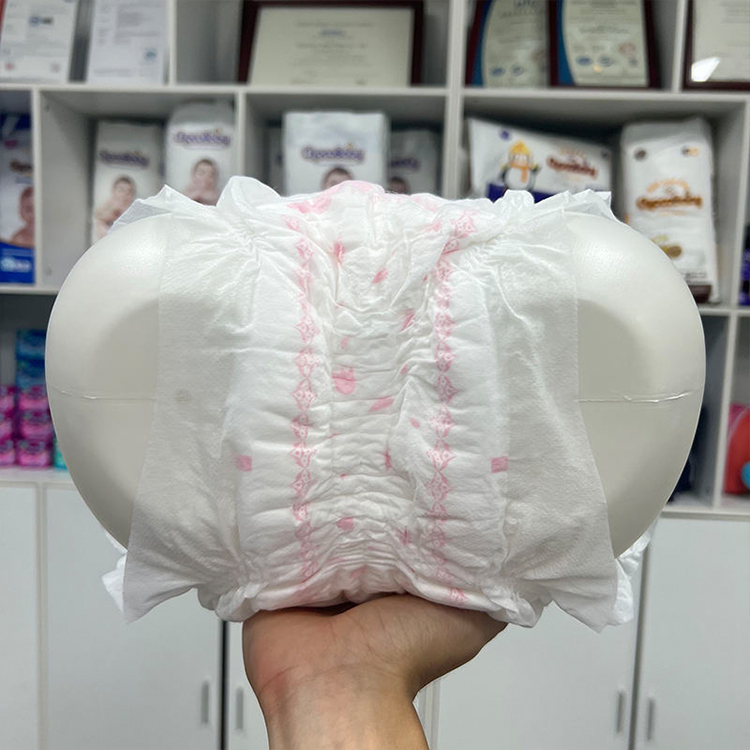
Elastic waist leakage security relies on just how the waistband keeps the absorbing zone near the body during movement. If the waist rolls down, loosens up, or draws unevenly, the core shifts. If the core changes, the procurement layer may not receive liquid where it was made to receive it. If the leg guards are no more straightened, leak comes to be a path-of-least-resistance occasion.
This is why I do not depend on absorption capacity alone.
ISO 11948-1 is extensively referenced for identifying absorption capability of body-worn urine-absorbing aids, and the main ISO web page claims it defines a method for establishing the absorption ability of the absorbent core ISO 11948-1. Useful? Yes. Sufficient? No.
A laboratory capacity number does not tell you whether the grown-up incontinence undergarments waist will certainly keep the product in the ideal setting during a grocery trip, a wheelchair transfer, or four hours of overnight side sleeping. For Adult Pull-Ups, fit is not second to absorbency. Fit determines whether absorbency obtains made use of.
The U.S. FDA’s classification language is additionally worth reading. Under 21 CFR 876.5920, a protective garment for incontinence is called a gadget with absorbing extra padding and a fluid obstacle meant to shield an incontinent individual’s garment from excreta. That lawful interpretation is completely dry, however it exposes the point: protection is the task. Not gentleness cases. Not quite packaging. Protection.
Materials: Elastic, Adhesive, Nonwoven, and the Silent Failure Chain
A waist is usually a system of elastic strands or flexible laminate, nonwoven layers, hot-melt adhesive, side-panel product, and bonding zones. The polymers matter. The adhesive issues. The warmth history matters. The storage carton matters.
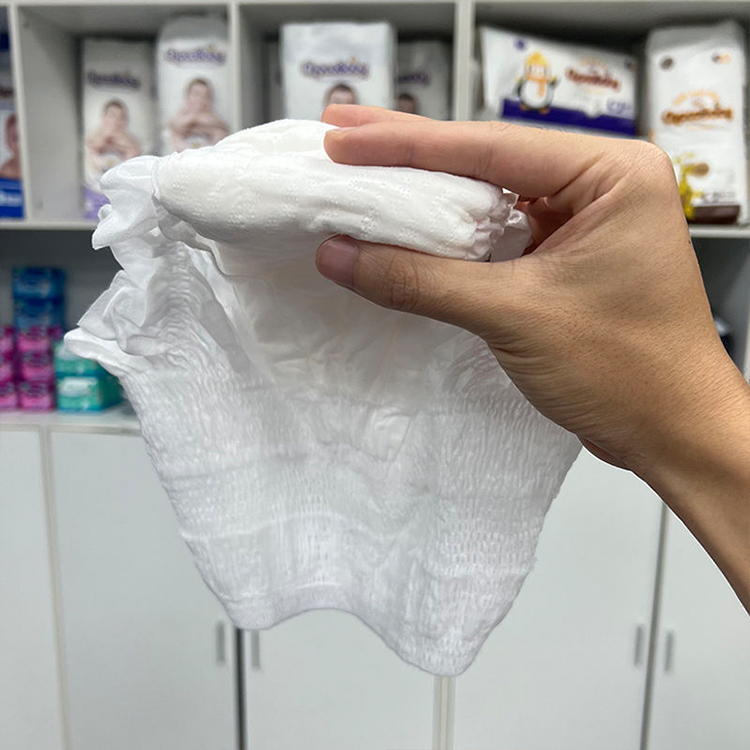
If the elastic is polyurethane-based elastane, it might behave in different ways under warm and moisture than a cheaper flexible film. If the sticky softens, the flexible can slip. If the nonwoven is too weak, the flexible may hold however the substrate tears. If the waist material really feels soft yet tablets after massaging, the convenience insurance claim collapses.
This is why I prefer suppliers that can show test records, not just certifications. A certificate states the system exists. A record claims the item was challenged.
My hard rule: never ever authorize waistband products without examining aging actions.
A perfect fresh example can turn into a loosened, tired item after sitting in a hot container, a humid stockroom, or compressed retail product packaging. Export customers know this. They simply do not always examine it early sufficient.
The Purchaser’s Red-Flag List Before Automation
Some indication appear prior to the very first container leaves the factory.
If a provider claims “same as your sample” yet can not provide waist tension tolerance, stop. If every size uses the very same flexible toughness, quit. If 2XL and M share the exact same waist reasoning, quit quicker. Bigger waists create various loads, different movement, and various self-respect threats.
I would certainly also challenge these insurance claims instantly:
“Strong flexible” without recuperation data
“Soft waistband” without skin-contact and pressure checks
“No leakage” without movement testing
“High absorbency” without fit validation
“OEM available” without great deal traceability
“Manufacturing facility direct” without incoming flexible assessment documents
For severe buyers, Adult Pull-Ups must undergo example authorization, pilot set testing, and shipment-lot verification. That appears slow-moving. It is less expensive than a recall, a merchant being rejected, or a negative institutional tender.
And below is the unpleasant bit: many grievances blamed on “wrong size” are really waistband layout failings. Poor size graphes exist, naturally. Yet when clients throughout 2 surrounding dimensions whine about sagging, rolling, or side leak, do not condemn the user first. Audit the waist.
What an Expert Waistband Test Should Consist Of
The best waistband examination strategy integrates lab instruments, manufacturing checks, and real-use simulation. No single number is enough.
Start with basic material examination: elastic size, tension contour, elongation, recovery, sticky compatibility, and nonwoven bonding strength. After that inspect in-process performance: waist positioning, side-panel placement, joint formation, elastic stress drift, and finished-product circumference. Lastly, run finished-goods screening: pull-on pressure, tear-open pressure, waistline pressure, movement leak, post-wear recuperation, and aging.
The production side matters since a design that works at example speed might not work at business speed. The pull-up line web page mentions 400– 450 pcs/min and as much as 220 m/min line rate for high-speed manufacturing, which is precisely why waistband control can not depend on “driver feel” pull-up baby diaper production line. At that speed, process drift is not a little problem. It is a thousand-defect rhythm.
Below is the useful approval series I would use:
Test 10 items per size from hand samples.
Test 30 items per size from pilot manufacturing.
Test kept samples after 7, 14, and 30 days of compressed storage.
Run motion leakage get in touch with sitting, walking, flexing, and side-lying placements.
Compare waist area recuperation across M, L, XL, 2XL, and 3XL if the variety includes prolonged sizes.
Suit examination results to problems from test customers or care team.
Lock product codes before bulk production.
Simple? Yes.
Commonly missed? Also yes.
FAQs
What are the key testing points for elastic waists in Grownup Pull-Ups?
The key testing points for flexible waistbands in Grownup Pull-Ups are stretch healing, waistline stress, seam toughness, side-panel security, leak control throughout activity, skin-contact soft qualities, aging resistance, and lot-to-lot consistency due to the fact that the waistband controls fit before the absorptive core has any possibility to do. Purchasers need to evaluate the waist as part of the complete product, not as a separated flexible strip.
Just how do you check elastic waists in Adult Pull-Ups?
To examine flexible waists in adult pull-ups, labs and manufacturing facilities need to measure prolongation, recovery, tensile stamina, bond peel, waist circumference after wear simulation, compression marks, leakage throughout walking and resting cycles, and efficiency after heat, moisture, and product packaging compression utilizing defined sample dimensions. The best outcomes originate from incorporating instrument data with movement-based finished-product screening.
Why do elastic waistbands trigger leaks in grown-up incontinence undergarments?
Elastic waists trigger leakages when they shed recuperation, roll down, produce midsection voids, or transfer tension erratically into the side panels, since urine moves toward the most convenient open network once the user rests, flexes, lies sideways, or draws the item backwards and forwards repeatedly. Leakage is frequently condemned on absorbency when the real problem is in shape collapse.
What test records should buyers request before approving Adult Pull-Ups?
Buyers need to ask providers for waistband elongation and recovery data, tensile and peel-strength results, side-seam tear data, rewet and leak records, ISO 11948-1 absorption capability where relevant, skin-contact product statements, and batch-level QC records before approving Adult Pull-Ups for retail or treatment networks. These records help different steady manufacturers from sample-only sellers.
Are Grownup Pull-Ups managed as clinical gadgets in the USA?
In the USA, grown-up incontinence safety garments are dealt with as Course I clinical gadgets under 21 CFR 876.5920 when they consist of absorbing padding and a fluid obstacle intended to secure a client’s garments from excreta, omitting infant baby diapers. That category makes documents, complaint data, identifying accuracy, and product consistency greater than documents.
Your Following Actions: Evaluate the Waist Prior To You Trust the Sample
Do not authorize Grownup Pull-Ups because the first example really feels soft.
Ask for the waist data. Request recovery after duplicated stretch. Ask for side-seam tear force. Request aging outcomes. Ask exactly how the waist is controlled on the production line, not only in the sample space. Then contrast those answers with actual motion leak testing.