The Unsexy Factor Customers Stop Chasing the Lowest Quote
Margins dislike friction.
When a care product customer needs to stitch with each other grown-up baby diapers, pull-up incontinence undergarments, disposable underpads, grown-up wipes, packaging artwork, evaluating files, delivery updates, and grievance follow-up from 4 or 5 different suppliers, the order quits being buying and ends up being overdue project management.
Why would any severe buyer keep doing that?
I’ll say the out of favor part first: many customers do pass by one-stop individual treatment product distributors due to the fact that they are romantic about “collaboration.” They select them due to the fact that fragmented sourcing silently eats revenue, time, and reliability. A purchaser could conserve $0.04 per diaper theoretically, after that lose the entire conserving when a late underpad shipment damages a nursing-home bundle, a clean pack leakages in transit, or a private-label carton arrives with the incorrect German case printed on the back panel.
That is the tough mathematics.
In the care products organization, completion user does not experience classifications independently. A leak occasion ends up being a bedding occasion. A bedding event ends up being a cleansing event. A cleaning occasion comes to be a skin-comfort grievance. So when professional care product customers try to find personal care item suppliers, they are actually asking a sharper inquiry: “Can this supplier help me regulate the entire care routine, not simply one SKU?”
That is why one-stop sourcing maintains winning.
Customers Are Denying Products. They Are Getting Less Failure Factors
The phrase “wholesale individual care products” appears clean in a spreadsheet. Actual purchase is uglier. It consists of carton compression, SAP distribution, topsheet gentleness, pack count business economics, private label claims, AQL assessment strategies, HS codes, lead-time buffers, language documents, and the one warehouse supervisor who calls at 11:40 p.m. due to the fact that a container got here with combined tags.
So the best treatment product provider is not always the cheapest supplier. In my sight, that belief has actually shed more buyers than any type of solitary item problem.
A genuine one-stop provider must reduce the variety of joints in the sourcing chain. Not remove all threat. That is fantasy. Yet decrease the factors where nobody possesses the trouble.
Procurement Problem
Multi-Supplier Sourcing
One-Stop Distributor Version
SKU planning
Baby diapers, wipes, underpads, and pads may be selected independently, creating dissimilar usage situations
Product family members can be designed around care regimen, wheelchair level, absorbency, and network
Personal label product packaging
Several artwork layouts, container specifications, and language documents raise error danger
One packaging process can line up claims, barcodes, pack counts, and carton markings
Quality problems
Vendors can criticize each various other when leak, skin irritation, or in shape grievances overlap
One responsible partner traces set, product, layout, and delivery variables faster
Conformity documents
Purchaser must chase after different COAs, examination reports, SDS data, and certifications
Central paperwork is easier to manage for tenders, importers, and retail onboarding
Replenishment
Lead times collide; one missing out on SKU damages the entire care basket
Manufacturing preparation can sustain bundled replenishment and container performance
Purchaser work
A lot more e-mails, even more follow-ups, even more sample contrasts, more disagreement
Fewer handoffs and cleaner supplier responsibility
That last row is where individuals lie to themselves.
Purchase teams love to talk about landed cost. Fine. Yet show me the landed expense of 3 provider audits, two art work improvements, a missed out on delivery home window, one denied pallet, and a supplier threatening to switch over brands since the wipes were out of stock while the diapers were offered.
Currently we are speaking about genuine cost.
Table of Contents
The Proof Customers Are Responding To
Private tag pressure has relocated from pricing to distributor capability
Take a look at what happened in grocery store private label. Reuters reported that Aldi united state pressed vendors to reduce costs, rise production, improve on-time and complete distribution, and scale ability as component of its united state expansion. The same record noted that more than 90% of Aldi items are exclusive label, and that Aldi prepared to include 800 stores by the end of 2028. That is not just a supermarket story. It is a supplier-capacity story: exclusive tag purchasers desire partners that can scale, systematize, and maintain racks filled under stress.
Care item customers are reading the exact same room.
Exclusive label individual care items are no more “economical alternatives” concealing at the bottom rack. They are category tools. Pharmacy chains, importers, shopping brand names, nursing-home representatives, and institutional purchasers desire grown-up diapers, adult wipes, urinary incontinence pads, and underpads that look systematic as a line. That suggests one supplier who can aid with specifications, product packaging, replenishment, and claims has an integrated advantage.
Policy penalizes messy sourcing
Grown-up incontinence items are not simply soft products with charming product packaging. In the USA, the eCFR defines a “safety garment for urinary incontinence” under 21 CFR 876.5920 as a tool consisting of absorbent extra padding and a fluid barrier planned to protect an incontinent client’s garment from excreta. That language issues.
And if a treatment products relocates into wipes, lotions, cleansing items, deodorizing claims, or skincare-adjacent products, the conformity discussion gets wider. The FDA’s December 2024 upgrade on aesthetic center registration and item listing under MoCRA defines needs around who sends, what information is consisted of, exactly how submissions work, timing, and exceptions. That is directly relevant when customers contrast skin care item vendors, adult wipes producers, and charm care product manufacturer partners.
One-stop does not imply “overlook regulation.” It means fewer places for governing responsibility to vanish.
Contamination and skin-contact failures are not theoretical
Below is where the sector gets unpleasant. Skin-contact products stop working in ways that are a lot more significant than a poor review.
In 2022, the UK government published a recall for individual cleansing products under brand names including Caremore, CCN/Medirite, CHL, Countrywide, Fairfield, and Fittleworth after detection of Pseudomonas aeruginosa, a bacterium that can cause infections in humans. The recall notice claimed the items did not satisfy applicable cosmetic item needs. The notice is still a useful caution for customers reviewing grown-up wipes and cleansing products: microbiology is not a design on a test report. It is a business threat.
This is why I dislike the expression “just wipes.”
There is no “simply” when the product touches vulnerable skin, elderly customers, bedridden patients, postpartum customers, or people with immune vulnerability. A provider that understands diapers but deals with wipes like a side hustle is not a one-stop distributor. It is a directory with a logo.
What One-Stop Really Means in Adult Treatment Procurement
A one-stop individual treatment supplier ought to connect the item system.
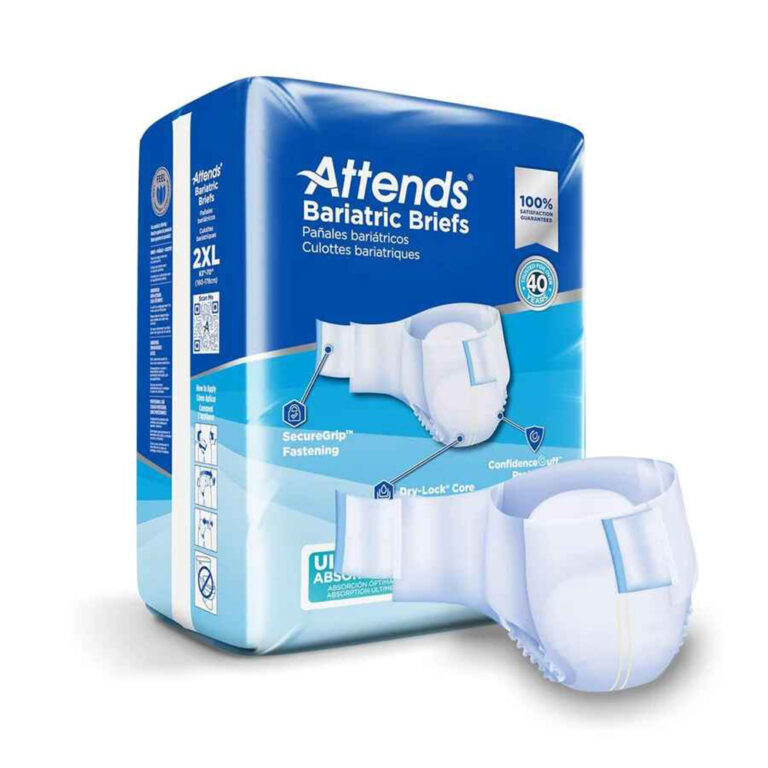
For grown-up urinary incontinence customers, that often begins with a reliable OEM/ODM grown-up baby diaper supplier that can sustain exclusive label programs, sampling, packaging, and paperwork. But the smarter purchasers do not stop there. They check out the full treatment basket.
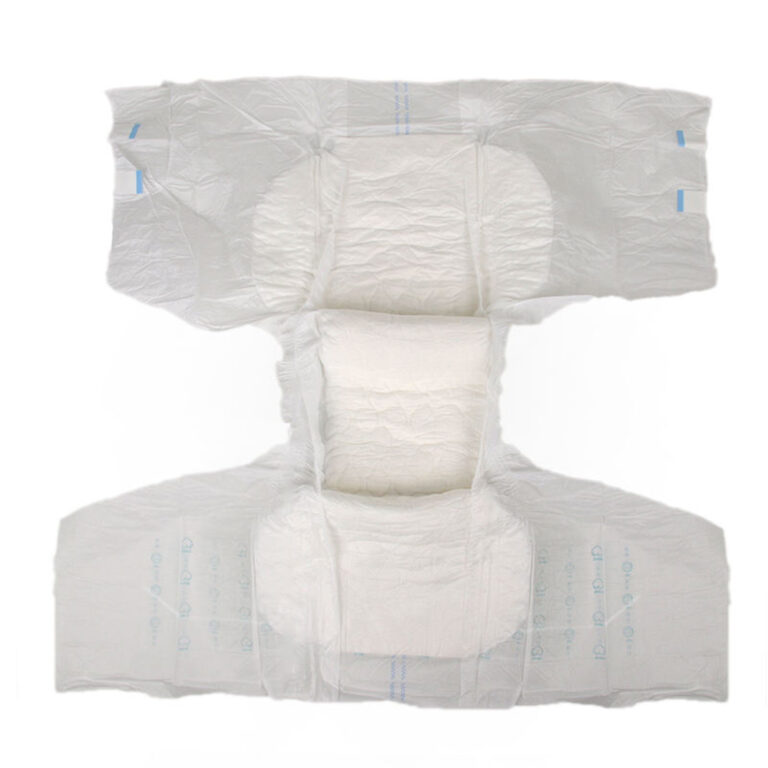
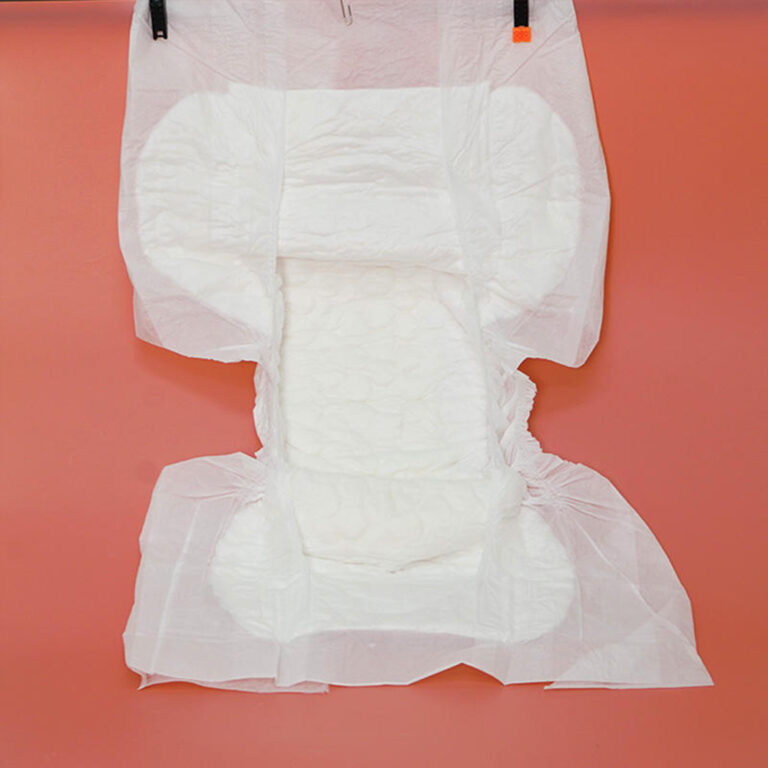
For hefty treatment, bed treatment, and nursing-home use, adult diapers with tabs normally become the foundation because open-style briefs can be applied while the user is relaxing, resting, or being helped by caretakers. For mobile customers that still desire dignity and discretion, incontinence underclothing belongs in the very same commercial conversation.
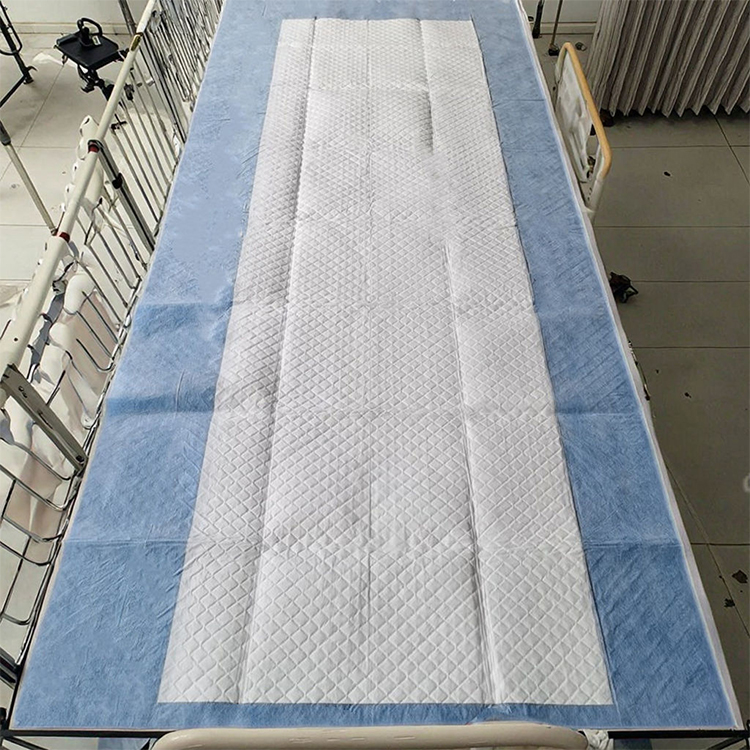
Then come the products that several amateur buyers neglect until complaints begin: disposable underpads for beds, chairs, and test tables, plus an adult wipes supplier that comprehends dimension, soft qualities, fluid formula, pack sealing, and skin-contact assumptions. Finally, buyers need evidence, not verse, which is why examination reports and certifications ought to be part of the conversation before range orders start.
That is the difference between buying SKUs and developing a treatment line.
The Hidden Cost Nobody Places In the RFQ
Below is my regulation: if your RFQ only contrasts system cost, MOQ, and lead time, your RFQ is underbuilt.
The genuine buying decision should include at least 7 price centers:
Testing cost across item styles
Artwork and product packaging correction cost
Issue handling time
Batch traceability speed
Container application
Governing record chasing
Lost sales when one product in the treatment basket heads out of stock
This is where one-stop individual care item providers earn their money.
A buyer sourcing adult diapers from Factory A, underpads from Factory B, wipes from Factory C, and product packaging from Vendor D may feel smart for discussing each line. However when a supplier wants a meaningful private label program for drug stores, home-care companies, and care institutions, the purchaser suddenly needs one brand voice, one carton reasoning, one asserts evaluation process, one delivery routine, and someone that responds to when something fails.
Inexpensive fragments get pricey.
Item Expertise Still Divides Actual Vendors From Magazine Vendors
One-stop sourcing just works if the distributor actually understands the items.
For grown-up baby diapers, that suggests understanding why salt polyacrylate SAP, frequently stood for as [- CH2-CH(COONa)-] n, behaves in different ways relying on core structure, fluff pulp distribution, acquisition layer rate, and compression. It means knowing why 0.9% NaCl synthetic urine screening matters. It implies speaking about rewet, strike-through time, leak guards, waistline elasticity, PE backsheet sound, breathable film, nonwoven GSM, and dampness indication chemistry without claiming every market wants the same item.
For grown-up wipes, it means recognizing pH variety, preservative system, substrate weight, alcohol-free claims, fragrance irritants, lid seal stability, moisture retention, and microbiological restrictions. For underpads, it indicates dimension, fluff/SAP equilibrium, backsheet slide resistance, and exactly how rapid caregivers can alter the smallest safety surface as opposed to stripping a whole bed.
This is why I am skeptical of vendors that state yes to everything.
A genuine distributor states, “No, that spec will create returns in your market.” A phony one says, “Yes good friend, highest quality, ideal price,” after that waits on the down payment.
The Customer’s Risk Map: What to Ask Prior To Picking a One-Stop Vendor
Prior to calling any person the very best care product provider, ask tougher inquiries.
Inquire about factory control
Do they produce directly, or are they coordinating third-party factories? Neither version is immediately bad, but concealing the design is a warning. A straight producer needs to discuss assembly line, inspection points, material control, and batch traceability. A trading companion should discuss just how distributor qualification, QC, and corrective activity actually work.
Inquire about product-family reasoning
A significant vendor ought to explain which users require tab-style briefs, which individuals require pull-ups, when pads make good sense, when underpads shield the care room, and why wipes are not merely “infant wipes in a larger pack.”
If they can not map the care routine, they can not develop the line of product.
Ask about documents
Customers must ask for COA, SDS where applicable, test records, ISO 9001 or ISO 13485 paperwork where appropriate, CE or FDA sustain where relevant, artwork control procedures, and product packaging specs. For skin care item distributors and grown-up wipes manufacturers, customers should also inquire about microbiological screening and claims responsibility.
Inquire about problem feedback
The best inquiry is ugly: “If my representative sends pictures of side leak, rash complaints, and torn side seams from 3 batch lots, what happens in the first 72 hours?”
A weak distributor sends apologies.
A solid distributor requests batch codes, kept examples, customer size data, fit pictures, storage space conditions, shipping documents, and grievance regularity by carton, then separates style issues from misuse, storage space damage, and making drift.
When One-Stop Is a Negative Idea
One-stop sourcing can become one-choke-point sourcing.
That is the threat no one wishes to admit. If a provider controls your diapers, wipes, pads, underpads, packaging, paperwork, and shipment schedule, then a weak supplier can freeze your entire classification. One-stop only works when the supplier has self-control, transparency, and sufficient operational depth to be worthy of the function.
I would stay clear of any kind of vendor that:
Refuses to share basic item testing logic
Can not discuss great deal traceability
Uses obscure phrases instead of quantifiable requirements
Deals every possible item category without technical depth
Presses the exact same diaper style for health centers, e-commerce, ABDL, bariatric treatment, and energetic individuals
Treats packaging claims as decoration
Can not go over lead-time barriers before peak season
There it is.
The ideal one-stop distributor streamlines sourcing. The incorrect one conceals turmoil under one invoice.
Buyers are under pressure to introduce faster, hold much less stock, reduce grievance prices, satisfy merchants, assistance exclusive label growth, and survive even more documentation. At the exact same time, end users anticipate far better convenience, caretakers anticipate faster changes, and representatives anticipate an even more total basket.
The NIDDK’s 2024 Urologic Illness in America Annual Data Report demonstrates how strongly urinary incontinence gets in touch with age, comorbidities, and care demand. For example, amongst individuals aged 65 and older in Medicare fee-for-service, claims-based occurrence of urinary incontinence boosted from 5.6% in 2012 to 6.1% in 2021, and the report notes that yearly incidence amongst individuals aged 65 and older averaged 290 per 10,000 individuals during 2015– 2021.
That demand is not served well by arbitrary sourcing.
It needs product systems: tab-style briefs for assisted care, pull-ups for flexibility, pads for light leakage, underpads for surface area defense, wipes for cleaning, and packaging that makes sense to retail, clinical, and e-commerce buyers.
So indeed, care item purchasers choose one-stop suppliers.
Not since they slouch. Since they have actually learned, often shateringly, that fragmented sourcing turns every product trouble right into a committee meeting.
Frequently asked questions
Why do care product purchasers choose one-stop distributors?
Treatment product purchasers favor one-stop vendors because one answerable companion can straighten item style, packaging, screening, replenishment, documentation, and issue handling throughout baby diapers, pull-ups, underpads, wipes, and skin-contact treatment products, reducing the covert coordination expense that generally sits outside the priced quote unit rate. This design is particularly helpful when purchasers handle private tag adult incontinence lines, drug store programs, home-care distribution, or institutional supply contracts.
What is a one-stop individual care supplier?
A one-stop individual treatment vendor is a manufacturer or collaborated supply companion that provides several relevant care products, such as adult diapers, incontinence undergarments, pads, underpads, wipes, packaging, OEM/ODM growth, and export paperwork under a single business and quality-control connection. The goal is not merely comfort; it is cleaner liability throughout the complete treatment routine.
Are individual care product distributors and medical tool suppliers the exact same?
Personal care product suppliers and medical tool distributors are not constantly the exact same due to the fact that regulatory treatment relies on product claims, intended usage, market, and category; a grown-up incontinence garment can be treated differently from a cosmetic wipe, aromatic skin care thing, or general health accessory. Purchasers need to verify item classification, paperwork, labeling responsibility, and import assumptions before authorizing a supplier.
Just how should buyers contrast wholesale personal care products distributors?
Buyers ought to compare wholesale individual care items providers by gauging manufacturing facility control, flaw handling, screening openness, MOQ reasoning, SKU coverage, packaging execution, lead-time discipline, export paperwork, and whether the vendor can show repeatability across a number of sets instead of showing one perfect display room sample. Cost matters, yet it must never ever be the only ranking aspect.
Exactly how do exclusive label individual treatment products reduce sourcing danger?
Exclusive label personal treatment products reduce sourcing risk when one provider controls advancement, packaging data, declares testimonial, carton specs, production timing, and lot traceability, because errors are much easier to find, appoint, and appropriate before the purchaser scales into pharmacies, care homes, shopping, or representative channels. The danger returns if the distributor does not have paperwork discipline.
What should purchasers ask skincare product suppliers or adult wipes producers?
Customers need to ask skin care product vendors and adult wipes suppliers for microbiological controls, preservative strategy, pH variety, substrate GSM, fragrance irritants, packaging seal data, compatibility with urinary incontinence regimens, and clear duty for cases under cosmetics, medical-device, or basic consumer-product policies. Wipes are skin-contact items, not disposable devices.
Your Next Action
If you are sourcing adult baby diapers, incontinence undergarments, underpads, grown-up wipes, or a private tag care product line, quit asking only, “What is your cheapest rate?”
Ask this instead: “Can you aid me construct a complete care basket that reduces problems, sustains documents, secures my margin, and still ships on schedule?”
That inquiry separates catalog sellers from severe personal care item providers.
And if your existing supplier can not address it clearly, it is time to assess your sourcing model before your clients do it for you.