How Material Changes Affect Adult Diaper Performance
The uncomfortable physics behind adult diaper materials
Specs beat slogans.
I have watched buyers spend weeks arguing over a softer hand-feel while ignoring the thing that later ruins the product in the field: whether the topsheet passes fluid quickly, whether the acquisition layer spreads it before the SAP swells, and whether the backsheet breathes without turning the brief into a leak experiment.
So who pays when “premium soft” becomes “wet by midnight”?
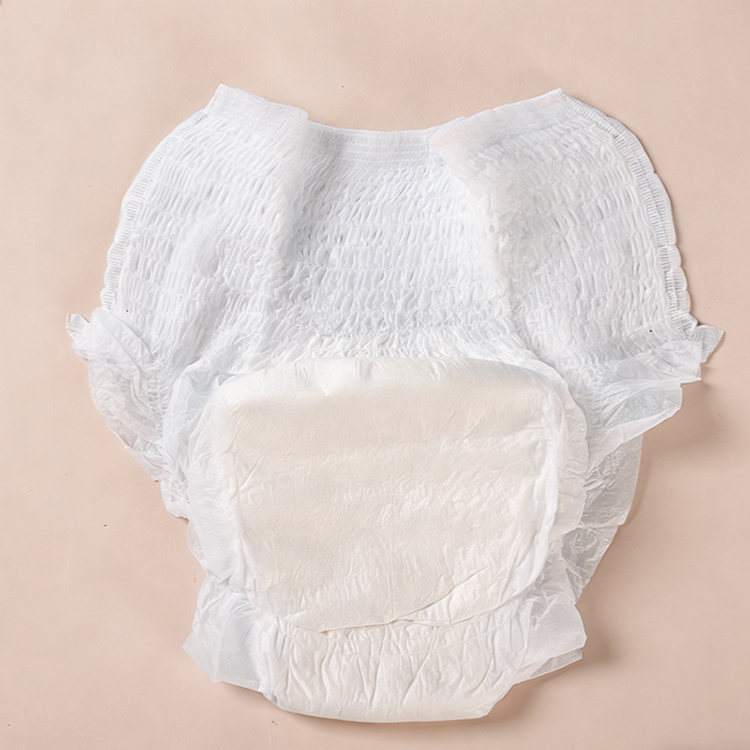
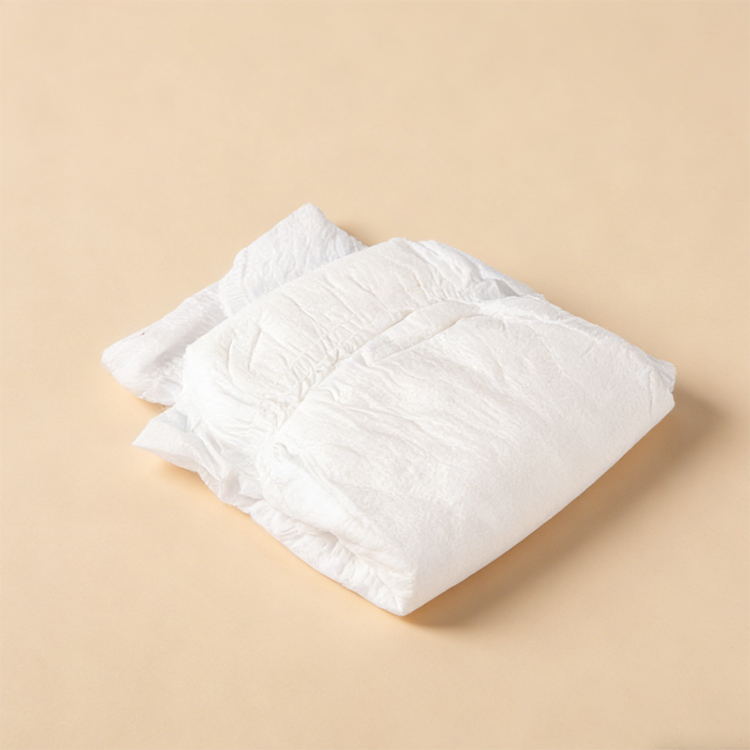
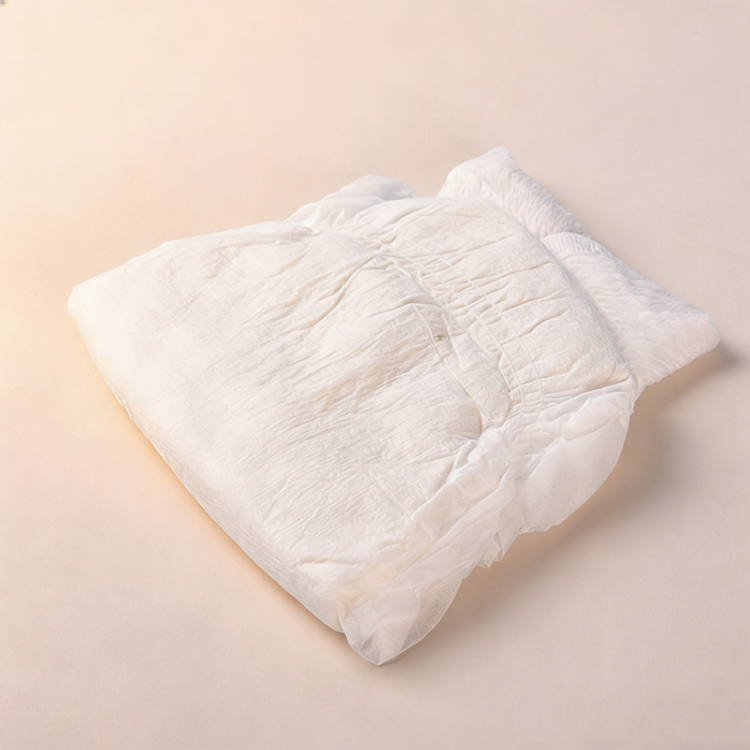
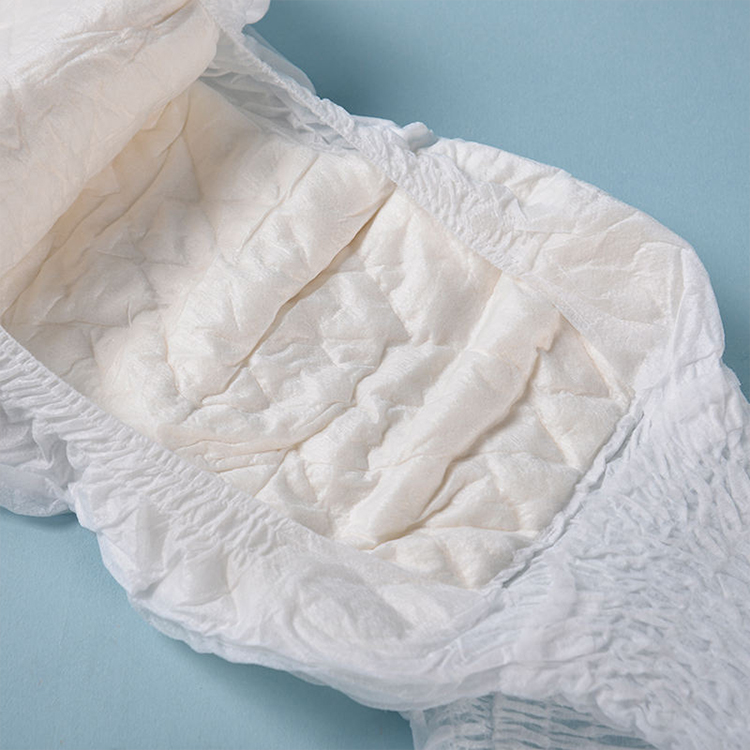
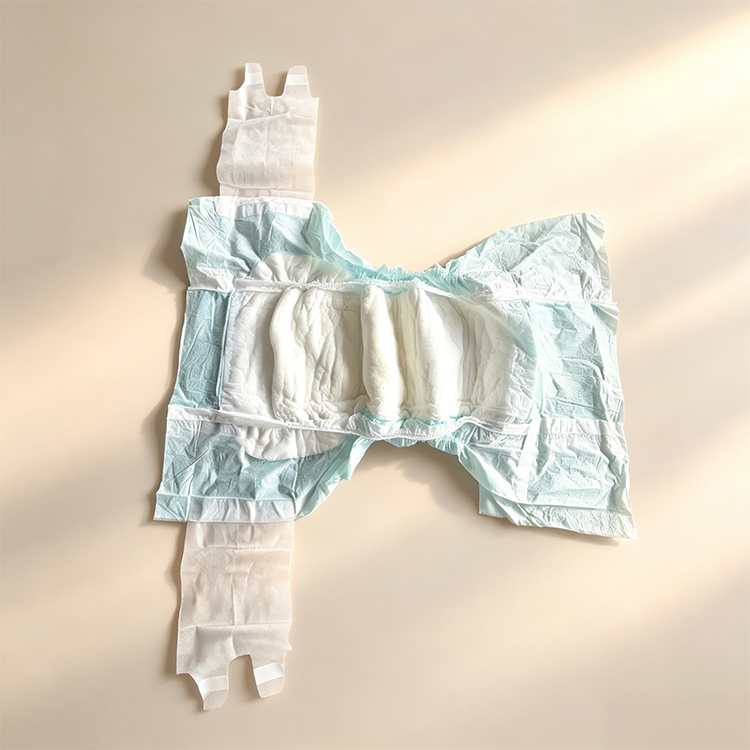
Adult diaper materials are not just procurement line items. They are the machine room of adult diaper performance. The topsheet controls first contact. The acquisition-distribution layer decides whether urine spreads or pools. The absorbent core, usually fluff pulp plus sodium polyacrylate superabsorbent polymer, does the heavy holding. The backsheet blocks liquid. Leak guards, elastics, tabs, adhesives, and waist panels decide whether the product survives real movement.
And real movement is ugly.
People sit. People turn. Caregivers refasten tabs. Wheelchair users compress the core for hours. Bedridden users shift to one side, and fluid follows gravity. That is why adult diapers for moderate to heavy incontinence cannot be judged by thickness alone.
The market is not small, either. The CDC’s National Center for Health Statistics reported that 50.9% of noninstitutionalized people aged 65 and over had urinary leakage and/or accidental bowel leakage in NHANES 2007–2010 data, which is the kind of raw prevalence number that makes sloppy material choices look less like “minor comfort issues” and more like commercial negligence: CDC/NCHS incontinence report.
The law is blunt too. Under 21 CFR 876.5920, a protective garment for incontinence is a device with absorbent padding and a fluid barrier intended to protect an incontinent patient’s garment from excreta; it is a Class I device, and infant diapers are excluded from that device category: 21 CFR 876.5920 protective garment for incontinence.
That matters because buyers love to call adult diapers “hygiene products” when selling them and “medical-adjacent products” when defending price. I dislike that ambiguity. If a product touches vulnerable skin, manages urine or stool, and gets used in nursing homes, hospitals, and home care, then material changes deserve adult supervision.
Table of Contents
The material swap table buyers should keep on the desk
This is why I like sending readers deeper into fast-dry vs soft-feel topsheet engineering before they approve a new adult diaper material spec. “Soft” is not enough. “Fast” is not enough. The product has to stay dry after pressure, not just look dry in the first ten seconds.
The absorbent core is where nice samples become bad batches
Here is the hard truth: SAP sells beautifully on spec sheets because buyers can see big absorbency numbers and feel safe. But sodium polyacrylate, commonly represented by the repeating unit (C3H3NaO2)n, is not magic dust. It is a hydrogel system that needs space, fluid access, and distribution support.
More SAP can help. More SAP can also ruin you.
When a core is overloaded with SAP and stripped of too much fluff pulp, the product may become thinner and more “modern,” but intake can slow because swollen polymer blocks flow paths. That is gel blocking. I have seen it create the worst kind of complaint: “The diaper still had dry zones, but it leaked.” That sounds impossible until you cut open the core and see the fluid trapped in one swollen area.
A useful clinical design clue comes from a BMC Geriatrics study on adult-type briefs. The researchers described standard polyacrylate superabsorber briefs with a surface pH of 7.08 ± 0.03 when wetted with saline, while adding a curled-fiber acquisition layer helped buffer the skin-facing surface to 4.58 ± 0.17; the design also used 500 ml of 0.9% saline as a urine surrogate in repeated wetting work: BMC Geriatrics adult brief design study.
That is not a cute lab detail. Skin has opinions.
If the absorbent core leaves moisture, alkalinity, heat, and friction near the skin, adult diaper performance becomes a dermatitis issue before it becomes a leakage issue. A 2024 NIH-hosted Medicare Fee-for-Service analysis reported that among incontinent members in skilled nursing facilities, 60.5% had at least one UTI in 2018, while 66.4% had at least one slip or fall; the authors were not blaming diapers alone, and neither am I, but the numbers show how unforgiving this user group can be: NIH-hosted Medicare incontinence study.
That is why rewet testing for adult diapers should sit next to absorbency in every buyer file. Capacity tells you how much liquid the product can hold. Rewet tells you whether the user has to sit in it.
Breathable adult diapers are not automatically safer
I like breathable backsheets. I do not trust lazy breathability claims.
A breathable adult diaper usually uses a vapor-permeable film or cloth-like laminate that lets water vapor escape while resisting liquid urine. Done well, it reduces heat and humidity. Done badly, it gives buyers a soft, quiet product that leaks through weak zones, pinholes, or poor lamination.
MedlinePlus keeps the consumer explanation simple: urine-leak pads are made to absorb more fluid than sanitary pads and usually have a waterproof backing: MedlinePlus urinary incontinence products. In procurement language, that “waterproof backing” is where the fight starts. How waterproof? Under what pressure? After folding? After sitting? After warehouse heat?
This is where many brands cheat the conversation. They call the backsheet breathable, but they never define water vapor transmission rate, hydrostatic resistance, film thickness, lamination strength, or pinhole tolerance. And then the product enters real life, where users do not behave like flat lab samples.
The same logic applies to adult diapers with tabs for caregiver-led changes. Tabs are not just closure hardware. They are part of the material system. A tab-style brief with poor tapes, weak waist elastic, or a noisy backsheet may pass absorbency testing and still fail in hospitals or care homes because staff need repeated adjustment, fast checks, and stable fit during turning.
Small parts cause big complaints.
Sustainability claims are entering the material spec
Adult diaper materials are being pulled in two directions: higher performance and lower environmental burden. That tension is not going away.
Reuters reported in 2024 that Japan’s adult diaper market was expected to grow 16% to ¥98.9 billion by 2027, while the baby diaper market was expected to shrink 8% to ¥84.6 billion, a neat little warning to every hygiene manufacturer still treating adult incontinence as a side category: Reuters on Japan’s adult diaper market shift.
At the material level, the pressure is already visible. In May 2024, LiveDo, Nagase & Co., and Nagase ChemteX announced joint development of adult disposable diapers using bio-based super absorbent polymers, aiming for release in 2027 or later; the same release stated that Japan used 556,000 tons of disposable diapers in 2020 and that disposable diapers were estimated to account for 5.2% to 5.4% of general waste: Nagase bio-based SAP adult diaper release.
Now, my controversial view: sustainability claims will create the next wave of bad adult diaper launches unless buyers force performance proof. Bio-based SAP, recycled pulp, reduced fluff, thinner cores, and plastic-reduction backsheets may all have a place. But if the product leaks, rewets, smells worse, or irritates skin, the environmental story becomes expensive theater.
For OEM and private label programs, material changes need change-control discipline. If you are changing SAP supplier, fluff ratio, topsheet finish, ADL width, backsheet film, adhesive, or tab tape, route the buyer toward adult diaper test reports and certifications before final approval. A nice sample is not a production guarantee.
How I would approve material changes before mass production
I would not start with price.
I would start with failure history: side leaks, wet feeling, odor complaints, skin redness, tab tearing, sizing complaints, night leakage, warehouse deformation, and batch inconsistency. Then I would connect each complaint to the material layer most likely to be guilty.
Lock the exact topsheet material: PP, PE/PP film, SMS, cotton-touch variant, gsm, hydrophilic treatment, and lint expectation.
Confirm the absorbent core formula: SAP supplier, SAP ratio, fluff pulp basis, ADL coverage, core channel design, and target capacity.
Test with 0.9% saline, not plain water, because urine behavior is closer to saline than a showroom demo.
Run repeated-dose acquisition and rewet testing, especially for overnight, bariatric, and institutional SKUs.
Demand retention under pressure, not only total capacity.
Check side leakage with movement and compression, not just flat-table absorption.
Validate breathable backsheet strength through hydrostatic pressure and pinhole inspection.
Test refastenable tabs for multiple open-close cycles.
Require REACH/SVHC, skin-contact, and material declarations where the market expects them.
Keep golden samples and batch records before scaling to a 20’GP or 40’HQ order.
That sounds strict because it is. Loose material approval is how brands buy refunds in advance.
FAQs
What are adult diaper materials?
Adult diaper materials are the layered components that determine fluid intake, dryness, fit stability, and leakage control, including the topsheet, acquisition-distribution layer, absorbent core, standing leak guards, elastics, tapes, adhesives, and breathable or film backsheet used in adult incontinence briefs for day, night, home care, and institutional care.
In plain terms, they decide whether the brief feels dry, fits securely, resists leaks, and survives real movement. The best materials for adult diapers are not always the softest or thickest; they are the materials balanced for the user’s mobility, output level, skin risk, and change schedule.
How do material changes affect adult diaper absorbency?
Material changes affect adult diaper absorbency by altering how quickly urine passes through the topsheet, how widely the acquisition layer spreads it, how securely sodium polyacrylate and fluff pulp retain it, and how much liquid returns to the surface under body pressure.
A higher SAP core may increase capacity, but it can also slow intake if the fluid cannot move through the core fast enough. That is why “how adult diaper materials affect absorbency” is really a system question, not a single-material question.
Does more SAP always mean better adult diaper performance?
More SAP does not automatically mean better adult diaper performance because high superabsorbent loading can increase retention while slowing intake, causing gel blocking, uneven swelling, poor distribution, and higher leak risk when the acquisition layer and fluff matrix are not designed around it.
The absorbent core needs balance. SAP holds fluid; fluff and ADL help move it. When a supplier removes too much fluff to make a thinner diaper, the lab capacity may look good while real-use leakage gets worse.
Are breathable adult diapers less leak-proof?
Breathable adult diapers are disposable incontinence briefs or pull-ups that use vapor-permeable backsheet materials to reduce heat and humidity near the skin while still relying on a fluid barrier, absorbent core, and leak guards to prevent urine or stool leakage.
They are not automatically less leak-proof, but weak breathable films can fail if hydrostatic resistance, lamination quality, or pinhole control is poor. Breathability should be tested alongside leakage protection, not accepted as a comfort claim.
What should buyers ask before approving adult diaper material changes?
Buyers should ask for proof before approving adult diaper material changes, including rewet data, strike-through time, retention under pressure, breathability data, leak testing, chemical declarations, batch traceability, and samples from the exact SKU and production line planned for purchase.
I would also ask what changed, why it changed, whether the supplier changed upstream vendors, and whether the new material affects cost, lead time, packaging compression, shelf life, or complaint risk. A material change without documentation is a future argument.
Your Next Steps: Demand Proof Before You Approve the Next Material Change
Do not approve adult diaper materials because the sample feels soft on a conference table.
Ask for the data. Ask for the method. Ask for the exact SKU report. Ask what happens after sitting pressure, repeated wetting, refastening, side sleeping, and warehouse storage. Then compare that evidence against the user group: mobile adults, bedridden users, nursing homes, hospitals, pharmacy retail, e-commerce, or overnight care.
If you are sourcing adult diapers, request the full material specification, rewet testing, absorbency testing, leakage testing, breathability data, and compliance package before placing a repeat order. Start with the supplier’s adult diaper test reports and certifications, then move into product sampling only when the numbers match the promise.