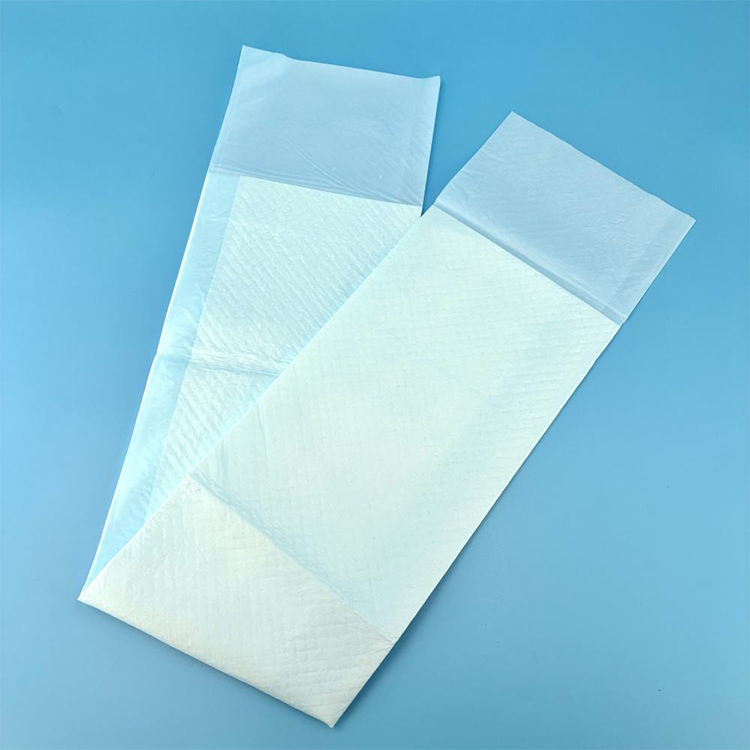
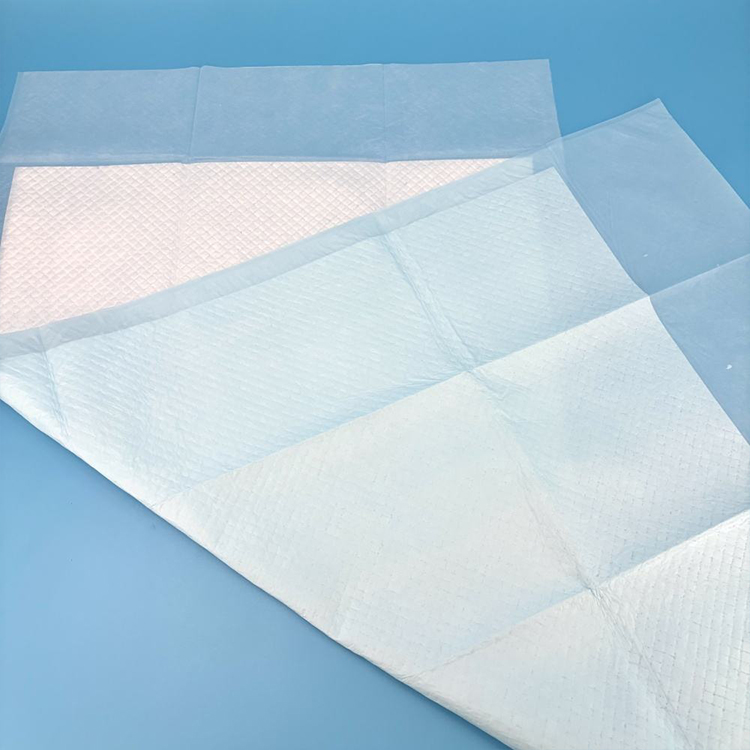
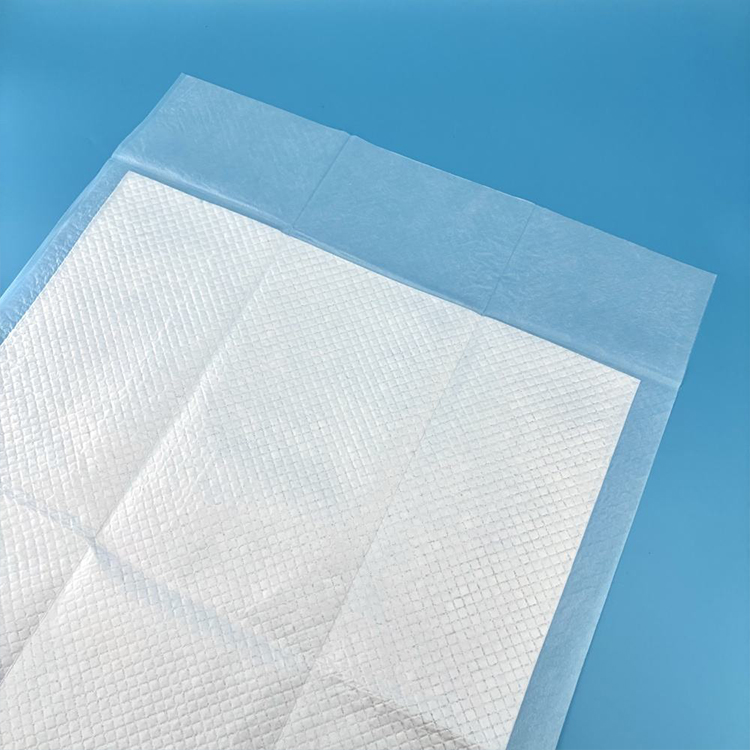
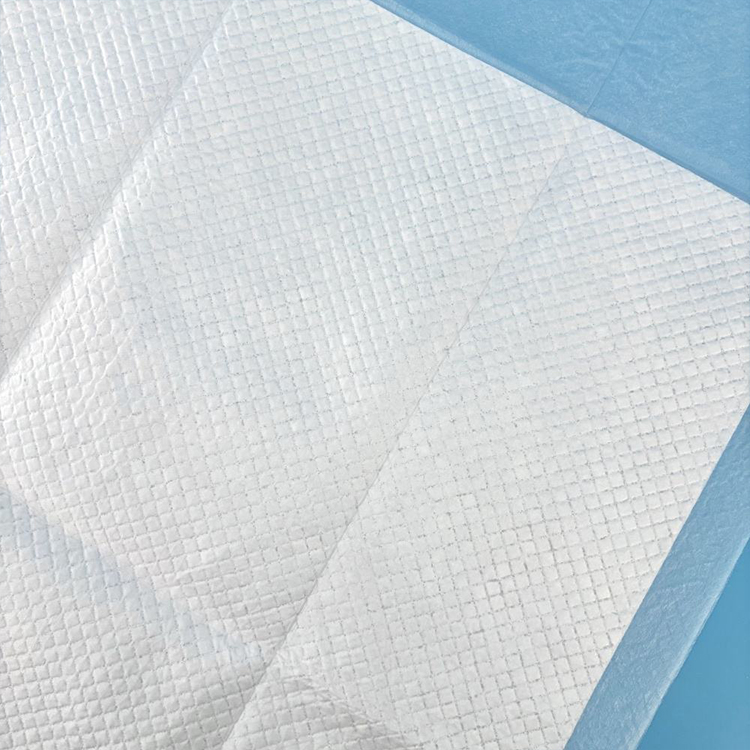
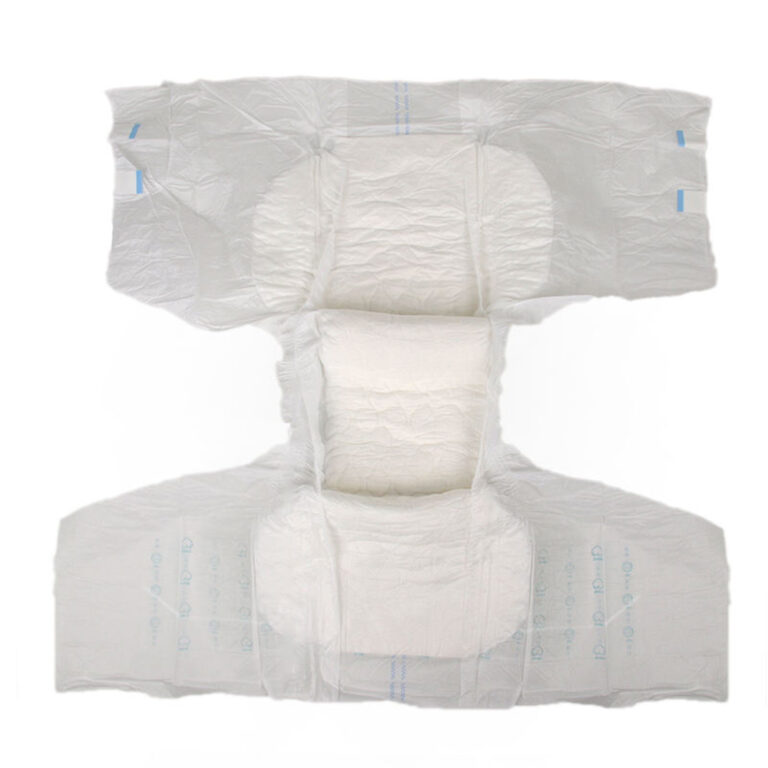
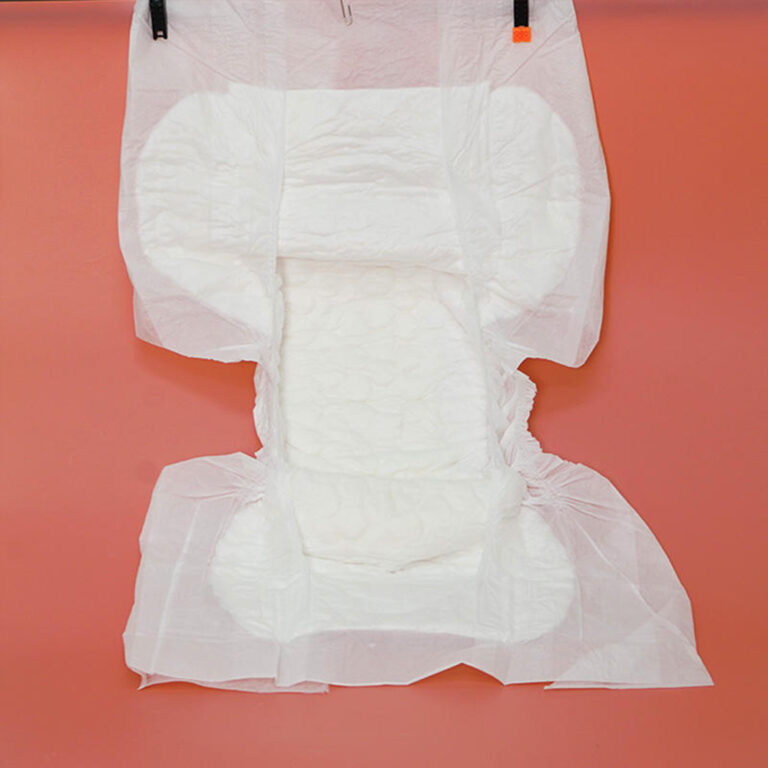
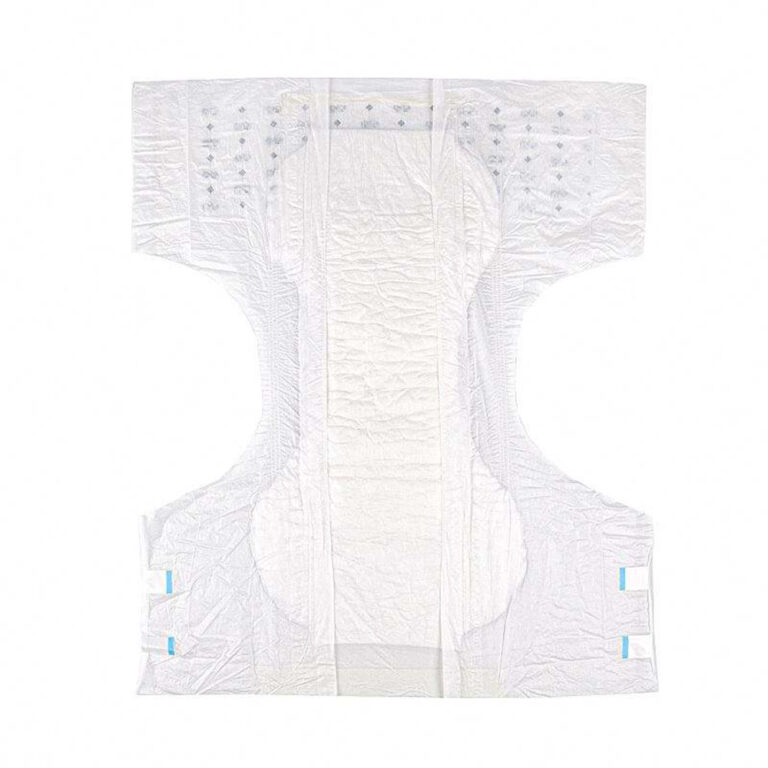
What to Consider in OEM Customization for Incontinence Pads
Specs decide everything.
When buyers describe an OEM incontinence pad as “soft, highly absorbent and affordable,” they have not written a product specification; they have handed the factory three subjective adjectives and left almost every costly engineering decision open to interpretation.
What could possibly go wrong?
Plenty. The pad may feel soft when dry but remain wet after loading. It may pass a total-capacity test yet leak during a sudden release. The adhesive may hold on cotton underwear but detach from stretch fabric. And the final retail pack may look polished while the absorbent core inside bears little resemblance to the approved sample.
I have a blunt rule for private-label projects: never customize the package before defining the failure you are trying to prevent.
That rule matters because the customer base is not small. The US National Institute of Diabetes and Digestive and Kidney Diseases reports that approximately half of women experience urinary incontinence, while as many as one in three men over 65 may experience accidental urine loss. Those groups do not all need the same pad geometry, capacity or protection zone.
A credible OEM program therefore starts with the user, the leakage pattern and the intended sales channel. Everything else follows.
Table of Contents
Start With the Wearer, Not the Factory’s Existing Catalogue
Many suppliers begin an OEM discussion by sending a spreadsheet of available lengths, weights and pack counts. That is convenient for the production line. It is not necessarily useful for the buyer.
Start somewhere else.
Define the intended wearer in operational terms:
Male, female or genuinely unisex
Mobile, partially mobile or caregiver-assisted
Light dribbling, stress leakage, urge leakage or heavier release
Daytime, travel, work, exercise or overnight use
Regular underwear, fixation pants or another supporting garment
Typical wear interval before changing
Target retail, pharmacy, institutional, e-commerce or reimbursement channel
These answers determine where the core should sit, how quickly fluid must enter it and how much surface area is needed.
For example, a male guard normally needs front-loaded absorbency and a broader, cupped upper section. A women’s pad typically uses a longer central protection zone. Our comparison of male guards and women’s incontinence pads explains why changing the wrapper color without changing core geometry is not meaningful product development.
That is an unpopular opinion among manufacturers selling “gender-specific” ranges.
But it is true.
A blue package does not create male anatomy. A floral wrapper does not create a female absorbency map. When the internal structure is identical, buyers should ask whether they are paying for genuine product differentiation or marketing theatre.
Build a Use-Case Brief Before Requesting Samples
A useful development brief should state a measurable use case, not merely a product category.
Weak brief:
We need a premium heavy-absorbency pad for Europe.
Better brief:
We need a 380–420 mm anatomically shaped pad for mobile women with moderate urge or mixed urinary leakage, intended for six-hour daytime wear in close-fitting underwear, with low rewet under sitting pressure, individually wrapped units and multilingual retail packaging.
Now the incontinence pad manufacturer can make engineering decisions against an actual target.
Buyers building a full range should review the existing incontinence pad formats before deciding whether they need a light liner, a contoured moderate pad, a heavy pad or a flow-through booster. These are different products. Treating them as absorbency grades of one universal design is usually a mistake.
Turn “High Absorbency” Into a Testable Product Specification
“High absorbency” is one of the least useful phrases in this industry.
A pad can hold a large volume in a laboratory bucket test and still fail on a person because total capacity says little about fluid-entry speed, absorbency placement, rewet, edge leakage or performance under body pressure.
The ISO 11948-1 whole-product method provides a method for determining the absorption capacity of body-worn urine-absorbing aids. ISO confirmed the standard as current in 2023. It is useful for controlled product comparisons, but it should not be confused with real-world usable capacity.
That distinction is expensive.
A 1,000 mL theoretical result does not mean a wearer can safely release 1,000 mL into the pad while walking, sitting or sleeping. Some fluid may reach the edges before the core distributes it. Pressure may force liquid back toward the topsheet. The pad may fold away from the body. Adhesive failure may create a gap before the core is saturated.
So I would never approve an OEM incontinence pad using capacity alone.
The Specification Table I Would Send to a Manufacturer
Specification area
What the buyer should define
Evidence required before approval
Common failure when ignored
Pad dimensions
Total length, front width, rear width and crotch width in millimetres
Dimension report from multiple finished samples
Folding, poor underwear fit or inadequate coverage
Product weight
Finished pad weight and acceptable tolerance
Sample measurements and production tolerance
Hidden material reduction between sample and bulk order
Absorbent core
Fluff pulp weight, SAP level, core length, width and distribution pattern
Bill of materials and cut-open sample review
High capacity in the wrong part of the pad
Fluid acquisition
Target intake time for first and repeated loading
Agreed laboratory test method and raw results
Pooling and side leakage during sudden releases
Rewet
Maximum liquid returned under defined pressure
Rewet test with stated load, timing and test fluid
Damp surface, discomfort and skin complaints
Topsheet
Spunbond, perforated film, hydrophilic treatment, basis weight and softness target
Material specification and skin-contact declaration
Soft dry feel but slow fluid penetration
Acquisition layer
Material, basis weight, dimensions and placement
Construction drawing and supplier specification
Slow distribution or local core saturation
Backsheet
PE film or cloth-like laminate, breathability target and noise requirement
Material report and handling test
Heat buildup, tearing or audible movement
Adhesive
Strip length, width, coat weight and peel target
Adhesive test on intended underwear fabrics
Pad shifting, curling or detachment
Leak protection
Side channels, embossing, elastic barriers or raised guards
Loaded-use testing in multiple positions
Fluid escaping before the core reaches capacity
Odor control
Material or technology used and permitted marketing claim
Ingredient statement and claim support
Unsupported “antibacterial” or odor-removal claims
Individual wrapping
Film type, opening method, print registration and seal strength
Packed sample and transport test
Wrappers opening, tearing or exposing the pad
Retail packaging
Count, dimensions, barcode, languages and case quantity
Signed artwork and packing specification
Wrong counts, mistranslation or shipping inefficiency
This is not bureaucracy. It is the product.
SAP Is Not a Substitute for Core Engineering
Most disposable custom incontinence pads combine cellulose fluff pulp with superabsorbent polymer, commonly cross-linked sodium polyacrylate. Its repeating unit is often represented as (C₃H₃NaO₂)n.
SAP swells and retains fluid. Cellulose helps acquire and distribute it.
Adding more SAP can increase laboratory retention, but too much concentrated polymer may slow distribution, create gel blocking or make the loaded pad feel stiff. More pulp can improve wicking, yet excessive pulp can increase thickness and encourage bunching.
There is no magic ratio.
The correct balance depends on the intended fluid volume, release speed, core dimensions, wearing pressure and desired thickness. Buyers should therefore request the core map, not just the total grams of absorbent material.
And ask where the SAP sits.
A pad with 8 grams of SAP concentrated near the centre may behave differently from a pad using the same quantity across a longer acquisition zone. The raw-material cost is identical. The user outcome may not be.
Fast-Dry and Soft-Feel Are Separate Decisions
Buyers often ask for the softest possible topsheet. That sounds reasonable until the selected material slows fluid penetration and leaves urine sitting against the skin.
Softness sells the first touch. Dryness decides the next purchase.
Our analysis of fast-dry versus soft-feel topsheets explains why these properties must be tested separately. A professional sample review should examine:
Dry hand feel
First fluid strike-through
Repeated strike-through
Rewet under pressure
Surface integrity after loading
Linting or fibre release
Friction during movement
The skin issue is not theoretical. A multisite study involving 5,342 adults in US acute-care facilities reported an overall incontinence-associated dermatitis prevalence of 21.3%, rising to 45.7% among incontinent patients, according to the National Library of Medicine study.
A pad cannot prevent every skin problem. But a slow, wet surface certainly does not help.
Decide What Can Change and What Must Remain Locked
OEM customization sounds flexible. Uncontrolled customization is merely inconsistency with better branding.
Before approving a sample, divide the specification into three groups.
Customer-Visible Variables
These can usually be changed without rebuilding the whole product:
Brand name and logo
Wrapper artwork
Retail bag artwork
Pack count
Carton marks
Barcode
Language
Absorbency naming
Colour accents
Opening instructions
Performance Variables
These directly affect how the pad functions:
Length and width
Core dimensions
Fluff pulp and SAP quantities
SAP distribution
Acquisition-layer material
Topsheet
Backsheet
Adhesive pattern
Embossing
Leak-control geometry
Product weight
Controlled Production Variables
These may not be visible to the consumer, but they affect repeat-order consistency:
Approved raw-material supplier
Material grade
Basis weight tolerance
Glue application rate
Line speed
Core placement tolerance
Seal temperature
Sampling frequency
Defect classification
Lot coding
Pallet pattern
Here is the hard truth: buyers spend too much time editing package colours and too little time locking the bill of materials.
I would rather launch one plain-looking pad with a frozen material specification than four attractive variants whose pulp, SAP, adhesive or topsheet can change whenever the factory finds a cheaper source.
Approve a Golden Sample and a Signed Specification
The golden sample should be the physical reference retained by both buyer and manufacturer. It should be linked to a dated specification containing:
Product code and revision number
Finished dimensions
Finished weight and tolerance
Material names and grades
Core construction
Performance-test methods
Packaging configuration
Approved artwork files
Defect limits
Change-control procedure
Names of the people authorising approval
Photos are not enough.
A photograph cannot prove topsheet basis weight, SAP distribution, adhesive coat weight or rewet performance. Keep sealed samples from the approved run and compare them with bulk-production samples.
For a more detailed inspection structure, use this adult diaper and absorbent-product QC report checklist. Although written around adult diapers, the same control logic applies to incontinence pads: identify the lot, record measurable results, document defects and show who released the shipment.
Regulatory Claims Can Cost More Than the Product
A private-label pad is not automatically “compliant” because a supplier sends a CE logo, an FDA screenshot or an ISO certificate.
Documents need scope.
In the United States, 21 CFR 876.5920 defines a protective garment for incontinence as a device consisting of absorbent padding and a fluid barrier intended to protect an incontinent patient’s garment from excreta.
That definition matters because intended use and labeling help determine the regulatory route.
The FDA explains that most Class I and some Class II devices may be exempt from 510(k) premarket notification, but 510(k) exemption does not erase every regulatory obligation. Establishment registration, device listing, labeling controls, complaint handling and other requirements may still apply, depending on the product and responsible economic operator.
Do not print “FDA approved” merely because the establishment is registered.
Those phrases are not interchangeable.
For each target market, the buyer should confirm:
Intended use
Product classification
Responsible manufacturer
Importer or authorised representative
Establishment registration requirements
Device listing requirements
Label language
Mandatory symbols
Lot identification
Complaint and vigilance process
Technical-file responsibilities
Permitted performance and skin-related claims
The same caution applies to terms such as “antibacterial,” “hypoallergenic,” “dermatologically tested,” “prevents infection” and “medical grade.” Each claim needs a definition and supporting evidence.
“Odor control” is not the same claim as “kills bacteria.”
“Skin friendly” is not a test method.
And “chemical free” is nonsense. Cellulose, polyethylene, adhesives and sodium polyacrylate are all chemicals.
Ask for the Actual Document, Not the Logo
A professional compliance package may include:
Declaration of Conformity
Certificate with valid scope and issuing body
ISO 9001 or ISO 13485 certificate, where applicable
Skin-contact material declarations
REACH and SVHC declarations for EU projects
Restricted-substance testing
Biocompatibility assessment where required
Finished-product performance reports
Safety data for relevant materials
Batch traceability records
Packaging and label approval records
Check the company name, address, product scope, certificate number, issue date and expiry date.
A certificate belonging to another factory is worthless. A certificate covering wet wipes does not automatically cover incontinence pads. A test report from a different product weight does not prove the performance of the item you are purchasing.
Paperwork must match the SKU.
Price the Complete Program, Not Just the Pad
Unit price is only one line in the cost model.
A lower pad quotation can be erased by excessive minimum order quantities, poor carton utilisation, redesign fees, unused packaging inventory, leakage complaints, emergency inspections or a material change that forces another round of testing.
Consider this illustrative calculation:
Cost item
Supplier A
Supplier B
Pad price
$0.105
$0.112
Quantity
500,000
500,000
Product cost
$52,500
$56,000
Custom packaging plates and setup
$3,000
$1,200
Mandatory third-party testing
$4,500
Included
Pre-shipment inspection
$800
Included
Estimated unusable packaging after design change
$2,000
$0
Illustrated program cost
$62,800
$57,200
Supplier B appears 6.7% more expensive at pad level. Across this hypothetical order, the total program is $5,600 cheaper.
That is why I distrust quotations with one large number and no assumptions.
Request a cost breakdown covering:
Finished pad
Individual wrapper
Retail bag
Outer carton
Printing cylinders or plates
Artwork setup
Sample charges
Testing
Inspection
Pallets
Export packing
Tooling
Documentation
Freight basis
Payment terms
Storage of unused printed packaging
Also ask which changes trigger a new MOQ. A package-count change may require only new artwork. A new pad width may require different tooling, material widths or line settings.
They are not equivalent requests.
Choose an OEM Incontinence Pad Manufacturer by Evidence
The best OEM incontinence pads supplier is not necessarily the supplier with the largest factory presentation.
I care more about control.
Can the manufacturer explain how raw materials are approved? Can it trace a complaint to a production lot? Can it show results from the same SKU being quoted? Can it separate cosmetic defects from functional defects? Can it explain what happens when a raw-material supplier changes?
These questions expose weak suppliers quickly.
My Shortlist Test
Before placing a production order, I would require:
A written development brief acknowledged by the supplier.
Samples from the intended production structure, not an unrelated showroom item.
A complete product specification with revision control.
A bill of materials or controlled material list.
Test methods agreed before testing begins.
Raw data, not only a “PASS” stamp.
Packaging mock-ups with verified dimensions and languages.
A golden sample signed by both parties.
A pre-production confirmation sample.
A batch-specific QC report before shipment.
Written approval before any material substitution.
A complaint and corrective-action process.
The OEM/ODM manufacturing service describes a typical project flow with samples in 7–15 days and bulk production in 15–30 days, depending on the specification and packaging. Those figures are useful for planning, but the commercial agreement should still define when the clock starts.
Does sample timing begin after the brief is received? After payment? After artwork approval? After the material arrives?
Write it down.
A vague lead time is not a lead time.
FAQs
What can be customized in OEM incontinence pads?
OEM customization for incontinence pads is the controlled modification of pad dimensions, absorbent-core architecture, topsheet, acquisition layer, adhesive, backsheet, odor-control system, packaging, labeling and performance targets so a supplier can manufacture a repeatable product for a defined user group, sales channel and regulatory market.
Common options include pad length, width, thickness, SAP and fluff-pulp balance, absorbency placement, individual wrapping, retail pack count, multilingual artwork and carton configuration. Performance changes should be validated with agreed test methods rather than approved from appearance alone.
How do I choose an OEM incontinence pad manufacturer?
The best OEM incontinence pad manufacturer is a supplier that can convert your use case into measurable specifications, provide traceable samples and test data, lock approved materials, control production changes, document each batch and support the labeling and regulatory requirements of the countries where the product will be sold.
Do not shortlist factories using price, catalogue size or certificates alone. Review sample consistency, test methods, change control, complaint handling, batch traceability, packaging capability and the scope of every certificate or report provided.
What absorbency should I specify for a custom incontinence pad?
Absorbency for a custom incontinence pad should be defined through the wearer’s leakage volume, release speed, wear duration, movement level, body position and acceptable rewet rather than through a single maximum-capacity number printed on the package or copied from a laboratory whole-product absorption test.
Specify total capacity alongside intake speed, repeated loading, rewet under pressure and leakage performance. A light stress-leakage liner and a heavy urge-incontinence pad may need different fluid-entry rates and core maps even when their advertised capacity looks similar.
What is the normal MOQ for private label incontinence pads?
A private-label incontinence pad MOQ is the minimum production and packaging quantity required to run the selected pad structure, wrapper, retail bag and carton economically, and it may be set by machine efficiency, printed-film quantities, material widths, pack configuration or container utilisation rather than by the pad itself.
Ask for separate MOQs for stock products with custom stickers, standard pads with printed packaging and fully customized pad structures. Also confirm who owns unused printed film and whether it can be stored for repeat orders.
How can buyers verify batch-to-batch quality?
Batch-to-batch quality is verified by comparing each production lot against a frozen specification and signed golden sample, then recording dimensions, weight, material identity, absorbency, intake, rewet, adhesive performance, packaging, lot codes and defect levels through a defined sampling plan before the shipment is released.
Require the QC report to identify the SKU, order number, lot, production date, sample size, equipment or methods used, actual results, failures, corrective actions and final release authority. A page of product photographs is not a complete QC report.
Should men’s and women’s incontinence pads use different designs?
Men’s and women’s incontinence pads should use different designs when anatomical fit and typical leakage location require different protection zones, with male guards generally using wider front-loaded absorbency and women’s pads using a longer central channel; cosmetic colour changes alone do not create meaningful gender-specific performance.
A unisex pad may still work for selected light-leakage markets. Test it on the intended users before assuming one geometry can serve every anatomy, underwear style and movement pattern.
Build the Specification Before Requesting the Price
Do not begin your OEM project with “What is your cheapest pad?”
Begin with the wearer, leakage pattern, dimensions, target performance, material controls, packaging, market and evidence required for approval.
Then request the quotation.
For a custom incontinence pad development proposal, prepare your target length, absorbency level, user group, pack count, destination market and estimated monthly quantity, then submit them through the LOVINHUG OEM/ODM inquiry page.