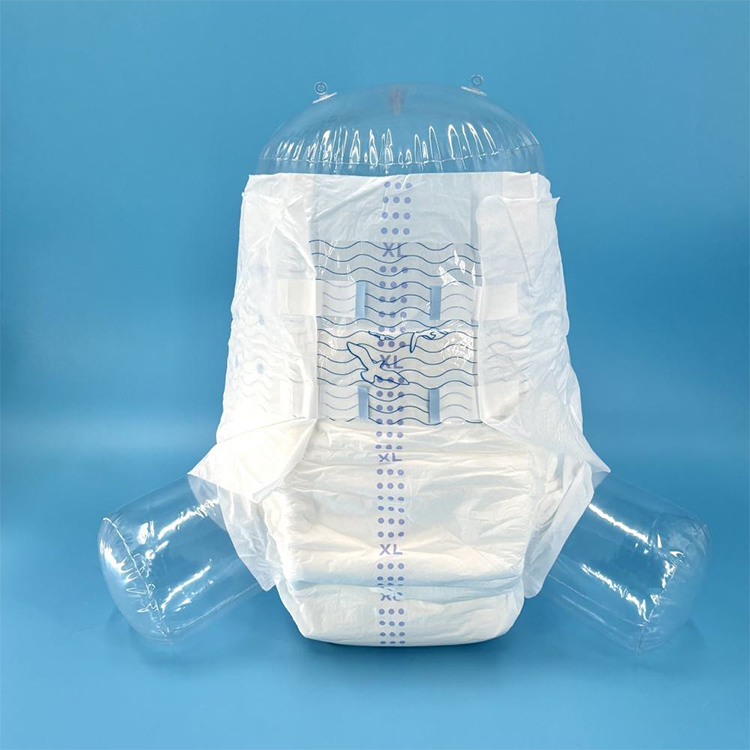
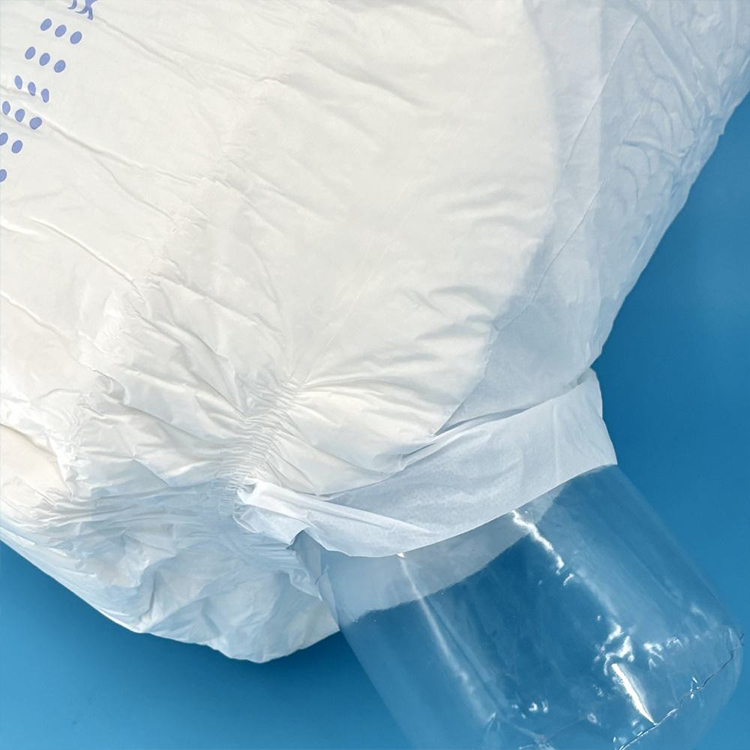
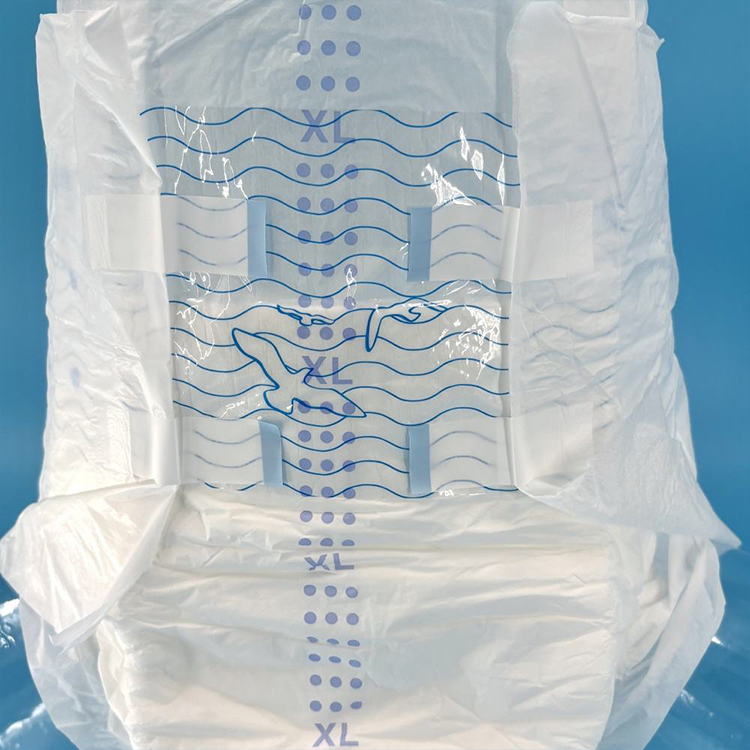
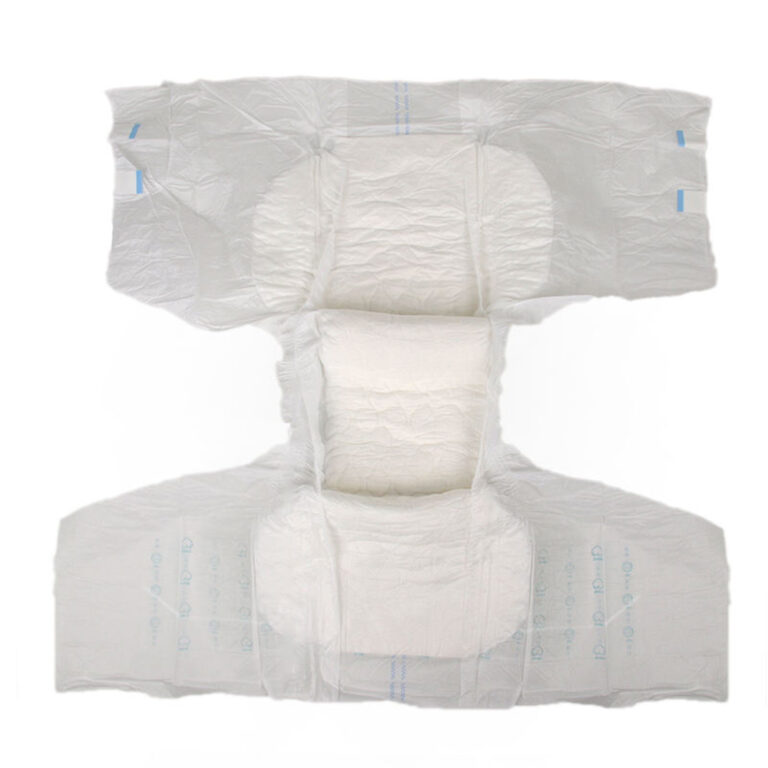
An adult diaper QC report should connect one finished production lot to approved specifications, traceable samples, named test methods, raw measurements, recorded defects, corrective actions, packaging checks, and a signed release decision, because anything less is inspection theater dressed up as quality documentation.
What good is a green “PASS” box if nobody can tell which cartons were tested?
I have a blunt rule for adult diaper quality control: a report must help the buyer decide whether to release, hold, rework, or reject a shipment. It is not a photo album. It is not a recycled laboratory certificate. And it is certainly not a one-page checklist filled with identical check marks.
A serious adult diaper inspection checklist must answer five questions:
What exact production lot was inspected?
How were the samples selected?
What specification and test method were used?
What were the actual measured results?
Who accepted the commercial and technical risk?
Miss one, and the report becomes weaker. Miss three, and I would not call it a QC report at all.
Table of Contents
A QC Report Is a Release Decision, Not a Photo Album
The hard truth is that many factory reports are designed to look reassuring rather than reveal variation.
They show twelve clean product photos. They display a company stamp. They say “absorption: qualified,” “appearance: qualified,” and “packing: qualified.” Yet there is no purchase-order number, no batch code, no sample size, no test-liquid formula, no individual measurements, and no acceptance or rejection number.
That proves nothing.
For U.S. programs, the regulatory context is also more serious than some private-label buyers assume. The FDA’s urinary-incontinence device guidance identifies a protective garment for incontinence under 21 CFR 876.5920 as a Class I, 510(k)-exempt device. Exempt does not mean undocumented.
And for organizations subject to U.S. medical-device quality-system requirements, the FDA Quality Management System Regulation final rule became effective on February 2, 2026. It incorporates ISO 13485:2016 as a foundation while retaining additional FDA requirements, including controls for records, complaints, labeling, and packaging.
So the report has to survive more than a purchasing manager’s glance. It may later be examined during a supplier audit, complaint investigation, retailer review, tender submission, import inquiry, or product recall.
Would your current report survive that scrutiny?
The 10 Sections Every Adult Diaper QC Report Should Contain
1. Document Control and Shipment Identity
Every adult diaper QC report should begin with controlled identification data.
At minimum, record:
QC report number and revision
Inspection date and location
Manufacturer and factory address
Customer or brand name
Purchase-order number
Product name, SKU, size, absorbency tier, and pack format
Production lot or batch number
Production line number
Manufacturing date and production time window
Total lot size in pieces, bags, cartons, and pallets
Inspector’s name and department
Report preparation, review, and approval signatures
The report should also state whether the inspection was performed during production, after production, before loading, or after rework.
“Adult diaper, size L” is not enough. A buyer may have two size-L briefs using different SAP weights, tabs, backsheets, package counts, or artwork revisions. The product identity must be exact.
The site’s own adult diaper test reports and certification documentation already points buyers toward lot-based records, traceability, third-party reports, and per-SKU performance evidence. That is the right direction. The final report should make those links operational.
2. Approved Specification and Revision Status
A report cannot declare conformity until it names the document against which conformity was judged.
This section should list:
Signed product specification number and revision
Approved bill of materials
Approved packaging artwork revision
Approved size chart
Approved golden sample or sealed reference sample
Purchase-order requirements
Test-method numbers and revisions
Customer-specific defect classification
Approved engineering changes
Temporary deviation permits, if any
This matters because suppliers change materials.
A topsheet basis weight drops. A new sodium polyacrylate supplier is introduced. A breathable polyethylene backsheet changes. Glue application is reduced. Elastic tension is adjusted. The package still looks familiar, but performance may not be.
The OEM/ODM adult diaper manufacturing workflow describes incoming-material checks, first-article approval, line settings, sealing, weights, SAP distribution, and leak-guard alignment. A shipment report should identify which approved material and process revisions were actually used for the inspected lot.
No revision, no control.
3. Sampling Plan and AQL Details
“AQL passed” is not a sampling plan.
The report must state:
Lot size
Sampling standard and edition
Normal, tightened, or reduced inspection
General or special inspection level
Sample-size code letter
Number of units inspected
AQL assigned to each defect class
Acceptance number, or Ac
Rejection number, or Re
Actual defects found in each category
Sampling locations across cartons and pallets
ISO 2859-1:2026 is the current edition of the widely used attribute-sampling standard. The report should identify the edition actually applied instead of copying “ISO 2859” from an old template.
For a conservative commercial starting point, I would negotiate an acceptance number of zero for safety-related critical defects, AQL 1.0 for major defects, and AQL 2.5 for minor defects. Those figures are not universal adult diaper quality standards. They are buyer-defined contract terms that should be adjusted for product claims, user vulnerability, sales channel, complaint history, and regulatory exposure.
A hospital contract deserves tighter thinking than a promotional giveaway.
The sampling method matters too. Units should be drawn across the production run and from multiple shipping cartons, not handed to the inspector from a suspiciously perfect box beside the QC office.
4. Visual Workmanship and Product Construction
The visual section should record defect counts, not merely state “appearance OK.”
Inspectors should check for:
Foreign matter, insects, oil, dirt, hair, and visible contamination
Exposed SAP or fluff pulp
Core breakage, bunching, cracking, or uneven distribution
Missing or folded acquisition-distribution layers
Open seams and delamination
Excess, missing, or misplaced hot-melt adhesive
Torn topsheets or backsheets
Pinholes in the backsheet
Missing, damaged, or misaligned leak guards
Uneven leg elastic
Missing or weak waist elastic
Incorrect tab placement
Tabs bonded to the wrong surface
Wetness-indicator defects
Printing errors
Abnormal odor
Hard edges or sharp adhesive points
Product folding errors
Photographs should show both conforming and nonconforming samples, with sample numbers visible in the frame.
Photos support data. They do not replace it.
5. Dimensions, Weight, and Material Consistency
An adult diaper can be visually attractive and still fail because its geometry has drifted.
The report should show the target, tolerance, individual results, average, minimum, maximum, and pass/fail status for dimensions such as:
Total product length
Front and rear panel width
Crotch width
Absorbent-core length and width
Leak-guard height
Waist elastic length
Tab position
Distance between tabs
Leg-opening dimensions
Folded-product dimensions
Unit weight
Absorbent-core weight, where destructive verification is required
Do not settle for one unit.
A useful report might test n=10 dimensional samples and show every result. If unit weight is specified at 118 g ± 5 g, the report should display the ten readings, not “average weight: pass.”
Why? Because an acceptable average can hide two seriously underweight products.
6. Absorbency, Acquisition, Rewet, Retention, and Leakage
This is where weak adult diaper quality testing is usually exposed.
The ISO 11948-1 whole-product method provides a method for determining absorption capacity in body-worn urine-absorbing aids. It remains useful. But capacity is not the same as usable protection.
Read that again.
A brief may hold a large amount of fluid under an immersion-style laboratory method while performing badly during a fast void, repeated loading, sitting pressure, turning, walking, or side sleeping. That is why the report should separate at least five performance concepts:
Total Absorption Capacity
Record the method, sample conditioning, liquid, immersion or dosing procedure, drainage time, sample count, individual results, and acceptance limit.
Do not convert a laboratory capacity number into a real-world wear-time promise without evidence.
Acquisition Speed
Acquisition measures how quickly the product moves a defined liquid dose through the topsheet and into the absorbent system.
The report should state:
Dose volume
Number of doses
Time between doses
Test-liquid composition
Application point
Acquisition time for each dose
Sample count
Mean, minimum, and maximum results
When a test uses simulated urine such as 0.9% sodium chloride solution, written as 0.9% NaCl, the report should say so. “Test liquid” is too vague.
Rewet Under Pressure
Rewet measures how much absorbed liquid returns toward the skin-facing surface under a defined load.
The test record should identify the applied pressure or mass, contact area, dwell time, filter-paper specification, loading sequence, and result in grams.
The EDANA Nonwovens Standard Procedures include specific adult-incontinence methods for acquisition and rewet, centrifugal liquid retention, and absorption before leakage using an adult mannequin. That alone should tell buyers why one vague “absorbency test” is not enough.
Retention
Retention shows whether the core keeps liquid after drainage, pressure, or centrifugation.
This matters because sodium polyacrylate can absorb a large quantity of saline, but core structure, SAP distribution, fluff-pulp balance, and pressure determine how much stays where it belongs.
Leakage Resistance
Leakage testing should reflect the intended user and product format.
Depending on the agreed protocol, the report may include:
Repeated-dose horizontal leakage testing
Inclined-board testing
Mannequin testing
Standing and seated loading
Side-sleeper simulation
Cuff-channel leakage assessment
Dynamic movement or fit trials
Leakage location and time-to-leak recording
The site’s analysis of adult diaper leakage and product design makes an important point: slow intake, poor fit, collapsed cuffs, and compression rewet can cause failure before theoretical capacity is reached.
Capacity-only reports are sales brochures.
7. Fasteners, Elastics, Seams, and Functional Strength
A high-capacity core is useless if the product cannot stay on the body.
For tab-style briefs, inspect:
Tab peel strength
Tab shear or holding strength
Landing-zone bond strength
Refastening performance
Tab symmetry
Tab detachment
Front-ear and rear-ear bonding
Waistband extension and recovery
Leg-elastic extension and recovery
For pull-up incontinence underwear, inspect:
Side-seam breaking strength
Tear-away consistency
Waistband stretch
Elastic recovery
Seam opening after repeated stretching
Product recovery after donning simulation
The method, equipment, pulling speed, jaw distance, sample orientation, and result unit—normally newtons, or N—should appear in the report.
“Tabs are strong” is not data.
8. Skin-Contact, Chemical, and Microbiological Evidence
Not every laboratory test belongs in every shipment report. But every required test must be traceable to the correct SKU, materials, claims, and production period.
Risk-based testing may cover:
Surface pH
Total aerobic microbial count
Yeast and mold
Specified pathogens
Residual acrylate monomers in SAP
Formaldehyde
Extractable or restricted substances
Phthalates, where applicable
Organotin compounds, where applicable
REACH Candidate List SVHC screening or declarations
Latex statements
Fragrance or lotion composition
Skin irritation or sensitization evidence
Biocompatibility documentation where required by classification and intended use
Routine release checks and periodic third-party tests should not be confused.
Routine checks may be performed per lot or production run. More complex chemistry, microbiology, transport validation, or skin-contact testing may be conducted at a defined frequency and repeated after a raw-material, supplier, process, product-design, packaging, or claim change.
The report should state the frequency. Silence is not a frequency.
9. Packaging, Labeling, Barcode, and Logistics Checks
Packaging errors can turn technically acceptable diapers into commercially unusable inventory.
The QC report should verify:
Correct product and size in each bag
Correct pieces per bag
Correct bags per carton
Correct barcode and scannability
Correct brand, SKU, language, and artwork revision
Correct absorbency and sizing claims
Lot or batch coding
Manufacturing date
Expiry or use-by information where required
Instructions and warnings
Country-of-origin statement
Carton dimensions and gross weight
Carton marks
Pallet configuration
Seal integrity
Bag leakage or open seals
Print adhesion and legibility
Drop, vibration, compression, or transit tests where specified
For international programs, the report should also confirm that the inspected artwork matches the destination market. The site’s guide to CE and market-specific requirements for adult incontinence products is relevant here because classification, claims, language, responsible-party details, and supporting documents can change by destination.
A perfect diaper in the wrong bag is still a failed shipment.
10. Nonconformity, Corrective Action, and Final Release
Failures must remain visible.
A strong report records:
Nonconformity number
Defect category
Affected quantity
Affected cartons, times, or production line
Immediate containment action
Root-cause investigation status
Rework or sorting method
Quantity reworked
Retest sampling plan
Retest results
Remaining risk
Customer concession or deviation approval
Final disposition
Authorized release signature
The release status should be unambiguous:
PASS
FAIL
HOLD
CONDITIONAL RELEASE
RELEASED AFTER REWORK AND RETEST
I distrust reports in which every characteristic passes on the first attempt, every month, across every SKU. Manufacturing has variation. Honest systems show what happened when the process missed.
Buyer-Grade Adult Diaper QC Report Table
QC Report Section
Minimum Evidence Required
Weak-Report Red Flag
Release Question
Lot identity
PO, SKU, size, batch, line, dates, quantity
“Adult diaper L”
Can this report be tied to the shipped cartons?
Specification
Document number, revision, golden sample, BOM
No revision number
Was the lot checked against the approved build?
Sampling
Standard, level, sample size, AQL, Ac/Re
“Random inspection passed”
Was the sample statistically and commercially defensible?
Workmanship
Defect list, counts, sample IDs, photos
Only clean product photos
Were defects actively searched for and disclosed?
Dimensions
Target, tolerance, individual values, mean, range
One measurement
Is process variation visible?
Unit weight
Target, tolerance, n value, individual readings
Average only
Could underweight units be hidden by the mean?
Absorption
Method, liquid, conditioning, n, raw results
“High absorbency”
Does the number correspond to a defined method?
Acquisition
Dose, interval, first and repeated intake times
No repeated loading
Can the core accept fast and repeated voids?
Rewet
Load, dwell time, paper, individual results
“Surface dry”
Does the product remain dry under pressure?
Leakage
Position, loading, movement, leak location
Capacity used as leakage proof
Was real leakage behavior examined?
Fasteners and seams
Method, force, result unit, failure mode
Manual tug only
Will the product stay secure during use?
Packaging
Count, artwork, barcode, coding, sealing
Package photos only
Can the inventory be legally and commercially sold?
Nonconformity
Defect records, containment, rework, retest
Failures deleted from final report
What happened to rejected units?
Release
Status, reviewer, approver, date
Stamp without name
Who accepted responsibility for shipment?
The Numbers That Matter—and the Numbers That Mislead
Numbers are not automatically trustworthy.
A report can contain dozens of measurements while still avoiding the performance question that matters. I often see this with absorbency claims. The supplier highlights a large total-capacity number, while acquisition time, rewet, fit, and leakage remain unreported.
Why show the flattering number and hide the operational ones?
Raw Results Beat “Pass”
A buyer-grade result should look like this:
Illustrative reporting format only
Test: Rewet after repeated dosing
Method: Buyer Method RW-03, Revision 4
Test liquid: 0.9% NaCl
Sample size: n=5
Specification: ≤0.50 g
Results: 0.31 g, 0.36 g, 0.33 g, 0.41 g, 0.35 g
Mean: 0.35 g
Minimum: 0.31 g
Maximum: 0.41 g
Status: PASS
That format lets the buyer see spread, margin, and outliers.
Compare it with “rewet: qualified.” Which would you trust?
Averages Can Conceal Instability
Suppose ten units have an average weight of 118 g. That sounds acceptable.
But what if the individual results range from 108 g to 128 g?
The average has not changed, yet the production process may be unstable, some cores may be underfilled, and packaging weights may vary enough to trigger retailer or customs questions. Reports should therefore show individual results, minimum, maximum, and—where appropriate—standard deviation.
One Test Does Not Validate Every Claim
A whole-product absorption test does not automatically prove:
Twelve-hour wear
Overnight leakage protection
Skin dryness
Side-sleeper performance
Heavy-incontinence suitability
Bariatric fit
Repeated-gush performance
Reduced dermatitis risk
Each claim needs an evidence path.
Buyers sourcing adult diapers for private-label and wholesale programs should place the claim-to-test matrix inside the product specification before sample approval, not argue about evidence after 80,000 printed bags have been produced.
The AQL Trap: A Passing Inspection Can Still Hide Risk
AQL is widely misunderstood.
It is an indexing value used to select an acceptance-sampling plan. It is not a promise that the shipment contains exactly that percentage of defects, and it is not permission for the factory to intentionally ship defective products up to the stated number.
But that misunderstanding is everywhere.
A report that says “AQL 2.5 passed” without showing lot size, inspection level, sample size, defect classification, Ac/Re values, and actual defect counts is incomplete.
It may also be commercially reckless to apply one AQL to every defect. Consider the difference:
A slightly off-center printed line is cosmetic.
A weak tab is functional.
A missing leak guard may cause product failure.
Visible foreign matter may create a safety and brand crisis.
The wrong size packed in the wrong bag can affect both care and traceability.
Why would those receive the same limit?
I would define defect classes before production, attach photographic examples, and state how borderline defects will be handled. Otherwise, every dispute becomes subjective after the goods are finished.
And remember: acceptance sampling does not replace process control. A shipment can pass while the underlying line is drifting. That is why incoming-material records, in-process data, first-article approval, weight trends, and complaint history belong beside final inspection.
Three Pieces of Evidence Buyers Should Not Ignore
The U.S. Quality-System Rules Changed in 2026
The FDA’s revised Quality Management System Regulation took effect on February 2, 2026. For manufacturers and products within its scope, documented control of records, complaints, labeling, packaging, production, and quality processes is not optional administrative decoration.
A report should therefore be controlled, reviewable, and traceable.
A spreadsheet that can be silently overwritten is not the same as a released quality record. A PDF with no report number, revision, reviewer, or approval history is not much better.
One Microbial Recall Involved 498,330 Units
This example concerns adult wipes rather than adult diapers, and that distinction should be stated clearly. But it shows what weak lot control can cost across the wider incontinence-care category.
The recall notice identified UPCs, production periods, best-before dates, lot-code ranges, distribution dates, and the hazard.
That is traceability in action.
Without lot codes and manufacturing records, a company may have to recall far more inventory than the genuinely affected production window. Buyers who treat batch coding as a packaging detail are making a financial mistake.
Incontinence Is Not a Tiny Consumer Niche
A 2024 clinical reference hosted by the U.S. National Library of Medicine reports that approximately 24% to 45% of women experience urinary incontinence, while estimates among older men range from 11% to 34%, with 2% to 11% reporting daily occurrences.
The ranges vary because studies use different definitions, ages, and populations. But the commercial point remains: these products serve a large population, including older adults, people with impaired mobility, institutional residents, and users with vulnerable skin.
That demands better evidence, not softer marketing language.
How I Would Audit an Adult Diaper QC Report in 10 Minutes
I would not begin with the photos.
I would begin with the report header and ask whether the document can be tied to the purchase order, production line, batch, cartons, and samples. If that connection is missing, the rest may belong to another production run.
Then I would follow this sequence.
Minute 1: Confirm Product Identity
Check SKU, size, absorbency tier, package count, artwork revision, manufacturing date, and lot code.
One mismatch is enough to stop the review.
Minutes 2–3: Read the Sampling Plan
Find the lot size, sample count, inspection level, AQL values, acceptance numbers, rejection numbers, and defect totals.
If the report says only “randomly sampled,” ask who selected the samples and from which cartons.
Then the buyer is being asked to trust the conclusion without seeing the evidence.
Minute 6: Search for Failures and Rework
Look for crossed-out results, retests, replaced pages, unexplained second samples, conditional release, sorting, and corrective action.
A retest is not automatically dishonest. An undisclosed failed first test is.
Minute 7: Verify Method Details
Check method number, revision, liquid, dose, load, dwell time, conditioning, equipment, and sample count.
“Internal method” without an attached procedure is a dead end.
Minute 8: Check Packaging and Claims
Verify count, barcode, size, claim wording, language, lot coding, carton marks, and destination-market artwork.
The product and package must agree.
Minute 9: Check Traceability and Calibration
Ask whether the factory can provide:
Calibration status for scales, tensile testers, timers, and dimensional tools
Raw worksheets
Sample-retention records
Material batch records
Line-production records
Nonconformity reports
Complaint linkage
Change-control records
The report does not have to contain every supporting file. It must identify them well enough that they can be retrieved.
Minute 10: Find the Release Authority
A final report needs a named preparer, reviewer, and release approver.
Not just a stamp.
The final question is simple: who had the authority to stop the shipment, and did that person review the actual failures?
FAQs
What is an adult diaper QC report?
An adult diaper QC report is a controlled batch-release document that identifies the inspected lot, sampling plan, approved specifications, test methods, measured results, defect counts, packaging status, nonconformities, corrective actions, and final release authority, allowing a buyer to trace a shipment from purchase order to tested sample and shipping decision.
It should provide enough information for an independent buyer, auditor, or complaint investigator to reconstruct what was inspected, how it was tested, what failed, and why the shipment was released or rejected.
What tests should an adult diaper QC report include?
Adult diaper quality testing should include identification and visual checks, dimensions and unit mass, absorbency capacity, repeated acquisition speed, rewet under pressure, leakage resistance, fastener or seam strength, elastic and cuff function, packaging accuracy, and any market-required chemical or microbiological tests defined in the approved specification.
The exact test package should match the product format, intended user, wear duration, absorbency claim, destination market, and sales channel. A pull-up, tab brief, bariatric brief, and institutional overnight product should not share one lazy test template.
What AQL should be used for adult diaper inspection?
An adult diaper AQL inspection should use buyer-approved, risk-based limits that distinguish critical, major, and minor defects, with zero tolerance for safety-related contamination or wrong-product errors and separately negotiated AQL values for performance and cosmetic defects rather than one convenient number applied to everything.
A practical negotiation may begin with an acceptance number of zero for critical defects, AQL 1.0 for major defects, and AQL 2.5 for minor defects. The final values should reflect claims, user risk, channel expectations, historical complaints, and contractual consequences.
Is ISO 11948-1 enough to prove adult diaper quality?
ISO 11948-1 is a whole-product absorption-capacity method for body-worn urine-absorbing aids, but it is not a complete adult diaper performance verdict because it does not by itself prove fast acquisition, low rewet under pressure, cuff stability, fit during movement, side-sleeper protection, or real-use leakage resistance.
Use it as one part of a broader adult incontinence product testing plan. Buyers should add repeated acquisition, rewet, retention, fit, fastening, construction, and leakage methods aligned with the intended use.
Should every adult diaper shipment have a QC report?
Every commercial shipment should have a lot-specific QC or release record that connects the purchase order, SKU, production batch, samples, measured results, packaging checks, deviations, and approval signature, although slower chemical, microbiological, transport, and material-compliance tests may be scheduled periodically or repeated after a supplier, material, process, or claim change.
The shipment-level document can reference valid periodic laboratory reports, but it must not pretend that a two-year-old third-party test proves the composition and performance of a newly changed batch.
How do you inspect adult diaper quality?
Adult diaper quality is inspected by comparing randomly selected, traceable samples from a defined production lot against an approved specification, then recording construction, dimensions, absorbency, acquisition, rewet, leakage, fastener strength, packaging, and defect results under a stated sampling plan before an authorized person releases or rejects the shipment.
The inspection should combine attribute checks, measured-variable testing, production-record review, and risk-based laboratory evidence. Final-product photos alone cannot reveal SAP distribution, rewet, seam strength, microbial status, or process drift.
Your Next Step: Make the QC Report a Contract Requirement
Do not request “a QC report” after production and hope the factory guesses what you meant.
Write the reporting requirements into the purchase specification before issuing the purchase order. Define the sampling edition, inspection level, defect classes, AQL values, critical-defect policy, test methods, numerical limits, packaging checks, raw-data format, sample-retention period, change-control procedure, and release authority.
Then approve the sample.
Then approve the specification.
Only then approve mass production.
For a new private-label program, request the supplier’s blank QC template, completed sample report, calibration list, test-method index, material traceability example, packaging checklist, and nonconformity workflow before paying the production deposit. Use the site’s contact and sample-request channel to request a compliance pack and lot-specific adult diaper QC report format for review.
My final opinion is not gentle: if a supplier refuses to show raw measurements, sampling logic, failures, and traceability before the order, do not expect transparency after the container has shipped.