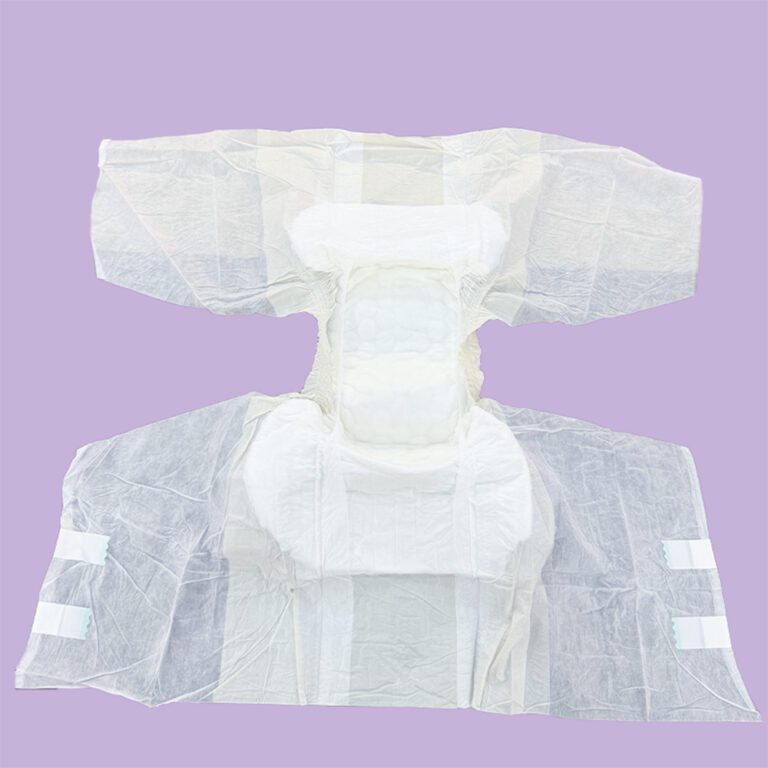
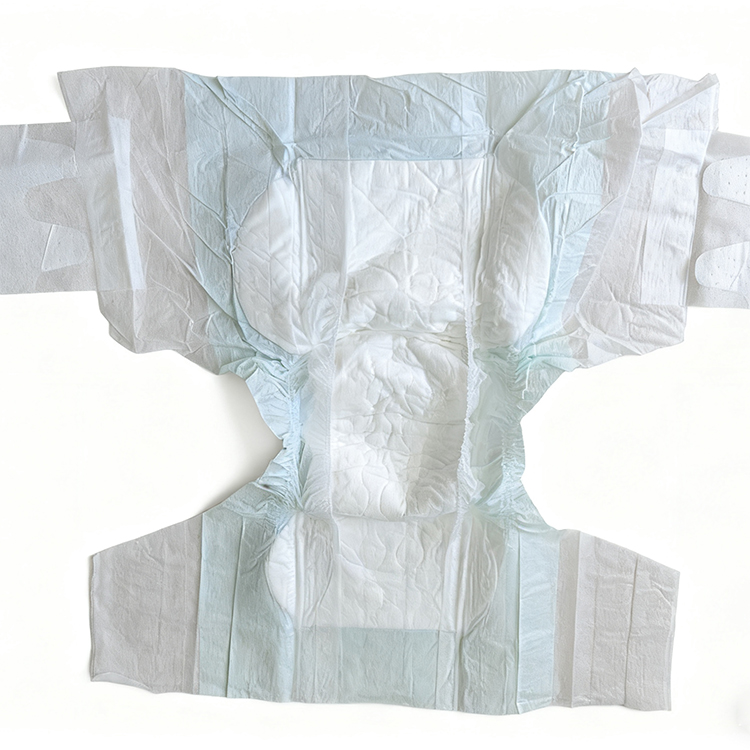
Male Guards vs Women’s Incontinence Pads: Key Differences
Male guards and women’s incontinence pads may contain similar raw materials, including nonwoven fabric, fluff pulp, an acquisition-distribution layer, and sodium polyacrylate superabsorbent polymer, but those materials are arranged around very different leakage zones and body contours.
So why are they still treated as interchangeable?
The blunt answer is convenience. Retailers want fewer SKUs, caregivers use whatever is available, and some manufacturers repackage nearly identical products with different colors. That may simplify inventory. It does not necessarily improve protection.
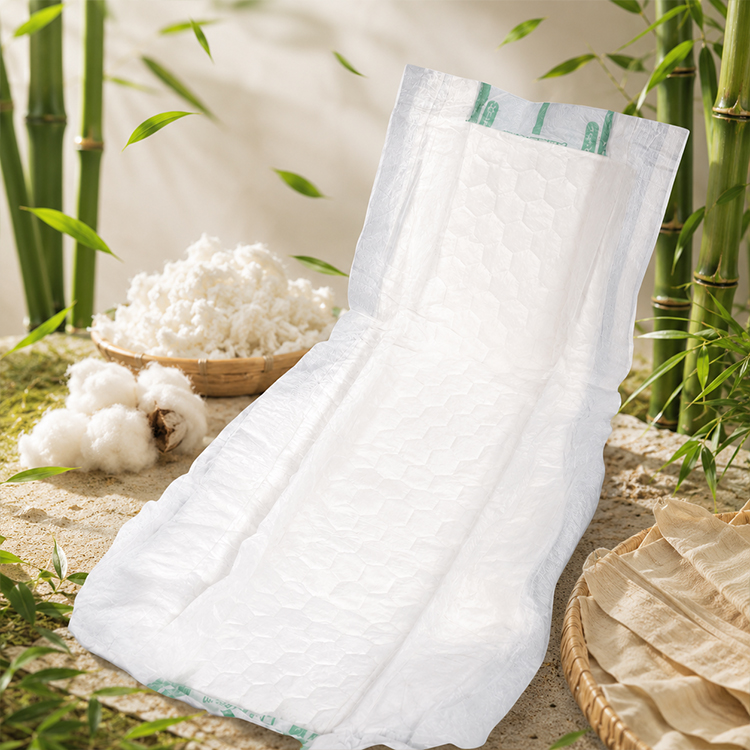
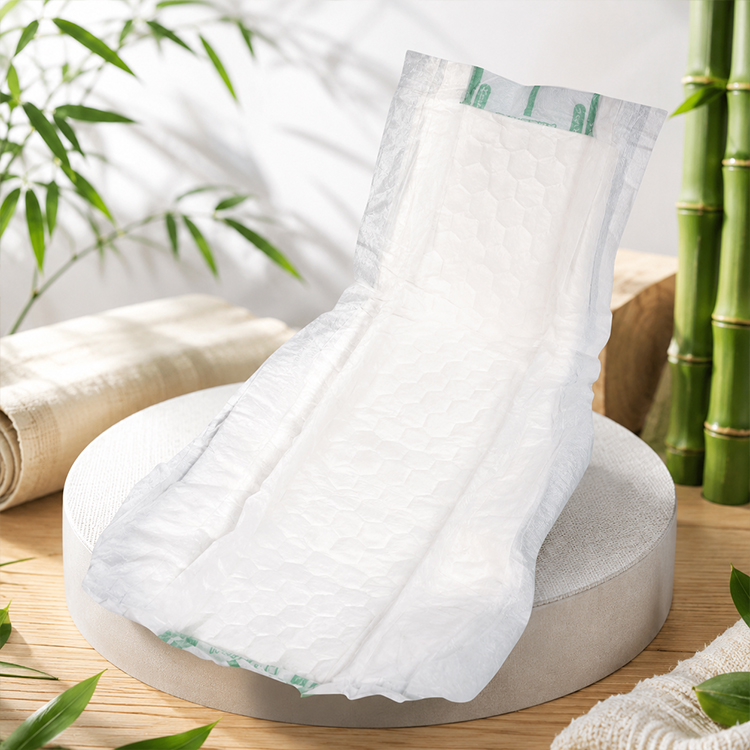
A proper male guard is generally wider and more cupped at the front, placing the absorbent core over the penis and scrotal area. A typical women’s pad is longer and narrower, with absorption distributed through the central and lower channel. Both products manage urine. They simply intercept it in different places.
That difference affects leakage, comfort, discretion, and cost per successful wear.
The Real Difference Is Absorbency Placement
The term male incontinence pads covers several formats, including small shields for post-void dribbling, contoured guards for light-to-moderate leakage, and larger inserts intended for use with fixation underwear. They are not all the same product.
Still, a well-designed male guard normally has three recognizable features:
A broad or V-shaped upper section
A reinforced front absorbent zone
A cupped profile that stays close to male anatomy
Women’s incontinence pads usually use a longer, flatter profile. Their absorbent channel is commonly centered through the crotch because stress leakage often exits lower in the garment during coughing, sneezing, lifting, running, or standing.
The U.S. National Institute of Diabetes and Digestive and Kidney Diseases estimates that approximately half of women experience urinary incontinence. The same agency reports that as many as one in three men older than 65 may experience accidental urine loss.
Those figures do not prove that every buyer needs a gender-specific pad. They do explain why a one-shape-fits-all strategy is weak.
Stress, urge, postpartum, menopausal, or mixed leakage
Best underwear
Close-fitting briefs or fixation pants
Close-fitting briefs or full-coverage underwear
Poor underwear match
Loose boxer shorts
Loose underwear, thongs, or narrow gussets
Typical coverage
Front-focused
Lengthwise central coverage
Movement risk
Top edge folding or guard dropping if underwear is loose
Twisting, bunching, or shifting along the gusset
Best use
Light-to-moderate urinary leakage
Light-to-moderate urinary leakage
Bowel leakage protection
No
No
Main fitting error
Guard positioned too low
Pad positioned too far forward or backward
Better alternative for heavy leakage
Male protective underwear or tab-style brief
Protective underwear or tab-style brief
This table describes the usual design logic, not an absolute rule. Some heavy women’s pads are wider, some unisex inserts are anatomically shaped, and low-quality male guards may be little more than relabeled flat pads.
Read the specification. Then test the fit.
The Core Chemistry May Match, but the Fluid Map Does Not
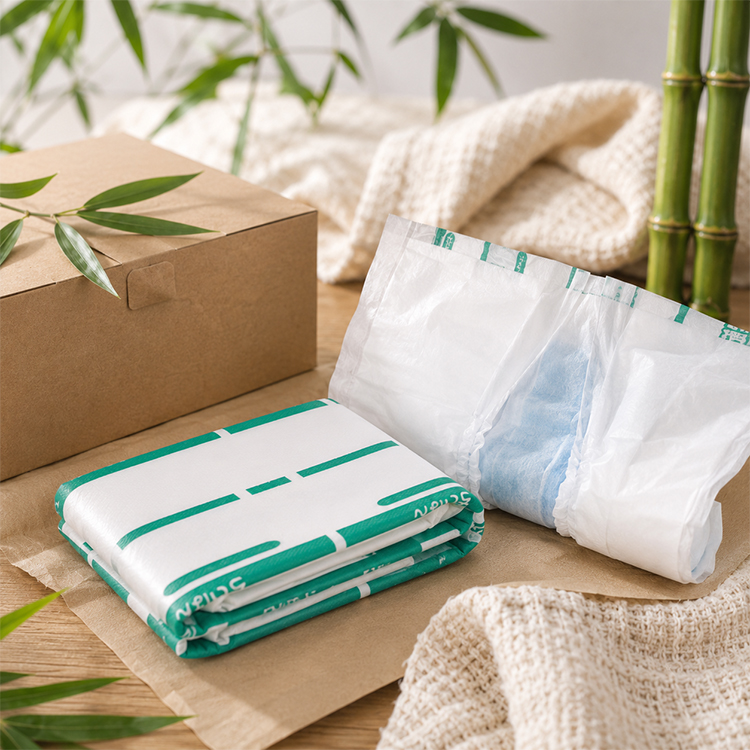
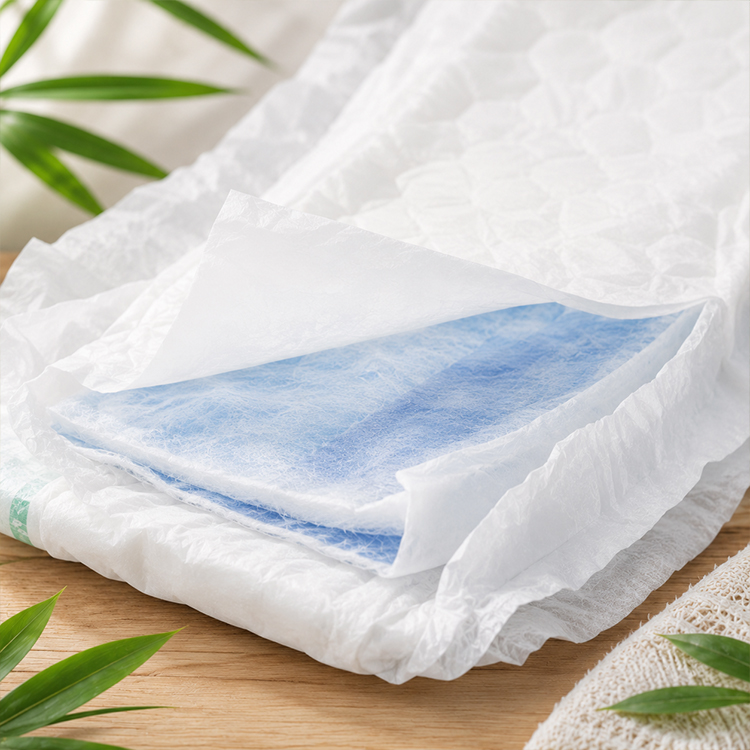
Most disposable bladder control pads use a multilayer construction:
A fluid-permeable topsheet
An acquisition-distribution layer, often called an ADL
An absorbent core made from cellulose fluff and superabsorbent polymer
A liquid-resistant backsheet
Garment adhesive or another fixation method
The superabsorbent polymer is commonly cross-linked sodium polyacrylate, whose repeating unit is often written as (C₃H₃NaO₂)n. It swells as it takes in fluid, while cellulose fibers help distribute that fluid through the core.
But more polymer is not automatically better.
A guard with a large theoretical capacity can still leak if urine hits an unreinforced edge, the acquisition layer cannot handle the initial flow, or the product folds away from the body. A slimmer guard with faster intake and smarter core placement may perform better.
This is where marketing departments become slippery. They advertise maximum capacity but rarely publish:
First-gush intake time
Rewet under pressure
Front-zone capacity
Core movement after walking
Adhesive strength after several hours
Leakage performance while seated
The laboratory method in ISO 11948-1 measures the total absorption capacity of body-worn urine-absorbing products. It is useful for controlled comparisons, but total laboratory capacity is not the same as usable capacity on a moving body.
That distinction matters.
A male guard can hold plenty of test liquid and still fail when its top corners fold inward. A women’s pad can post an impressive capacity number and still overflow at the front when worn by a man because the reinforced core sits several centimeters below the actual leakage point.
Why Fit Beats the Absorbency Number
Fit decides everything.
When a male guard is worn in loose boxer shorts, gravity pulls the product downward while movement creates an open channel between the body and the absorbent surface; by the time urine reaches the core, some of it may already be running toward the leg opening.
What exactly was the “maximum absorbency” supposed to fix?
Men’s incontinence guards generally work best in snug briefs that hold the wide section against the front of the body. The penis should point downward into the absorbent zone unless the product instructions specify another position. The narrow end should sit beneath the scrotal area without folding sharply.
Women’s pads also require stable underwear. A long pad placed in a narrow gusset can curl upward, twist, or detach. Adhesive helps, but adhesive cannot compensate for incompatible garment geometry.
Do not inspect only the unused sample on a table. Products fail on bodies.
When Male Guards Are the Better Choice
Male guards are usually the better option when leakage is concentrated at the front and the user remains mobile.
That includes many men experiencing:
Post-void dribbling
Light urge leakage
Stress leakage after prostate treatment
Small leaks during exercise or lifting
Predictable daytime leakage between toilet visits
The reinforced zone sits closer to the source, which can reduce the amount of liquid travelling across the topsheet before reaching the absorbent core. Less travel generally means fewer opportunities for sideways escape.
Male incontinence shields are especially useful for very small losses. They are thinner than full guards and may disappear more easily under fitted clothing. But a shield is not a miniature heavy-absorbency pad. It is intended for drops and dribbles.
And that creates a common mistake: buying the most discreet format, then asking it to manage moderate urgency leakage.
It will not negotiate.
When a guard repeatedly saturates, shifts overnight, or requires changes every one or two hours, move up a format rather than stacking products. The site’s male incontinence underwear options provide greater coverage for users whose leakage has outgrown a front insert.
When Women’s Incontinence Pads Make More Sense
Women’s incontinence pads are generally better when the leakage point aligns with a central, lengthwise absorbent channel and the user needs protection through the crotch rather than high at the front.
They are commonly used for:
Stress leakage during coughing or exercise
Postpartum bladder leakage
Urgency episodes
Menopause-associated symptoms
Mixed stress and urge incontinence
Light leakage requiring a discreet pad
Women are more likely to experience urinary incontinence than men because pregnancy, childbirth, pelvic-floor changes, anatomy, and other health factors alter risk. A 2024 NIDDK annual data report found substantially higher claims-based prevalence among women than men across the insurance populations it examined.
There is another issue that buyers underestimate: surface dryness.
A 2012 cluster-randomized trial involving 60 older women with incontinence-associated dermatitis compared a test pad with a usual absorbent pad. Complete recovery occurred in 43.3% of the test-pad group versus 13.3% of the usual-pad group, and the test group healed faster, with p = 0.009. The study is available through the National Library of Medicine.
That does not mean one pad cures damaged skin. It means product construction can influence the moisture environment against the skin.
Buyers should therefore compare strike-through speed, rewet, softness, and breathability instead of treating “cotton soft” as a complete specification. The site’s analysis of fast-dry versus soft-feel topsheets explains why first-touch softness and sustained dryness are separate performance questions.
Can Men Use Women’s Incontinence Pads?
Yes, sometimes.
A man with very light, occasional dribbling may get acceptable protection from a women’s or unisex pad, especially when no male guard is available. The pad must be positioned far enough forward and held firmly against the body.
But acceptable is not optimal.
A flatter women’s pad may place most of its absorbent material too low. When the wearer sits, the front edge may fold or leave a gap. During walking, the product can shift backward. Those failures are usually blamed on inadequate capacity, even though the real problem is core placement.
Here is the hard rule: if a man leaks primarily at the front, test a male guard before buying a thicker women’s pad.
The opposite is also true. A woman should not assume a male guard offers better protection simply because it looks wider or thicker. The short, front-heavy structure may leave insufficient length through the central and rear area.
Menstrual Pads Are Not Urinary Incontinence Pads
This substitution deserves a direct answer.
Menstrual pads are designed primarily for blood, which is more viscous and normally released differently from urine. Urinary incontinence pads must manage faster, more water-like fluid and may need to handle a sudden gush rather than a slower flow.
Urinary pads generally place more emphasis on:
Rapid fluid acquisition
Superabsorbent polymer
Rewet control
Urine-related odor management
Repeated fluid loading
Protection under sitting pressure
A menstrual pad may work for a few drops in an emergency. It is not my preferred long-term answer for bladder leakage.
The pack may look similar. The engineering target is not.
The Cost Per Pad Can Mislead Buyers
Cheap units become expensive failures.
Consider an illustrative procurement example: Product A costs $12 for 24 male guards, or $0.50 per guard. Product B costs $12 for 40 flatter pads, or $0.30 per pad. Product B looks cheaper until poor positioning causes the user to consume two pads, making the real cost $0.60 per leakage episode.
And that calculation still ignores wet clothing, laundry, caregiver time, returns, complaints, and lost confidence.
For professional buyers, I would track:
Cost per successful wear
Average changes per 24 hours
Leakage incidents per 100 uses
Skin complaints per 1,000 units
Adhesive failures
Product-related clothing changes
Repeat-purchase rate
The unit price belongs in the spreadsheet. It should not control the decision.
How to Choose the Best Incontinence Pads for Men
Start with the leak pattern, not the pack claim.
Choose a male shield when:
Leakage consists mainly of drops after urination, the user changes independently, and discretion is the highest priority.
Choose a contoured male guard when:
Leakage is light to moderate, concentrated at the front, and occurs during work, travel, exercise, sitting, or daily movement.
Choose protective underwear when:
Leakage is less predictable, a full bladder release is possible, the product shifts repeatedly, or overnight coverage is needed.
Choose a tab-style brief when:
The user needs caregiver assistance, has limited mobility, experiences heavy urinary leakage, or also needs bowel containment.
Do not place an impermeable-backed pad inside another absorbent product. It can block fluid transfer and create side leakage. Purpose-built booster pads use a flow-through backsheet; ordinary guards and women’s pads usually do not.
A Pad Manages Leakage; It Does Not Treat the Cause
This point gets buried because containment products are easy to sell.
New or worsening leakage can be associated with urinary tract infection, medication changes, diabetes, constipation, pelvic-floor dysfunction, prostate enlargement, prostate surgery, neurological conditions, or urinary retention. Blood in the urine, pain, difficulty emptying the bladder, sudden severe leakage, or recurrent infections require clinical assessment.
A better guard can prevent wet trousers. It cannot diagnose the reason they became wet.
FAQs
How are male guards different from women’s incontinence pads?
Male guards are anatomically shaped absorbent inserts with a wider, cupped front and a front-loaded core designed to sit over the penis and scrotal area, whereas women’s incontinence pads are generally longer and narrower, with absorption distributed through the central and lower channel to match typical female leakage placement.
The practical difference is interception. Male guards catch fluid near the front before it travels, while women’s pads protect more of the lengthwise crotch area.
Can men use women’s incontinence pads?
Men can use women’s incontinence pads temporarily when leakage is very light and the pad can be positioned securely, but the flatter, center-loaded shape often leaves the front absorbent zone too low, increasing bunching, side escape, and surface wetness during sitting, walking, bending, or post-void dribbling.
A male guard is normally more reliable when leakage originates mainly at the front.
What are the best incontinence pads for men?
The best incontinence pads for men match the actual leak pattern rather than the boldest capacity claim: use a slim shield for drops, a cupped male guard for light-to-moderate front leakage, and protective underwear or a tab-style brief when output, overnight wear, mobility limits, or bowel leakage makes an insert unreliable.
Fit should then be tested while standing, sitting, walking, and bending.
Are male incontinence shields suitable for overnight use?
Male incontinence shields are generally unsuitable for overnight use because their small absorbent area is intended for drops and post-void dribbling, not repeated urgency episodes, long change intervals, side-sleeping pressure, or a full bladder release that can move beyond the shield before its compact core absorbs the fluid.
A larger guard may handle light overnight leakage, but protective underwear offers more dependable coverage.
Are menstrual pads the same as bladder control pads?
Menstrual pads and bladder control pads are different absorbent products because menstrual pads primarily manage slower, more viscous blood flow, while urinary pads are engineered for rapid water-like fluid intake, lower rewet under pressure, urine-related odor control, and sudden releases that can overwhelm a conventional sanitary pad before fluid reaches its core.
A menstrual pad may handle a few emergency drops, but it is not a reliable substitute for repeated bladder leakage.
Test the Geometry Before You Trust the Packaging
Do not approve a male guard because the pack is blue. Do not approve a women’s pad because it is thin, floral, or described as discreet.
Request samples. Mark the front and central absorbent zones. Measure the pad before and after saturation. Test adhesive hold, strike-through speed, rewet, folding, sitting pressure, and movement. Then ask real users which format stayed dry without feeling bulky.
For distributors, retailers, care suppliers, and private-label brands, the next step is to define the wearer, leak location, target capacity, pad dimensions, topsheet, ADL, SAP distribution, adhesive pattern, and packaging count before requesting a quotation through the adult incontinence OEM/ODM service.