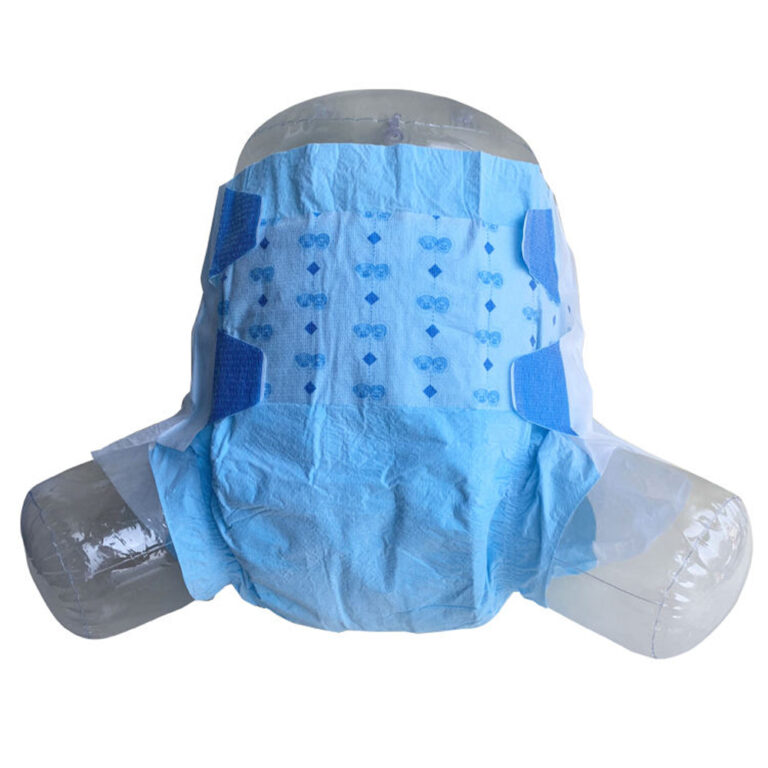
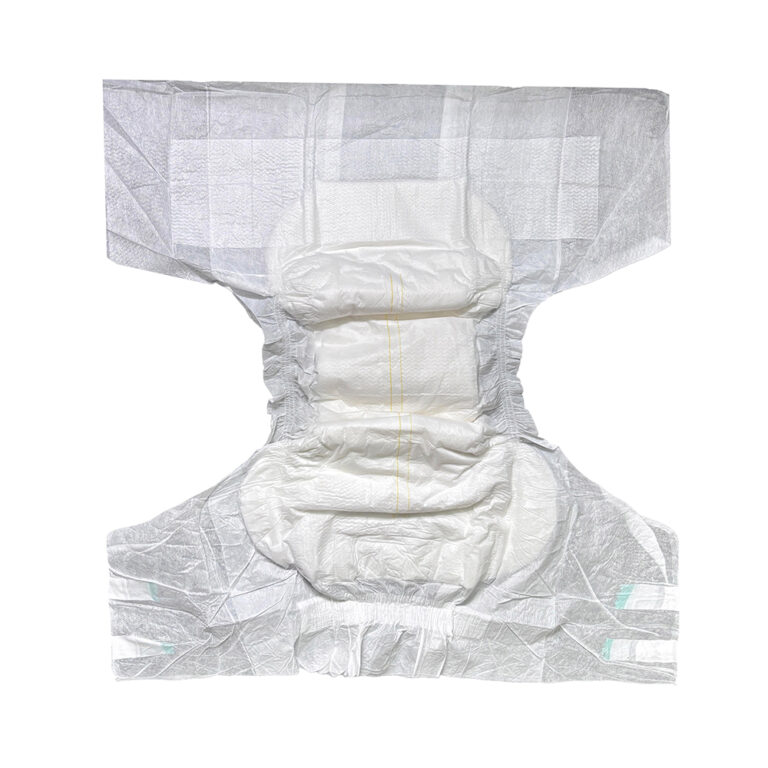
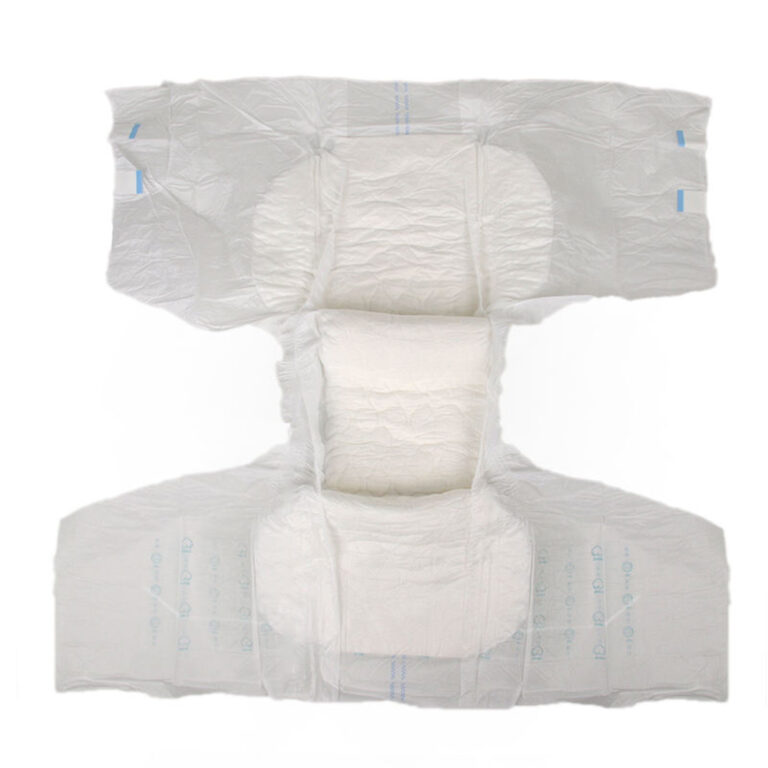
In-Process Quality Checks on an Adult Diaper Production Line
An adult diaper that fails in use usually failed on the production line first. Typical causes are a tape placed a few millimetres off its landing zone, a core carrying too little superabsorbent polymer (SAP), or a bond that looked fine but peeled after storage. In-process quality checks are the controls that catch those problems while the web is still running, before thousands of units are packed and shipped. For importers, private-label brands, and procurement teams, the practical question is not whether a factory “has QC.” It is which characteristics are checked, by what method, how often, and what happens when a check fails. This guide explains the main in-process checks on an adult diaper line, what each one can and cannot detect, and how to turn them into specification and RFQ requirements.
What Are In-Process Quality Checks on an Adult Diaper Line?
In-process quality checks are inspections and measurements performed during converting, between incoming material inspection and finished-goods release. On an adult diaper line they fall into three groups: automatic inline detection on every unit, operator checks at set intervals, and laboratory tests on samples pulled from the running line.
Each group answers a different question. Inline devices ask whether a unit is visibly and dimensionally correct. Operator checks ask whether the process is still set as approved. Laboratory samples ask whether the product still performs. No single group covers all three, so a supplier’s QC claim should be broken into its parts.
One regulatory point affects how much weight buyers should give to contract language. The FDA product classification entry for protective garments for incontinence (product code EYQ) lists the device as Class I and 510(k) exempt. It also notes an exemption from the GMP regulation, except for records and complaint files, provided the device is not labeled sterile. That does not make quality optional. It means that, for U.S.-bound adult briefs, the detail of in-process control is set largely by your specification and the supplier’s own quality system, not by a prescriptive rule. Confirm the obligations for your own market and labeling with a regulatory specialist.
Which Checks Happen at Which Stage of the Line?
Checks follow the converting sequence: material unwinding, core forming, component application, fastening and elastics, cutting and folding, final inspection, and packing. The table below summarizes typical practice described by manufacturers and equipment suppliers. It is a synthesis, not a standard, and the right set for a given product depends on its construction.
Line stage
What is checked
Typical method
Failure it guards against
What to ask the supplier
Unwind and splicing
Web presence, tension, alignment, splice location
Sensors, auto splicing, PLC alarms
Web breaks, splices in finished units, misregistration
Are units containing a splice tracked and rejected?
Under-dosed or uneven cores, dry zones, gel blocking
Is SAP dose verified separately from total unit weight?
Component placement
ADL, topsheet, backsheet, and cuff position; core centering
Vision system
Misaligned layers, missing parts, edge leakage
Which offsets trigger a reject, and who set them?
Elastics and waistband
Presence, position, retraction
Vision for presence and position; lab for retraction
Collapsed gathers, leg gaps, waist sag
How is elastic retraction verified over time?
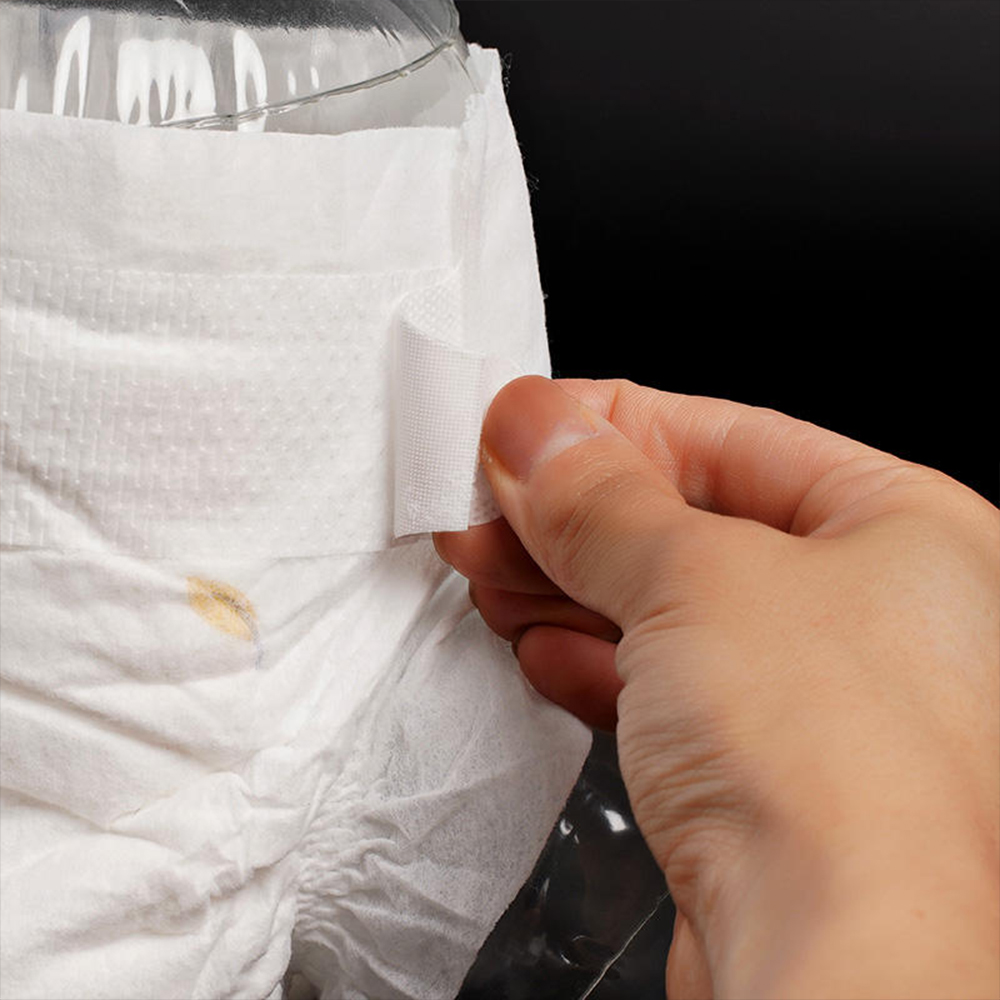
Fastening tapes
Presence, skew, landing-zone position; peel and shear
Vision plus lab peel and shear tests
Tab failure, poor refastening, wrong fit
Are peel results from aged samples, or fresh only?
Hot melt adhesive
Application pattern, temperature, add-on
Operator checks, parameter logs, aged samples
Delamination, core shift, glue bleed-through
Which adhesive parameters are logged each shift?
Cutting and folding
Shape, length, leg trim, fold
Vision, dimensional sampling
Out-of-size units, poor leg trims
What dimensional limits apply per size?
Metal detection
Ferrous and non-ferrous contaminants
Inline detector with reject
Machine fragments or contaminants in product
Where is the detector placed, and how is its sensitivity verified?
Packing
Count, bag seal, lot code
Count sensors, inkjet coding, operator check
Short counts, mixed lots, untraceable units
Does each unit or pack carry a traceable code?
Two public descriptions support the general picture. An equipment supplier’s process guide describes cameras that flag missing components such as absent elastic or a missing core, layer offsets beyond a set threshold, dimensional deviation, and appearance defects such as stains or glue marks. It also describes dynamic weighing of each unit to monitor core weight and SAP addition, and metal detectors at the raw-material input and finished-product output. It adds a sampling station that tests absorption rate and leakage at a set frequency. Because the source is a machine seller, treat it as a description of what lines can be equipped to do, not proof of what a given factory does.
How Inline Vision Inspection Works, and Where It Stops
Inline vision inspection uses cameras and lighting at fixed stations to compare each unit against programmed rules. A diaper manufacturer’s quality-control overview lists the defects such systems commonly catch: missing or skewed tapes, frontal tape position, skewed waist elastic, pad integrity problems, poor leg trims, and leg cuff placement.
The same source states the limit plainly. Some things are not visible to the camera, such as hot melt glue spray and internal lateral tape folding, and these need human interaction and direct feedback to the operator. That is a useful boundary for buyers. A camera sees surface geometry and presence. It does not see bond quality, internal folds, or whether the core will distribute liquid.
Three variables decide whether a vision system protects you or only decorates a quote:
Threshold setting. A tight offset limit rejects more good units and raises scrap cost. A loose one lets marginal units through. The limit should be tied to the product specification, not left at a machine default.
Reject reliability. A detected defect only matters if the reject mechanism removes the unit. Ask whether the supplier challenges the system with known defective samples at start-up or after changeovers. This is a recommended practice, not a requirement stated in any source cited here.
Format coverage. Settings built for one size or tab layout can drift when a line changes format. Ask how inspection recipes are stored and verified per SKU and size.
Equipment configuration matters as well. The full servo adult diaper production line page lists servo drive and PLC control, auto splicing, SAP auto feeding, and an auto inspection and reject device among its main configuration items. That shows the equipment category includes detection and rejection capability. It does not show what the inspection is set to detect on your product, which remains a question for the supplier.
What Weight and SAP Checks Can and Cannot Tell You
Dynamic weighing is one of the most common inline controls because it is fast and non-destructive. It flags units whose total mass is outside a window, which often signals a missing core, a feeding fault, or a change in SAP addition.
Its weakness is that total weight is a blended number. Pulp, SAP, nonwovens, and adhesive all contribute. A unit can sit inside its weight window while the SAP-to-pulp balance has shifted, because extra pulp can offset missing SAP.
Illustrative example (hypothetical, not a customer case): a night-use brief passes every weight check for a shift. Later lab pulls show slower repeated-dose intake and higher rewet. The cause is a drift in SAP dosing, masked by a slightly heavier pulp core. The weight window was accurate. It was simply measuring the wrong thing.
What to verify with the supplier:
Whether SAP dose is monitored independently or inferred from unit weight.
Whether the weight window applies to the whole diaper or to the core.
How SAP distribution is checked, for example by periodic core tear-down.
Adhesives, Tapes, and Elastics: The Checks Cameras Miss
Functional properties are the hardest to verify inline. Bond strength, tape peel and shear, and elastic retraction are measured by pulling samples from the line, often with destructive tests. The Paileesha overview lists laboratory checks that include backsheet pinholes, hot melt temperature ageing, elastomeric retractile forces, and lateral tape peel and shear forces. It lists these alongside capacity, rewet, and absorption speed.
This is where process validation enters the picture. Advisera’s guide to ISO 13485 process validation explains that clause 7.5.6 requires validation of processes whose outputs cannot be verified. It also explains that validation can be avoided where 100% inspection or a sound statistical rationale verifies the result. Applied to a diaper line, adhesive bonding and tape attachment cannot be fully inspected in every unit without destroying it. The reasonable control is to validate the settings (temperatures, pressures, add-on, speeds), log them, and confirm results with scheduled destructive sampling. If your supplier holds ISO 13485, ask how this was applied to bonding and fastening.
Laboratory Sampling From the Line: What It Should Include
Line-side lab tests link process control to product performance. The equipment-supplier guide above gives a sampling frequency of every 15 minutes as an example. Treat that as an illustration. No source cited here sets a universal interval, so frequency should come from risk, line speed, and process stability, and be written into the control plan.
Routine sampling for adult briefs typically covers acquisition time, rewet, retention or capacity, and mechanical properties such as tape strength. The distinction buyers often miss is between single-dose and repeated-dose testing. Single-dose tests are fast enough for frequent line-side use. Repeated-dose tests expose slowdown and surface return once the core is partly loaded, and suit design approval and requalification, as covered in single-insult versus multi-insult testing for adult diapers. A practical split:
Every run or shift: single-dose acquisition and rewet, tape and dimension checks.
Design approval, and after any core, SAP, ADL, or topsheet change: repeated-dose testing and fit evaluation.
Check type
Covers
Frequency
Strength
Blind spot
Inline automatic
Presence, position, geometry, weight, metal
Every unit
Immediate reject, high coverage
Cannot see bond quality or fluid behavior
Operator line-side
Glue pattern, folds, set-up conditions, logbook
Set intervals
Catches what cameras miss
Depends on discipline and training
Lab sampling
Acquisition, rewet, capacity, peel, retraction
Sampled by plan
Measures performance
Slower; samples only a fraction of output
Does More Inspection Mean Better Quality?
The common assumption is that more inspection points, or 100% inline inspection, guarantee a better product. That holds only under certain conditions. A factory can advertise a large number of inspection points, as some supplier pages do, but the number means little until you know which characteristics they cover and what happens at each one.
Inspection finds defects after they exist. A stable, validated process prevents them. Heavy reliance on rejection can hide an unstable process, because scrap rises while shipped units still pass. Overly tight vision thresholds raise cost without improving function, and inline devices cover only what they can see.
A better test of a supplier’s control system is a short set of evidence questions. Which characteristics are controlled? By what method, at what frequency, with what limit, and with what recorded response? A smaller, well-defined set of checks with records is worth more than a large undefined one. The same logic appears in the manufacturer selection checklist for importers. It asks for incoming, in-process, and final QC checkpoints, an AQL plan, batch coding, and CAPA records rather than general assurances.
What Should Happen When an In-Process Check Fails?
A check without a defined response is only a measurement. The reaction plan should say who may stop the line, how suspect product is isolated, and who can release it.
A workable plan has five parts:
Contain. Hold or reject units from the last confirmed good check forward.
Identify. Use lot and date coding so affected units can be traced. The Paileesha overview recommends an inkjet code on each diaper, an operator logbook on every line, and clear date coding to trace raw material defects.
Investigate. Record the cause: material, set-up, equipment, or operator.
Decide. Define when rework, scrap, or a documented deviation is allowed, and require buyer notice for deviations that affect performance.
Prevent. Record corrective action and confirm it worked.
Rejected units should not return to good stock without a documented rule.
How to Write In-Process Checks Into Your Specification
Checks are only enforceable when the specification names them. A well-built adult diaper product requirement document connects each requirement to a verification method and an approval decision. In-process controls should sit in that same matrix. For each critical characteristic, record the limit, the method, the sampling plan, and the response.
Classifying characteristics by consequence keeps the plan credible. Function-critical items need tight limits and records. These include SAP dose, core integrity, tape strength, elastic function, and backsheet integrity. Safety and compliance items need defined detection and traceability. These include metal contamination, lot coding, and labeling accuracy. Appearance and handling items, such as print position and fold neatness, can run to normal limits.
What Should Buyers Specify Before Requesting a Quote?
Suppliers can only price and commit to what they can see. Before the RFQ, prepare:
Product tier, user profile, and sizes, since heavy overnight briefs need stricter controls than light pull-ups.
A list of critical characteristics with the limit and method for each, and material tolerances attached.
Required inline detection, such as tape presence and position, component placement, weight, and metal detection, and whether rejects must be counted per shift.
Sampling frequency and lot acceptance rules, including AQL level if used.
Test conditions for lab checks: liquid, dose volume, number of doses, interval, and load.
Report format: target, tolerance, individual readings, and result per lot, not summary pass marks.
Change control: notification and retesting triggers for any change in SAP, pulp, ADL, adhesive, or elastics.
Retained samples and traceability coding for each lot.
Ask each supplier to mark any item it cannot meet and to describe its typical process range. Tighter checks can affect cost, scrap, and lead time, so discuss them before sampling rather than after.
Buyers who want to see how a manufacturer describes its own workflow can review LOVINHUG’s OEM and ODM adult diaper manufacturing services. The page describes incoming material inspection, in-process checks for sealing integrity, weights, and SAP distribution where applicable, finished-goods inspection with lot traceability, and optional pre-shipment reporting. Use that structure as a starting point. Then request the control plan, sample records, and reject logs behind it, as you would from any supplier.
Frequently Asked Questions
What are in-process quality checks in adult diaper manufacturing?
They are inspections and measurements made while diapers are being produced, between incoming material checks and finished-goods release. They include inline detection of presence, position, and weight, operator checks, and laboratory tests on samples from the running line.
What defects can inline vision inspection detect on a diaper line?
Typical targets are missing or skewed tapes, tape position, waist elastic position, core or layer misalignment, poor leg trims, cuff placement, and visible contamination or glue marks. It cannot reliably assess bond strength, internal tape folds, or liquid performance.
Can in-process checks measure absorbency?
Not inline. Cameras and scales detect geometry and weight, which are indirect indicators. Acquisition time, rewet, and capacity need lab tests on pulled samples. Repeated-dose behavior needs a specific protocol rather than a single-dose result.
How often should samples be pulled from the line?
There is no universal interval. Frequency should reflect line speed, process stability, product risk, and format changes, and be written into the control plan. One supplier guide cites every 15 minutes as an example, not a standard.
Does the FDA require in-process checks for adult diapers?
The FDA classification entry for incontinence protective garments lists Class I, 510(k) exempt, and GMP exempt except for records and complaint files, if not labeled sterile. In-process checks are therefore mainly set by your contract and the supplier’s quality system.
What should a buyer ask when an in-process check fails?
Ask how suspect product is contained and traced, who authorizes release, whether deviations require buyer notice, and how corrective action is recorded. Request examples of reject logs and corrective action records, not only written procedures.