Adult Incontinence Products for Home Healthcare Agencies: What Buyers Need
Home healthcare agencies buy incontinence products differently from hospitals or nursing homes. Care takes place in dozens or hundreds of separate households. Caregivers range from licensed nurses to family members with no training. Nobody can walk to a central supply room when a brief fails at 2 a.m. The buying decision is less about finding one “best” adult diaper. It is about building a small, standardized system of briefs, underpads and wipes. That system has to fit client mobility, be applied correctly by different caregivers, and arrive on a predictable schedule. This guide covers what agency buyers should specify, test and ask suppliers before committing to volume. It also covers how to compare product formats, which specifications predict real-world leakage, and what an RFQ should contain.
How Is Buying for a Home Health Agency Different From Institutional Purchasing?
Agency buying differs from institutional buying in three ways: the labor model, the payer model and the logistics model.
Labor model. In a facility, trained staff change residents on a schedule, and one protocol covers every floor. In home care, the person applying the product may be a visiting aide, a spouse or an adult child. Our own comparison of home care and institutional care argues that the real split between the two settings is labor and workflow, not absorbency ratings. For agencies, that means a product has to be forgiving. It should be easy to size, easy to apply and easy to check.
Payer model.Medicare.gov states that Original Medicare does not cover incontinence supplies or adult diapers, and that some Medicare Advantage plans offer extra benefits that vary by plan. Agencies should not assume supplies are reimbursable. Confirm who pays for each client’s products: the client, a Medicaid program, a managed-care plan or the agency itself. Each payer implies different size labeling, documentation and quantity limits.
Logistics model. There is no central stockroom, so supply failures show up as leaks and emergency orders in someone’s living room. The wider shift of care into private homes is covered in our analysis of how aging in place is changing demand for adult incontinence products. That shift makes pack size, discreet delivery and clear instructions part of the specification.
Used for heavy bowel events or assisted changes it cannot handle
Disposable underpads
Beds, recliners, wheelchairs; backup when the brief fails
Fast intake, low rewet, backing that blocks liquid, non-slip properties
Thick pads that let liquid run sideways instead of absorbing it
Adult wipes
Cleansing after every change
Sheet size, skin-friendly formulation, pack count
Substituting harsh or undersized wipes, which slows changes
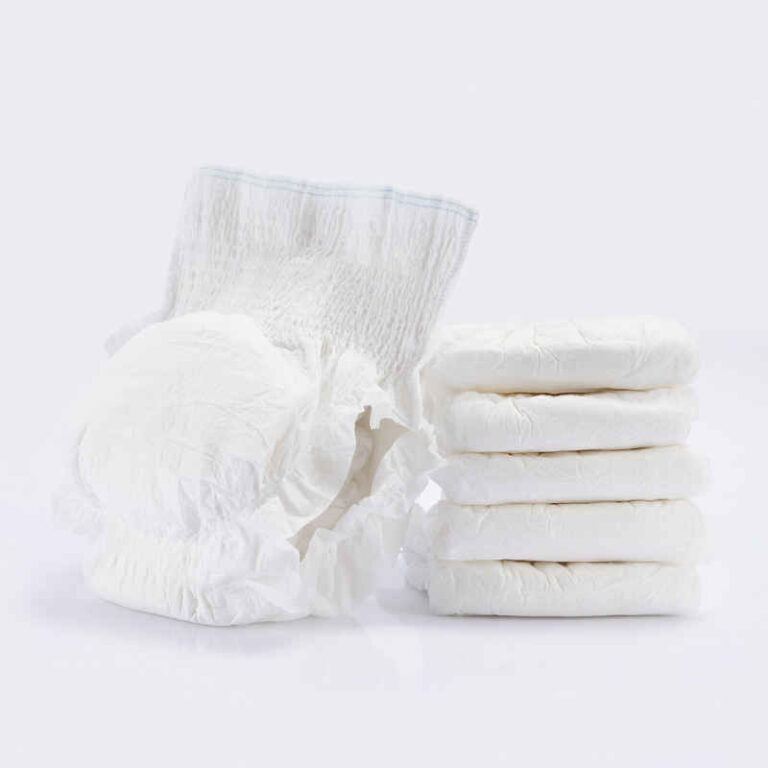
The rule of thumb in our guide to choosing briefs for moderate to heavy needs is simple. If staff change the client in bed, use tabs. If the client manages alone, use pull-ups. For agencies, the practical consequence is to keep both formats in the catalog but assign them by client profile, not by branch preference.
Underpads and wipes are easy to treat as afterthoughts. Our article on why home care buyers purchase underpads and wipes together frames them as the operational layer around the brief. They protect the surface and clean the skin. An agency that sources the brief from one supplier and the support items from another often ends up with mismatched sizes and gaps in supply.
Which Specifications Actually Predict Leakage?
Absorption capacity alone is a weak predictor of leakage. It is the number most often quoted on packaging and the one least likely to explain a failed night.
The main international laboratory method for whole-product absorption is ISO 11948-1, often called the Rothwell method. A peer-reviewed study of laboratory test methods compared lab methods against in-use performance. It used 12 experimental products worn by 55 incontinent nursing home residents. ISO 11948-1 showed good repeatability and reasonable correlation with in-use data. However, it was blind to the effects of leg cuffs, which gave measurable benefits in real use. The study was conducted in nursing homes, so treat it as strong evidence about test methods, not as a home-care performance benchmark.
For buyers, that supports a wider specification set:
Intake speed. How quickly the product pulls liquid into the core. Slow intake lets liquid pool and run toward the leg gaps.
Distribution. Whether liquid spreads along the core or pools in one hot spot.
Rewet (wet-back). How much moisture returns to the skin surface under pressure. This matters for skin comfort and for overnight use.
Leg cuffs and leak guards. Cuff tension and geometry decide whether the seal survives turning and side sleeping.
Tab strength and reposition ability. Tabs must hold under movement and allow re-fastening for a check.
Size range. Fit is leakage control. Our guide recommends measuring waist and hip and choosing the size that matches the larger measurement, since many clients are narrow at the waist and wide at the hip.
Ask suppliers which of these they test, by what method, and on what sample. Do not invent pass/fail thresholds for your RFQ. Instead, request the supplier’s test data and compare it across candidates under your own trial protocol.
Does Higher Absorbency Always Lower Total Cost?
No. Buying the highest-absorbency brief for every client is a common way to raise cost without reducing leaks.
The assumption behind it is that more capacity means fewer changes and fewer leaks. That holds only when the leak was caused by capacity. In practice, many leaks come from fit, application or cuff seal. Our buyer guide makes the same point: repeated leaks in a “heavy” product are often a fit or application problem, not a capacity problem. An overbuilt overnight brief used for a daytime routine adds bulk, heat and cost without adding protection.
A more useful measure than unit price is the cost per client-day of care:
briefs used per day
underpads used per day
wipes used per change
linen and laundry burden
caregiver minutes per change
the cost of returns, emergency orders and incident follow-up
A cheaper brief that leaks more often can raise the underpad count, linen load and call-outs. A premium brief assigned to a client who needs only moderate protection raises cost with no benefit. The exception is a client with heavy overnight output. For that client, the higher-capacity, better-sealed product may be the lowest-cost choice.
Illustrative example only (hypothetical, not a customer case): an agency finds that one client’s overnight leaks continue after moving up an absorbency tier. A fit check shows the brief is a size too small at the hip. Correcting the size solves the problem at a lower unit cost than the upgrade would have.
Why Skin Health Belongs in the Purchasing Conversation
Leakage and prolonged moisture are not only a laundry problem. A 2024 analysis of Medicare fee-for-service claims used a 5% sample of 2018 data. It found that 11.2% of members had a claims-based diagnosis of incontinence. Those diagnosed experienced on average 5 times more UTIs and 2 times as many dermatitis events than those without a diagnosis.
Read this carefully. It is an observational, claims-based association among Medicare beneficiaries. It does not show that a specific product causes or prevents those outcomes, and it does not measure any brand. It does support giving rewet, breathability and wipe quality real weight alongside price. Clinical leads at the agency should set skin-care protocols, and buyers should make sure product specifications support them.
What Regulatory and Documentation Points Should Buyers Check?
In the United States, 21 CFR 876.5920 defines a protective garment for incontinence as a device made of absorbent padding and a fluid barrier. It classifies the device as Class I (general controls). It exempts the device from premarket notification, subject to limitations. It also exempts it from the quality management system regulation except for requirements concerning records and complaint files.
Class I status means a lighter regime than higher-risk devices. It does not make documentation optional for buyers. Ask suppliers for the items your agency, clients or payers may require:
test reports and the methods used
material and labeling information
lot traceability and complaint handling procedures
size labeling that maps to payer categories, if clients are billed through Medicaid or managed care
Other countries regulate these products differently, so confirm requirements for your target market. Our channel guide to medical supply store distribution covers how payer rules shape which sizes and formats a store can stock.
Which Sourcing Model Fits an Agency?
Sourcing model
Typically suits
Advantages
Trade-offs
Medical supply store or regional distributor
Single-branch or small agencies
Low minimums, quick replenishment, local sizing help
Brand and spec can change with distributor stock; less control over specification
Medical wholesaler
Multi-branch agencies with steady volume
Broad catalog, consolidated invoicing
Specification limited to catalog; margin layers
Factory-direct or private label via an importer or distributor
Specification control, consistent branding and packaging
Container-level minimums, longer planning, more quality oversight needed
Be realistic about scale. The channel guide notes that the manufacturer it describes publishes a minimum order of one 20′ or 40′ container. These are company-published figures to confirm for each project. A single agency usually will not turn over that volume. Factory-direct supply generally suits distributors, buying groups or large multi-branch operators, and a smaller agency is better off buying through such an intermediary.
How Should an Agency Trial a New Product?
A short, structured trial is cheaper than switching suppliers after a failed rollout.
Select clients across profiles. Include bed-bound, assisted-transfer and mobile clients, and daytime as well as overnight use.
Train caregivers first. Use the same fit checklist for everyone: snug but not cutting waist, standing leak guards, no visible leg gaps, tabs sitting flat.
Record leak events by type. Back leaks, side leaks and rewet complaints point to different causes (position and waistband, cuff geometry, or intake).
Compare against your incumbent. Use the same clients and the same shifts where possible.
Check the whole system. Test the brief, underpad and wipe together, since the failure point may be the pairing.
Define the pass criteria before the trial begins, so the result is not a matter of opinion.
What Should Buyers Specify Before Requesting a Quote?
An accurate quotation depends on specifics. Prepare these before sending an RFQ:
Product mix and format: tab-style briefs, pull-ups, underpads, wipes, and the ratio among them.
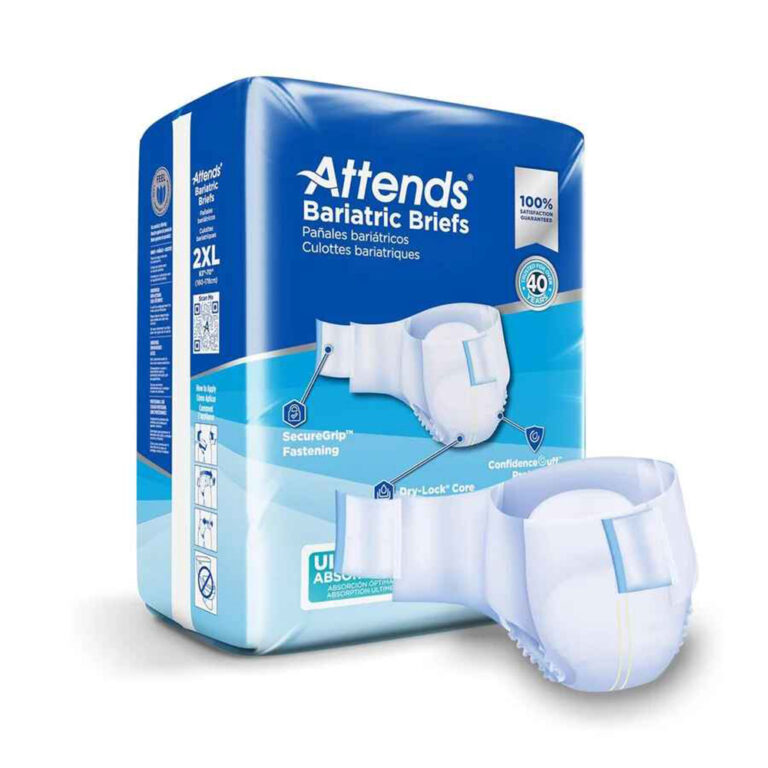
Size range and fit data: the sizes needed, including bariatric, and the waist and hip ranges your client base covers.
Absorbency tiers: how many levels, and which clients fall into each.
Performance requirements: intake speed, rewet, cuff and tab expectations, and the test method you will accept as evidence.
Order volume and cadence: monthly consumption, delivery frequency and any consolidation across branches.
Packaging: pack size suited to home delivery, discreet outer packaging and printed instructions.
Compliance and documentation: target market, required test reports, labeling and traceability.
Samples: quantity for the trial, and whether samples should match the production specification.
Shipping terms and lead time: destination, incoterms and the schedule you need.
Send the same specification to every supplier you are comparing. Ask each one to state any deviation from it in writing.
Frequently Asked Questions
Do tab-style briefs or pull-ups work better for home health agencies? It depends on the client. Tab-style briefs suit bed-bound or assisted clients who need in-bed changes and re-fastening for checks. Pull-ups suit mobile clients who toilet independently. Most agencies stock both and assign by client profile.
Does Medicare cover adult diapers for home care clients? Original Medicare does not cover incontinence supplies or adult diapers, and beneficiaries pay the full cost. Some Medicare Advantage plans offer extra benefits that vary by plan. Medicaid and managed-care coverage differs by state and plan, so verify each client’s payer.
What specifications matter most when comparing adult briefs? Look beyond headline absorbency. Compare intake speed, liquid distribution, rewet, leg-cuff seal, tab strength and size range. Research found that a standard lab capacity test did not capture the benefit of leg cuffs observed in real nursing home use.
Why do agencies buy underpads and wipes with briefs? Briefs handle the main event, underpads protect the bed or chair when a brief fails or is changed late, and wipes clean the skin. Buying them together keeps sizing compatible and reduces gaps in supply across a client’s care routine.
Can a small home health agency buy directly from a manufacturer? Usually not practically. Manufacturers often set container-level minimums, which exceed what one agency uses. Smaller agencies typically buy through a distributor, medical supply store or buying group. Confirm each supplier’s MOQ for your project.
Are adult incontinence products regulated in the United States? Yes. Under 21 CFR 876.5920, protective garments for incontinence are Class I devices exempt from premarket notification, subject to limitations. Requirements differ in other markets, and buyers should still request test reports and traceability records.