How Aging Populations Are Reshaping Demand for Adult Incontinence Products
Demand is aging.
As the number of people living into their 70s, 80s, and 90s rises, adult incontinence products are moving from a narrow medical-supply category into a broad consumer, pharmacy, home-care, hospital, and long-term-care business with sharply different user requirements.
So why are many brands still planning the category as though every older customer needs the same thick adult diaper?
The demographic direction is difficult to dispute. The World Health Organization’s aging and health data projects that one in six people worldwide will be aged 60 or older by 2030. That population is expected to grow from 1 billion in 2020 to 1.4 billion in 2030 and 2.1 billion by 2050. The number of people aged 80 or older is projected to reach 426 million by 2050.
That does not mean every older person will experience incontinence. It does mean that even a stable age-specific prevalence rate produces a larger addressable market when the underlying population expands.
And the rate is not stable across age groups.
The 2024 Urologic Diseases in America report found a claims-based urinary-incontinence prevalence of roughly 6% to 8% annually among Americans aged 65 and older from 2012 through 2021. In Medicare fee-for-service data for 2021, prevalence increased from 3.7% among people aged 65–69 to 10.6% among those aged 85 and older. The report also warned that claims data probably understate the real burden because many patients do not report the condition.
That gap between documented diagnosis and real-world use matters. Adult diaper market demand is not generated only after a physician enters an incontinence code. Products are bought quietly by spouses, adult children, home-care agencies, nursing facilities, pharmacies, hospitals, and users who have never discussed leakage with a clinician.
Table of Contents
Demographic Change Has Become a Procurement Signal
Population aging used to sit in the “long-term trend” section of corporate presentations. It now belongs in demand planning.
The United Nations projects that the global population aged 65 and older will reach approximately 2.2 billion by the late 2070s, eventually exceeding the number of people under 18. By the mid-2030s, the population aged 80 and older is expected to reach 265 million and outnumber infants.
Europe is already well into this transition. Eurostat reported that people aged 65 and older represented 22.0% of the European Union’s estimated 450.6 million residents on January 1, 2025. That share had increased by 2.9 percentage points in ten years.
For importers, distributors, and private-label brands, these numbers affect more than annual unit volume. They influence package count, size curves, overnight absorbency, institutional case packing, caregiver-friendly closures, male and female segmentation, and the balance between pull-ups, tab briefs, pads, and bed protection.
Market signal
Reported data
What it means for adult incontinence product buyers
Global population aged 60+
1.4 billion by 2030; 2.1 billion by 2050
Long-term category demand is supported by a much larger older consumer base
EU population aged 65+
22.0% on January 1, 2025
Pharmacy, home-care, and institutional channels need deeper and more segmented ranges
Japan adult diaper market
Forecast to rise 16% to ¥98.9 billion by 2027
Production capacity is shifting toward adult products rather than baby diapers
U.S. Medicare FFS urinary-incontinence claims
3.7% at ages 65–69 versus 10.6% at age 85+ in 2021
Demand intensity increases within the older population, especially among the oldest users
Japan offers the clearest commercial warning.
In July 2024, Reuters reported that Daio Paper’s adult-diaper revenue was already double its baby-diaper revenue. Oji Holdings had announced that it would stop domestic production of baby diapers and concentrate more heavily on adult products. Fuji Keizai projected Japan’s adult diaper market would grow 16% over the five years to 2027, reaching ¥98.9 billion, while its baby diaper market would contract 8% to ¥84.6 billion.
That is not a fashionable market forecast. It is production reallocation.
Factories, converting lines, sales teams, shelf space, and product development budgets are following the age structure of the customer base. Other aging markets may not copy Japan at exactly the same speed, but ignoring the direction would be reckless.
Aging Changes the Product Mix, Not Just Sales Volume
The lazy forecast says more elderly people equal more adult diapers.
The better forecast asks how many users remain mobile, how many need partial assistance, how many are fully dependent, how many experience light leakage, and how many need overnight protection under body pressure.
Those are different markets.
Active older adults are pushing demand toward underwear-like products
Many older consumers continue working, driving, exercising, shopping, and traveling. They do not want a product that looks or feels clinical. They want something discreet that can be pulled on and removed without assistance.
That supports growing demand for discreet incontinence underwear and adult pull-ups with a 360-degree elastic waist, tear-away side seams, quieter materials, lower bulk, and underwear-like packaging. These products are commercially important because they serve users who may reject anything explicitly presented as a diaper.
Words matter here.
“Protective underwear,” “bladder control underwear,” and “disposable pull-up pants” can reduce the psychological barrier to first purchase. A brand that waits until the customer needs maximum protection has entered the relationship too late.
Higher-acuity care preserves demand for tab-style briefs
Pull-ups are not the universal winner.
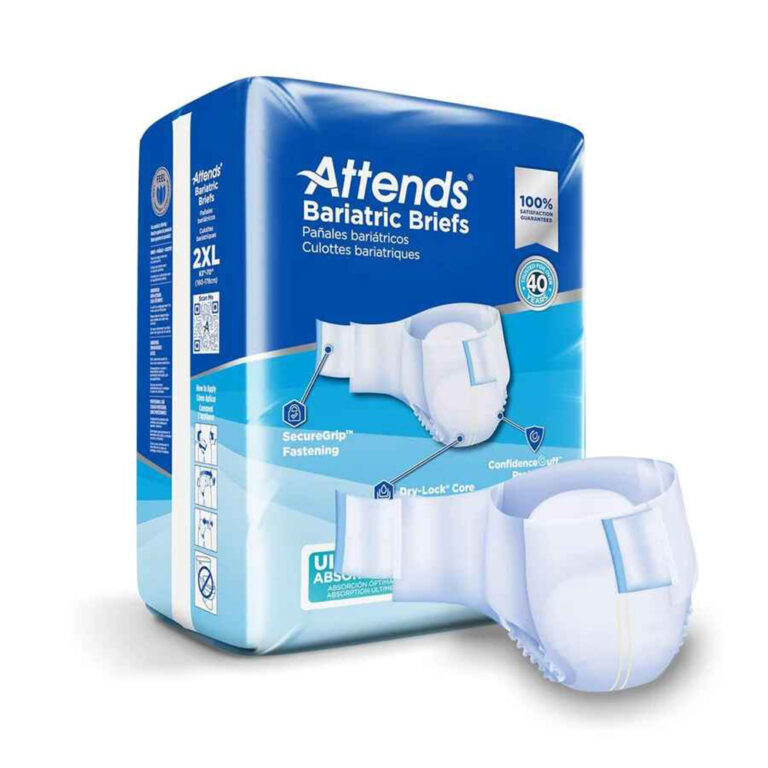
Users with limited mobility, severe leakage, cognitive impairment, or full-time caregiver support often need products that can be opened flat, fitted while lying down, inspected, and refastened. That keeps adult diapers for moderate-to-heavy incontinence central to hospitals, nursing homes, home-care agencies, and overnight care.
My hard view is that brands often underestimate caregiver labor.
A slightly cheaper brief that takes longer to position, tears during refastening, or leaks after repositioning may be more expensive at the facility level. Product cost per piece is visible. Labor, laundry, bedding changes, skin-care time, and complaint handling are scattered across other budgets.
That accounting blind spot protects bad products.
Light leakage creates the category’s entry point
Not every consumer starts with a full brief or pull-up.
Shaped incontinence pads for bladder leakage provide a lower-profile option for people managing light-to-moderate leakage inside regular underwear. For retailers and pharmacy brands, pads can be the first product a customer buys before progressing to higher-capacity protection.
That progression is commercially valuable. A coherent range can retain the same customer as needs change:
Light liner to shaped pad. Shaped pad to protective underwear. Protective underwear to overnight pull-up. Pull-up to tab-style brief. Brief to a complete care system with underpads and wipes.
A scattered product catalog loses that customer at every transition.
Aging also increases demand for surface protection.
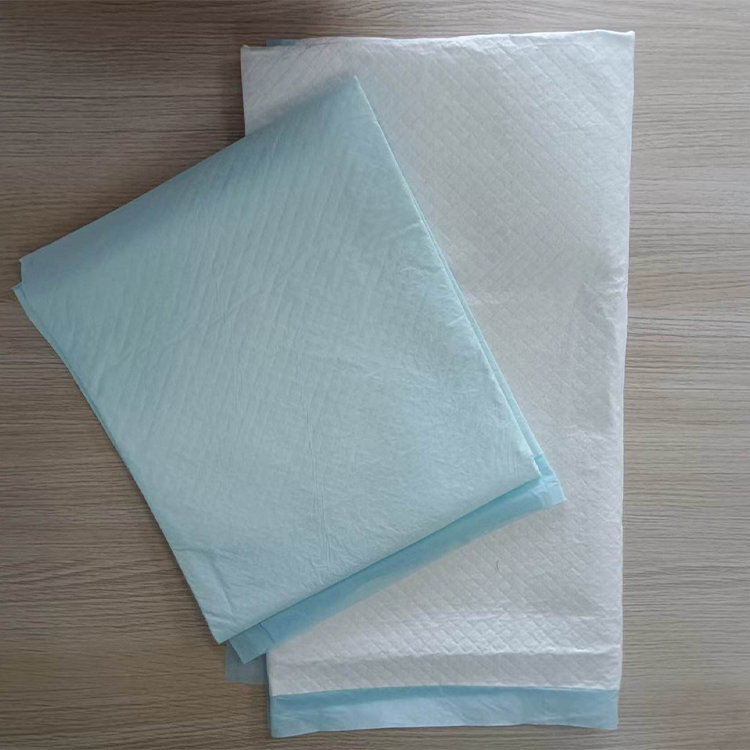
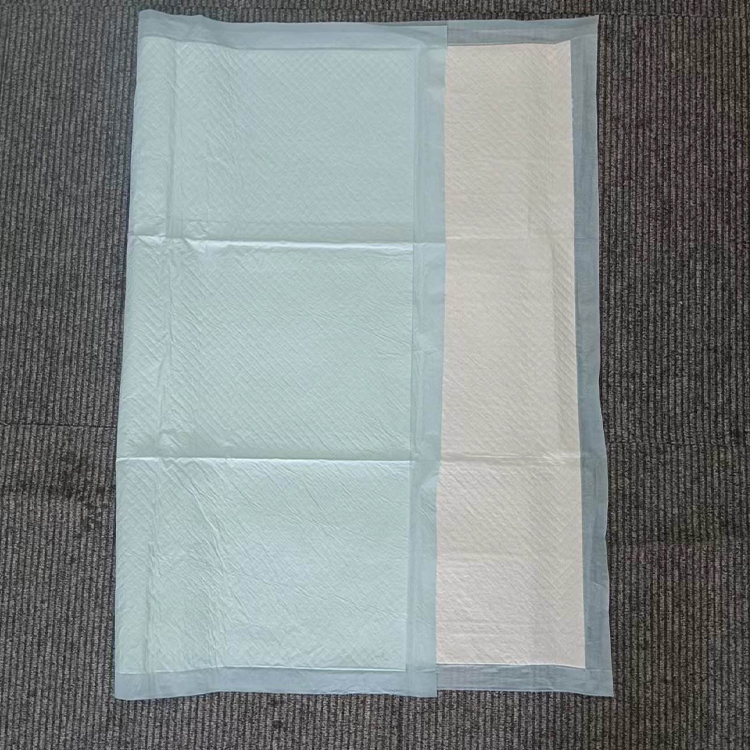
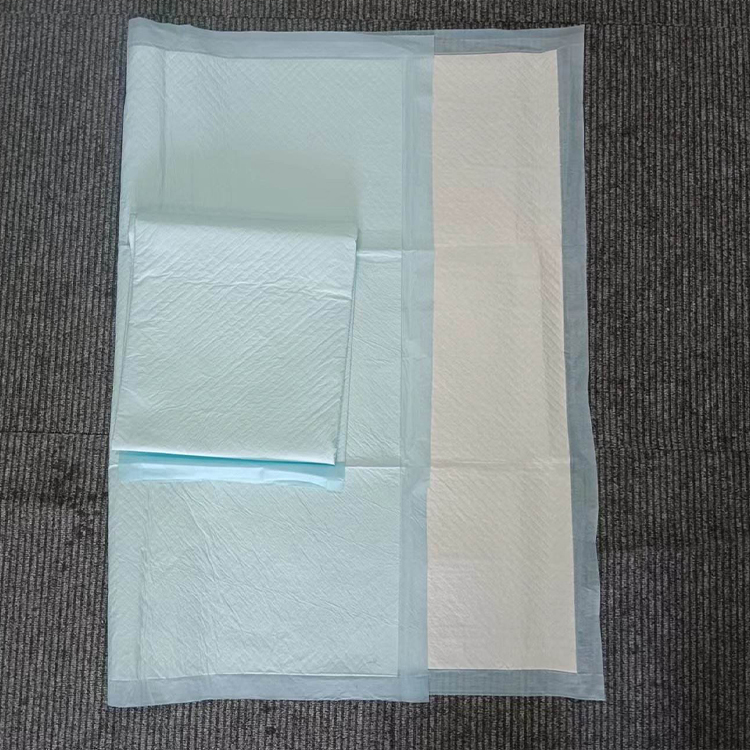
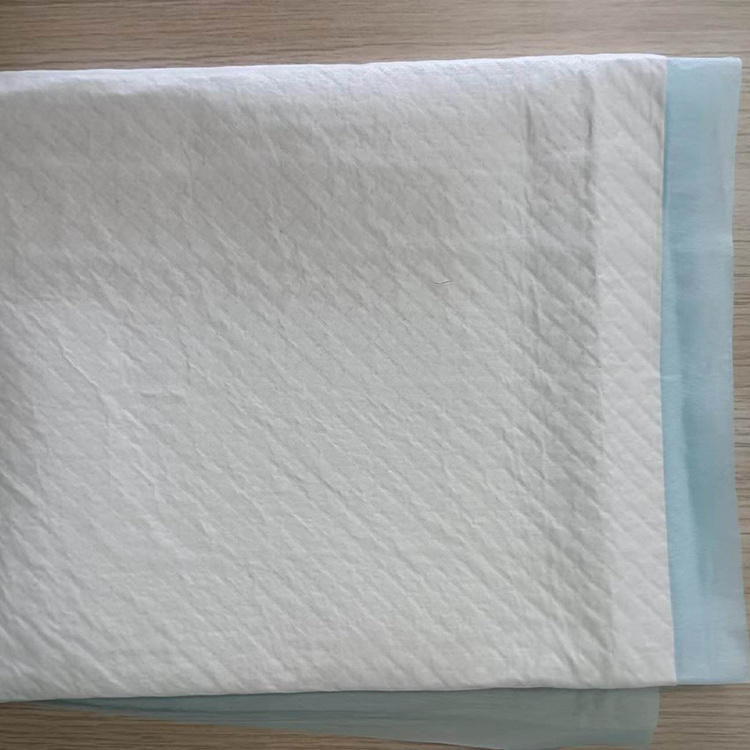
Hospitals, rehabilitation centers, nursing homes, and families regularly use disposable and reusable underpads to protect beds, chairs, wheelchairs, and examination surfaces. Underpads are not simply an accessory SKU; in high-dependency care, they are part of the operating system surrounding the user.
The strongest institutional assortments therefore do not sell one absorbent product. They sell a coordinated system.
The Hard Truth: “Maximum Absorbency” Is Not a Product Strategy
I remain skeptical whenever an adult diaper range is organized almost entirely around absorbency claims.
Maximum. Super. Ultra. Overnight.
Fine. But what happens during a sudden gush? What happens when the wearer sleeps on one side? What happens when the user has a narrow waist and larger thighs? What happens after two hours of pressure from sitting in a wheelchair?
Nominal capacity does not answer those questions.
A modern absorbent core commonly combines cellulose fluff pulp with a cross-linked superabsorbent polymer such as sodium polyacrylate. But the quantity of absorbent material is only one variable. Fluid acquisition speed, distribution, core stability, compression performance, topsheet dryness, standing leak-guard geometry, waist fit, and backsheet breathability decide whether that capacity can be used effectively.
A thick core can still fail.
In fact, excessive bulk can create leg gaps, trap heat, interfere with clothing, and shift during movement. I would choose a stable, well-fitted chassis with controlled rewet over a swollen product marketed around a laboratory capacity number almost every time.
The aging market needs segmentation by function
A serious adult incontinence product range should separate users by at least four functional conditions.
Mobility: fully mobile, partly mobile, chair-bound, or bed-bound.
Care setting: independent use, family care, home-care worker, hospital, or long-term-care facility.
Leakage pattern: light drips, urgency events, repeated moderate voids, heavy overnight output, or combined urinary and bowel incontinence.
Changing method: self-changing while standing, assisted changing, side-fastened changing in bed, or rapid institutional changes.
Age alone is a weak specification. An active 78-year-old golfer and an 78-year-old bed-bound stroke patient do not need the same product merely because their birth years match.
That sounds obvious.
Yet many brands still offer one pull-up, one tab brief, and three package colors.
Caregiver Shortages Will Influence Product Design
An aging population does not only expand the number of users. It also increases pressure on the workforce supporting them.
Japan provides an extreme example. A 2025 Reuters report described a nursing-care labor market with roughly one applicant for every 4.25 jobs, while researchers developed the AIREC humanoid robot to help with tasks including repositioning patients and changing diapers. Commercial use was not expected before 2030, but the project reveals how severe caregiver constraints have become.
The immediate answer is not robots. It is simpler products.
Caregivers need tapes that can be repositioned without tearing the backsheet, clear front-and-back identification, readable wetness indicators, predictable size labeling, strong side seams, high standing cuffs, and packaging that can be opened quickly without contaminating unused products.
And they need consistency.
A facility can train staff around one product specification. It cannot efficiently retrain them every time a supplier quietly changes elastic tension, core weight, tape placement, or sizing.
This is why aging-driven demand should increase the value of manufacturing change control, lot traceability, and sample approval. Buyers are not merely purchasing grams of fluff pulp and superabsorbent polymer. They are purchasing repeatable care procedures.
A Practical Demand Model for Adult Diaper Buyers
Demographics attract attention, but purchasing teams need units.
A basic institutional forecast can start with:
Annual body-worn product demand = eligible users × usage rate × average products per day × 365
Consider a care network serving 1,000 residents. Assume 70% use body-worn adult incontinence products and average 3.5 changes per day:
1,000 × 70% × 3.5 × 365 = 894,250 units per year
That figure still excludes underpads, booster pads, adult wipes, emergency inventory, trial sizes, new admissions, and the fact that day and night products may have different specifications.
Now change the average usage from 3.5 to 4.0 products per day:
1,000 × 70% × 4.0 × 365 = 1,022,000 units per year
A difference of half a product per user per day adds 127,750 units annually.
Tiny assumptions become container-level consequences.
For retail planning, the formula should be modified:
Annual retail demand = target population × category penetration × repeat-purchase frequency × average units per purchase
But I would not use one national penetration rate. Urban pharmacy shoppers, e-commerce subscribers, hospital-discharge patients, and rural family caregivers behave differently. Forecast them separately.
Aging Consumers Are Also Changing Packaging and Brand Language
Older users are not a single “geriatric hygiene” segment, and packaging that treats them that way can destroy demand.
The best packaging communicates function without humiliation. It should make size, absorbency level, product form, waist range, quantity, and intended use easy to find. A customer should not need reading glasses and ten minutes of concentration to distinguish a night brief from a light pull-up.
But many packs are still designed for the buyer’s procurement department rather than the user.
That is backwards.
The aging consumer population includes experienced retail shoppers who compare softness, discretion, noise, appearance, shipping privacy, and environmental claims. They are not passive recipients of care. Daio Paper’s consumer research, reported by Reuters, found that potential buyers responded positively to products they could wear while pursuing hobbies, shopping, fishing, or playing golf.
That is the opportunity.
Do not sell incapacity. Sell continuity.
Compliance Will Matter More as the Category Expands
Growing demand attracts more suppliers, more private labels, and more aggressive product claims. It also attracts regulatory attention.
In the United States, 21 CFR 876.5920 defines a protective garment for incontinence as a device consisting of absorbent padding and a fluid barrier intended to protect an incontinent patient’s clothing from excreta. FDA records identify product code EYQ as a Class I protective garment for incontinence.
That does not mean every country treats every pad, brief, or pull-up identically. Intended purpose, labeling, product claims, distribution channel, and local classification rules matter.
Buyers should therefore ask for evidence, not logos pasted onto a sales sheet. Useful documentation may include material declarations, absorbency and rewet test methods, microbiological testing where required, batch records, factory-audit information, labeling reviews, and traceable product specifications.
The site’s adult diaper test reports and certification resources show the type of evidence procurement teams increasingly request, including performance reports, quality-system documentation, REACH/SVHC declarations, lot-based records, and market-specific compliance support.
My opinion is blunt: a low quote without a controlled specification is not a saving. It is an unpriced liability.
What Winning Adult Incontinence Brands Will Do Differently
The adult diaper market will not reward every company equally.
The winners will build portfolios around real use cases instead of adding random absorbency tiers. They will distinguish independent users from assisted-care users. They will develop day and night ranges. They will treat fit as a performance variable. They will test rewet under pressure, not just free absorption in a laboratory.
They will also plan capacity earlier.
A demographic trend that develops over decades can still produce sudden commercial pressure when a pharmacy chain adds a private label, a public tender changes supplier, or an institutional buyer consolidates several facilities under one contract.
That is where adult diaper OEM and ODM manufacturing becomes strategic. The supplier should be able to discuss size architecture, absorbency targets, materials, pack counts, documentation, sample approval, multilingual packaging, production lead times, and controlled repeat orders—not simply ask which existing product the buyer wants relabeled.
Cheap relabeling is easy.
Building a defensible range is not.
FAQs
How does population aging affect demand for adult incontinence products?
Population aging increases demand for adult incontinence products by expanding the number of older consumers, raising the share of people with mobility or continence challenges, and increasing institutional care consumption, while also shifting purchases from basic briefs toward segmented day, night, pull-up, pad, and surface-protection systems.
The effect is therefore both quantitative and structural. Buyers need more units, but they also need a broader assortment for independent users, caregivers, hospitals, nursing facilities, pharmacies, and e-commerce channels.
Which adult incontinence products will benefit most from aging populations?
The product types most likely to gain are discreet pull-up underwear for active adults, tab-style briefs for assisted care and heavy leakage, shaped pads for light-to-moderate bladder leakage, and underpads for beds and chairs, because an aging market contains several mobility levels rather than one uniform elderly-user profile.
The right mix will vary by country. Markets with strong home-care systems may buy more pull-ups and pads, while institutional markets may require larger volumes of tab briefs, underpads, wipes, and overnight products.
Are adult diapers considered medical devices?
In the United States, many adult incontinence products are regulated as Class I protective garments under 21 CFR 876.5920 and FDA product code EYQ, although exact obligations depend on intended use, claims, labeling, establishment status, and distribution model; medical-device rules in other countries can differ materially.
Importers should verify classification for each destination market rather than assuming that one registration, certificate, or declaration is accepted worldwide.
How should distributors forecast adult diaper demand?
Distributors should forecast adult diaper demand by multiplying the expected user population by daily product use, 365 days, channel occupancy or penetration, and the planned mix of briefs, pull-ups, pads, and underpads, then separating day and night demand instead of using one average absorbency assumption.
Forecasts should also account for size distribution, pack count, reorder frequency, institutional contracts, promotional periods, and the time needed for sample approval and ocean freight.
What features matter most in elderly incontinence products?
The most important product features for elderly users are reliable fit, rapid fluid acquisition, low rewet, stable leg and waist seals, breathable skin-contact materials, easy fastening or pull-on use, clear size communication, and predictable batch consistency, because nominal absorbency alone does not prevent leaks during movement, sleep, or caregiver repositioning.
Product selection should also reflect mobility, hand strength, body shape, change position, leakage pattern, skin condition, and whether the product will be used independently or with caregiver assistance.
Is urinary incontinence an inevitable part of aging?
Urinary incontinence is not an inevitable consequence of aging, although it becomes more common at older ages and may be associated with mobility limitations, medication, infection, diabetes, prostate conditions, pelvic-floor changes, neurological disease, or other treatable factors requiring professional medical assessment.
The National Institute on Aging advises that bladder-control problems can often be treated or managed. Absorbent products provide practical protection, but they should not be presented as a substitute for medical evaluation.
Build Your Adult Incontinence Range Before Demand Overtakes Capacity
The demographic signal is already visible. The oldest age groups are growing, institutional care systems are under pressure, active older consumers expect discretion, and major manufacturers are redirecting resources toward adult products.
Do not respond with one generic brief and a larger purchase order.
Define your target country, sales channel, mobility segments, size curve, day and night specifications, expected monthly volume, packaging language, absorbency test requirements, and compliance documents. Then request samples built around those conditions.
Start by reviewing the available adult diaper OEM and ODM manufacturing options and prepare a clear product brief for evaluation. The companies that establish fit, performance, documentation, and supply consistency now will be better positioned when aging-driven demand becomes a procurement emergency rather than a market forecast.