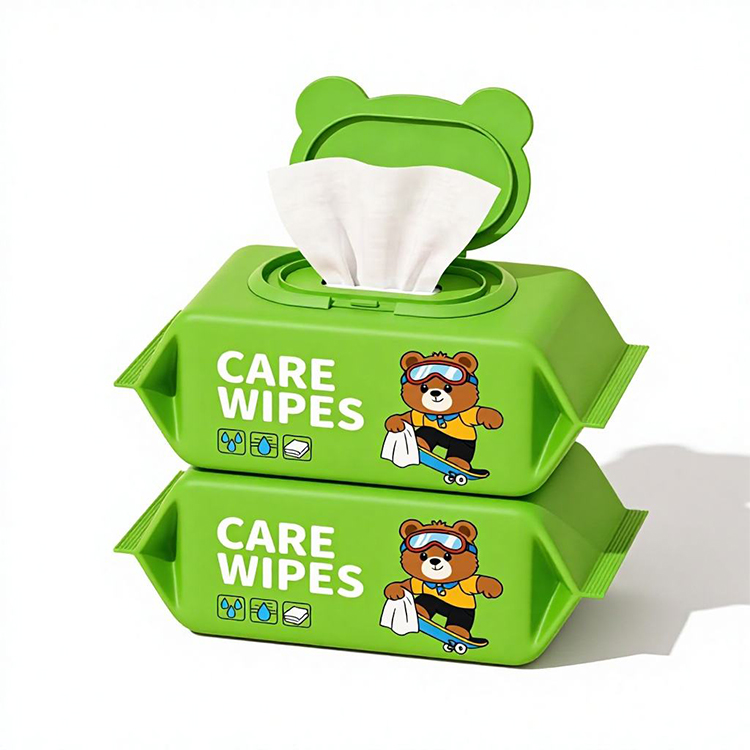
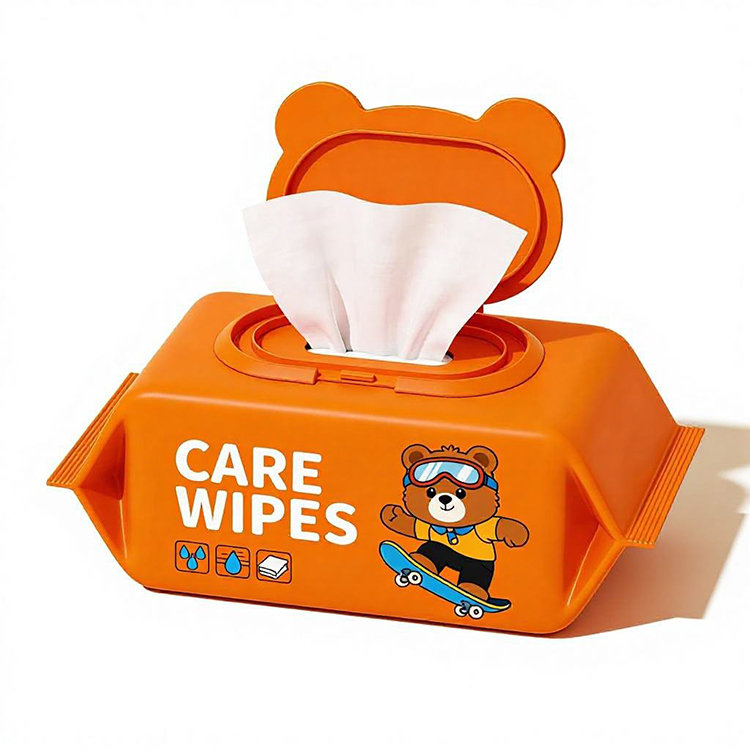
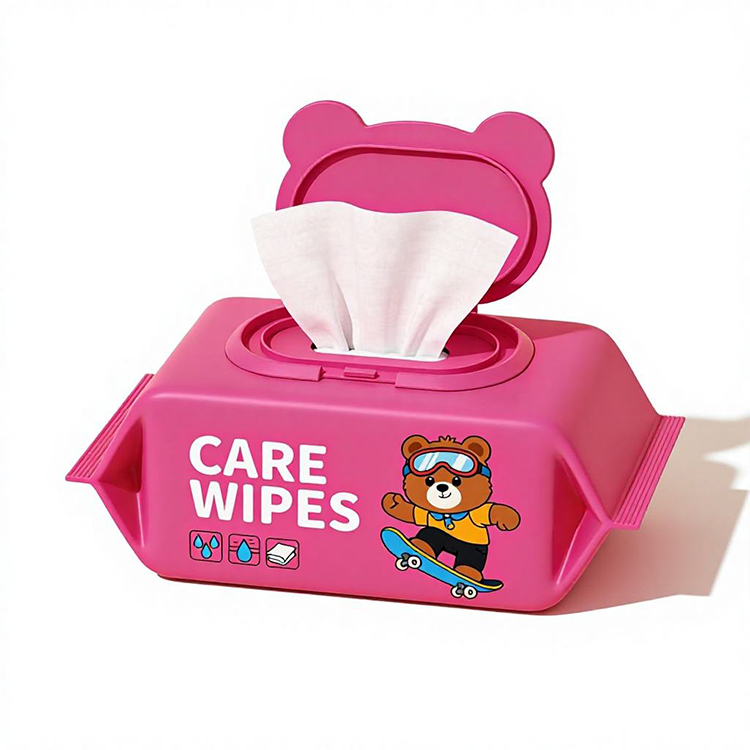
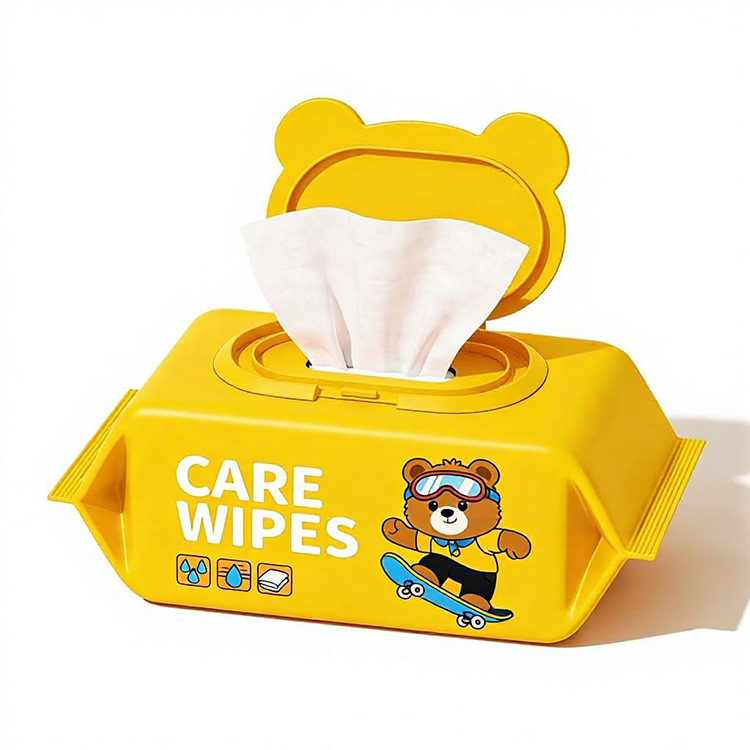
Adult wipes are generally larger, stronger, and better suited to body cleansing and incontinence care, while baby wipes are primarily designed for cleaning an infant’s diaper area. Adults can use baby wipes for light personal hygiene, but repeated perineal care, bowel leakage, bed bathing, and limited-mobility care usually demand a more substantial adult wipe.
That is the clean answer.
The uncomfortable answer is that “adult” and “baby” are marketing categories, not performance standards. A poorly specified adult wipe can be smaller, rougher, or less stable than a premium baby wipe. Buyers still need to examine unfolded dimensions, substrate GSM, wet tensile strength, lotion chemistry, fragrance, preservatives, pack closure, and real wipe consumption per change.
Table of Contents
The Real Difference Is Engineering, Not the Age Printed on the Pack
Size changes everything.
When a caregiver is cleaning urine, stool, sweat, odor, and barrier-cream residue from an adult body, a small sheet that bunches, stretches, or tears creates more hand repositioning, more wipes, and more friction across skin that may already be exposed to moisture several times a day.
Why pretend that is a minor packaging detail?
The strongest adult wipes for incontinence and body cleansing are built around adult-scale coverage, wet strength, one-handed dispensing, and repeated hygiene routines rather than simply using a different label on a standard wet wipe. The product category also includes bedside cleansing, full-body freshening, travel hygiene, post-procedure care, and support for people with restricted mobility.
Comparison Point
Adult Wipes
Baby Wipes
What Buyers Should Verify
Primary purpose
Adult body cleansing, incontinence cleanup, perineal care, bed baths
Infant diaper changes and general baby cleanup
Actual intended-use statement on the label
Sheet coverage
Usually larger, although no universal size is guaranteed
Usually smaller and easier to carry
Unfolded length and width in centimeters or inches
Wet strength
Often designed for heavier soil and broader wiping strokes
Commonly optimized for softness and infant cleanup
Wet tensile test, stretching, tearing, and linting
Substrate
Spunlace or another soft nonwoven with adult-care strength targets
Soft nonwoven designed for infant skin
Material blend, GSM, embossing, and plastic content
Lotion system
May emphasize no-rinse cleansing, pH balance, fragrance-free options, aloe, glycerin, or dimethicone
May use pH buffers and mild infant-oriented lotion systems
Full INCI list, preservative system, pH range, and lotion load
Closure integrity and moisture retention after repeated opening
Cost logic
Cost per change and caregiver efficiency matter
Pack price and portability often dominate
Average sheets used per real cleanup
Disposal
Most should go in the trash
Most should go in the trash
Verified flushability evidence, not a vague front-label claim
The table shows why the difference between adult wipes and baby wipes cannot be reduced to softness. Softness matters, but a wipe that feels silky in the hand and collapses during use is not a professional care product.
For technical sourcing, I would insist that the RFQ specify sheet dimensions, fold style, GSM, substrate composition, lotion load, target pH, wet strength, fragrance status, preservative system, pack count, lid type, and shelf-life testing. The site’s guide to adult care wipe size, GSM, and lotion load explains why these measurable fields tell buyers far more than words such as “premium,” “thick,” or “extra soft.”
Can Adults Use Baby Wipes?
Yes, adults can use baby wipes for light external cleansing when the product label permits that use, the skin is intact, and the user does not react to the ingredients. Baby wipes can be practical after exercise, during travel, for hand cleanup, or for a small urinary leak.
But suitability changes when the job gets harder.
Baby wipes often become inefficient during bowel-incontinence cleanup, full-body bathing, bariatric care, or repeated brief changes. A caregiver may need several smaller sheets, which creates more folding, more contact with contaminated material, and potentially more rubbing.
The FDA’s disposable-wipes guidance advises consumers to follow the labeled intended use, use wipes on intact skin, allow the skin to dry, keep the pack closed, and examine the ingredient list when allergies or sensitive skin are concerns. The agency also makes an important point that destroys a common assumption: adults have reported reactions to baby wipes that caused no reaction in their babies.
So “made for babies” does not automatically mean “safe for every sensitive adult.”
When Baby Wipes Are Usually Adequate
Baby wipes can be a reasonable choice when:
Cleanup is small and occasional.
The adult is independently mobile.
The skin is healthy and unbroken.
The wipe does not sting, redden, or leave an uncomfortable residue.
The product is used externally and according to its label.
Portability matters more than maximum sheet coverage.
When Adult Cleansing Wipes Make More Sense
Adult cleansing wipes are usually the more practical choice when:
Urinary or fecal incontinence is frequent.
The user wears tab-style briefs, pads, or incontinence underwear.
A caregiver performs the cleaning.
The person is bedridden or has limited mobility.
Full-body or bedside cleansing is needed.
Fewer, larger sheets could reduce handling and rubbing.
The product will be used repeatedly in a nursing home, hospital, or home-care routine.
For these conditions, a properly specified pH-balanced, alcohol-free adult body wipe offers pack, formula, sheet, and private-label options built around adult-care applications rather than infant diaper bags.
Skin Exposure Turns a Simple Wipe into a Care Decision
Here is the hard truth: the wipe is not the whole skin-care protocol.
Incontinence-associated dermatitis, commonly shortened to IAD, develops when skin is repeatedly exposed to urine, feces, moisture, friction, and unsuitable cleansing practices. Wipes can support a better routine, but no wipe can compensate for delayed changes, aggressive rubbing, trapped moisture, or failure to inspect damaged skin.
The scale is not theoretical. A CDC/NCHS report on incontinence among older Americans, based on the 2009 Long Term Care Minimum Data Set, found that 70.3% of long-term nursing-home residents were not in complete control of bladder function, 60.0% lacked complete bowel control, and 54.4% lacked complete control of both. Those figures are historical rather than a current prevalence estimate, but they show why adult cleansing is a repeated workflow rather than an occasional personal-care purchase.
More recent intervention data also matters. A 2024 six-hospital study reported that an evidence-based care bundle reduced hospital-acquired IAD prevalence from 6.71% to 4.27%, a relative reduction of approximately 36.3%. The result came from a structured program, not from changing one wipe in isolation.
That distinction matters.
I do not trust a supplier who implies that aloe, vitamin E, chamomile, or the word “hypoallergenic” can independently prevent dermatitis. Those ingredients may support a product concept, but serious buyers should ask for dermatological testing, stability data, microbiological controls, preservative information, and defensible claim wording.
pH-Balanced Is Incomplete Without a Number
“pH-balanced” sounds scientific. Often, it is incomplete.
Clinical recommendations for incontinence-related cleansing frequently refer to cleansers or wipes near pH 5.5, while acknowledging that broader skin condition, cleansing frequency, and product design also matter. A systematic review of older-adult IAD care specifically recommended cleansing after incontinence episodes with a cleanser or wipe close to pH 5.5.
A buyer should therefore ask:
What is the finished lotion’s target pH range?
What is the allowable production tolerance?
Is pH tested at filling and after stability aging?
Does the substrate alter the measured pH?
Is the claim supported for the finished wipe or only for the bulk lotion?
That is procurement. “Skin friendly” without a test method is just decoration.
Fragrance Is Not Proof of Cleanliness
Fragrance can mask odor perception, but it does not prove that skin is cleaner. In repeated perineal care, added scent also introduces another formulation variable for users with different sensitivities.
I would make fragrance-free the default for mixed resident populations and then create a lightly scented option only where the channel has a documented commercial need. The site’s analysis of whether nursing homes should choose fragrance-free adult wipes reaches the same practical conclusion: institutional care should prioritize repeat tolerance, ingredient clarity, sheet strength, and workflow over perfume.
Fragrance-free does not guarantee zero irritation. Neither does “natural.” Preservatives, botanical extracts, adhesives, lotions, dyes, and substrate residues can all become relevant depending on the individual user.
The Price Per Pack Is Usually the Wrong Number
Cheap packs seduce buyers.
Then the change starts.
A 60-count baby-wipe pack may appear cheaper than a 40-count adult-wipe pack, yet the comparison collapses when the smaller sheet requires three or four wipes during a cleanup that a larger, stronger sheet handles with fewer units.
The practical equation is:
Cost per change = price per wipe × average wipes used per change
For institutional buyers, I would add labor, disposal volume, packaging failures, dried-out stock, and complaint handling. A wipe that saves one cent per sheet but adds 30 seconds to thousands of changes is not cheap. It has merely moved the cost into staffing.
Test the Wipe Like a Caregiver, Not a Marketing Team
A useful side-by-side trial should record:
Average wipes used for urinary cleanup.
Average wipes used for bowel cleanup.
Sheet tearing or stretching rate.
Dispensing failures and multiple-sheet pulls.
Perceived glide and residue.
Skin redness, stinging, or complaints.
Pack moisture at the first and final 10% of sheets.
Time required per change.
Waste-bin volume.
Cost per completed care episode.
I would run the test with representative users and care conditions, not five office employees cleaning their hands in a conference room. Adult wipes for incontinence are work tools. Test them where the work happens.
“Flushable” Is a Disposal Claim, Not a Skin Benefit
Adult wipes and baby wipes should generally be placed in the trash unless a product has credible, applicable flushability validation and local wastewater guidance permits flushing.
The U.S. Environmental Protection Agency has repeatedly advised consumers to flush only toilet paper, warning that wipes can damage household plumbing, septic systems, and municipal wastewater equipment. A wipe’s ability to disappear around the toilet bend does not mean it disperses like toilet tissue farther down the system.
For a manufacturer or private-label brand, “Do Not Flush” is not ugly packaging. It is responsible labeling.
How to Choose the Best Wipes for Adults
The best wipes for adults are not simply the thickest, wettest, or most expensive. They match the user, soil level, skin condition, care frequency, and dispensing environment.
Use this decision sequence:
For Independent Daily Hygiene
Choose a portable, resealable pack with a soft sheet, low-residue lotion, clear ingredient list, and enough strength for body cleansing without an oversized institutional format.
For Urinary Incontinence
Prioritize gentle no-rinse cleaning, adequate coverage, low friction, reliable one-sheet dispensing, and a formula compatible with repeated use.
For Bowel Incontinence
Prioritize larger sheets, wet strength, folding control, strong but gentle cleaning performance, and packaging that a caregiver can operate with one hand.
For Sensitive or Frequently Cleansed Skin
Start with fragrance-free, alcohol-free options and examine the complete ingredient list. Request finished-product dermatological testing rather than accepting the word “hypoallergenic” by itself.
For Nursing Homes and Hospitals
Evaluate case-pack efficiency, lot traceability, microbiological testing, lid durability, staff consumption per change, multilingual labeling, and documented disposal instructions.
For Private-Label Programs
Lock the physical and chemical specification before approving artwork. The manufacturer should confirm dimensions, GSM, material blend, lotion ingredients, pH tolerance, pack count, shelf life, testing, labeling, carton configuration, and change-control procedures.
FAQs
What is the main difference between adult wipes and baby wipes?
Adult wipes are generally designed with larger coverage, stronger wet handling, and adult-care applications such as incontinence cleanup, perineal cleansing, bedside bathing, and full-body hygiene, while baby wipes are commonly optimized for infant diaper changes, portability, and smaller cleaning areas; however, buyers must verify actual dimensions, materials, formulas, and performance because category names are not technical standards.
A premium baby wipe may outperform a weak adult wipe in softness or wet strength. The intended-use label and measurable specification matter more than the illustration on the package.
Can adults use baby wipes for personal hygiene?
Adults can use baby wipes for occasional external personal hygiene when the label permits the intended use, the skin is intact, and the ingredients do not cause redness, itching, burning, or discomfort, but smaller baby wipes may become inefficient for bowel incontinence, full-body cleaning, assisted care, or repeated changes involving a larger surface area.
Stop use when irritation appears, and do not assume that a baby-oriented formula is automatically suitable for every adult with sensitive skin.
Are adult wipes better than baby wipes for adults?
Adult wipes are usually better for frequent adult incontinence care because larger sheets, stronger wet performance, caregiver-friendly packaging, and adult-oriented cleansing systems can reduce the number of wipes and handling steps required, although baby wipes may remain perfectly adequate for small spills, travel, light urinary cleanup, and adults who tolerate a particular formula well.
“Better” should therefore be measured by performance per care episode, not by age wording alone.
What are the best wipes for adults with sensitive skin?
The best wipes for adults with sensitive skin are typically soft, fragrance-free, alcohol-free, appropriately pH-controlled, strong enough to prevent repeated rubbing, and supported by transparent ingredient and dermatological-testing documentation, while the final choice should also reflect existing dermatitis, allergies, cleansing frequency, barrier-product use, and guidance from a qualified healthcare professional when skin is damaged.
No single botanical ingredient or front-label claim guarantees universal tolerance.
Should adult wipes or baby wipes be flushed?
Adult wipes and baby wipes should normally be discarded in a lined waste bin rather than flushed, because most wipes retain substantially more wet strength than toilet paper and may contribute to household, septic, pump, and sewer blockages; only follow a flushability claim when it is backed by relevant testing and accepted by local wastewater guidance.
For care facilities, clear bin placement and staff instructions are safer than relying on users to interpret vague disposal language.
How should caregivers use adult cleansing wipes?
Caregivers should prepare the replacement absorbent product first, clean gently from the least soiled area toward the more soiled area, use clean sections of the wipe for each stroke, avoid aggressive rubbing, inspect the skin, allow it to dry as directed, apply prescribed barrier care when appropriate, and dispose of used wipes according to facility policy.
Gloves, hand hygiene, local infection-control procedures, and the product label still apply. A cleansing wipe is not a substitute for clinical assessment when skin is broken, bleeding, blistered, or persistently inflamed.
Build an Adult Wipe, Not a Rebranded Baby Wipe
The adult wipes vs baby wipes debate ends when buyers stop comparing front labels and start comparing the completed care episode.
For light personal hygiene, a tolerated baby wipe may be enough. For frequent incontinence, assisted changes, bed bathing, and professional care, adult wipes usually provide the better format because coverage, strength, dispensing, and workflow carry more weight.
Private-label buyers should request measurable specifications before discussing fragrance names or packaging graphics. Define the user, cleanup type, sheet dimensions, GSM, substrate, lotion system, pH tolerance, preservative strategy, testing, pack closure, and expected wipes per change.
Then sample it properly.
Review the available adult cleansing wipe formats and submit your technical requirements through the company’s OEM/ODM manufacturing service to develop a wipe program based on real adult-care performance rather than recycled baby-wipe assumptions.