How to Break Down an Adult Diaper OEM Quote: Materials, GSM, Packaging, Yield
You’ve got two OEM quotes on your desk. Both say “premium,” both promise “no leaks,” and both look kinda close. Then you notice the unit price isn’t close at all. That’s when it hits you: an adult diaper OEM quote is never “just a price.” It’s a bundle of assumptions.
If you don’t unpack those assumptions, you’ll get the classic mess later: soft sample, harsh bulk. Great first order, unstable reorders. “Same SKU” that suddenly feels different, and now your buyer thinks you’re playing games (you’re not, but it looks like it).
So let’s break it down the way sourcing teams actually do it: Materials, GSM, Packaging, Yield. Keep these four locked, and quotes become comparable. Also, your reorders stop turning into drama.
Materials in an Adult Diaper OEM Quote
Materials decide what your customer complains about. Not in a lab way, in a real way: rash, leaks, smell, tab failure, lint on bedsheets. If your customers are nursing homes, hospitals, home-care agencies, or distributors, they don’t care about fancy wording. They care about repeat outcomes.
Topsheet nonwoven and hydrophilic treatment
The topsheet is the “skin-touch” layer. If it feels scratchy, people notice fast. And if intake is slow, you get the worst kind of review: “It leaks even when it’s not full.”
What to lock in the quote:
nonwoven type and bonding (spunbond, SMS, etc.)
hydrophilic treatment (intake behavior)
lint control (care facilities hate lint, seriously)
If the quote only says “soft nonwoven,” it’s not a spec. It’s a vibe.
Backsheet film and breathability
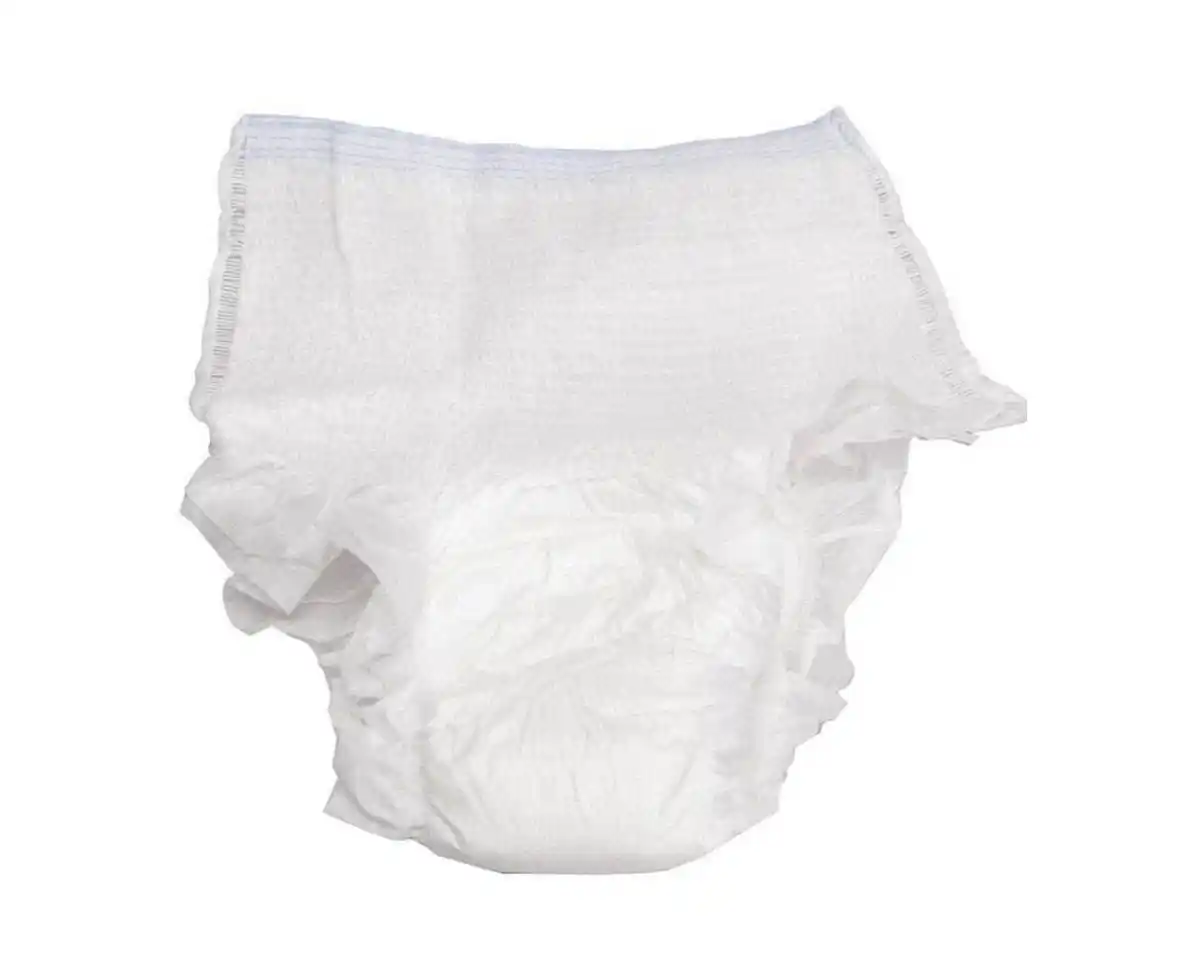
Backsheet choices are where “same diaper” can split into two different products. Some films feel quiet and cloth-like. Others feel plastic-y and noisy. Breathable vs non-breathable matters more in long-wear use cases.
What to lock:
breathable film vs PE film
cloth-like lamination (if you need that retail feel)
target noise level (yes, people care)
For caregivers doing night changes, a loud diaper is a small problem. But small problems stack up and become “switch brand” problems.
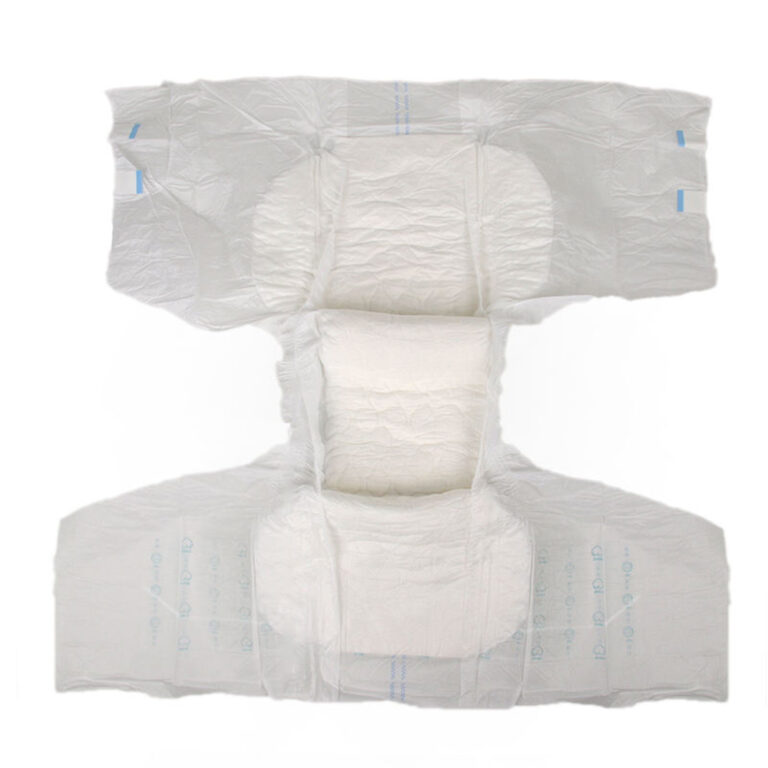
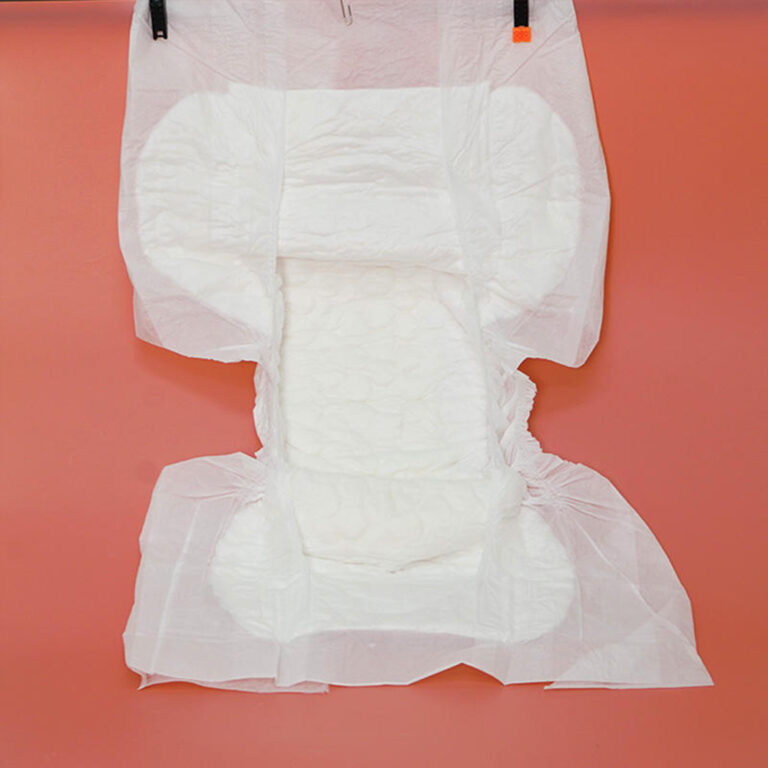
This is the part factories argue about in shorthand: SAP, fluff pulp, ADL (acquisition/distribution layer), core wrap, anti-gel-blocking behavior. If you sell heavy incontinence, you can’t leave core structure vague.
What to lock:
SAP loading approach (not the number, the design intent)
fluff pulp grade and core wrap type
whether you use an ADL layer (and what type)
“core integrity” expectation (does it sag, does it clump)
A lot of buyers only ask for “high absorbency.” That’s like asking for a “fast car.” You need to define how it performs: fast intake, good spread, and stable core when it’s under pressure.
Leak guards, cuffs, elastics, tabs, landing zone
Leak protection is not just “has cuffs.” It’s cuff height, elastic tension, and construction consistency.
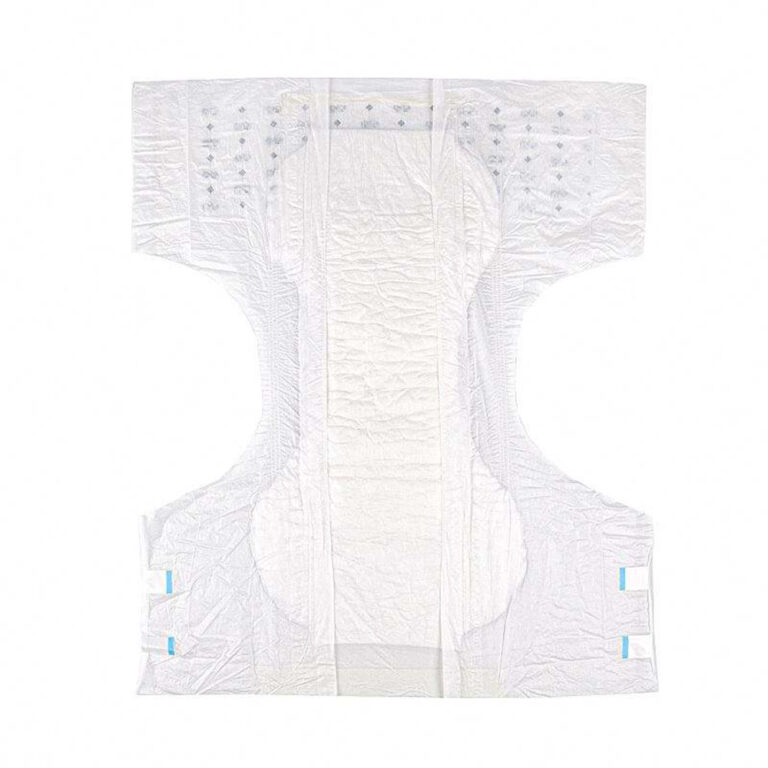
If you’re quoting adult diapers with tabs, lock:
refastenable tabs type (hook & loop vs adhesive)
landing zone material (and strength)
leg cuffs style (standing cuff vs basic cuff)
waist elastics behavior (does it bite, does it roll)
These details decide if caregivers trust your product. Caregivers don’t want “maybe it holds.” They want “I don’t have time for this.”
If you’re doing category builds, it helps to separate SKUs clearly:
Different channels want different builds. Don’t force one BOM to do every job, it won’t.
GSM in Nonwoven and Film Specifications
People throw “GSM” around like it’s a magic quality button. It’s not. But it is one of the best tools to stop suppliers from swapping materials quietly.
What GSM means in nonwoven purchasing
GSM is basis weight: how heavy a material is per square meter. Higher GSM often means more body and better strength. Lower GSM can feel lighter and cheaper, but it may tear easier or feel too thin.
GSM doesn’t guarantee comfort, but it heavily influences “feel” and durability.
Where to specify GSM in adult diapers and pull-up underwear
You don’t need GSM on every tiny component. Focus on what drives experience and failure points:
topsheet nonwoven (handfeel + intake)
ADL layer (fluid distribution)
cloth-like backsheet laminate (noise + comfort)
frontal ear / landing zone nonwoven (tear resistance)
tab reinforcement (tab pull strength)
For incontinence underwear, side seam strength matters too. If seams pop, you’ll see returns from e-commerce fast. Not fun.
GSM red flags in OEM quotes
Watch for these lines:
“standard nonwoven”
“customer requested quality”
“same as sample”
That language leaves room for drift. If the quote doesn’t list GSM, it’s not a quote you can enforce. It’s a handshake.
Packaging Specs in OEM/ODM Quotes
Packaging can destroy a good product. Not because it’s pretty, but because it changes your unit economics in the warehouse, your shelf presentation, and your damage rate.
pcs/bag and bags/case
Lock these two. No excuses. If “pcs/bag” changes, your inventory planning breaks. If “bags/case” changes, your distributor’s SKU mapping breaks.
This is where buyers use the phrase: case pack locked.
What to lock:
pcs/bag
bags/case
carton dimensions range
barcode placement rules (if you do retail)
E-commerce pack vs institutional bulk pack
Different use cases, different pack-out:
Nursing homes want easy-open, clear labeling, simple handling.
Retail wants clean artwork and consistent front-facing info.
If you ship to mixed channels, keep separate packaging specs. One pack can’t satisfy all channels without tradeoffs, it just can’t.
Carton marks, pallet pattern, and damage rate
This sounds boring. Then you get a container with crushed corners and your importer sends you photos at 2 a.m.
Ask for:
carton marks standard (CTN marks)
pallet pattern and wrap method
“drop test mindset” (at least basic transit protection)
A strong pack reduces claim fights. That’s real money and real time saved.
Yield in Manufacturing and Quality Control
Yield is the part nobody wants to talk about because it’s “factory internal.” But yield affects your consistency and your reorder confidence.
Yield assumptions: scrap, rework, start-up loss
All lines have waste. Start-up waste, changeover waste, rejects, rework. If a factory runs unstable, it may push out borderline goods just to protect output. Then your quality swings.
You don’t need their whole factory report. You need the basics:
where they check defects (in-line checkpoints)
what happens to rejects (scrap vs rework rules)
how they keep lots separated (traceability discipline)
Golden sample, AQL, lot traceability
If you want stable bulk, you need:
golden sample (approved reference)
AQL level agreement (inspection rule)
lot code system (trace it back when something goes wrong)
This is how you avoid the endless email loop: “We think it’s shipping issue.” “No, it’s production.” “No, it’s storage.” With traceability, you stop guessing.
Adult-Diaper OEM/ODM spec docs + your category pages
GSM
GSM for key nonwovens + landing zone + cloth-like laminate
tearing, thin feel, batch drift
Material spec annex
Your purchasing spec (GSM column)
Packaging
pcs/bag, bags/case, carton spec, artwork files, CTN marks
warehouse chaos, channel mismatch, damaged goods
Packaging spec + pack-out photos
Your packaging SOP + product page promise
Yield
QC checkpoints, reject handling, golden sample, AQL, lot code
unstable reorders, claim wars, mystery defects
QC agreement + inspection records
Your QA protocol + buyer contract terms
LOVINHUG OEM/ODM Support for Adult Diapers, Underpads, and Private Label
If you’re sourcing for wholesale, importing, or building a private label, you want a supplier who speaks in spec language, not marketing language. LOVINHUG supports OEM/ODM programs focused on bulk buyers like distributors, importers, care facilities, and e-commerce private labels—so the quote discussion stays practical: BOM, GSM, pack-out, QC, and lead time.
And since your buyers may want a full care lineup, it helps when one factory can cover multiple categories under the same quality logic: