Common Causes of Adult Diaper Leakage and How Product Design Can Help
The Leak Is Usually Mechanical Before It Is Absorptive
Leaks tell stories.
A diaper can carry a giant absorbency claim, a swollen core, a loud “overnight” label, and still fail in the first two hours if the leg opening gaps, the topsheet cannot pull fluid down fast enough, or the user’s body shape does not match the chassis.
So why do buyers keep asking only one question: “How many milliliters does it hold?”
I’ve seen the same mistake in adult incontinence product copy again and again. The product page screams “maximum absorbency,” while the real failure point sits somewhere uglier: wrong waist size, weak standing cuffs, poor back coverage, slow acquisition layer, or a pull-up being forced into a bed-care situation where a tab brief would have made more sense.
That is the hard truth about adult diaper leakage: adult diaper absorbency matters, but it is rarely the whole case.
The CDC’s National Center for Health Statistics reported national estimates of incontinence among older Americans using NHANES, residential care, home health, hospice, and nursing home datasets, including 2,416,705 nursing home residents in the MDS data pool. That is not a niche inconvenience. That is a care-system problem with procurement, dignity, skin-health, and cost consequences.
Table of Contents
The Industry’s Dirty Little Shortcut: “Make It Thicker”
Here is my unpopular opinion: thickness is the laziest answer in the adult diaper business.
A thicker product may help when the brief already fits well, the core takes fluid quickly, the acquisition layer distributes liquid, and the leak guards stay upright under movement. But thickness can also create bulk, leg gaps, heat, friction, and poor body contact. That is how adult diaper leaks happen inside products that look impressive in the package.
Adult-diaper.com already has the right supporting path here. Their article on why thicker adult diapers aren’t always better makes the same practical point: a bloated brief can still leak if intake speed, rewet, cuffs, and body fit are wrong.
And product testing backs this up more than most marketing departments want to admit. ISO 11948-1 covers a method for determining absorption capacity of the absorbent core of body-worn urine-absorbing aids, but lab capacity is not the same thing as in-use leak control during sitting, turning, walking, compression, or side sleeping.
Real use is meaner.
A professional buyer should be asking for acquisition speed, rewet under pressure, standing cuff height, elastomer recovery, topsheet dryness, SAP distribution, and fit range—not just a pretty absorbency number. The better labs test with 0.9% saline solution, and acquisition/rewet methods such as NWSP 070.9.R1 focus on how quickly the product accepts liquid and how much wetness returns under pressure.
Where Adult Diaper Leakage Actually Starts
1. Wrong adult diaper fit and sizing
Bad sizing is the first suspect.
If the brief is too large, the leg cuffs float away from the groin and create a direct leak channel. If it is too small, the core can shift, tabs can pull unevenly, and the user may get pressure marks before the product has a chance to perform.
This is why I dislike “waist-only” sizing charts. They are not enough. A real adult diaper fit and sizing check should include waist, hip, thigh shape, belly position, mobility level, and whether the user is standing, seated, or lying down during changes.
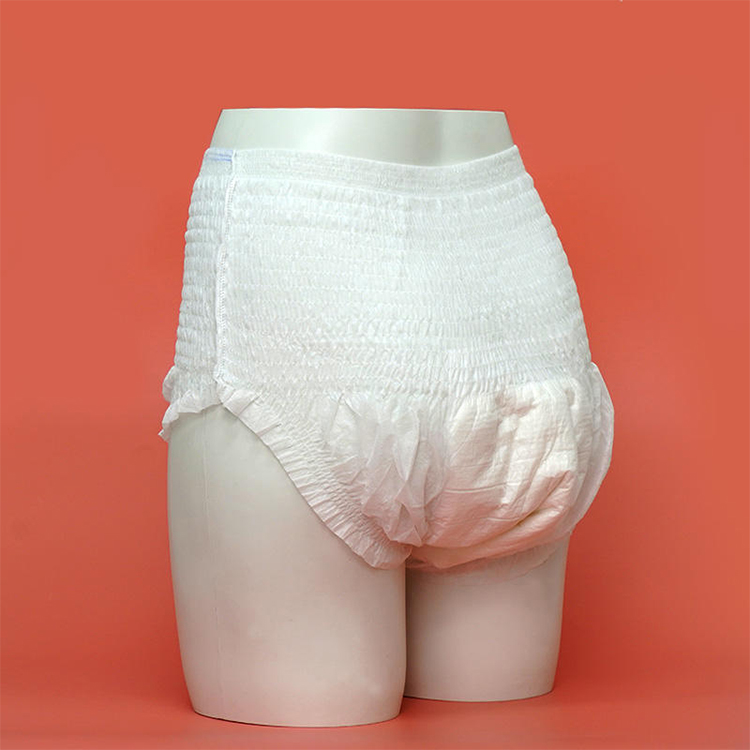
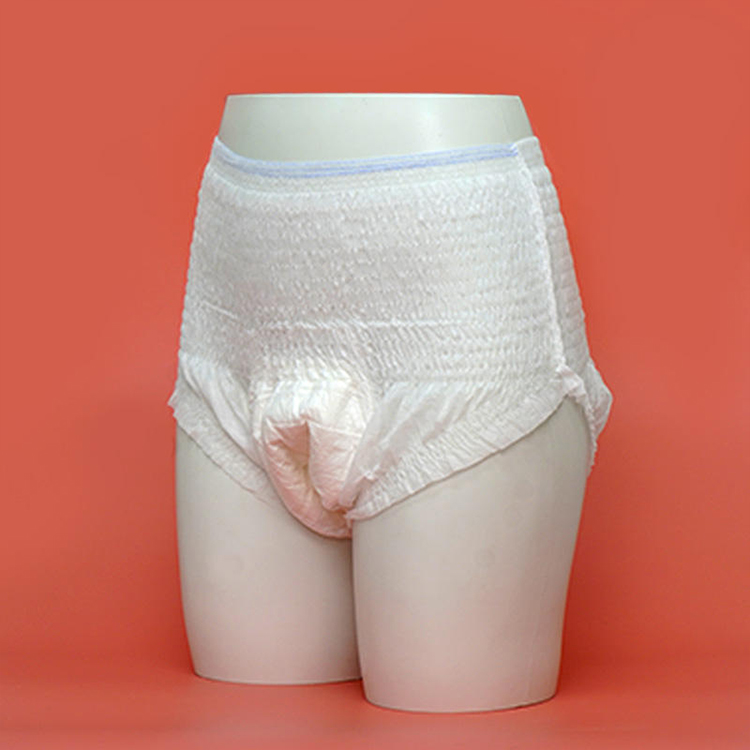
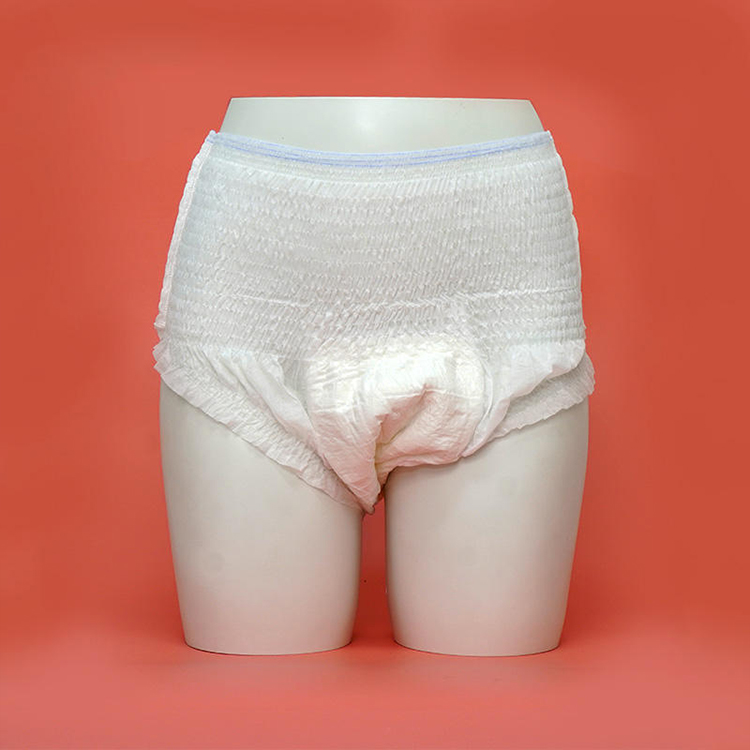
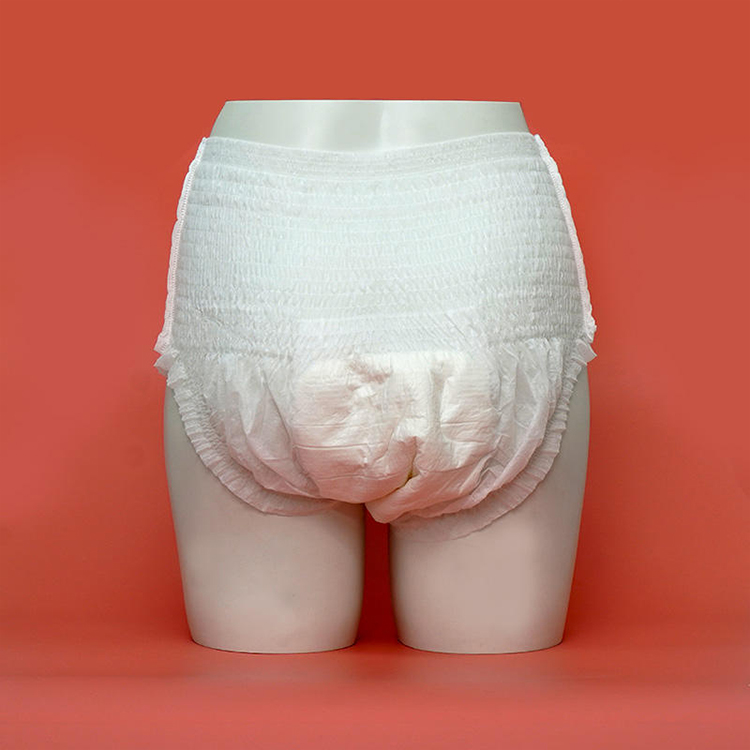
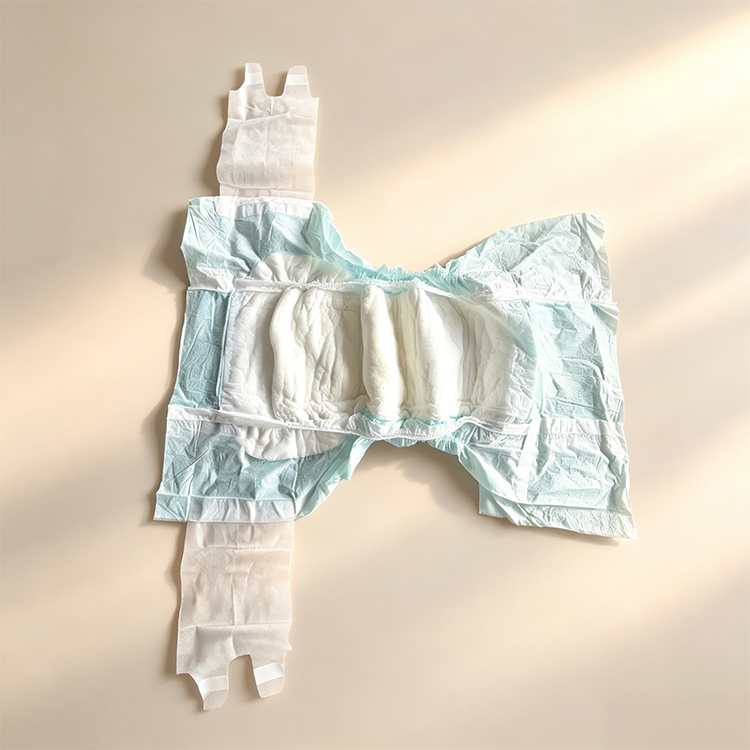
For assisted care, adult diapers with tabs usually make more sense than pull-ups because tabs allow fit correction while the user is sitting or lying down. For independent mobile users, incontinence underwear can be the cleaner choice because the 360° waistband holds the product closer to the body during normal movement.
2. Slow intake speed during gush events
Adult incontinence leakage often happens in seconds, not hours.
A product may hold a lot on paper, but if the topsheet and acquisition distribution layer cannot move liquid into the core fast enough, urine pools on the surface and runs sideways into the leg opening. Then everyone blames absorbency. Wrong target.
The better design answer is a fast-dry topsheet, an acquisition layer that spreads liquid forward and backward, and a core layout that avoids one overloaded wet spot. Sodium polyacrylate SAP helps retention, but SAP alone cannot save a product with poor intake geometry.
3. Collapsed leak guards adult diapers should have controlled
Leak guards are not decoration.
Tall inner cuffs are supposed to stand like little walls around the absorbent channel. But if the elastic is weak, the cuff angle is wrong, or the product is too bulky, those guards fold inward or outward and stop doing their job.
This is especially ugly in side sleepers. Overnight adult diaper leaks often come from side channels, not from the center core reaching full capacity.
4. Rewet under compression
This one gets ignored because it is inconvenient.
A user sits. A caregiver repositions them. A side sleeper rolls onto one hip. Pressure hits the wet core, and fluid comes back toward the topsheet. If the surface feels damp, skin risk rises. If the pressure path points toward the leg opening, the sheet gets wet.
A 2019 PubMed-indexed study using the International Pressure Ulcer Prevalence Survey reported incontinence-associated dermatitis prevalence of 4.3% in the entire patient population and 18% incontinence prevalence. That matters because leakage is not only a laundry issue; repeated moisture exposure can become a skin-injury issue.
5. Wrong product format for the user
Pull-ups are not bad.
But they are often misused. If a user is active, self-toileting, and managing moderate leakage, pull-up underwear can be exactly right. If the user is bedridden, has heavy voids, needs caregiver-assisted changes, or requires frequent checks, a tab-style brief is usually the better tool.
Adult-diaper.com’s briefs vs pull-ups guide fits naturally here because the decision should come from workflow, not ego. A pull-up is not more dignified if it leaks. A tab brief is not “clinical” if it keeps the bed dry and the skin protected.
6. Overnight use treated like daytime use
Night is different.
Overnight adult diaper leaks happen because the product is asked to manage longer wear time, repeat voids, side pressure, back sleeping, delayed changes, and compression. That is a different engineering problem from a two-hour daytime brief.
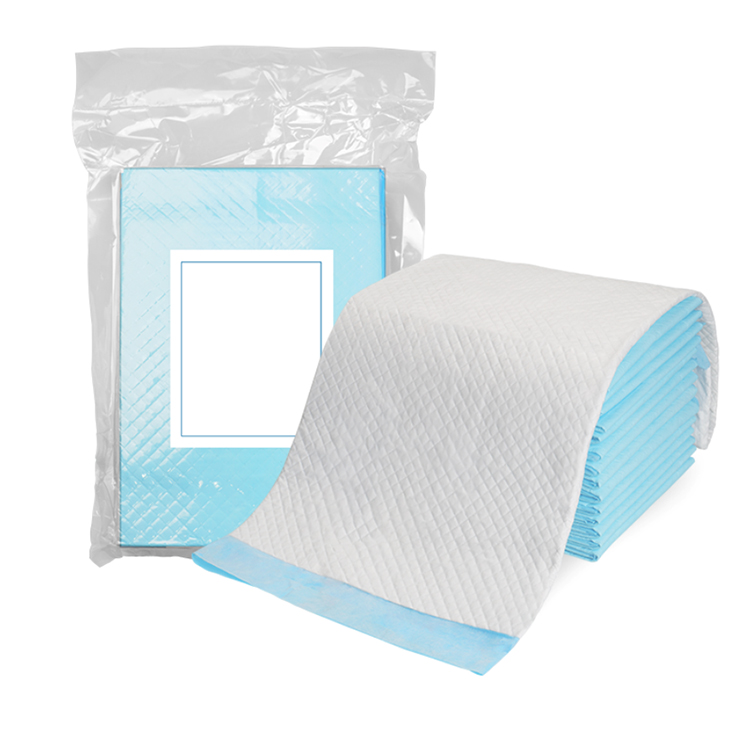
The best adult diapers for leakage at night usually combine higher back coverage, stronger leg cuffs, faster intake, lower rewet, and enough core stability to survive turning. Sometimes the answer is not one giant brief; it is a well-fitted brief plus booster pads for adult diapers and an underpad strategy.
7. Care routine failure
Design helps. Care still matters.
A strong adult diaper can fail if caregivers apply it loosely, fold the leak guards inward, choose the wrong size, skip skin checks, or stretch change intervals beyond what the product can handle. This is why wetness indicators, refastenable tabs, and breathable backsheets matter. They reduce guesswork.
The legal signal is also getting louder. In October 2024, Disability Rights Florida reported that Florida Medicaid now covers medically necessary incontinence supplies for adults over 21 after a class action lawsuit against the state Medicaid agency; the organization specifically noted that clean, frequently changed, form-fitting supplies help reduce skin breakdown and infection risks.
Leak Cause vs Product Design Fix
Adult Diaper Leakage Cause
What It Looks Like In Real Use
Product Design Feature That Helps
Buyer’s Hard Question
Wrong size or poor body match
Side leaks, sagging, red marks, tabs pulling unevenly
Wider size range, elastic waist, refastenable tabs, better leg seal
Are we measuring waist and hips, or guessing?
Slow intake speed
Sudden side leak after one heavy void
Fast-dry topsheet, acquisition distribution layer, optimized SAP/fluff ratio
Do we have acquisition data, not just total capacity?
Weak leak guards
Leakage at groin or side while sitting or lying down
Damp surface, odor, skin irritation, leaks after sitting
Lower rewet core, better fluid lock, pressure-resistant SAP structure
What happens after compression, not just after pouring?
Wrong format
Pull-up leaks in bed-care use; tab brief feels excessive for mobile users
Pull-ups for active users; tab briefs for assisted or heavy care
Is the format matched to mobility?
Overnight overload
Wet bed at 3 a.m., rear leaks, side-sleeper failure
Higher back coverage, overnight core, booster-pad compatibility
Are we solving night use as a system?
Poor change workflow
Leaks despite “good” product specs
Wetness indicator, easy tabs, breathable backsheet, care accessories
Can staff apply it correctly at speed?
Product Design Can Help, But It Cannot Lie
A good design does four things before the first leak happens.
First, it keeps the chassis close to the body. Second, it pulls liquid down fast. Third, it traps fluid under pressure. Fourth, it protects the leak paths at the leg, waist, rear, and side.
That sounds basic. It is not.
Core structure: SAP is powerful, but not magic
Most disposable adult diapers use fluff pulp plus SAP, often sodium polyacrylate, the water-binding polymer commonly represented as [−CH2−CH(COONa)−]n. More SAP can improve retention, but too much SAP in the wrong layout can slow intake or create gel blocking.
So the adult diaper absorbency conversation should move from “how much SAP?” to “where is the SAP, how fast does liquid reach it, and what happens after the user sits?”
Topsheet and acquisition layer: the first 10 seconds decide the complaint
A soft-feel topsheet sells well.
But if the topsheet stays wet, the user pays for it. A fast-dry topsheet paired with an acquisition layer can reduce pooling and move fluid toward the core before it escapes the sides. This is where premium briefs quietly beat cheap bulky ones.
Leak guards and leg elastics: small parts, expensive failures
The cheapest leak guard is the one that looks good in a sample and collapses in use.
For adult diaper leaks, I want to know cuff height, elastic strength, cuff attachment position, and whether the inner guards still stand after the brief has absorbed liquid. If the answer is vague, I assume the supplier is hiding behind “high absorbency.”
Breathable backsheet: comfort is part of leak control
That is why breathable cloth-like backsheets matter in long wear. They do not replace absorbency, but they help the product stay wearable long enough to do its job.
For skin-care routines, pairing briefs with adult wipes also makes commercial sense. Clean changes are not just nice. They reduce odor complaints, improve caregiver workflow, and support the dignity story buyers claim they care about.
What Procurement Teams Should Demand Before Buying “Best Adult Diapers for Leakage”
Ask for proof.
Not poetry.
A supplier should be able to discuss absorbency tiers, intake performance, rewet behavior, cuff structure, sizing logic, packaging, MOQ, and change-use cases without hiding behind generic claims. Adult-diaper.com positions its adult diapers and OEM/ODM programs around briefs, pull-ups, pads, underpads, and wipes, which is the right category architecture because leakage is often solved by matching the whole system, not by pushing one heroic SKU.
Here is the buyer checklist I would use:
Request total absorbency data and acquisition/rewet data.
Test the same product on seated, standing, side-sleeping, and bedbound use cases.
Compare pull-ups against tab-style briefs by mobility level.
Measure waist and hip, not waist alone.
Check whether leak guards stand after absorption.
Run overnight trials with and without booster pads.
Track complaints by leak location: front, rear, side, leg, waist.
Watch for skin complaints, not only wet sheets.
But the most uncomfortable question is this: are you buying performance, or are you buying the emotional comfort of a thicker product?
FAQs
Why do adult diapers leak?
Adult diapers leak when fluid escapes faster than the product can absorb, seal, or retain it, usually because of wrong sizing, poor leg fit, slow intake speed, collapsed leak guards, compression rewet, overnight overload, or a mismatch between product format and user mobility level.
In plain language, the leak is often built into the decision before the diaper is even applied.
How can adult diaper fit and sizing reduce leakage?
Adult diaper fit and sizing reduce leakage by keeping the absorbent core centered, the leg cuffs close to the groin, the waistband stable, and the tabs or elastic tension balanced, so urine is directed into the core instead of escaping through side, rear, or leg gaps.
Measure waist and hips, then test movement. A perfect package claim means nothing if the brief drifts after 20 minutes.
Are thicker adult diapers better for adult diaper leakage?
Thicker adult diapers are not automatically better for leakage because bulk can create leg gaps, trap heat, slow movement comfort, and hide weak intake or poor cuff design; the better product is the one that fits the body and manages fluid quickly under pressure.
I would rather buy a thinner engineered brief with strong cuffs than a thick brick that leaks sideways.
What product design features help stop overnight adult diaper leaks?
Overnight adult diaper leaks are reduced by higher back coverage, fast intake layers, strong standing leak guards, low-rewet cores, stable waist fit, side-sleeper protection, booster-pad compatibility, and enough absorbency to handle repeated voids during longer wear periods.
Night protection is a system. Treat it like one, and the 3 a.m. linen change becomes less common.
Are pull-ups or tab-style briefs better for leakage?
Pull-ups are better for mobile, independent users with light to moderate leakage, while tab-style briefs are usually better for heavy incontinence, caregiver-assisted changes, bedbound users, and situations where refastening, inspection, and precise leg-waist adjustment matter more than underwear-like appearance.
This is not about dignity versus care. The dignified product is the one that works.
Your Next Steps: Audit the Leak Before Buying More Bulk
Stop guessing.
Before you buy another “maximum absorbency” adult diaper, map the leak: front, rear, side, leg, or waist. Then match the failure to the design fix. If the user is mobile, compare pull-up underwear. If the user is bedbound or caregiver-assisted, test tab-style briefs. If nights are failing, add booster pads and check back coverage before blaming absorbency.
For B2B buyers, importers, care institutions, and private-label teams, the action is simple: build your leakage-control range around fit, format, intake speed, rewet performance, leak guards, and real-use testing—not just thickness.