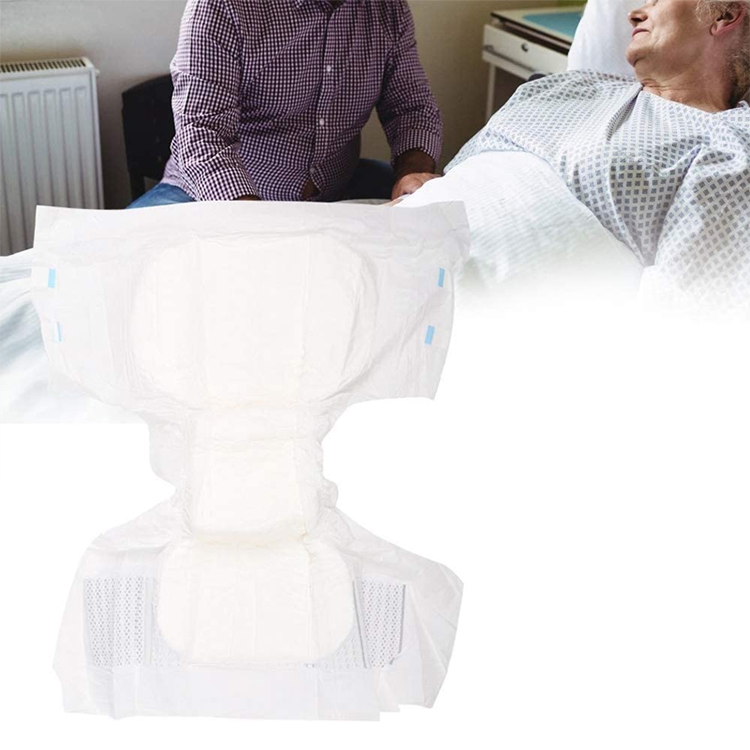
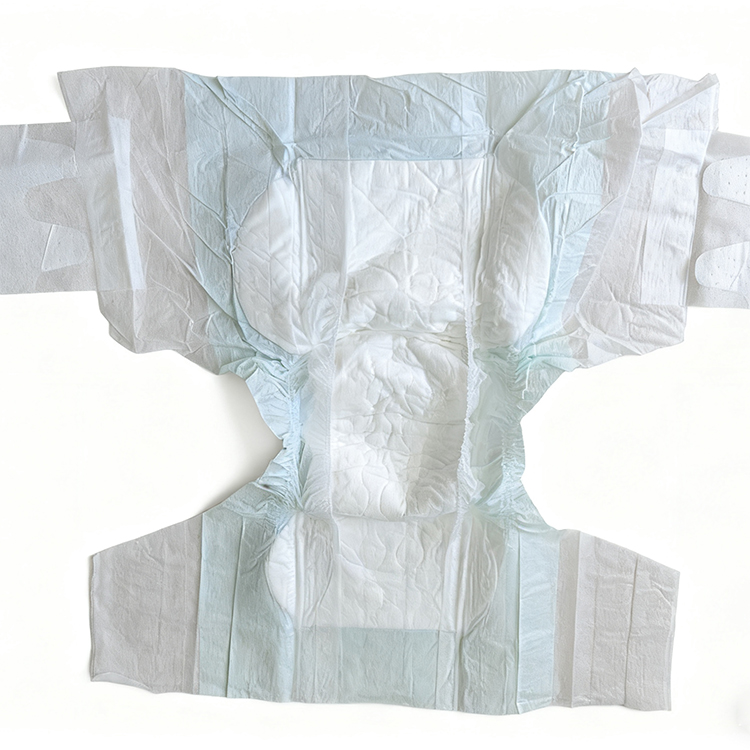
When an adult diaper fastening tab releases during a transfer, tears away during a night check, or refuses to reseal after a caregiver inspects the skin, the failure spreads beyond the product into wet linens, interrupted sleep, extra handling, product waste, and damaged dignity.
Why do buyers still treat tape as a minor component?
They should not. In adult diapers with tabs, the closure system is part of the containment system. It controls how closely the waist panel, leg elastics, standing guards, and absorbent core stay positioned against the body.
The scale of the issue is not small. A 2024 CDC analysis of U.S. caregiving data found that 20.1% of adults were caregivers during 2021–2022. The proportion of caregivers aged 60 or older rose from 28.0% in 2015–2016 to 35.4% in 2021–2022.
That means millions of changes, checks, adjustments, and overnight care events depend on a closure system that many purchasing sheets describe with one lazy phrase: “strong tape.”
That is not a specification.
Tape Strength Is a Care Workflow Specification
An adult diaper tab does more than close the brief. It transfers tension from the side panel to the frontal landing zone while the wearer sits, lies down, rolls, stands, coughs, or moves during a transfer.
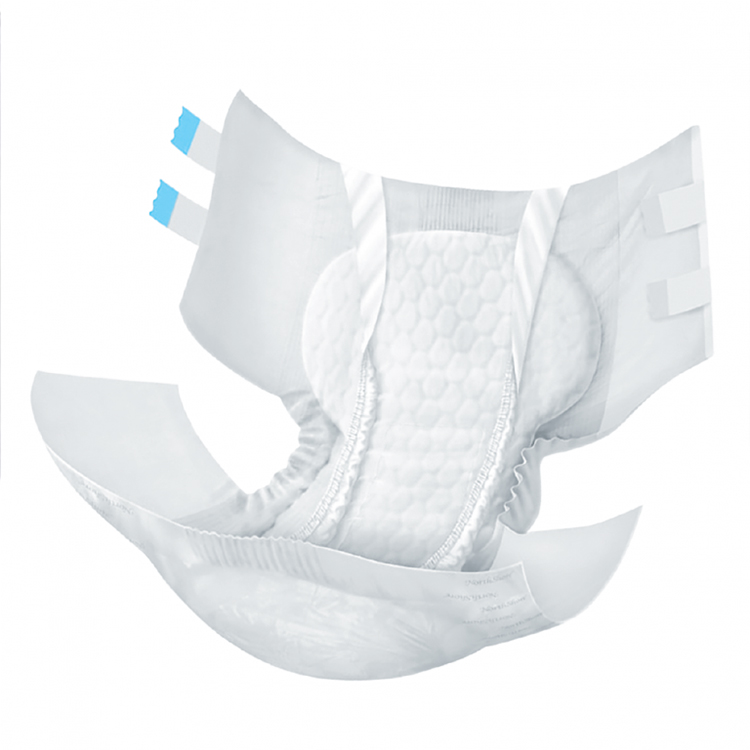
A functional fastening system usually includes:
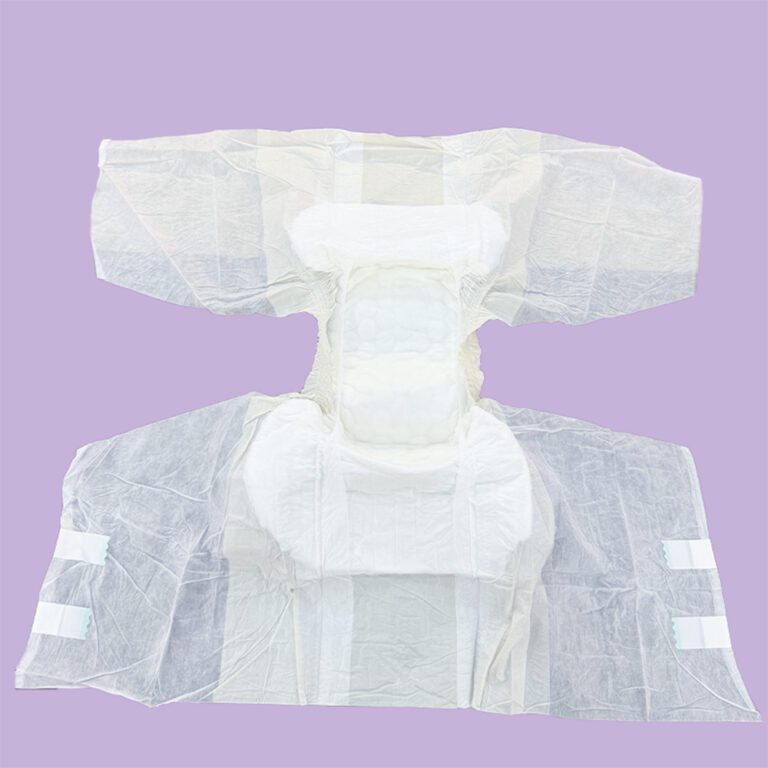
The fastening tab or hook material
The tab backing film or nonwoven
The side ear or elastic panel
The adhesive bond between the tab and ear
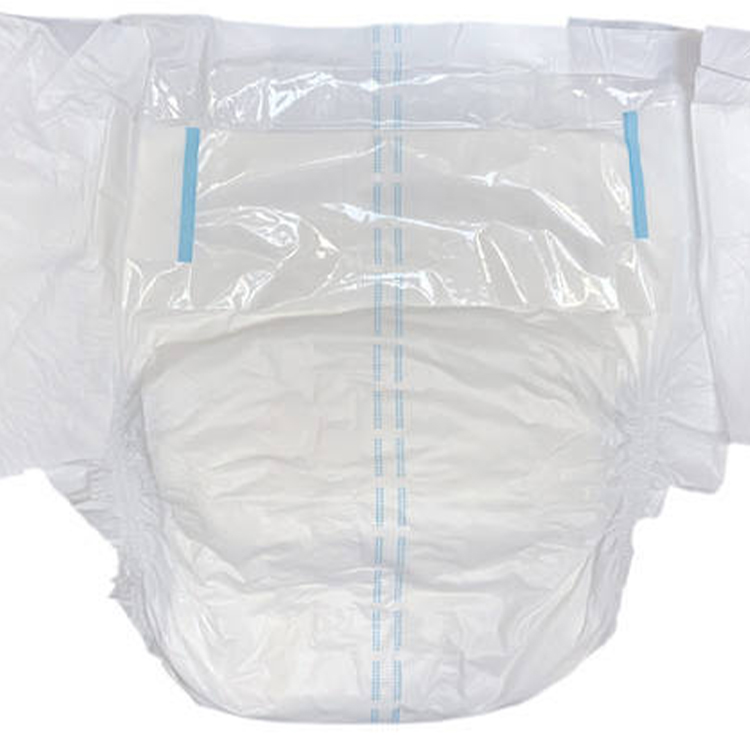
The frontal landing zone
The outer backsheet or compatible loop surface
The seams holding those components together
The system is only as strong as its weakest connection.
A high-grip adhesive means little if the tab tears away from the side panel. A thick tab means little if the landing zone delaminates. And a large landing zone means little if the caregiver cannot reposition the tab after the first application.
This is why I do not accept “strong tape” as a complete answer from a supplier. I want to know what stays attached, for how long, under what load, after how many refastening cycles, and under which handling conditions.
For bedridden users, these questions become even more important. A flat-open brief may need to be positioned while the user is side-lying, adjusted after the user is rolled back, opened for a skin inspection, and resealed without replacing the entire product. The site’s guide to tab-style briefs for bedridden users explains why this workflow differs from putting on pull-up underwear.
Table of Contents
What “Strong” Really Means in Adult Diaper Tapes
Tape strength is not one number. It is a combination of peel resistance, shear holding power, material anchorage, tear resistance, and refastening performance.
Peel Strength: Will the Tab Lift Away?
Peel strength measures the force required to pull a tape away from its landing surface at a specified angle and speed.
ASTM D3330/D3330M describes methods for measuring peel adhesion in pressure-sensitive tapes, including 90-degree and 180-degree configurations. The standard is useful for comparing production lots and checking adhesive uniformity.
But ASTM also makes an important point that weak marketing departments tend to ignore: a laboratory peel value does not automatically predict functional performance in the finished product.
A diaper is not a stainless-steel test panel.
Its landing zone may be a printed film, laminated nonwoven, loop material, or reinforced frontal panel. It bends. It wrinkles. It encounters body heat, movement, powder, barrier cream, and uneven caregiver pressure.
So a buyer should request peel data on the actual diaper landing material, not only on standard steel.
Shear Strength: Will the Tab Slide Under Sustained Load?
Shear strength measures whether a bonded tape can remain attached when a load pulls parallel to the bonded surface.
ASTM D3654/D3654M covers procedures for evaluating the ability of pressure-sensitive tape to remain adhered under a constant parallel load.
This matters because a diaper tab is rarely pulled only outward. When a wearer sits up, turns in bed, or shifts in a wheelchair, the fastening system experiences sustained sideways and diagonal forces.
Weak shear performance may not produce an immediate dramatic failure. The tab may creep slowly. The waist opens by a few centimeters. The leg seal changes. A gap forms.
Then the leak gets blamed on absorbency.
That diagnosis is often wrong.
Tab Anchorage: Does the Tape Stay Attached to the Diaper?
Some adult diaper tapes do not release from the landing zone. They tear away from the side panel instead.
That is an anchorage failure.
The adhesive between the tab base and ear panel must survive pulling, repositioning, and sudden force. The ear material must also resist elongation and tearing around the bonded area.
This is especially relevant in XL, 2XL, and 3XL products, where higher circumference and body movement can place more tension on the side structure. Buyers evaluating larger sizes should examine products such as XL adult diapers with heavy-absorbency tabs as complete fit systems rather than simply wider versions of a medium brief.
Refastening Strength: Can the Tab Work a Second Time?
A tab that works once is not necessarily refastenable.
Caregivers frequently need to open a brief to check wetness, inspect the skin, correct a folded leak guard, or reposition the product after turning the user. A genuine refastenable tab should maintain useful holding power after repeated controlled opening.
My blunt view is that “refastenable” should never be accepted without a cycle definition.
Does it mean twice? Three times? Five times?
And does the supplier test only a clean tab in a laboratory, or does the tab remain manageable after realistic gloved handling?
Weak Tape Creates Costs Caregivers Actually Feel
A weak closure system does not only create a defective product. It creates extra work around the product.
More Repositioning
When one tab lifts, the caregiver often tightens the remaining tabs. That creates uneven tension, twists the core, and may pull one leg opening tighter than the other.
The result is not a secure adult diaper fit. It is a distorted fit.
More Product Waste
A tab that tears from the ear panel may make an otherwise clean brief unusable. If the failure occurs during application, the facility loses a fresh product before it has provided any absorbency value.
If the failure occurs during a check, the caregiver may have to replace a brief that could otherwise have remained in service.
More Linen Changes
Tape strength does not create absorbency, but it helps keep absorbent components where the product designer intended them to be.
When the waist opens or the chassis shifts, standing leak guards may flatten and leg elastics may move away from the body. That is particularly risky during side-lying and overnight use.
Facilities managing these scenarios should pair correctly fitted tab briefs with suitable disposable underpads for beds and chairs. But an underpad should be secondary protection, not an excuse for a failing brief.
More Handling of the Care Recipient
Every failed fastening can mean another roll, lift, reposition, or transfer.
That matters. The CDC’s data show that caregivers themselves are aging, with 35.4% of caregivers aged 60 or older in the 2021–2022 reporting period. A product that requires repeated correction quietly transfers quality-control problems from the factory to the caregiver’s hands, shoulders, and back.
Harder Skin Checks
Tape strength does not directly prevent incontinence-associated dermatitis. Correct cleansing, appropriate change timing, barrier protection, absorbency, low rewet, and clinical assessment all matter.
Still, a tab that can be opened and resealed supports regular skin inspection without automatically destroying the brief.
A large U.S. multisite study available through the National Institutes of Health evaluated 5,342 adults in acute-care facilities across 36 states. Incontinence-associated dermatitis was found in 21.3% of the total sample and 45.7% of patients with urinary, fecal, or dual incontinence.
Those figures do not prove that stronger tabs prevent dermatitis. They do show why reliable access for checking, cleansing, drying, and refitting deserves attention.
After soiling, caregivers also need appropriate cleansing products. Large, strong, alcohol-free adult wipes for incontinence care can support the cleanup routine, but the new brief still needs a fastening system that can be positioned without repeated struggle.
Weak, Balanced, and Over-Aggressive Tape Performance
Tape condition
What the caregiver experiences
Likely product consequence
Procurement interpretation
Too weak
Tab lifts, slides, curls, or releases during movement
Loose waist, displaced core, flattened guards, possible leakage
Adhesive, hook engagement, landing zone, or shear performance may be inadequate
Weak anchorage
Tab remains attached to the front but tears away from the side ear
Brief becomes unusable
Tab-to-ear bond or ear-panel tear resistance is inadequate
Poor refastening
First closure holds, but the second or third closure fails
Product may be discarded after inspection
“Refastenable” claim is not supported by realistic cycle testing
Balanced closure
Tab holds during movement, opens intentionally, and reseals without tearing
Stable fit with practical caregiver access
Desired target for professional care settings
Too aggressive
Tab damages the landing zone or stretches the chassis during removal
Difficult adjustment, distorted fit, possible material tearing
Higher peel force has reduced usability rather than improved it
Oversized stiff tab
Strong grip but difficult handling around body curves
Wrinkling, pressure points, or poor contouring
Mechanical strength is acceptable, but ergonomics are poor
The target is controlled strength.
Not maximum strength.
A tape can be so aggressive that it damages the outer cover, pulls the frontal panel out of shape, or becomes difficult to remove with gloved hands. When that happens, a technically “stronger” adhesive produces a less usable diaper.
How Buyers Should Test Adult Diaper Tape Strength
A supplier certificate is a starting point. It is not the end of qualification.
For institutional, wholesale, or private-label sourcing, I recommend combining instrument data with finished-product handling trials.
1. Test the Finished Brief, Not Only Raw Tape
Ask for peel and shear results using the actual tab and actual landing-zone materials.
A raw adhesive test may help control incoming materials, but it cannot reveal:
Landing-zone delamination
Ear-panel tearing
Tab-base separation
Backsheet stretching
Hook-to-loop incompatibility
Chassis distortion
2. Use Multiple Sizes and Production Lots
Do not test one medium sample and assume the 3XL version behaves the same.
A useful buyer screening plan could include at least 10 finished briefs from each selected size and at least three production lots. This is a procurement screening protocol, not a universal regulatory requirement.
Record the sample size. Record the lot.
A report containing only one average value, with no minimum, maximum, standard deviation, test condition, or failure mode, is procurement theater.
3. Test Initial Closure and Refastening Separately
Run the first closure test, then repeat after one, three, and five opening cycles.
Record whether:
Holding force drops sharply
Adhesive transfers to the landing zone
Hooks become clogged or flattened
The tab curls
The landing film wrinkles or tears
The ear panel stretches permanently
The number of cycles should match the intended care setting. A home-care product may face different handling from a hospital brief used during scheduled checks.
4. Include Gloved Handling
A caregiver may apply the product while wearing nitrile gloves, working in low light, managing a side-lying person, or trying to keep one hand on the care recipient.
Ask several users to locate, grasp, pull, apply, open, and reseal the tabs while wearing gloves.
The tab should be large enough to control but flexible enough to follow the body. It should not require fingernails to separate it from a release surface.
Do not stop the test after fastening the brief onto a static mannequin. People move.
6. Record the Failure Mode
“Failed” is not enough.
Record exactly what happened:
Adhesive released from the landing zone
Hook disengaged from the loop surface
Tab film split
Tab detached from the ear
Ear panel tore
Landing zone delaminated
Backsheet stretched
Seam opened
Tab became impossible to refasten
Failure-mode data tells the factory what to correct. A simple pass/fail result often does not.
7. Test Contamination Sensitivity Carefully
Barrier creams, cleansing lotion, powder, skin oils, and moisture can transfer to a caregiver’s gloves and then to a fastening tab.
A controlled contamination study can reveal whether holding performance collapses after minor contact. The goal is not to claim that a product works when soaked or heavily contaminated. The goal is to understand how sensitive the closure is to realistic handling.
The test method, contaminant quantity, contact area, dwell time, and refastening cycle must be documented. Otherwise, the results cannot be compared.
Adhesive Tabs, Hook-and-Loop Tabs, or Hybrid Closures?
There is no universally best system. There is only the best system for the product design, user group, cost target, and care workflow.
Pressure-Sensitive Adhesive Tabs
Adhesive tabs are familiar, thin, and often economical. They can provide strong initial grip when paired with a compatible reinforced landing zone.
Their weaknesses usually appear when the adhesive contacts lotion, powder, fibers, or moisture. Some adhesive systems also lose useful grip after repeated opening.
Hook-and-Loop Tabs
Mechanical hook tabs engage with a compatible nonwoven or loop landing surface. They can offer good refastening performance and may be less sensitive to light contamination than exposed adhesive systems.
But poor hook geometry, low loop density, or an undersized landing area can produce inconsistent grip. Aggressive hooks may also catch unintended nonwoven areas.
Hybrid Systems
Some briefs combine mechanical hooks with adhesive or use reinforced frontal zones designed for repeated adjustment.
Hybrid designs can improve flexibility, but they add material and manufacturing complexity. More components also mean more interfaces that must be controlled.
I would not choose among these systems by name alone. I would compare finished-product fit, holding performance, refastening, failure modes, caregiver handling, and cost per successful care event.
Questions Professional Buyers Should Ask Suppliers
Before approving tape-on adult diapers, ask the supplier:
What peel, shear, tab-anchorage, and tear tests are performed?
Are tests conducted on the finished brief or only on incoming tape material?
What is the defined number of refastening cycles?
Are XL, 2XL, and 3XL closures tested separately?
What failure modes appeared during qualification?
How are tape and landing-zone materials controlled between production lots?
Can the supplier provide mean, minimum, maximum, standard deviation, sample size, and environmental conditions?
Has performance been tested with nitrile gloves and realistic movement?
What changes require buyer reapproval?
Can pre-shipment samples be retained for complaint investigation?
For private-label projects, these points should be written into the approved specification rather than left inside an email conversation. Buyers can use the site’s adult diaper OEM/ODM manufacturing process to discuss first-article approval, material controls, in-process inspection, finished-goods checks, and lot traceability.
A supplier who responds only with “our tape is very strong” has not answered the question.
FAQs
What is adult diaper tape strength?
Adult diaper tape strength is the combined ability of the fastening tab, adhesive or hook system, ear panel, and landing zone to hold a secure fit under peel, shear, movement, moisture, and repeated opening without releasing unexpectedly or tearing the brief’s outer materials.
It should be evaluated as a complete fastening system. Testing only the adhesive ignores ear-panel tearing, landing-zone damage, tab-base separation, and poor refastening.
Do strong diaper fastening tabs prevent leaks?
Strong diaper fastening tabs help prevent leaks only when they maintain the intended waist and leg geometry; they do not compensate for the wrong size, a saturated core, flattened leak guards, poor application, or long change intervals, all of which can defeat an otherwise well-built tape-on brief.
Containment depends on fit, absorbency, acquisition speed, rewet control, standing guards, elastic recovery, body position, and change timing. Tape strength supports these elements by keeping them aligned.
How should caregivers test adult diaper tabs?
Caregivers should check whether adult diaper tabs stay attached during sitting, rolling, transfers, and overnight movement; can be opened and refastened at least several times during a controlled trial; remain usable with gloved hands; and avoid tearing the landing zone or chassis.
Care teams should also document whether failures occur more often in specific sizes, body positions, shifts, or care routines. Those patterns can separate product problems from sizing and application problems.
Why do adult diaper tapes break?
Adult diaper tabs commonly break because the tab film or nonwoven stretches, the ear panel tears, the adhesive loses grip, the hook misses the landing zone, the backsheet delaminates, or the caregiver applies uneven tension to a poorly sized brief during a rushed change.
The visible break may not identify the original cause. Buyers should inspect the entire fastening chain and record the exact point of failure before changing the adhesive specification.
What are the best adult diapers for caregivers?
The best adult diapers for caregivers are open-style briefs that combine dependable refastenable tabs, clear front-and-back identification, a usable wetness indicator, tall standing leak guards, fast liquid acquisition, low rewet, breathable materials, and a size range that fits real waist, hip, and thigh measurements.
No single model is best for every user. Bedridden care, bariatric fit, wheelchair use, bowel incontinence, overnight wear, and independent toileting require different product configurations.
Turn Tape Strength Into a Written Buying Standard
Stop buying “strong tape.”
Buy a defined closure system with documented peel behavior, shear holding power, tab anchorage, tear resistance, refastening cycles, finished-product testing, caregiver usability, and lot-to-lot controls.
Start by reviewing your current complaint records. Separate “leak” complaints into fit loss, tab release, tab tearing, landing-zone damage, saturated capacity, leg-cuff failure, and application error. Then test the brief under the body positions and care routines where the failures actually occur.
For a new wholesale, institutional, or private-label program, compare available adult diapers with tabs, define the required sizes and care scenarios, and submit the fastening requirements as part of your RFQ.