How to Define AQL Levels for Adult Diapers, Pull-Ups, Pads, and Wipes
AQL is triage.
It is a statistical decision system for accepting or rejecting a production lot after inspecting a sample, and it works only when the buyer has already defined the lot, the inspection method, the defect classes, and the consequences of failure.
So why do suppliers keep writing “AQL 2.5” on inspection reports as though those three characters settle everything?
They do not.
AQL 2.5 for a slightly crooked pack print may be reasonable. AQL 2.5 for an open backsheet seam, contaminated wipe lotion, detached pull-up waistband, or missing absorbent core is reckless.
My blunt rule is this: the defect risk must define the AQL level, not the convenience of the inspection company.
AQL Is Not a Promise of Perfect Quality
AQL means Acceptance Quality Limit. It is an index used in an acceptance-sampling system to decide whether a production lot should pass or fail based on defects found in a randomly selected sample.
The current international reference is ISO 2859-1:2026, which replaced the withdrawn ISO 2859-1:1999 edition. The 2026 edition covers lot-by-lot attribute inspection using AQL-indexed sampling schemes.
That update matters.
Purchase agreements, quality manuals, and third-party inspection instructions that still cite only “ISO 2859-1:1999” are now pointing to a withdrawn edition. Existing contracts may continue using an agreed legacy plan, but new specifications should identify the exact standard and edition being applied.
AQL also does not mean that a lot passing at AQL 1.5 contains exactly 1.5% defective products. A passing sample may come from a lot with fewer defects, more defects, or no detected defects at all. Sampling creates known statistical risks for both the producer and the buyer.
That is why serious buyers define:
The inspection unit
The production lot
The sampling standard and edition
The inspection level
The defect classifications
The AQL assigned to each classification
The test methods
The acceptance and rejection rules
The response after a failed inspection
Without those elements, “AQL inspection” is mostly theater.
Table of Contents
Start With Product Risk, Not a Borrowed Number
Adult diapers, pull-ups, pads, and wipes do not fail in the same way.
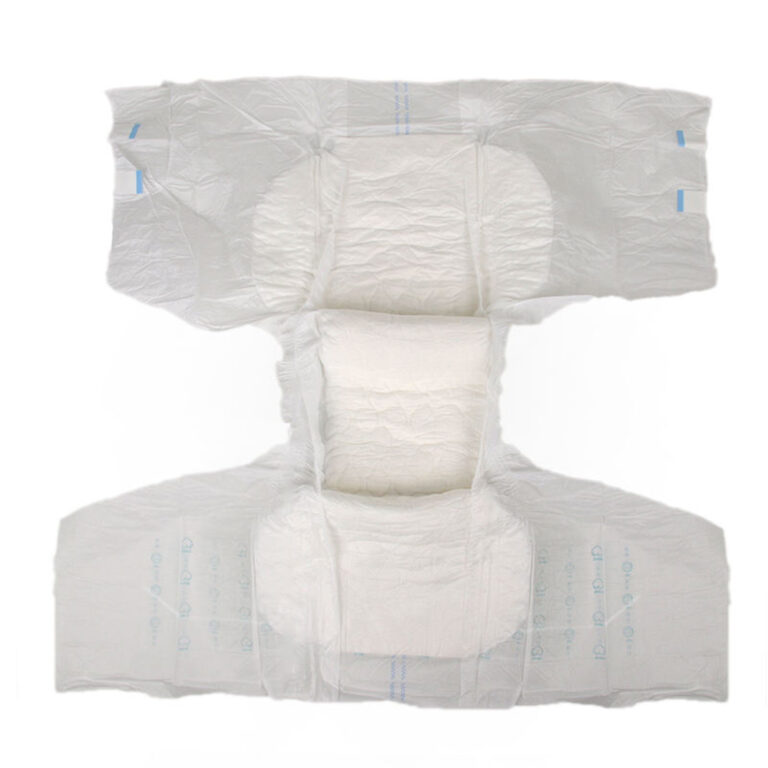
A tab-style brief can fail because a tape detaches, a leak guard collapses, the absorbent core shifts, or the polyethylene backsheet develops a pinhole. A pull-up may look acceptable on a table and then split at the side seam during dressing. A pad may pass an absorbency demonstration but detach from the user’s underwear because of weak adhesive coverage.
Wipes are different again. They combine a nonwoven sheet, water-based lotion, preservatives, packaging seals, and extended shelf-life exposure. A pouch can look immaculate while the contents carry an objectionable microorganism.
One number cannot control all of that.
Define the inspection unit first
For adult diaper quality control, the normal inspection unit should be one finished diaper, not one bag or one carton.
For pull-up diaper inspection, one finished pull-up is the unit for construction defects, while one retail pack may be a separate unit for count, labeling, coding, and seal inspection.
For wet wipes quality inspection, buyers often need at least three units of analysis:
One individual wipe for sheet dimensions, appearance, lotion distribution, and tensile properties
One retail pouch or tub for seal integrity, count, coding, and dispensing performance
One production batch for microbiological, chemical, and preservative-system release testing
Confusing those units produces meaningless reports. Inspecting 200 pouches does not mean 200 individual wipes were checked, and visually examining individual sheets does not validate the microbiological condition of the lotion batch.
Do not mix unrelated products into one lot
A defensible lot should normally share the same:
SKU and size
Product construction
Lotion formula, where applicable
Production line
Production period or shift
Packaging version
Main raw-material batches
Traceable lot code
Do not combine medium and extra-large briefs, fragranced and fragrance-free wipes, or day and overnight pads into one convenient “shipment lot.” That practice lets good products statistically hide bad ones.
The AQL Matrix I Would Put in the Contract
There is no legally mandated universal AQL table for all absorbent hygiene products. The buyer and manufacturer must establish limits based on intended use, severity of harm, manufacturing capability, regulatory exposure, and customer tolerance.
The following matrix is a defensible starting policy, not a substitute for product validation or legal review.
Defect class
Recommended starting limit
Typical examples
Lot decision
Critical
Zero acceptance, normally c=0
Microbial contamination, sharp foreign material, wrong formula, hazardous chemical contamination, absent fluid barrier causing direct exposure, seriously incorrect safety labeling
Reject and contain the lot after one confirmed defect
Major, high risk
AQL 0.65–1.0
Open seams, backsheet holes, missing leak guards, failed waist seams, wrong product inside the pack, severe core displacement
“AQL 0” is often used casually, but zero is not a conventional AQL value in the same sense as AQL 1.0 or 2.5. What most buyers actually mean is a zero-acceptance or c=0 plan: finding one critical defect in the sample rejects the lot.
That still does not prove that the uninspected portion of the lot contains zero critical defects. Critical-risk control must therefore begin upstream with validated processes, supplier controls, metal detection, sanitation, traceability, formula control, and sometimes 100% automated inspection.
Sampling is the gate. It is not the factory.
Build a Defect Catalogue for Each Product Format
AQL levels are only as good as the defect definitions underneath them.
“Poor quality” is not a defect definition. “Leakage problem” is not much better. Inspectors need observable criteria, photographs, measurement methods, boundary samples, and unambiguous pass/fail rules.
I would normally classify the following as critical or high-risk major defects:
Sharp metal, hard plastic, glass, insects, blood, or unknown biological contamination
Missing or badly perforated fluid-impermeable barrier
Large backsheet holes
Exposed hot-melt adhesive in a skin-contact area
Wrong size or product packed under a materially misleading label
Missing absorbent core section
Severe contamination or offensive foreign odor
Tab failure that makes the brief unusable
Open side, front, or rear seams
Missing or trapped leak guards
Severe core bunching or displacement
Wetness indicator or printed ink transferring onto skin-contact material
The functional inspection should cover more than static appearance. Open and refasten the tapes. Pull the chassis. Check the cuffs in an upright position. Measure the brief. Run the agreed absorption, acquisition, distribution, and rewet methods.
EDANA’s Absorption Before Leakage test method was developed for moderate and severe adult incontinence briefs and pads used by bedridden patients, with the published method scope covering products with ABL values from 300 to 1,100 grams. That is a performance method, not an AQL percentage.
Pull-up diaper inspection
Pull-ups often fail under movement, not while lying flat on an inspection table.
Major inspection points should include:
Side-seam burst or premature tear
Waistband delamination
Poor elastic recovery
Leg-opening asymmetry
Core cracking after stretching
Waist roll-down
Missing tear-away seam
Excessive force needed to open the tear-away seam
Leakage through the side seam
Inconsistent front-and-back identification
Size outside the approved tolerance
Insufficient rise or crotch width
I would require conditioning and repeated stretch testing using a written cycle, speed, extension, and recovery interval. “Inspector stretched product by hand” is not a test method.
Adhesive performance needs numbers. Define peel force in N/25 mm or another validated unit, the substrate used for testing, dwell time, test speed, temperature, and humidity. Otherwise, “strong adhesive” means whatever the supplier wants it to mean that day.
Wet wipes quality inspection
The FDA explains that disposable wipes may be regulated differently depending on their intended use and claims. Wipes marketed simply for cleansing may fall under cosmetic requirements, while antimicrobial or treatment claims can move them into a different regulatory category. FDA’s disposable wipes guidance also warns that wipes have previously been recalled because of bacterial or mold contamination.
For adult body wipes, the control plan should distinguish between visible defects and batch-release hazards.
Visible and functional checks include:
Incorrect sheet count
Wipe dimensions outside tolerance
Poor lotion distribution
First wipe difficult to dispense
Multiple wipes dispensing together
Sheet tearing during normal use
Package seal leakage
Lid detachment
Reseal failure
Code missing or unreadable
Pouch puncture
Wipes drying before the stated shelf life
Foreign particles or discoloration
Separate laboratory controls should cover, where applicable:
Total aerobic microbial count
Yeast and mold
Specified objectionable organisms
Lotion pH
Preservative concentration
Preservative efficacy or challenge testing
Formula identity
Viscosity or solids where relevant
Package compatibility
Stability at defined temperatures
Water quality
Do not classify microbial release as a routine “major AQL 1.5” defect.
That is indefensible.
How to Build an ISO 2859-1 Sampling Plan
The ISO 2859-1:2026 sampling system converts the lot size, inspection level, selected AQL, and inspection status into a required sample and acceptance or rejection decision.
A similar U.S. industry reference is ANSI/ASQ Z1.4, which provides attribute sampling plans with normal, tightened, and reduced inspection.
Step 1: State the exact standard
Do not write:
Inspection according to international AQL standard.
Write:
Attribute inspection shall be performed under ISO 2859-1:2026, single sampling, normal inspection, using the inspection levels and AQL values defined in the approved product quality plan.
The contract should also state what happens if the buyer, supplier, and inspection agency own different editions of the standard.
Step 2: Select the inspection level
General Inspection Level II is a common starting point for routine finished-product inspection. Level I can reduce the sample when inspection cost is high and risk is lower. Level III provides a larger sample where more discrimination is justified.
Special inspection levels may be appropriate for costly or destructive tests, but a smaller sample must not be used merely to make failure less likely.
I would use a higher level when:
The supplier is new
The SKU is newly launched
Materials or formulas changed
Production moved to another line
Previous lots failed
Complaint rates increased
The product is intended for hospitals or long-term care
The defect can cause leakage, skin exposure, infection, or major brand damage
Step 3: Retrieve the sample and Ac/Re numbers
Use the current licensed standard.
Do not copy an anonymous AQL chart from an image search. Do not assume the 1999 and 2026 editions are interchangeable. And do not let an inspection company quietly substitute its default table without documenting the change.
The selected table will provide:
A sample-size code
The number of units to inspect
The acceptance number, or Ac
The rejection number, or Re
The lot passes when defects remain at or below Ac. It fails when defects reach Re.
Step 4: Randomize across the entire lot
The inspector should sample across:
Different pallets
Top, middle, and bottom carton positions
Different production times
Different carton numbers
Different lanes or machine positions where relevant
Taking every sample from the six cleanest cartons beside the warehouse door is not random sampling.
For a long production run, I prefer time-distributed retained samples as well as shipment inspection. AQL inspection can catch an overall lot problem, but it may miss a two-hour process drift buried in the middle of a 20-hour run.
Step 5: Apply separate counts for each defect class
One defective unit may contain several defects.
Your quality agreement must state whether defects are counted by:
Defective unit
Individual nonconformity
Defect class
Characteristic
For example, one diaper could have a detached tab, missing leak guard, and print smudge. Counting it as only one generic “defective diaper” may hide a serious process breakdown.
Step 6: Use switching rules
Normal inspection should not continue forever regardless of performance.
Repeated lot failures should move the supplier to tightened inspection. A sustained record of accepted lots may qualify for reduced inspection when the governing standard and quality agreement permit it.
And no, changing the purchase-order number does not reset the quality history.
Three Regulatory Case Files Buyers Should Read
Quality teams sometimes treat contamination, warehouse handling, and formula drift as abstract risks. Regulators have supplied more than enough evidence that they are not.
The June 2026 Target wipe recall
On June 5, 2026, the FDA published Target’s nationwide recall of several Up & Up baby-wipe formats following customer complaints and FDA testing that identified Burkholderia cepacia complex and Burkholderia gladioli.
The recall covered fragrance-free packs in 20-, 72-, 216-, 800-, and 1,200-count configurations, plus cucumber-scented formats. The FDA notice described possible local infections and, in vulnerable users, possible bloodstream infection, sepsis, or pneumonia.
The lesson for wet wipes quality inspection is direct: appearance inspection cannot replace microbiological release, water-system control, preservative validation, environmental monitoring, and traceability.
A pouch may pass AQL.
The batch can still be unsafe.
The 2025 DermaRite recall expansion
In August 2025, DermaRite Industries expanded a nationwide recall involving skin-care, cleansing, antifungal, and protectant products because of possible Burkholderia cepacia complex contamination. Several products were intended for use in care environments and on compromised skin. The FDA recall announcement is a reminder that water-based hygiene and skin-care systems need controls beyond a finished-goods visual inspection.
The organism does not care whether the product is called a wipe, cleanser, foam, or perineal-care product.
Your quality system should not care either.
The Dollar Tree warehouse warning letter
An FDA warning letter issued to Dollar Tree described open packages of baby wipes in a warehouse with fluorescent stains indicative of urea or urine, along with major pest and sanitation observations.
That case is not a laboratory curiosity. It shows why final quality includes warehousing, pallet condition, carton closure, pest control, damaged-goods segregation, and transport inspection.
A factory can release a clean product and still lose control downstream.
Regulatory Status Does Not Replace Your AQL Plan
In the United States, 21 CFR 876.5920 defines a protective garment for incontinence as absorbent padding with a fluid barrier intended to protect an incontinent patient’s garments from excreta.
The regulation classifies this product type as a Class I device under general controls, with stated exemptions subject to applicable limitations. It also retains requirements relating to records and complaint files.
That does not mean every adult diaper, pad, and wipe in every market follows identical rules. Classification depends on the product, jurisdiction, claims, and intended use.
It also does not mean a Class I product deserves casual quality control.
Low regulatory class is not low user consequence. A leaking brief can expose skin for hours. A failed pull-up seam can humiliate a user in public. A contaminated wipe can contact damaged perineal skin. A mislabeled size can increase leakage and caregiver workload across an entire care facility.
The EDANA Document Repository provides industry material covering absorbent hygiene labeling, adult incontinence products, wet-wipe disposal communication, flushability, and nonwoven test procedures. Use those resources to strengthen the technical specification, not as decoration in a supplier presentation.
Contract Language That Prevents the Usual Arguments
A supplier saying “we follow AQL” is not enough.
The product specification, quality agreement, and purchase order should identify:
The ISO or ANSI sampling standard and edition
Inspection status: normal, tightened, or reduced
General or special inspection level
AQL by defect class
Zero-acceptance critical-defect rule
Approved defect catalogue with photographs
Measurement tolerances
Test equipment and calibration requirements
Laboratory-release tests
Random-sampling procedure
Lot and batch definitions
Retained-sample quantity and retention period
Reinspection rules
Rework authorization
Lot rejection and replacement responsibility
Cost responsibility for failed inspections
Complaint reporting and investigation timelines
Corrective and preventive action requirements
Change-control obligations
The site’s adult diaper manufacturer selection checklist is a useful next step because AQL should sit inside a larger chain of batch coding, incoming control, in-process checks, final inspection, traceability, and corrective action.
And when moving from a sample to private-label production, the OEM and ODM quality agreement should freeze materials, dimensions, absorbency targets, packaging, artwork, and change-control rules before the deposit is paid.
“Same as sample” is not a specification.
It never was.
The Best AQL Level for Hygiene Products Depends on the Failure
Here is the policy I would use as a first draft:
Critical safety and contamination defects: zero acceptance, supported by preventive controls and separate batch-release testing
High-risk functional defects: AQL 0.65 or 1.0
Normal major defects: AQL 1.0 or 1.5
Minor cosmetic defects: AQL 2.5 or 4.0
Performance measurements: numerical specifications, validated methods, and trend control rather than visual AQL alone
Then I would tighten those numbers using evidence.
Look at complaints per million units. Examine leakage returns by size and shift. Track tab failures, side-seam bursts, pack-seal failures, wipe dry-out, and microbial excursions. Compare first production with repeat orders. Separate customer misuse from true product failure.
AQL levels should move when the evidence moves.
A supplier producing ten stable lots should not be treated exactly like a supplier that failed twice last month. A hospital brief should not automatically inherit the cosmetic tolerance used for a value-channel retail liner. A newly reformulated wipe should not receive reduced inspection because the old formula had a good history.
That is not consistency.
That is laziness.
FAQs
What is an AQL level for adult diapers?
An AQL level for adult diapers is a risk-based acceptance threshold used with a defined sampling plan to decide whether a production lot passes or fails based on critical, major, and minor defects; it is not a promise that the entire lot contains exactly that percentage of defects.
A complete adult diaper quality control plan should separately define construction defects, dimensions, tab performance, seam integrity, barrier integrity, absorption, acquisition speed, rewet, labeling, pack count, and contamination.
What is the best AQL level for hygiene products?
The best AQL level for hygiene products is not one universal number; a defensible starting policy uses zero acceptance for critical safety defects, AQL 1.0 or 1.5 for major functional defects, and AQL 2.5 or 4.0 for minor cosmetic defects, then tightens limits using complaint and process data.
Product risk matters more than habit. A print blemish and a contaminated wipe must never share the same acceptance threshold simply because they appear on the same inspection form.
How does an ISO 2859-1 sampling plan work?
An ISO 2859-1 sampling plan is a lot-by-lot attribute inspection system that converts lot size, inspection level, and selected AQL into a sample size plus acceptance and rejection numbers, while switching rules move the supplier among normal, tightened, and reduced inspection as quality history changes.
Use the current ISO 2859-1:2026 edition or another explicitly agreed standard. Record the edition in the quality agreement so the supplier, buyer, and inspection company use the same tables.
Should critical defects use AQL 0?
Critical defects should use zero acceptance because one confirmed event involving contamination, sharp foreign material, barrier failure, wrong regulated labeling, or an unsafe formula can justify lot rejection; however, a c=0 sample still cannot prove zero defects across the lot, so prevention and 100% controls may also be required.
For microbial and chemical hazards, laboratory batch release and validated manufacturing controls matter more than increasing the number of visually inspected cartons.
How should wet wipes quality inspection differ from diaper inspection?
Wet wipes quality inspection must combine attribute sampling for count, seal integrity, sheet dimensions, tensile behavior, appearance, and pack condition with separate microbiological and chemical release testing for the lotion system, because a visually perfect pouch can still contain objectionable organisms or a preservative system that has drifted out of validation.
Wipes also require formula traceability, water-system control, package compatibility, stability studies, preservative validation, and documented criteria for discoloration, odor, lotion migration, and dry-out.
Can one AQL level cover diapers, pull-ups, pads, and wipes?
One AQL level should not cover diapers, pull-ups, pads, and wipes because each format has different failure mechanisms, safety exposure, construction risks, use conditions, and laboratory requirements; even within one product, critical contamination, major leakage, and minor cosmetic defects require separate thresholds and different release decisions.
A single “AQL 2.5” statement may look simple on a purchase order, but it creates arguments precisely when the buyer most needs a clear decision.
Turn Your Next PO Into a Controlled Quality Plan
Stop asking suppliers whether they “use AQL.”
Ask for the document.
Require the current sampling standard, defect catalogue, product-specific AQL matrix, laboratory-release criteria, random-sampling procedure, retained-sample plan, complaint history, and corrective-action process before approving mass production.
For your next adult diaper, pull-up, pad, or wipe program, send the supplier five things with the RFQ:
The product specification
The defect classification catalogue
The proposed AQL levels
The required test methods
The lot-rejection and corrective-action terms
Then compare the supplier’s response with its actual production records.
A serious manufacturer will discuss code letters, test methods, process limits, retained samples, and change control. A weak one will send a certificate, repeat “AQL 2.5,” and hope price ends the conversation.