How the Fit of Pull-Up Diapers Affects Their Discreetness Under Clothing
A pull-up can hold a large volume of urine and still fail its wearer if the outline shows through slim trousers. For buyers sourcing disposable incontinence underwear, discretion is rarely decided by the absorbent core alone. It depends on the chassis: the shell of waist panels, outer cover, leg elastics and side seams that holds the core against the body and sets the silhouette. This article explains how chassis shape changes what is visible, audible and uncomfortable under clothing, which trade-offs it creates with leakage control, and how to test and specify it before you approve a sample or place an order.
What does “chassis” mean in a pull-up, and why does it control discretion?
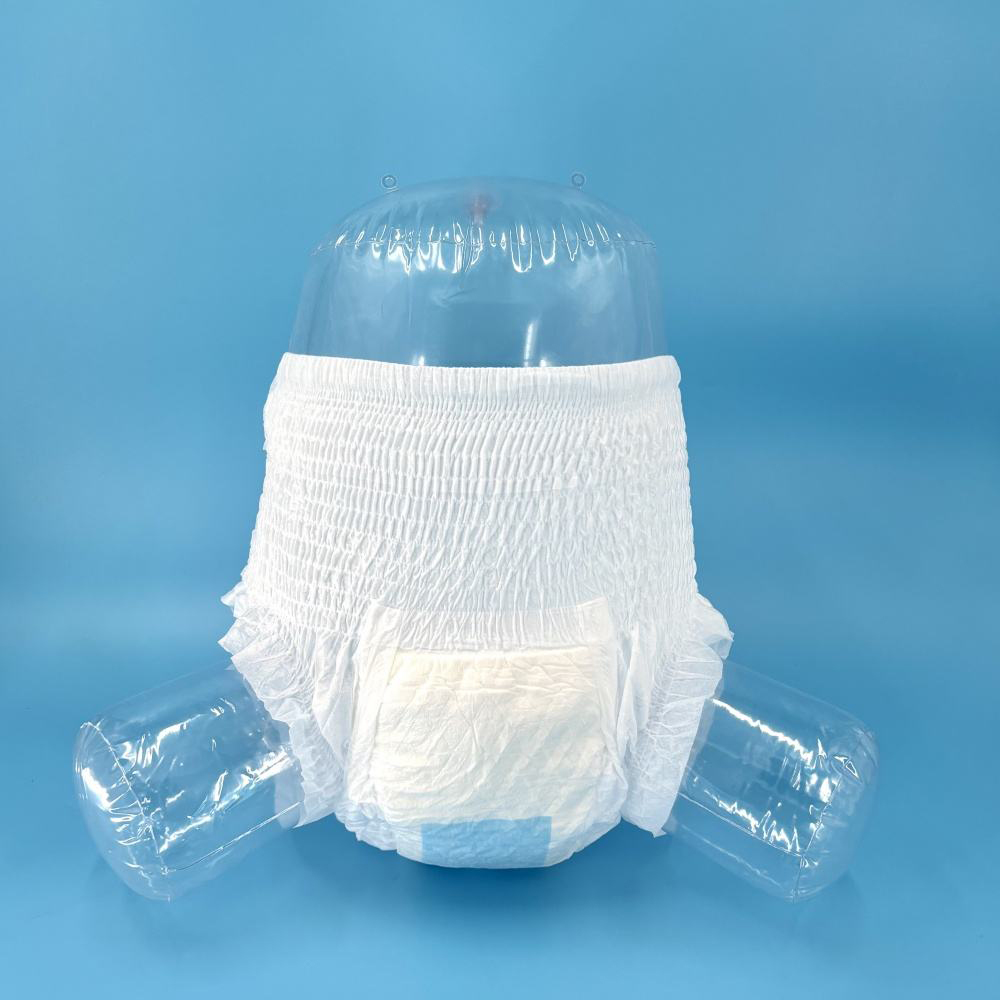
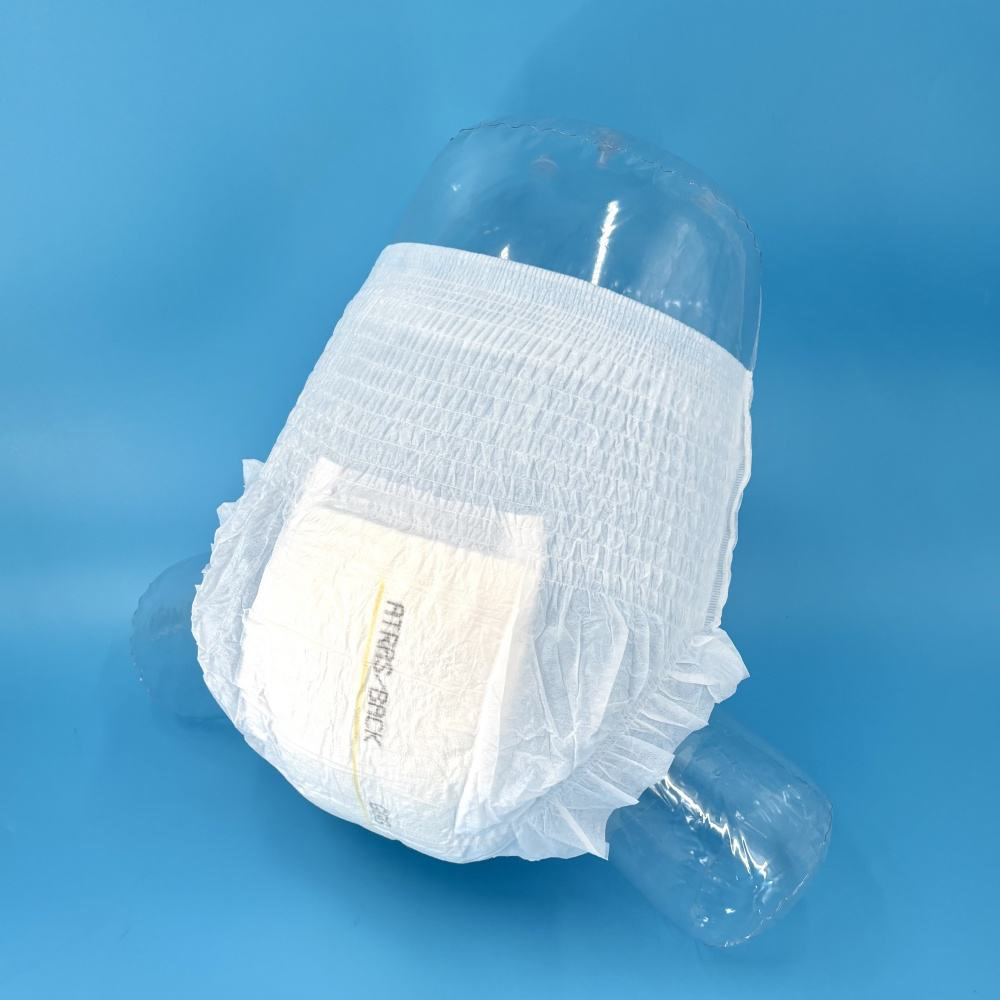
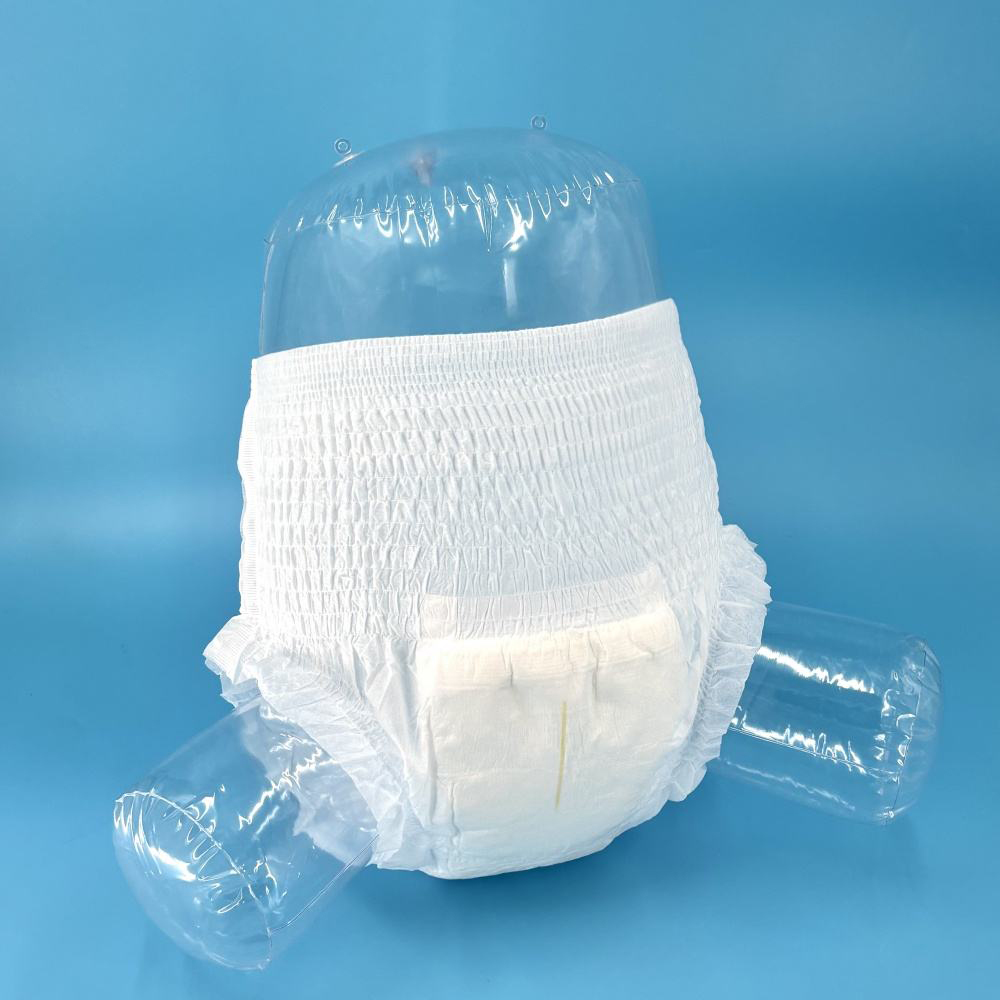
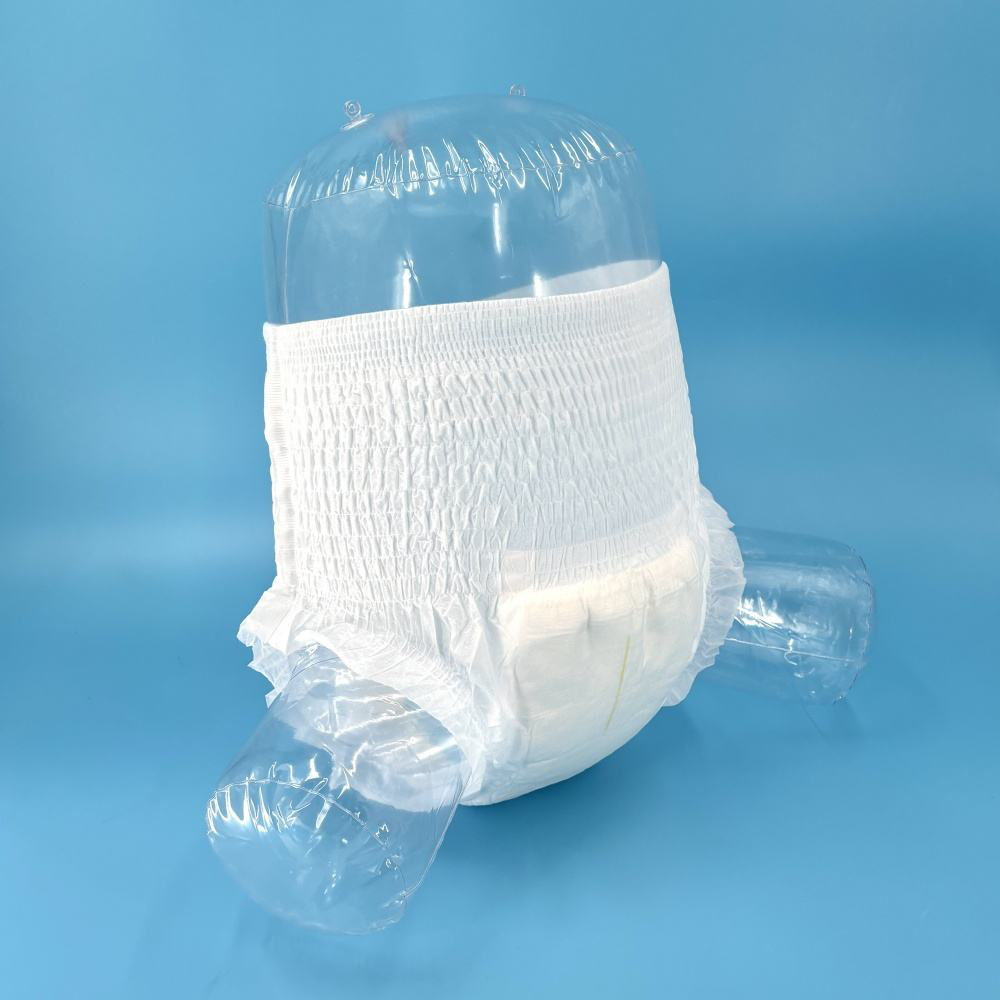
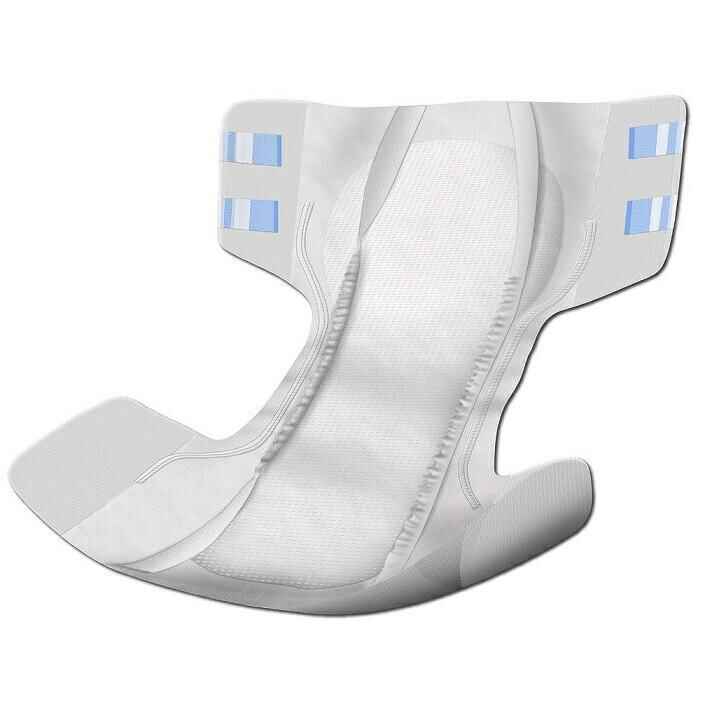
In this article, the chassis means everything in a pull-up except the absorbent core itself: the outer nonwoven cover and backsheet, the waistband, the leg elastics and cuffs, the side panels or seams, and the cut pattern that gives the product its rise, crotch width and leg-opening shape. Suppliers may use the term differently, so confirm what each party means when you write a specification.
The chassis controls discretion because the core is only one part of what an observer sees. Three things reach the outside of a garment:
Shape: bulges at the crotch, front and seat, and a wider stance caused by padding between the thighs.
Lines: edges from the waistband, leg elastics and seams that show through fitted fabric.
Sound and movement: rustling from the outer cover, and sagging or bunching after wear.
A reviewer-led test illustrates the point. When Wirecutter tested incontinence underwear and pads, it evaluated noise as well as comfort, noting that a plasticky backing might rustle during movement, and it described its higher-capacity reusable pick as less visually subtle under tight-fitting clothing. That is consumer testing of a limited product set, not an engineering standard, but it shows that end users judge discretion on several variables at once.
Five chassis variables that determine what shows under clothing
Crotch width and core-to-chassis proportion
Crotch width is the distance between the leg openings at the narrowest point of the gusset. A wide crotch with a wide core pushes the thighs apart, changes gait and creates a visible bulge on the inner thigh in fitted trousers. A narrow crotch reduces the bulge but concentrates the absorbent mass, which can lead to saturation at one point and channeling toward the leg opening once the core is loaded.
The core can also be shaped separately from the chassis: hourglass, tapered or rectangular. A tapered core with the absorbent mass placed where the wearer’s urine is deposited can look slimmer than a uniform rectangle of the same capacity. Whether it does depends on the wearer’s anatomy and posture, so verify with fit samples rather than relying on a drawing.
Ask the supplier: core width at the crotch, core length, and where the superabsorbent polymer is concentrated.
Rise and torso length
Rise is the front-to-back distance through the crotch, and it controls where the waistband sits. A rise that is too short pulls the product downward at the back, drags the waistband under the navel and exposes the top edge when the wearer sits. A rise that is too long bunches fabric at the waist, which shows as a ridge under a tucked shirt.
Rise also interacts with loading. Once the core is wet, its weight pulls the chassis down, so a product that looks fine dry can sag after use. This is one reason sizing based on waist circumference alone misleads. The manufacturer’s guide on how to measure waist, hip and rise for adult diaper sizing explains why hip girth, abdominal shape and total rise all affect where the chassis sits.
Ask the supplier: the size chart with waist, hip and rise ranges for each size, and how the sizes are graded between steps. Wide combined size steps such as “M/L” can leave more wearers between sizes.
Leg opening geometry and elastic tension
Leg elastics are the main source of visible lines. Tight elastic can cut into soft tissue and print a gather line through thin fabric. Loose elastic leaves gaps, so leakage becomes more likely. Leg cuffs that fold under during sitting add another ridge.
Leg-opening height also matters. A high-cut opening reduces side bulk but can shift the sealing line toward the groin crease, where movement is greatest. A lower cut covers more of the thigh and may be more stable, but it can show as a line below the seat in tight fabric.
Ask the supplier: elastic type and placement, whether the leg gather is continuous or segmented, and cuff height. Request photographs of the product in motion, not only flat on a table.
Waistband profile and side seams
A 360-degree stretch waistband spreads tension evenly and tends to lie flat, but its edge can still show through a tucked fitted top. Narrow bands may roll; wide bands may show as a belt-like band under trousers. Side seams and tear-away perforations add thickness at the hip. The manufacturer’s incontinence underwear range describes a 360° elastic waistband with tear-away side seams, a combination that makes caregiver removal easier but places a seam line on each hip, so confirm how flat that seam sits.
Printed waistbands are a branding feature. Ask whether the print affects stretch or stiffness, and evaluate a sample with the actual artwork.
Ask the supplier: waistband width, elastic count, seam construction, and whether branding affects stretch.
Outer cover material and noise
A cloth-like nonwoven outer cover tends to rustle less than a film-faced backsheet, and it feels more like underwear against clothing. The cover also affects friction. A slippery film can slide against trousers, and a textured nonwoven can grab and bunch. Neither is automatically better, and the right choice depends on the wearer’s clothing and activity.
The manufacturer’s disposable bladder control underwear page lists a soft, cloth-like outer cover that is quiet under clothing and notes that the topsheet and backsheet materials can be changed on OEM/ODM orders. Treat that as a customization option to evaluate with samples, not a performance guarantee.
Ask the supplier: outer-cover and backsheet material, whether the backsheet is breathable, and how noise was assessed.
Does a thinner core always make a pull-up more discreet?
Not always. A thin dry core is a good starting point, but the conventional assumption that thinner means more discreet ignores three conditions:
Loaded state. Discretion should be judged after the product has been loaded, because wet bulk, sag and shifting can reveal a product that looked flat when dry.
Leakage risk. A thin core with slow fluid intake can pool and leak, which defeats discretion more completely than a slightly thicker outline.
Wearer response. Users who feel unsure about a thin product may wear a larger size or add a second layer, which increases bulk.
The manufacturer’s article on why thin adult pull-up diapers can still maintain absorbency covers the core-level engineering, including superabsorbent loading, acquisition speed and distribution. The chassis then determines whether that core stays where it was designed to be. A slightly thicker product with a better rise, a flatter waistband and a stable leg seal can look better in use than a thinner product that bunches at the groin.
The same applies to absorbency level. A light-use pull-up and a heavy overnight pull-up should not be judged by the same silhouette standard. Compare discretion within the same absorbency band.
How chassis choices trade discretion against leak control
Chassis variable
Discretion benefit
Possible cost
What to verify
Narrower crotch / tapered core
Less inner-thigh bulge and a more natural gait
Higher chance of pooling and leg-edge leaks if intake is slow
Loaded-state visual check and a movement leak test
Lower leg-elastic tension
Fewer visible lines and less skin marking
Gaps at the leg during sitting and hip flexion
Gap observation while seated and during sit-to-stand cycles
Narrow, low-profile waistband
Less visible edge under tucked tops
Rolling or sliding down during wear
Waist stability after repeated pull-down cycles
Thin cloth-like outer cover
Lower noise and softer surface against clothing
Possible durability and slip trade-offs; cost varies with materials
Noise, snagging and abrasion during wear trials
Shorter rise
Less fabric bunching at the waist
Sagging and exposed top edge when seated
Fit on the intended body types at size boundaries
Broader grading steps
Fewer SKUs and a simpler inventory
More wearers outside the ideal fit
Size chart overlap and fit samples at each boundary
This table shows qualitative design trade-offs. It does not provide measured values, and the actual effect of each variable depends on the product’s construction and the wearer.
How should buyers test discretion before approving a sample?
Define discretion as a set of observable checks, then run them on the same set of garments and body types for every candidate. Because the ABL method has a narrow scope, you cannot rely on it to answer this question.
EDANA’s ABL test method guidance states that the Absorption Before Leakage method was developed for products for moderate and severe incontinence used by bedridden patients, and that it is not suited to products marketed for mobile people with light or medium incontinence. Capacity tests also have limits. A PubMed-indexed study of ISO 11948-1 (the Rothwell method) found its correlation with clinical leakage performance for heavy-incontinence diapers and inserts was strong enough to help purchasing decisions, but that study concerned leakage, not silhouette or noise, and it did not cover light-use pull-ups. Neither method measures how a product looks under clothing.
A practical discretion protocol can include:
Garment set: at least one fitted garment (for example, jersey leggings or slim trousers) and one looser garment, used consistently across samples.
Views: front, side and rear photographs standing, seated and mid-stride, taken at the same distance and lighting.
Dry and loaded states: compare each sample dry and after a defined loading step. Set the loading volume to match the absorbency band you are sourcing.
Contact points: note visible lines at the waist, leg openings and hip seams, and record where the product moves.
Sound: a quiet-room walking and sit-to-stand check, with the same garment.
Movement: combine the visual review with a leak test. The manufacturer’s article on movement leak testing for active users describes why sit-to-stand, squatting and posture transitions expose seal and waistband problems that stationary tests miss.
No established standard for pull-up discretion testing was identified in the research for this article, so a buyer-defined protocol is the practical option. Write the protocol down and share it with the supplier so that repeat orders are judged on the same basis.
Which chassis profile fits which wearer and use case?
The best chassis depends on the wearer, the clothing and the length of wear. The following pairings are design reasoning for buyers to confirm with samples, not universal rules.
Fitted clothing, short wear, light to moderate leakage: prioritize low dry thickness, a narrow crotch, a flat waistband and a quiet outer cover. Accept that the product’s capacity ceiling will be lower.
Long seated periods: prioritize stability over minimal bulk. Sitting compresses the core and shifts fluid, so check rewet, sag and leg-cuff behavior. The article on why long-haul travel is creating demand for discreet adult pull-ups discusses the seated-pressure problem in detail.
Caregiver-assisted users: side seams or tear-away features may take priority over silhouette because removal speed and skin safety matter more.
Sex-specific lines: a design for one sex can place its absorbent mass differently from a unisex product. Ask where the core is concentrated and test on the intended wearer group.
Illustrative scenario (not a customer case): a retailer chooses a pull-up that looks slim on the shelf, then receives complaints that it shows under work trousers. The problem is traced to a stiff, wide waistband and a short rise that rolls the top edge when the wearer sits. The cause was the chassis, so changing the core would not have fixed it.
What should buyers specify before requesting a quote?
A quotation for a discreet pull-up is only as accurate as the specification behind it. Product details such as sizes, absorbency levels and packaging affect price, and chassis requirements affect both price and feasibility. Prepare these items:
Target wearer and absorbency band: light, moderate, heavy or overnight, and whether the product is unisex or sex-specific.
Size range and fit data: waist, hip and rise ranges by size, plus the body types you expect to serve.
Discretion priorities: ranked, such as lowest dry thickness, quietest cover, flattest waistband or least visible leg line.
Materials: outer-cover type, topsheet, backsheet and elastic preferences, plus whether a printed waistband is required.
Accessories and features: wetness indicator, odor control, or other options you want to evaluate.
Sample and test requirements: the garments and protocol you will use, the number of samples per size, and the movement leak test you expect.
Target market and compliance: the countries where you will sell. In the United States, 21 CFR 876.5920 defines a protective garment for incontinence as a device consisting of absorbent padding and a fluid barrier, classifies it as Class I and exempts it from premarket notification, subject to limits. The regulation text does not set silhouette or noise criteria, so those requirements have to come from your own specification. Confirm the rules for each destination market with a regulatory specialist.
Commercial terms: order quantity, MOQ, delivery schedule, carton layout and bag design.
The same bladder control underwear page lists customizable sizes, absorbency levels, materials, wetness indicator, odor control, printed waistband and packaging as available options. MOQ, lead time and which combinations are feasible are not stated there, so request them in writing.
Frequently Asked Questions
What is the chassis of an adult pull-up?
The chassis is the structure around the absorbent core: the outer cover, backsheet, waistband, leg elastics, side seams and cut pattern. It sets the rise, crotch width and leg-opening shape, which determine how the product fits and how it looks under clothing.
Does a thinner pull-up always look more discreet?
No. A thin dry core helps, but discretion also depends on rise, waistband profile, leg elastics and the product’s behavior when loaded. A thin product that sags, bunches or leaks can be more noticeable than a slightly thicker product with a stable fit.
What causes visible lines under tight trousers?
Visible lines usually come from leg elastics, the waistband edge and side seams. Tight elastic can press into soft tissue, wide waistbands can show under fitted tops, and cuffs that fold during sitting can create a ridge. Test with the intended garments.
How do I test whether a pull-up is discreet?
Compare candidates in the same garments, in standing, seated and walking positions, both dry and after loading. Record visible lines, sag and noise, and combine the review with a movement leak test. Use the same protocol for every sample and repeat order.
Can ABL or Rothwell results tell me how discreet a pull-up is?
No. Both methods concern absorption, not silhouette or sound. EDANA also says ABL was developed for products used by bedridden patients and is unsuitable for those marketed to mobile people with light or medium incontinence. Add buyer-defined visual and movement checks.
Which chassis details should I include in an RFQ?
Include the target wearer, absorbency band, size range with waist, hip and rise data, ranked discretion priorities, material preferences, sample and test requirements, target market, MOQ and delivery schedule. Ask the supplier to confirm which combinations are feasible.
How does sizing affect discretion?
Sizing changes how the chassis sits on the body. A size that is too small tightens elastics and can print lines, and one that is too large can bunch and gap. Measure waist, hip and rise, and test samples at size boundaries.