How to Keep Adult Wipes Moist After Opening the Pack
Adult wipes dry.
When a soft pack stays open during every change, the adhesive label lifts at one corner, and the package sits beside a heater or sunny window, moisture loss accumulates long before anyone notices that the top sheet feels rough.
So why do caregivers still blame the lotion first?
The direct answer is simple: dispense one wipe, close the pack immediately, press the entire seal, store it away from heat and sunlight, keep the original packaging intact, and never pour water into a drying pack. If the closure weakens, place the complete original pack inside a clean secondary container or zipper bag.
That routine costs almost nothing. Yet it prevents most avoidable dry-out.
Why Adult Wipes Dry Out After Opening
Air leakage does most of the damage
Wet wipes combine a nonwoven sheet with a water-based cleansing lotion. A peer-reviewed study on wet-wipe preservation reported that wipes can contain more than 90% water, making moisture retention and microbial control inseparable parts of product design.
Once the factory seal is broken, the package depends on a pressure-sensitive label, flip-top lid, dispensing aperture, or canister cap. Every open cycle exchanges humid air inside the pack with drier room air.
One opening is trivial. Fifty openings are not.
A lifted label corner creates a small but continuous escape route. The pack may still look closed from across the room, yet the upper wipes slowly lose lotion. This is why I care more about closure performance than decorative packaging.
Buyers comparing products should also examine adult care wipe size, GSM, and lotion load. A high starting lotion load can delay noticeable dry-out, but it cannot compensate indefinitely for a weak seal.
Heat accelerates moisture loss
The FDA’s cosmetics shelf-life guidance warns that exposure to sunlight, air, temperature changes, and moisture can alter a product’s color, texture, and odor. That is directly relevant to adult wipes stored in cars, sunny bathrooms, heated care carts, or beside radiators.
Do not assume that “warmer is more comfortable” means “warmer is better for storage.” A wipe warmer may increase evaporation or affect the pack unless both the warmer manufacturer and wipe supplier approve that combination.
Follow the temperature instructions printed on the product. If the label does not provide a range, choose a stable indoor location away from direct sunlight, heaters, hot vehicles, freezing conditions, and repeated temperature swings.
Uneven lotion distribution can look like dry-out
Sometimes the package has not lost much total moisture. The lotion has simply settled toward the lower part of the folded stack.
If the top wipes feel slightly drier but the package remains undamaged, close it fully and gently massage the sealed pack. Briefly inverting the closed pack may help redistribute lotion, but do not leave it permanently upside down if liquid begins loading the adhesive flap or leaking around the lid.
The distinction matters: uneven distribution may be recoverable through sealed-pack redistribution; a badly dried, punctured, contaminated, or altered pack is not.
The Storage Routine That Actually Works
1. Open only the intended dispensing area
Do not tear the pouch wider because wipes are difficult to pull. A larger opening increases evaporation and may weaken the structure supporting the closure.
Pull one wipe with clean, dry hands. Avoid pushing fingers deep into the stack. FDA notes that fingers can introduce bacteria, yeast, and mold into water-containing cosmetic products.
If wipes repeatedly come out in clumps, treat that as a dispensing-design problem. Do not leave the pack open while separating them.
2. Close the pack immediately
Do this before beginning the cleaning task, not afterward.
For an adhesive label:
Flatten wrinkles around the opening.
Remove lotion from the sealing surface with a clean, dry disposable tissue.
Press from the center toward every edge.
Check that no folded wipe is trapped beneath the label.
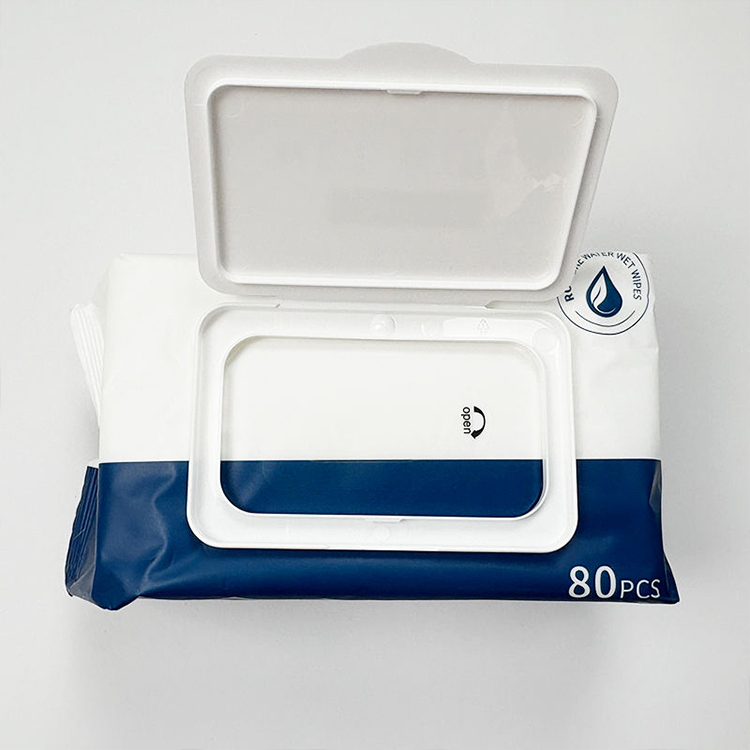
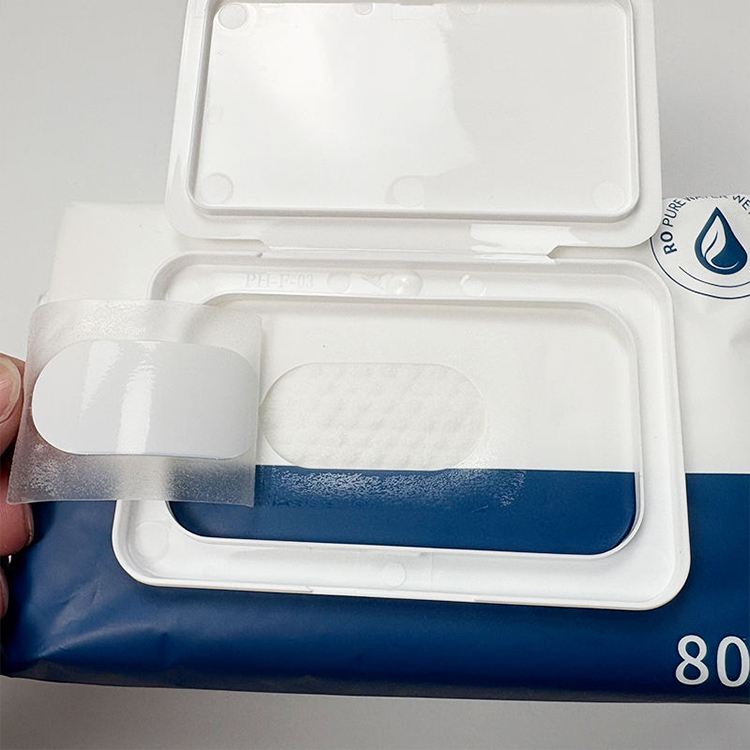
For a flip-top lid:
Confirm that the inner label or dispensing membrane was opened correctly.
Push the lid until it clicks or sits completely flush.
Inspect the hinge and rim for lotion, fibers, or damage.
A closure that is “mostly shut” is an open pack in slow motion.
3. Protect the original package
If the adhesive flap no longer stays down, place the entire original pouch inside a clean, dry, tightly closing container or zipper bag. This creates a second moisture barrier without transferring the wipes or separating them from their lot code, expiration date, ingredient list, and usage instructions.
Do not empty several packs into one communal box. And never top up an old dispenser with fresh wipes. Old lotion, fibers, hands, and residue can contaminate the incoming stock.
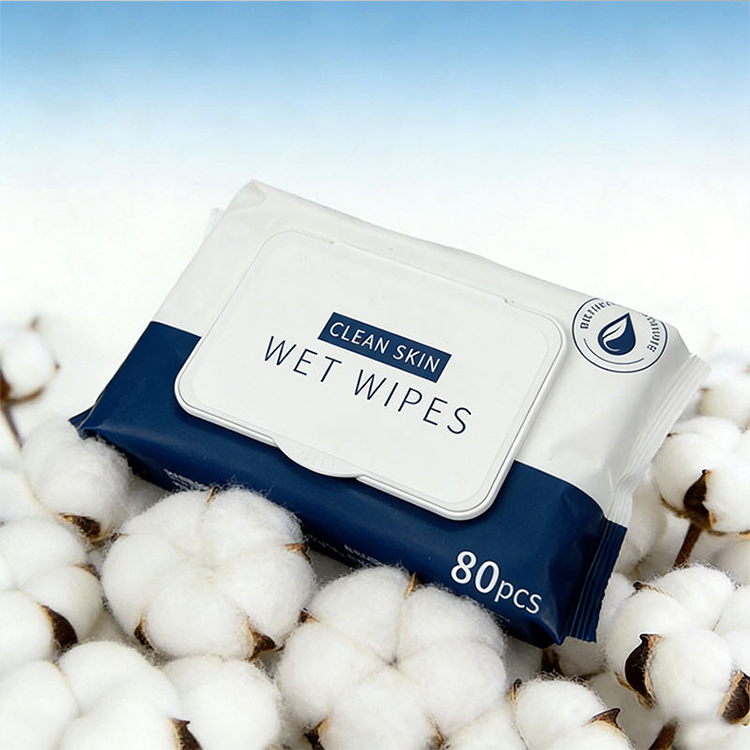
Purpose-built large-format adult wipes for incontinence care may be available in resealable soft packs, flip-top packs, canisters, or individual sachets. The best format depends partly on how quickly the pack will be used.
4. Match pack size to consumption
A 100-count pack may appear cheaper per wipe, but it is poor value if one person uses only a few sheets each week and the final third dries out.
My practical rule is:
High-turnover facility: larger packs with durable flip-top closures may work.
Low-frequency home use: smaller resealable packs reduce open time.
Travel or emergency kits: individually wrapped wipes offer stronger isolation.
Shared care carts: assign packs by room or user when infection-control policy requires it.
Write the opening date on the pack. Use first-opened stock first, and do not combine partial packs merely to make storage look tidy.
5. Keep the pack near the task—but not near heat
Convenience drives compliance. Store adult wipes close enough that caregivers do not leave the package open while walking across the room, but keep them away from windowsills, sinks, showers, radiators, warm equipment, and direct air from heating or cooling vents.
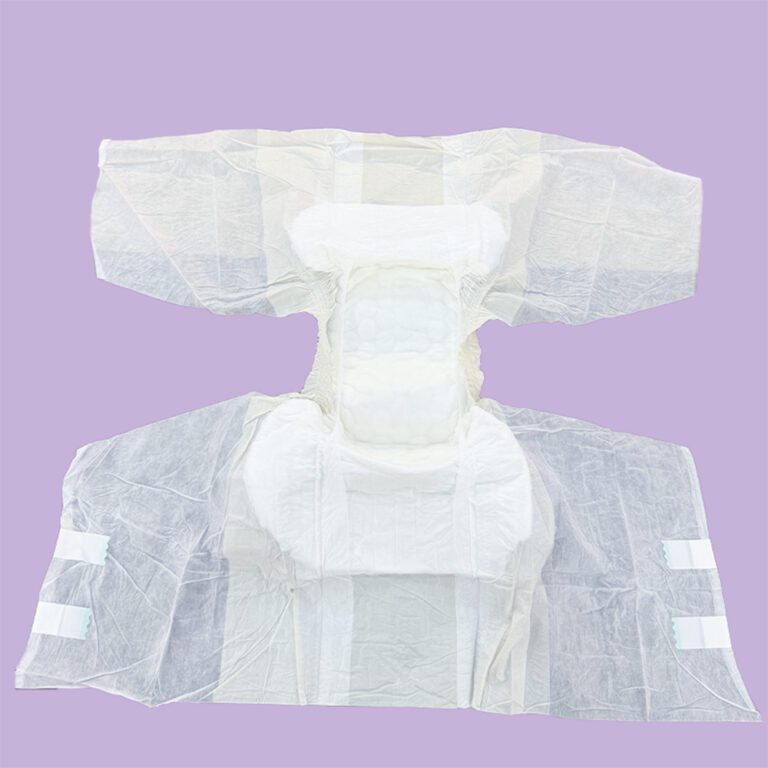
For a complete care station, coordinate wipes with briefs, disposal bags, gloves, skin protectants, and surface protection. The guide to why buyers purchase underpads and wipes together explains why storage should support the entire change routine rather than one isolated product.
Adult Wipes Storage Problems and Corrective Actions
What you notice
Likely cause
What to do
Keep or discard?
Adhesive label lifts at one corner
Lotion or fibers on the sealing area; adhesive fatigue
Clean and dry the outer sealing area, press firmly, then place the original pack in a clean secondary container
Usually keep if the wipes remain normal and the pouch is intact
Top wipes are slightly dry but lower wipes are wet
Lotion has migrated through the stack
Close fully, massage the sealed pack, and briefly invert it if the closure does not leak
Usually keep
Entire stack feels substantially dry
Long air exposure, heat, puncture, or failed closure
Do not add water; replace the pack
Discard
Pack was stored in a hot car or beside a heater
Elevated temperature and repeated temperature change
Move unopened stock to appropriate storage; inspect opened packs for odor, color, texture, and closure changes
Discard if altered or doubtful
Pouch is torn or punctured
Moisture barrier has failed
Isolate it from other stock and record the lot if complaints are being tracked
Discard
Someone added tap water, saline, aloe, or homemade lotion
Preservative system and pH may have been altered
Stop using the pack
Discard
Unusual odor, discoloration, slime, mold, swelling, or foreign material
Possible contamination or product deterioration
Stop use, retain the lot details, contact the supplier, and check recall notices
Discard
Communal dispenser is repeatedly topped up
Residue and old stock can contact new wipes
Empty and clean it according to its manufacturer’s instructions; use approved refills only
Discard exposed or mixed stock
Why Rehydrating Dried Adult Wipes Is a Bad Idea
Can you rehydrate dried adult wipes?
Technically, you can make them feel wet. That does not restore the original product.
A wipe lotion is a formulated system containing water, surfactants, pH adjusters, humectants, skin-conditioning ingredients, and preservatives. Adding tap water does not merely replace evaporation. It can dilute preservatives, shift pH, introduce microorganisms, and produce uneven chemical distribution across the stack.
Consider a simplified mathematical example—not an actual product formula. If a lotion originally contained 0.50% preservative and water equal to 10% of the remaining lotion mass were added, the theoretical concentration would become:
[ C_{\text{new}}=\frac{0.50%}{1.10}=0.455% ]
That is a 9.1% concentration reduction. Preservative performance is not necessarily linear, however, and even a numerically small change may affect protection if pH, packaging, microbial load, or ingredient compatibility also changes.
Bottled water is not a preservative. Saline containing 0.9% sodium chloride is not a replacement wipe formula. Distilled water is not guaranteed to remain microbiologically controlled after opening. Witch hazel, aloe mixtures, hand sanitizer, essential oils, and homemade cleansing solutions create still more variables.
Here is the hard truth: a moist wipe can be unsafe, while a dry wipe is merely obvious.
If an opened pack has dried substantially, discard it. When an alternative is needed, use a fresh single-use cloth with an appropriate cleanser according to the user’s care plan rather than pouring liquid into the entire pack.
Moisture Is Not the Same as Microbial Safety
The FDA states that disposable wipes have been recalled because of bacterial or mold contamination. A striking recent example occurred on June 5, 2026, when the agency published a recall notice for selected Up & Up wipes after testing identified Burkholderia cepacia complex and Burkholderia gladioli. The affected configurations ranged from 20-count pouches to 1,200-count multipacks.
Those incidents do not prove that normal household opening caused the contamination; manufacturing and supply-chain failures can occur before purchase. But they demonstrate why I reject internet advice telling caregivers to “just add a little water.” The preservation system is part of the safety design, not a cosmetic extra.
Stop using wipes if they show:
Unusual discoloration
Sour, musty, or otherwise abnormal odor
Slime or unexpected residue
Visible mold or foreign particles
Swollen or leaking packaging
Unexpected skin or eye irritation
A lot number included in a recall
For immunocompromised users, broken skin, wounds, surgical sites, or medical-device care, follow clinical instructions and use products approved for that purpose. Ordinary adult cleansing wipes are not automatically sterile.
What Caregivers and Private-Label Buyers Should Demand
Not every wipe format has the same after-opening performance. A basic adhesive label may suit fast-moving retail packs, while a rigid flip-top can provide more reliable repeated closure. Individually wrapped wipes offer strong isolation but increase packaging and unit cost.
Closure performance after repeated open-close cycles
Top, middle, and bottom wipe moisture
Label adhesion after lotion contacts the sealing area
Film water-vapor transmission performance
Heat-seal consistency and pouch integrity
Formula-to-packaging compatibility
Real-time and accelerated stability
Microbiological limits
Preservative efficacy or challenge testing
Finished-pack transport and drop testing
A simple in-house screen can weigh identical packs at Day 0, 7, 14, and 28 under controlled conditions:
[ \text{Mass Loss (%)}=\frac{m_0-m_t}{m_0}\times100 ]
This does not replace formal stability or microbiological validation, but it exposes weak closures quickly. Run the comparison after a defined number of opening cycles—such as 25, 50, and 100—and record the test temperature, relative humidity, opening duration, and wipe-removal count.
For cosmetic-type cleansing formulations, ISO 11930:2019 describes evaluation of antimicrobial protection through preservation efficacy testing or microbiological risk assessment. Packaging teams can also use methods such as ASTM F88/F88M for flexible-barrier seal strength, although heat-seal testing does not by itself prove that a resealable flap will survive repeated consumer use.
And do not ignore formulation choices. The site’s comparison of fragranced and fragrance-free adult wipes shows why moisture retention, skin compatibility, and label wording belong in the same approval process.
My buying position is blunt: if a supplier claims that wipes “stay moist after opening,” ask for after-opening data. An attractive flip-top photograph is not data.
FAQs
How do you keep adult wipes moist after opening?
The best way to keep adult wipes moist after opening is to dispense one sheet at a time, close the lid or label immediately, press the seal around its full edge, keep the original pack in a cool dry place away from sunlight, and use a clean secondary container if the closure weakens.
Choose a smaller pack when consumption is low, and write the opening date on it so older stock is used first.
Why do adult wipes dry out?
Adult wipes dry out because water vapor escapes through an open, poorly resealed, punctured, or heat-stressed package, while repeated access enlarges the time exposed to air and may leave the upper sheets drier than the lower stack as lotion migrates through the folded nonwoven material.
Heat, sunlight, a contaminated sealing surface, and an oversized dispensing opening can make the problem worse.
Should adult wipes be stored upside down?
Adult wipes should not be stored permanently upside down unless the manufacturer recommends it, because inversion may redistribute lotion but can also load the adhesive label or flip-top seal with liquid and expose a weak closure; storing the pack flat, fully closed, and briefly inverting it only while sealed is the safer default.
Stop inverting the pack if lotion reaches the outer seal or begins leaking.
Can you add water to dried adult wipes?
You should not add water to dried adult wipes because tap, bottled, distilled, saline, aloe, or homemade liquids can introduce microorganisms, dilute the tested preservative system, shift pH, alter skin compatibility, and create a pack that feels wet again without restoring the manufacturer’s validated microbial protection.
Replace a substantially dried pack instead of trying to rescue it.
Is an adult wipes dispenser better than a soft pack?
An adult wipes dispenser can retain moisture better than a weak adhesive flap when it has a tight, compatible closure, but it is not automatically safer; the best setup keeps wipes in their original pack or approved refill system, avoids top-ups, and follows the maker’s cleaning and replacement instructions.
A dirty dispenser can turn a packaging improvement into a hygiene problem.
How long do adult wipes last after opening?
How long adult wipes remain usable after opening depends on the formula, package barrier, closure design, use frequency, storage conditions, labeled expiration date, and any period-after-opening instruction, so there is no honest universal answer such as 30, 60, or 90 days that applies across every brand and market.
Follow the label and contact the manufacturer when no after-opening guidance is provided.
When should an opened pack of adult wipes be discarded?
Discard an opened pack of adult wipes when the pouch is torn or punctured, the seal will not close, the wipes have dried substantially, the product shows unusual odor, discoloration, slime, mold, gas swelling, or foreign material, the lot is recalled, or the label’s use period or expiration has passed.
When the intended user is medically vulnerable, uncertainty is enough reason to replace the pack.
Protect the Pack Before the Next Wipe Dries
Audit the pack you are using now. Check the closure, storage location, opening date, lotion distribution, pouch integrity, and wipe turnover. Move it away from heat, repair the storage routine, and replace any product that has been diluted, damaged, recalled, or visibly altered.
For distributors and private-label buyers, test the closure after repeated opening—not just while the pack is factory-sealed. Review the adult wipes product range, then contact the manufacturer to specify pack size, lotion load, closure format, moisture-retention testing, microbiological controls, and intended care channel before approving production.