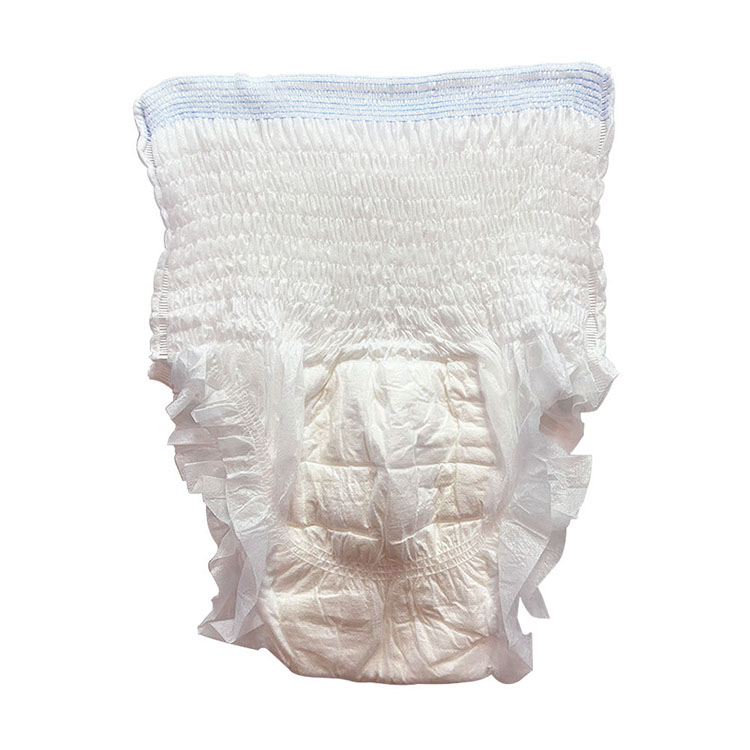
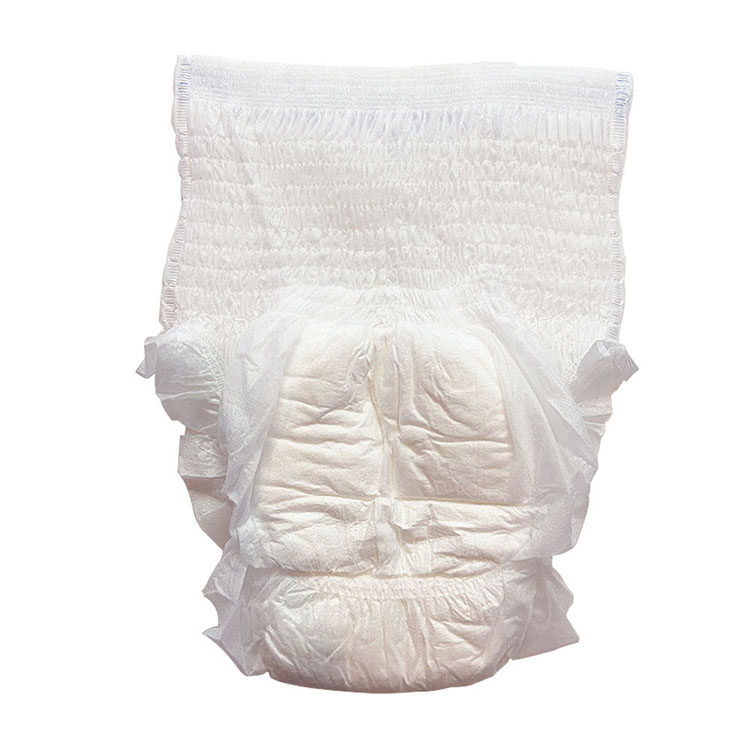
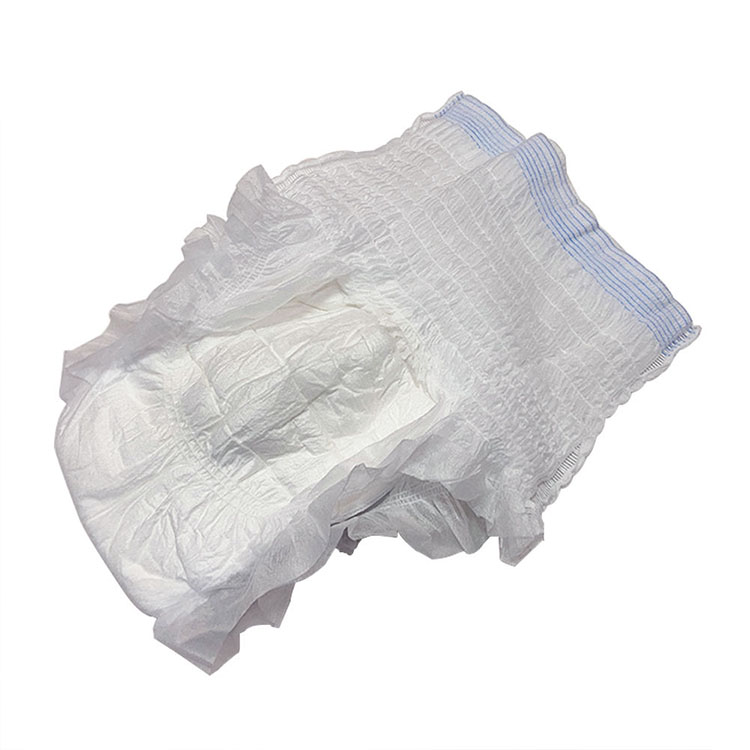
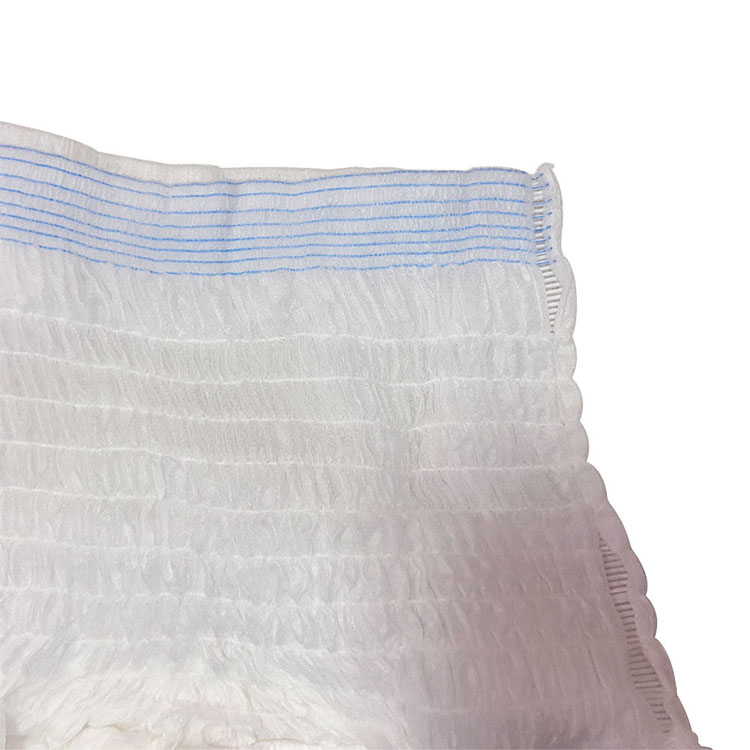
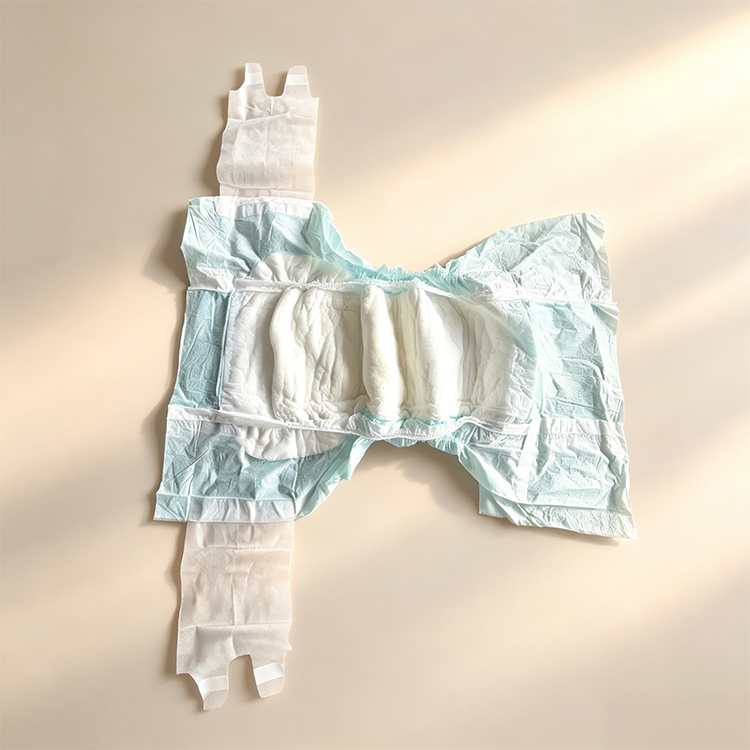
Why can thin adult pull-up diapers still maintain their absorbency?
Thin looks weak. That is the trap.
Thin fools buyers. I’ve read enough OEM spec sheets and watched enough product demos to know that this category still suffers from one very dumb assumption: if a pull-up looks slimmer under jeans, people assume somebody quietly stole the absorbency budget, even though the real fight is happening inside the core where polymer loading, intake speed, redistribution, and fit under motion decide whether the product works or humiliates the wearer. Why are we still judging an adult pull-up by silhouette alone?
The hard truth is simple: adult pull-ups do not exist in a tiny niche anymore, and manufacturers are not spending real money to make them thinner just for aesthetics. According to NIDDK’s 2024 Urologic Diseases in America report, claims-based urinary incontinence prevalence among people aged 65 and older ran at roughly 6% to 8% from 2012 to 2021, and prevalence rose with age, reaching 10.6% among Medicare fee-for-service patients aged 85 and older in 2021. That is not a vanity market. That is a durability market.
And the money is following that reality. In Reuters’ July 2024 report on Japan’s adult diaper market, Daio Paper said revenue from adult diaper sales was already double baby-diaper revenue, and Reuters reported Japan’s adult diaper market was forecast to grow 16% to ¥98.9 billion by 2027 while the baby-diaper market was expected to shrink 8% to ¥84.6 billion. When a market gets that serious, brands stop winning with fluff and start winning with engineering.
That’s also why the site you gave me should not bury this topic in bland catalog copy. Its own adult pull-ups for discreet bladder control page already says the product is soft, quiet, absorbent, and built with a fast-absorbing core, leak guards, and a stretchy waist; the better move is to support that claim with the sharper explainer on why thin-core pull-ups still perform. I’d connect those pages directly, because buyers who doubt thin products need proof, not adjectives.
Table of Contents
Where the absorbency really comes from
The polymer does the heavy lifting
Here’s the part the industry likes to hide behind pretty packaging: modern absorbency is chemistry plus geometry. A 2024 ACS/PMC paper on superabsorbent polymer granules notes that roughly three million tons of SAP granules are produced annually, mainly for diapers, incontinence devices, mattress pads, and hygiene products, and that these cross-linked granules can retain about 10 to 1000 grams of water per gram of SAP. That is why thin-core adult pull-ups can still act like serious absorbent underwear. They are not asking fluff pulp alone to do the job.
And it gets better. The same 2024 ACS paper found that treated SAP granules absorbed about 148 mg of water per mg compared with about 155 mg for untreated SAP, with no significant difference reported. I like this example because it kills a lazy assumption: adding function does not automatically wreck absorbency. A thinner core can stay strong if the material system is right.
Thin is not less. Thin is more efficient.
A classic bulky core relied more heavily on fluff. A modern thin-core adult pull-up relies on better distribution and a denser absorbent engine. Lawrence Berkeley National Laboratory explained that sodium polyacrylate beads used in diapers are typically smaller than 1.0 mm and form an insoluble hydrophilic gel, but also warned that pressure can squeeze fluid back out if the structure is poorly managed. That is the insider point most marketing pages miss: absorbency is not just “how much goes in,” it is also “how much stays put when the wearer sits, twists, squats, or sleeps on one hip.”
So yes, I will say it plainly. The thickest pull-up in the aisle can still be a mediocre product if it takes liquid slowly, pools at the point of insult, or collapses at the leg opening under pressure. And a discreet adult pull-up can outperform it if the acquisition layer is quick, the SAP is well distributed, the channel design moves liquid away from the hit zone, and the elastic geometry keeps the seal honest.
The numbers buyers should care about, not the ones they photograph
If you want the blunt version, this is the engineering stack that decides whether thin-core adult pull-ups behave like reliable protective underwear or just pretend to. I’m pulling this summary from the SAP evidence above, the pressure warning from Berkeley Lab, and the site’s own testing logic around movement and leakage.
Performance lever
What a good thin-core pull-up does
What a bad thin-core pull-up does
What the wearer actually notices
SAP loading
Stores more fluid in less space
Saves cost by under-loading the core
Early saturation and panic changes
Acquisition layer
Pulls urine down fast
Lets liquid sit on the surface
Wet feeling and front pooling
Distribution channels
Moves fluid away from the first hit zone
Keeps fluid concentrated in one patch
Sagging, clumping, and cold spots
Retention under pressure
Holds liquid during sitting and motion
Releases liquid when compressed
Rewet and embarrassing leaks
Leg cuff and waist fit
Maintains seal as the body moves
Gaps open during walking or sleep
Side leaks and waistband escape
Core-to-body alignment
Puts absorbency where the insult lands
Misses the body’s real wet zone
“High capacity” that fails in use
This is why I don’t trust “maximum absorbency” claims unless they are tied to movement, fit, and pressure. The site already has the right internal bridge for that argument in its article on movement leak testing for pull-ups, which says the industry keeps leaning on clean-looking capacity numbers while avoiding the uglier tests that expose leaks during walking, squats, stairs, and sit-to-stand motion. That article is worth linking right after any product page promising thin-core performance.
And there’s another honest move I’d make on this site: tell readers when a pull-up is the wrong tool. The page on briefs vs pull-ups by care channel already frames pull-ups as a better fit for mobility and discretion, while the article on why hospitals often prefer tab-style adult diapers makes the opposite case for bedbound, heavy-care use. That is good internal linking because it respects reality instead of forcing every visitor into the same SKU story.
Why thin-core adult pull-ups still fail in real life
Cheap distribution kills them first
Most leaks blamed on “not enough absorbency” are actually distribution failures. The liquid hits one spot, the surface intake is too slow, the core cannot spread the load, and the wearer gets overflow before the total capacity is ever used. I’ve seen this mistake over and over. Brands brag about the size of the tank while ignoring the width of the pipe.
That is why the site’s own bladder control underwear page gets one thing right: it talks about a fast-absorbing core, leak guards, snug leg cuffs, and a stretchy waist, not just absorbency in the abstract. Those are the parts that make thin-core incontinence underwear credible.
Motion exposes the frauds
A pull-up that survives a lab pour can still fail on a real body. The site’s movement-testing article says the real leak pathways show up during rotation at the hips, deep squats, sweaty elastic, repeated sit-to-stand cycles, and leg-cuff drift. I agree with that completely. The body is not a mannequin and the worst products get caught the second gravity and motion start working together.
Support layers still matter
But. Even a strong adult pull-up should not carry the whole system by itself when output gets heavier or wear time gets longer. That is where booster pads for extra absorbency make sense for overnight or travel use, and where adult care wipes sized for heavier cleanup help protect skin and reduce friction during changes. Thin is fine. Thin without a system is where buyers get burned.
FAQs
How do thin-core pull-ups work?
Thin-core adult pull-ups maintain absorbency because modern absorbent underwear uses a higher-efficiency core built from superabsorbent polymer and cellulose fluff, plus faster intake layers, channeling, and better cuff control, so the product stores more liquid in the right place instead of relying on sheer thickness alone. That is the real answer to “how do thin-core pull-ups work?” The good ones move liquid fast, lock it under pressure, and keep the seal stable when the user moves.
Are thin adult pull-ups as absorbent as thick ones?
Thin adult pull-ups can match or beat thicker models when the core uses enough SAP, spreads liquid efficiently, and holds it under sitting or movement, but they will lose badly when brands cut polymer load, cheap out on distribution layers, or ignore fit at the legs and waist. So no, thickness is not a reliable proxy. I’d compare intake, rewet, sagging, and leak location before I compared bulk.
What usually makes discreet adult pull-ups leak?
Discreet adult pull-ups usually leak because of slow intake, poor liquid redistribution, weak retention under pressure, or unstable cuff and waistband geometry during motion, which means the product fails at the body interface even when the lab capacity number still looks respectable on paper. I think this is where most bad reviews are born. People blame “low absorbency” when the real problem is front pooling, side gaps, or motion drift.
What are the best adult pull-ups for discreet protection?
The best adult pull-ups for discreet protection are the ones that combine a thin but SAP-dense core, fast strike-through, low rewet, stable leg cuffs, a quiet cloth-like outer layer, and sizing that stays aligned during walking, sitting, and sleep, rather than just looking slim in package photos. I would also separate mobile users from bedbound heavy-care users immediately. If the wearer needs frequent assisted changes or very heavy overnight containment, tab briefs may be the smarter choice.
And here is my blunt CTA. Stop asking whether the pull-up looks thin. Ask for intake speed, rewet performance, motion leakage, cuff stability, and overnight alignment. Ask where the SAP sits. Ask what happens after a second insult. Ask what changes when the wearer sits. That is how professionals buy. That is how good content earns trust.