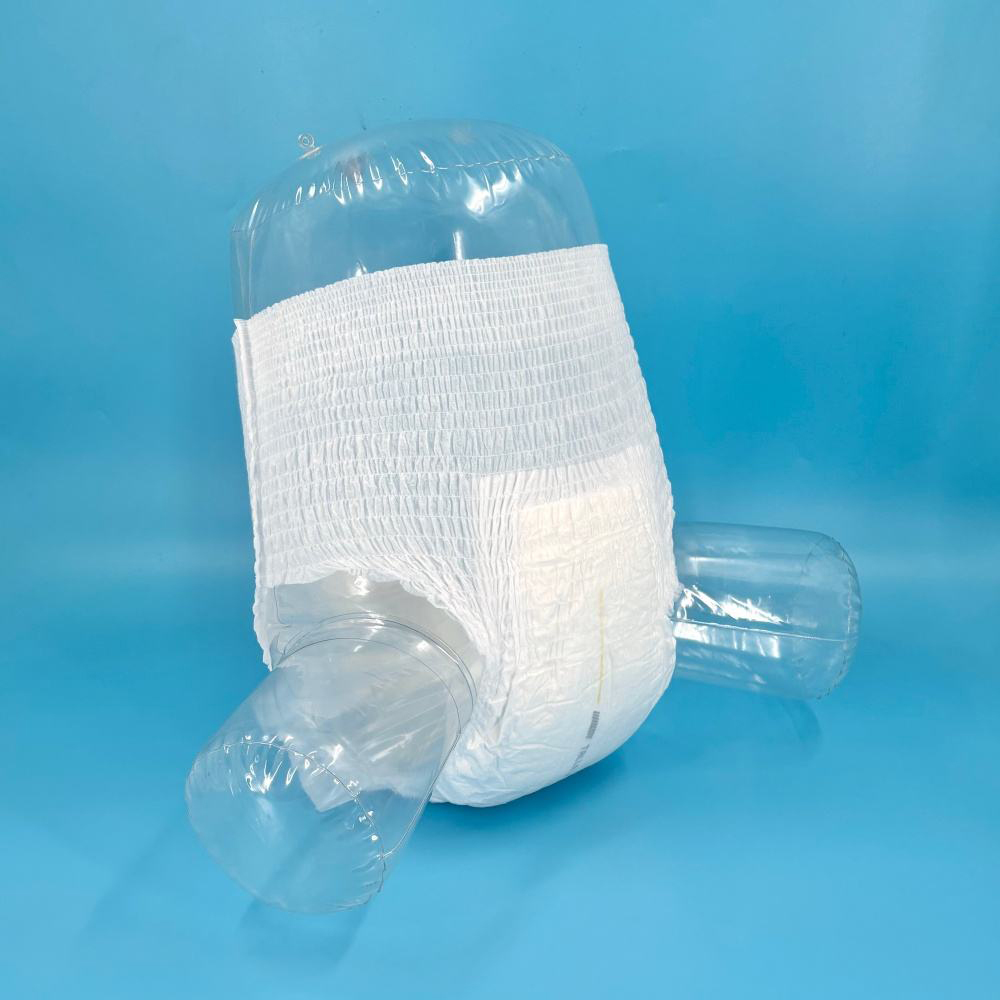
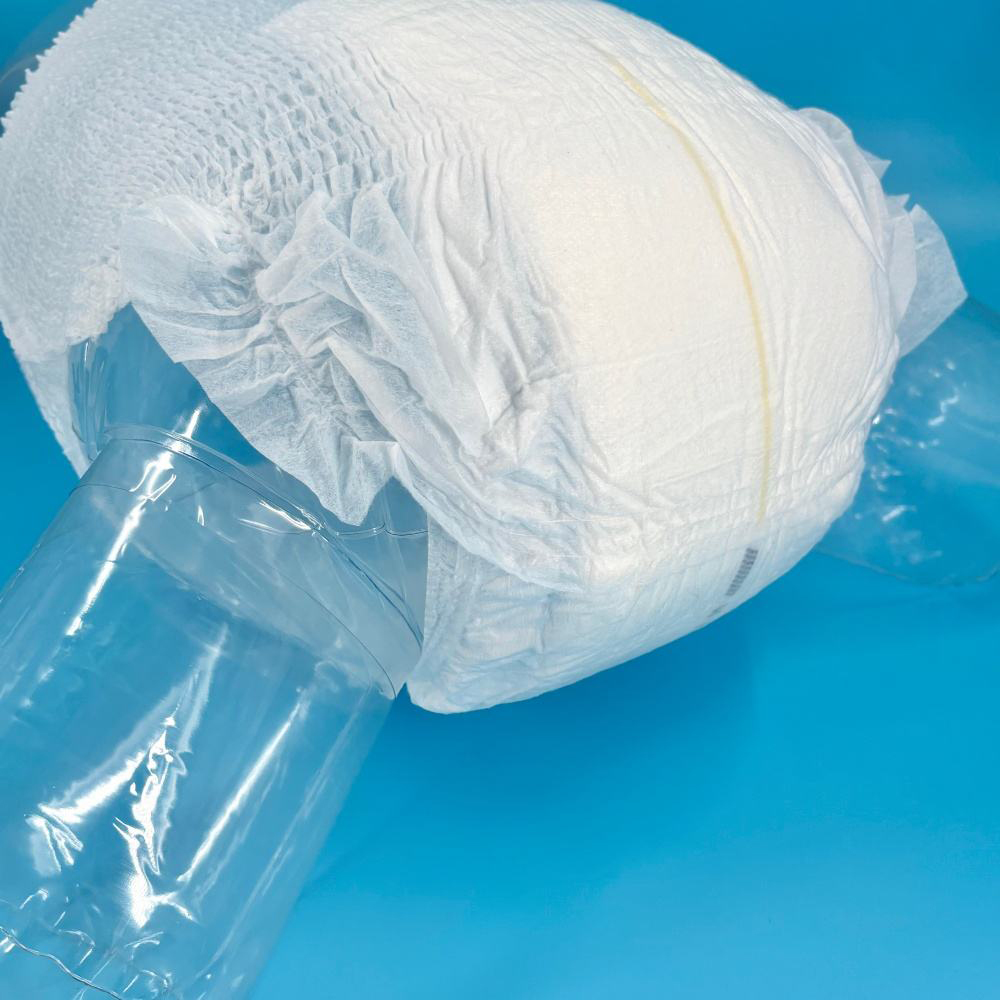
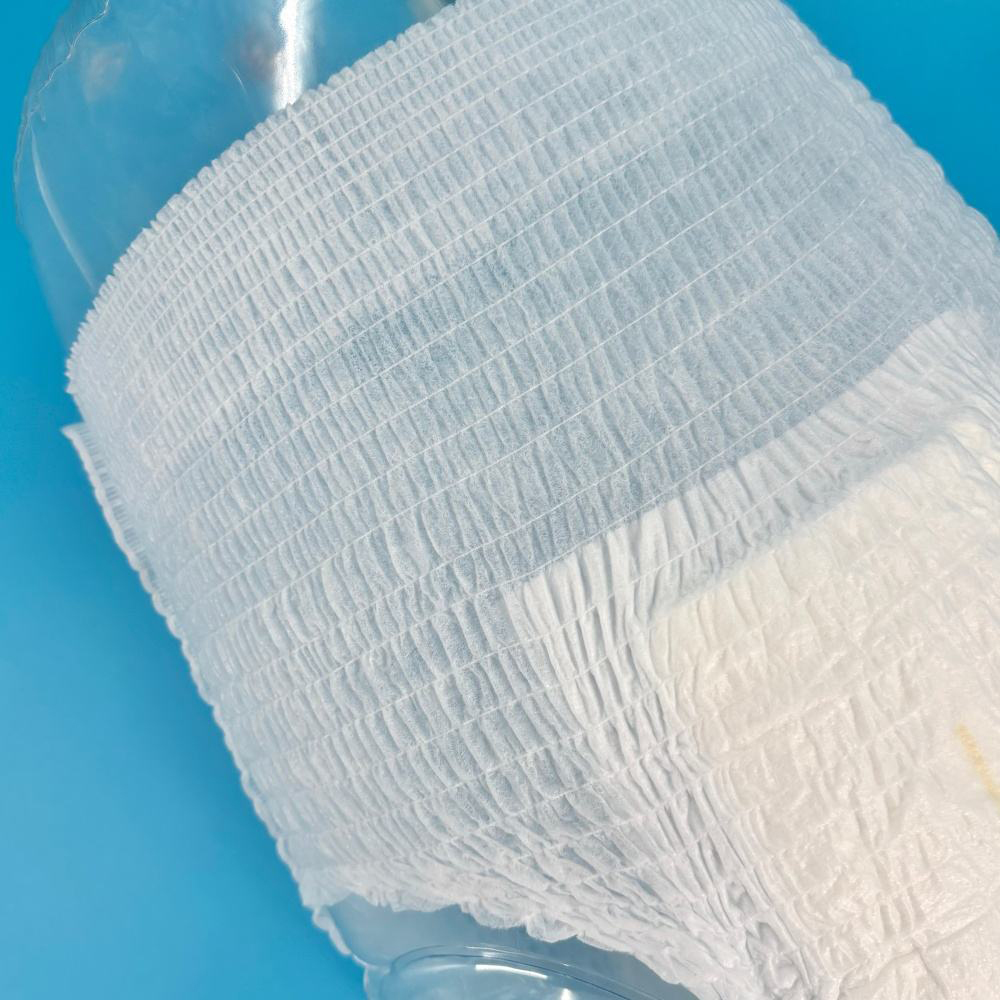
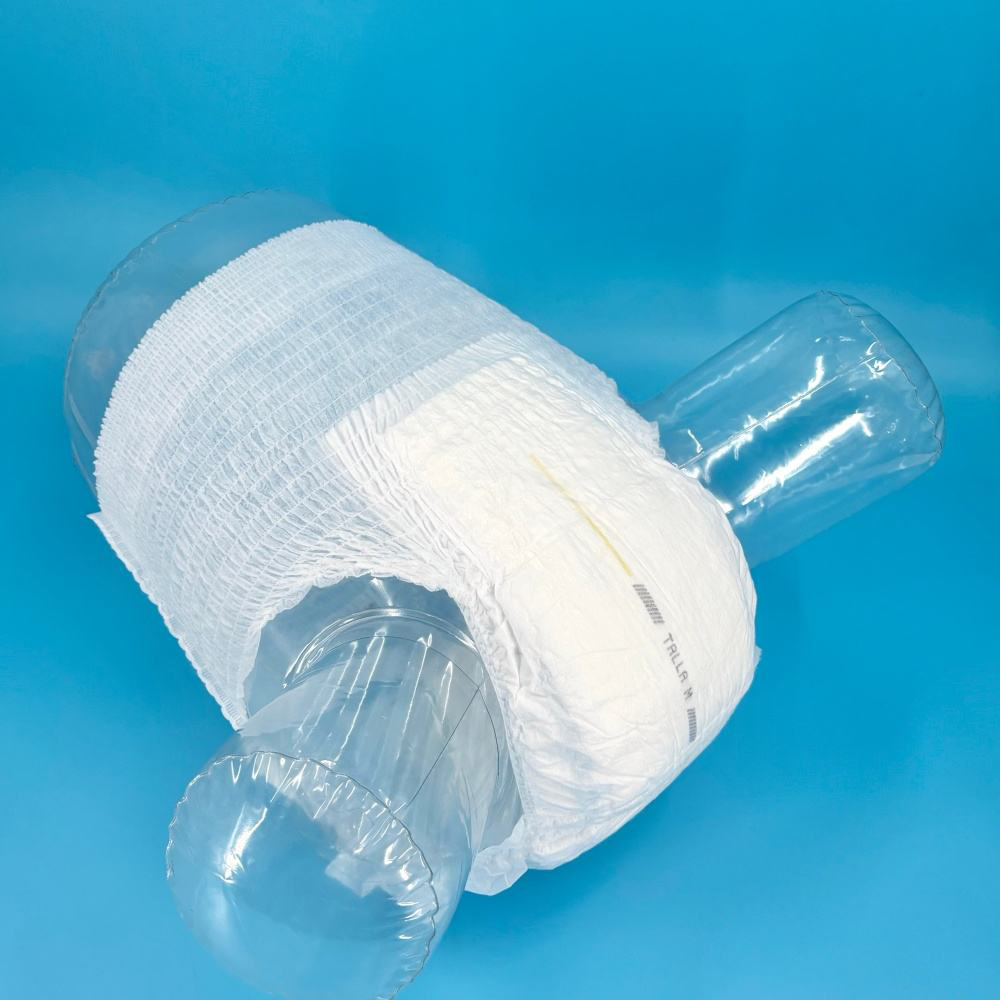
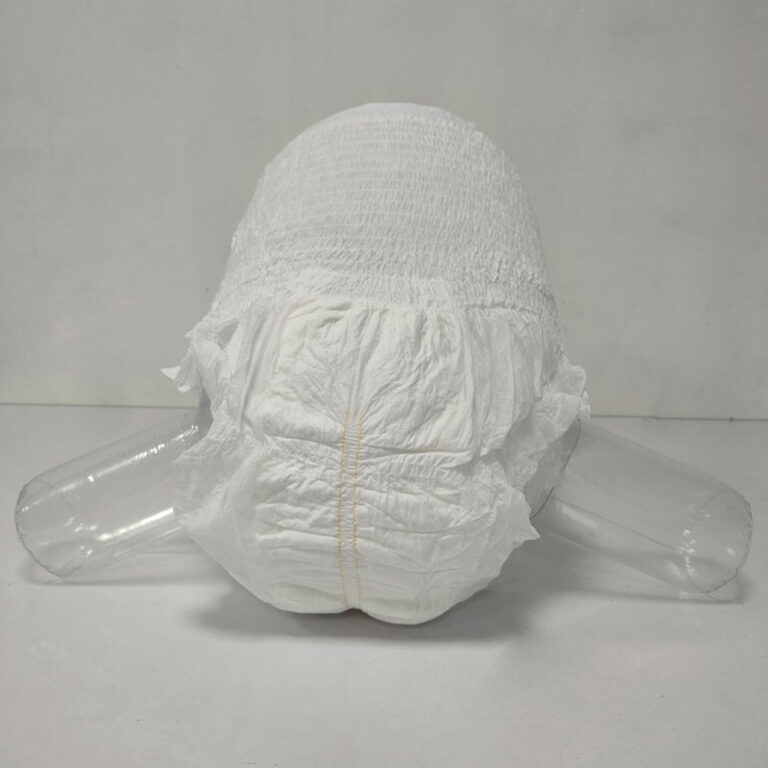
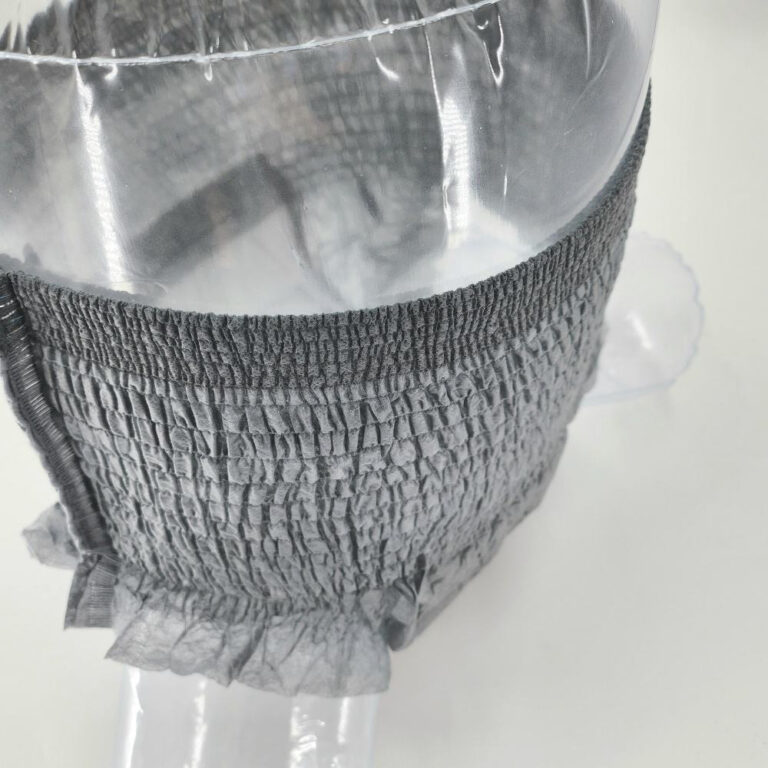
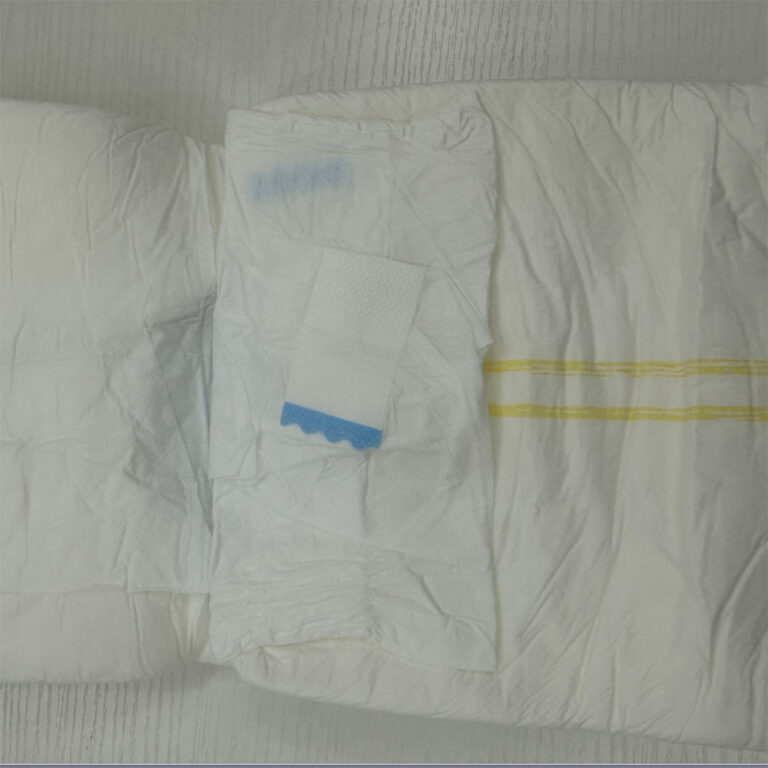
Adult pull-up waistbands usually roll down because the garment’s geometry, elastic behavior, or size does not match the wearer’s body in motion. The cause is rarely a single defect. A short rise, uneven waist tension, elastic that loses recovery after repeated stretching, a heavy loaded core, and clothing pressure can all push the top edge into a fold. For distributors, private-label brands, and institutional buyers, rolling matters because it shows up as side leaks, skin marks, and returns that look like absorbency complaints. This guide explains the main causes, how to tell them apart, how to test for them before approving a sample, and what to put in a quotation request so a manufacturer can address the problem at the specification stage.
Why Do Adult Pull-Up Waistbands Roll Down?
An adult pull-up waistband rolls down when the band cannot hold its position against body shape, movement, and the weight of the product. Five mechanisms account for most cases:
Rise mismatch. The distance from the front waist through the crotch to the back waist is too short or too long for the torso. The band then settles into a body crease or is dragged down when the wearer sits.
Wrong size. A product that is too loose slides. One that is too small can also roll and fold, because an overstretched band curls at the edge.
Elastic that does not recover. The band passes the first fitting but relaxes after repeated pulling, sitting, and toileting.
Uneven tension. The front digs in while the back gaps, so the band migrates toward the loosest zone.
Load and clothing. A wet core adds weight to the chassis. Tight trousers, shapewear, or a low-cut waistband can also press the band down.
Pull-ups are built differently from tab briefs. The Bladder & Bowel UK guidance on absorbent products describes pull-on protective underwear as a single design that resembles regular underwear, with elastic linings around the waist and hips for a close fit. That elastic is a closed ring. There is no tab to adjust, so any mismatch in size, rise, or tension stays in the product for the whole wear period.
How Can You Tell Where the Roll Starts?
Different roll patterns point to different causes, and treating them all as “needs stronger elastic” wastes sampling rounds. Retailer guidance such as Because Market’s guide to protective underwear that rolls down or bunches suggests checking the product after standing, sitting, and walking, then noting where movement starts. That is consumer-facing advice, not engineering evidence, but the diagnostic logic is useful for buyers reviewing complaints.
What you observe
Likely cause
What to check first
What a buyer should ask the supplier
Top edge folds outward at the front
Short rise, band sitting in an abdominal crease, or clothing pressure
Wear-test seated and standing; check trousers
Measured rise per size; fit photos seated
Band slides down at the back
Waist or hip too loose; low rear panel
Compare waist and hip to the size chart
Waist and hip ranges per size; rear panel height
Roll appears after several hours
Elastic recovery loss or wet-core weight
Compare fresh and worn waist circumference
Stretch-recovery data across repeated cycles
Roll happens in two adjacent sizes
Format or rise does not suit the body shape
Try a different rise or a tab brief
Alternative pattern or rise options
Front digs in, back gaps
Uneven tension distribution
Look for red marks and rear gaps after wear
Fit-form or pressure-mapping evidence
Roll mainly after toileting
Seam or band deformation from repeated pull-down
Inspect side seams and band after several cycles
Side-seam tear-force and band recovery results
The table is a diagnostic aid that combines retailer guidance with design reasoning, not measured test data. Verify each pattern against your own product and wearer group.
Product-Side Causes Buyers Can Control
Rise and Waist Position
Rise controls where the band sits. If the rise is short, the band is pulled down at the back when the wearer sits. If it is long, fabric bunches at the waist. Rise labels are not standardized either. The guide to low-rise versus full-rise incontinence underwear notes that no published standard defines rise categories for disposable incontinence underwear, and one supplier’s “mid-rise” can match another’s “full-rise.” Ask for a measured total rise by size, taken as a curved distance, rather than accepting a label.
A full-rise band is not automatically the answer. It may hold better for long sitting or wheelchair use, but a narrow or stiff band can still roll, and the top edge may show under fitted clothing. Assess rise and waistband design together.
Elastic Recovery and Tension Distribution
A band that stretches easily is not the same as a band that returns to size. Repeated donning, sitting, and pull-down for toileting cycle the elastic many times in a day. If recovery is weak, the waist circumference grows and the band loses its grip on the hips.
Measure circumference after repeated stretch cycles.
Measure recovery after a rest period.
Inspect for broken elastic strands or adhesive creep.
The same guide recommends looking at pressure distribution around the front, back, and sides instead of a single pass/fail stretch number. Uniform pressure, not high pressure, is what keeps a band in place.
Waistband Width, Stiffness, and Edge Construction
This is design reasoning rather than measured data, so treat it as a sampling checklist. A very narrow band concentrates tension on a thin strip and can curl when it sits in a crease. A very stiff band may resist conforming to the abdomen and fold at the edge instead. A wider, softer band spreads the load but adds material and may show under clothing. There is no universal ideal width. The right choice depends on wearer shape, intended clothing, and cost target, so compare two or three constructions on the same fit model.
Side Seams and Chassis Weight
Waistband tension passes through the side panels and into the seams. Disposable pull-up side seams usually have to tear open for removal yet hold during wear. A seam that is too weak can open under stress, and one that is too strong frustrates caregivers. Seam strength that varies from lot to lot makes the waist ring behave inconsistently.
Loading adds another variable. Once the core is wet, its weight pulls the chassis downward, so a product that looks right when dry can sag after use. This is a reason to test loaded samples, not just dry ones.
What Wearer and Application Factors Cause Rolling?
Even a well-specified product can roll if it is the wrong size or is put on unevenly. Buyers can reduce both problems through size guidance and instructions.
Sizing. A loose product can slide, and a product that is too small can roll and fold, according to the retailer guidance above. A sizing guide from adultdiapers365 lists signs of an undersized product, including a waistband that presses or rolls because it is overstretched, and not enough rise. Pants size is a poor proxy. Measure waist, hip, and rise and compare them with the size chart of the exact product, as explained in the guide to measuring waist, hip, and rise for adult diaper sizing.
Application. A pull-up pulled up with one side higher than the other creates uneven tension that can become a roll later. The steps for opening the waist, confirming front and back, pulling up evenly from both sides, and smoothing the band are covered in the guide to putting on adult pull-ups without twisting the waistband. Packaging diagrams and clear front and back markings reduce these errors at the source.
Clothing. Tight trousers, shapewear, and a low-cut waistband can push a pull-up down. Test the product under the garments your customers actually wear, not only in a laboratory setting.
Is a Tighter Waistband the Fix?
Not by itself. A tighter or stronger band can hold a pull-up in place during a short fitting and still perform worse over a full day. The cause may be geometry, not tension. If the rise is wrong, extra tension pulls the band into the crease and creates red marks, but the underlying mismatch remains. Over-tension can also overstretch the band at the edge, which the sizing guidance above links to rolling.
The better question is whether the band holds position with even, moderate pressure after repeated cycles. This applies most where the wearer is seated for long periods, has a prominent abdomen, or toilets independently several times a day. It applies less to short-duration, low-mobility use, where a firmer band may be acceptable. If two adjacent sizes both roll, the most reliable fix may be a different rise, a different pattern, or a different format. Consider a tab brief when the wearer cannot stand safely or needs bed-level changes.
An illustrative scenario: a distributor receives repeated complaints about one size rolling down in seated users. The first reaction is to request stiffer elastic. A review of fit photos shows the rear rise sits low when seated. Adjusting the pattern, not the elastic, would address the real cause. This is a hypothetical example, not a customer case.
How Does Rolling Affect Leakage and Discretion?
Rolling moves the absorbent core, can flatten leak guards, and opens a path at the side or back. A leak that starts at the waist or leg is therefore usually a fit problem. Because Market’s guidance makes the same point: if the product stays in place but leaks through the absorbent area, look at absorbency or change timing, but if the leak begins at the leg or waist, solve fit first.
Rolling also changes the silhouette. A folded band prints a ridge under fitted clothing, which is the opposite of what pull-ups are chosen for. The article on how pull-up fit affects discreetness under clothing explains how rise, waistband width, and leg elastics shape visible lines. It also explains why a slightly thicker product with a better rise can look smoother than a thin one that shifts.
Absorbency numbers will not reveal any of this. Capacity tests on a stationary core do not reproduce hip rotation, squatting, or repeated sit-to-stand cycles. The article on movement leak testing for active pull-up users discusses why movement tests add a separate layer of evidence.
How to Test for Waistband Roll Before Approving a Sample
A useful test plan combines bench measurements with wear trials. Do not rely on one or the other.
Bench: initial and post-stretch waist circumference, recovery after repeated cycles and rest, side-seam tear force, and visual inspection of elastic strands and adhesive.
Fit form or fit model: photographs standing, seated, and lying, with measured rise and waist position noted at each posture.
Wear trial: representative wearers in the clothing they use, with checks at set intervals for rolled edges, rear gaps, and red marks.
Loaded condition: a trial with the product loaded, because wet weight changes how the chassis sits.
Batch comparison: samples from more than one production lot, because variation in elastic tension between batches can hide in a single golden sample.
Aging: storage under warm, humid conditions if the product will move through long supply chains.
This list does not set pass/fail thresholds. Those depend on product class, wearer group, and your quality standards, and should be agreed with the supplier in writing.
Regulation will not set them for you. The U.S. regulation for protective garments for incontinence (21 CFR 876.5920) identifies the device as absorbent padding and a fluid barrier intended to protect the patient’s garment, and classifies it as Class I. It does not specify waistband recovery, rise, or fit performance, so those requirements need to be written into your own specification. Check market-specific rules for other regions separately.
What Should Buyers Specify Before Requesting a Quote?
A quotation request that includes fit-related fields helps the manufacturer propose a suitable construction and avoids rework after sampling.
Size range: target waist and hip ranges for each size, and the measured rise per size, if known.
Rise and waistband design: low, standard, or full-rise preference; waistband width; printed orientation markers.
Absorbency level and use period: day, overnight, or extended wear, since load affects sag.
Clothing context: what customers wear over the product.
Testing requests: stretch-recovery results, side-seam tear force, movement or wear trial evidence, and multi-batch samples.
Storage and transport: expected warehouse conditions and shipping duration.
Target market and branding: private-label requirements, packaging instructions, and applicable local regulations.
Quantity and timeline: order volume, sample rounds, and delivery schedule.
Suppliers differ on what they can offer in each field, so confirm options and MOQs in writing instead of assuming. If the problem is already in the market, share complaint photos and wear conditions rather than only the word “rolling.” That helps separate the root cause from sizing or application.
Frequently Asked Questions
Why do my adult pull-ups keep rolling down at the waist?
The most common reasons are a size that is too small or too large, a rise that does not suit the torso, elastic that has lost recovery, and clothing that presses the band down. Check measurements and clothing first, then compare an adjacent size.
Does a rolling waistband mean the pull-up is too small?
Not always. A product that is too small can roll because the band is overstretched, but a short rise, a body crease, uneven application, or tight clothing can produce the same result. Compare two adjacent sizes during normal movement before changing the order.
Can a stronger elastic waistband stop rolling?
Sometimes, but not on its own. If the rise or size is wrong, stronger elastic mainly adds pressure and red marks. Even tension, adequate recovery after repeated stretching, and correct rise matter more than elastic strength alone.
What should I ask a supplier about waistband performance?
Ask for measured rise by size, waist and hip ranges, stretch-recovery results after repeated cycles, side-seam tear-force data, and multi-batch fit photos. Request a movement or wear trial, not only a stationary capacity figure.
Are low-rise or full-rise pull-ups less likely to roll?
Neither is automatically better. Low-rise bands can slide when the wearer sits, while full-rise bands may hold higher but can roll if the band is narrow or stiff. Verify with a seated and standing wear trial on your target wearer group.
When should a buyer consider tab-style briefs instead?
Consider tab-style briefs when pull-ups roll or twist in two adjacent sizes, when the wearer cannot stand safely, or when frequent bed-level changes are needed. Tabs let caregivers adjust waist and leg tension while the wearer is seated or lying.