Private Label vs Reselling: What Adult Diaper Distributors Should Choose
Margins lie first.
I have watched too many distributors fall in love with the easy math of reselling, only to discover that easy math turns ugly the minute a factory changes absorbency, a broker slips in a cheaper core, or a competitor cuts price by 6% and steals the exact same SKU from the exact same catalog.
Why build somebody else’s margin stack?
The market already made its decision
Demand is real.
And it is not moving because of some trendy consumer mood swing; it is moving because aging is measurable, persistent, and expensive, with the U.S. Census reporting in June 2024 that the 65+ population grew 9.4% from 2020 to 2023 to about 59.2 million, increasing in all but one U.S. metro area, while clinical data summarized by the NIH in 2024 notes urinary incontinence affects roughly 423 million adults worldwide and exceeds 50% among nursing-facility residents in some settings, which is exactly why adult incontinence products are no longer a side shelf business but a structural healthcare-and-retail category.
Still think this is a tiny niche?
The signal is even louder in Asia. In July 2024, Reuters reported that Daio Paper’s adult diaper revenue was already double its baby diaper revenue, while Fuji Keizai projected Japan’s adult diaper market would grow 16% to 98.9 billion yen by 2027. I do not treat that as “interesting international news.” I treat it as advance notice for every distributor who still thinks adult diapers are a low-status, low-strategy commodity.
Table of Contents
Private label adult diapers win when you want control, not just turnover
Reselling is faster.
But speed without control is rented revenue, and rented revenue tends to vanish right when complaint rates rise, marketplaces get crowded, or institutional buyers ask questions you cannot answer about SAP loading, fluff pulp balance, breathable PE backsheet film, tab performance, wetness indicators, or why two “identical” containers behave differently three months apart.
That sound familiar?
This is where private label adult diapers through an OEM/ODM system start to make commercial sense. On that page, the site frames the model exactly the way serious buyers should think about it: factory-direct supply, 10,000㎡ of manufacturing space, 18 production lines, sample cycles in roughly 7 to 15 days, and bulk lead times around 15 to 30 days. Those numbers matter because adult diaper distributors do not really buy “diapers.” We buy repeatability.
And repeatability is the whole business.
I am blunt on this point: if you plan to sell into pharmacy, care, e-commerce, or importer channels for more than 12 months, private label is usually the better bet because it lets you own the commercial identity while the factory handles converting, assembly, and scale. That means your margin is not trapped between a brand owner above you and a price-war parasite below you. It also means your customer remembers your pack, your fit, your absorbency story, and your reorder reliability, not the nameless broker who found the load.
What private label really gives adult diaper distributors
It gives leverage.
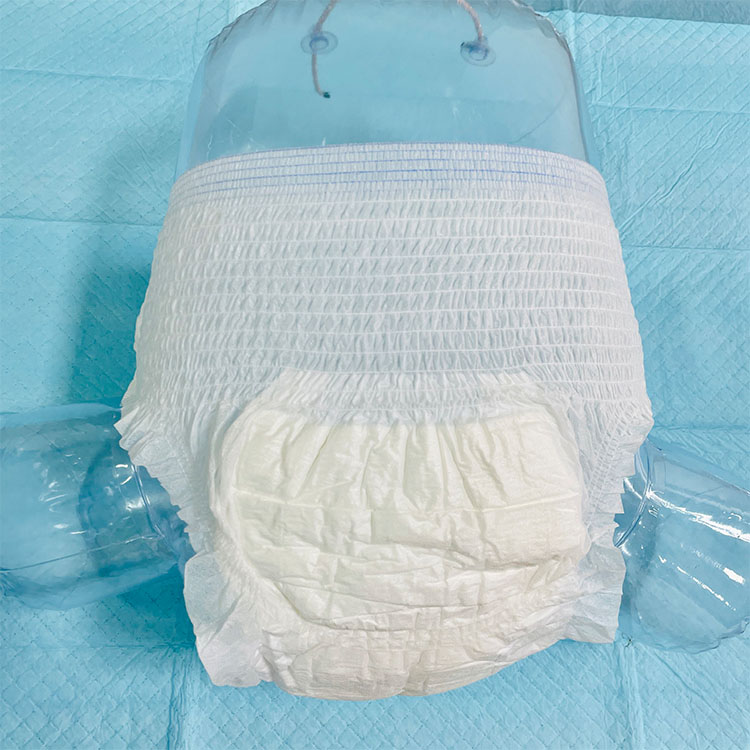
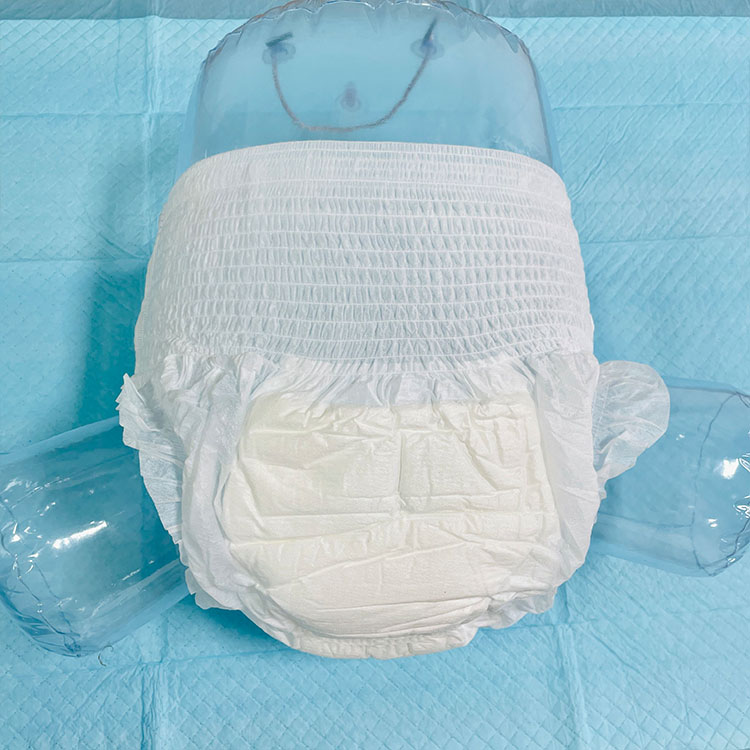
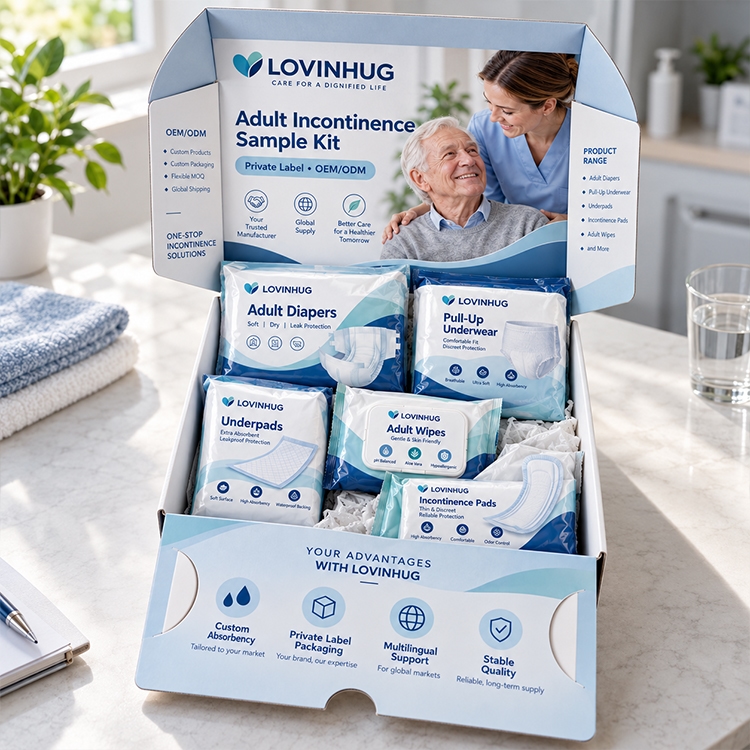
Not abstract “brand value,” not LinkedIn nonsense, but practical leverage across pricing, claims handling, specification control, and line extension, especially when you can connect your core brief business to related SKUs like wholesale adult diapers and private label incontinence underwear under one sourcing logic instead of juggling disconnected vendors.
Would you rather explain one quality system or four?
The factory-side difference between OEM and ODM also matters more than many buyers admit. The site’s article on OEM vs ODM for adult incontinence products gets to the point: OEM suits distributors who want tighter spec ownership, while ODM works when you need a faster launch and can live with a more standardized architecture. My own view is harsher. If you already know your target channel, your absorbency tier, your case pack, and your price ceiling, then excessive ODM dependence can become intellectual laziness.
The hidden edge: complaint containment
Complaints compound.
Once a resold SKU starts leaking, delaminating, or simply feeling different, you are stuck playing detective with weak documentation, blurry accountability, and a supplier who may treat your business as interchangeable. A private label program, by contrast, gives you a basis to lock BOM, GSM, packaging, carton marks, and acceptance criteria before scale. That is why I like this internal resource on how to break down an adult diaper OEM quote by materials, GSM, packaging, and yield. It forces the adult diaper manufacturer for distributors to speak in operating details, not brochure perfume.
And that is where good margins actually come from.
Reselling still works, but only in narrow situations
I am not dogmatic.
There are cases where reselling adult diapers is the sane move: you are testing demand in one small geography, you lack cash for packaging inventory, you do not yet understand which end user dominates your volume, or you are filling a short-term institutional tender where speed matters more than long-term moat.
But let’s not romanticize it.
Reselling is best when uncertainty is high and ambition is low to moderate. Once certainty rises, reselling becomes a tax. You pay that tax in thinner gross margin, weaker differentiation, and more vulnerability to channel substitution. I have seen distributors mistake “low risk” for “low commitment,” and then wake up to find the only thing they truly own is a customer service inbox.
That is not a business. That is a forwarding service.
The darker side is compliance and channel integrity. Adult diapers are not random consumer fluff. The FDA classifies a protective garment for incontinence under product code EYQ and 21 CFR 876.5920, which should tell every importer and distributor that documentation discipline is not optional theater. FDA product classification
And poor channel discipline gets punished. In December 2024, the U.S. Department of Justice announced that an El Paso medical supplier was sentenced over a $1.7 million healthcare fraud scheme involving substitution of lesser-valued continence supplies while billing for higher-valued ones, including adult diapers, wipes, and bed liners.
You think buyers do not notice those stories?
The real comparison adult diaper distributors should use
Fancy opinions are cheap.
So here is the table I would use if I were deciding whether to keep reselling or move into OEM adult diapers under a private label structure.
Decision Factor
Private Label Adult Diapers
Reselling Adult Diapers
Speed to market
Moderate; usually slower at the start because specs, artwork, sampling, and approval must be locked
Fast; you can move quickly with existing catalog SKUs
Gross margin potential
Higher over time because you own the commercial wrapper and can engineer price ladders
Lower because brand owner, trader, or upstream supplier keeps more of the profit
Product control
High; easier to define absorbency, fit, SAP/fluff balance, packaging, and defect standards
Low to medium; you usually inherit someone else’s spec decisions
Complaint handling
Easier to investigate when BOM, GSM, and lot logic are defined upfront
Harder because accountability is often blurred across trader, factory, and brand
Channel defensibility
Stronger; your pack, naming, and assortment can become sticky
Weak; the same item can reappear through another distributor next week
Working capital load
Higher; packaging, artwork, samples, and MOQ planning require real commitment
Lower at first; lighter entry cost for testing
Best fit
Distributors building a long-term category position
Distributors validating demand or filling short-term gaps
My hard verdict: choose private label if you plan to stay
Most should.
And by “most,” I mean most adult diaper distributors with repeat-order intent, multi-SKU ambition, and even a basic desire to stop competing on nothing but invoice timing, because the adult incontinence products business rewards operators who can stabilize supply, engineer assortment, and defend margin, not middlemen who keep relabeling the same soft promises.
So what would I choose?
If I were launching today, I would resell only long enough to learn the channel, maybe one or two quarters, then I would shift fast into private label adult diapers with a factory that can show documentation discipline, stable replenishment, multilingual export handling, and clean quote logic. I would also pressure-test the manufacturer using the site’s distributor sourcing FAQ before I signed anything meaningful, because MOQ, sampling rhythm, and batch consistency are not side questions. They are the entire risk model.
The best private label adult diaper manufacturer is not the one with the loudest factory photos. It is the one that answers boring questions well.
FAQs
Is private label better than reselling for adult diaper distributors?
Private label adult diapers are usually the better choice for distributors who want repeat orders, stronger margin retention, tighter specification control, and a more defensible market position, because the distributor owns the product identity and can shape pricing, packaging, and quality standards instead of borrowing them from another brand.
Yes, in most medium-term and long-term scenarios, I would choose private label over reselling. Reselling is useful for testing demand, but it rarely builds a moat. Once volume becomes predictable, staying in resale mode often means giving away margin and letting another company control your future.
When should a distributor still resell adult diapers?
Reselling adult diapers is the smarter choice when a distributor is entering a market with limited cash, uncertain SKU fit, or urgent delivery needs, because it reduces setup friction and allows fast commercial testing before the buyer commits to custom packaging, MOQ planning, and specification management.
I would use reselling only as a reconnaissance phase. It works when you need fast turnover, not when you need durable positioning. If you already know your buyer segment, reselling for too long becomes an expensive habit.
How do you choose between OEM and ODM adult diapers?
OEM adult diapers are manufacturer-built products made to the distributor’s defined specifications, while ODM adult diapers rely more heavily on the factory’s pre-developed product framework, allowing faster launch but usually giving the buyer less control over technical architecture, differentiation, and long-term exclusivity.
I prefer OEM when the distributor understands its channel and wants tighter command over fit, absorbency, packaging, and claims language. ODM is fine for speed, but it can flatten your differentiation if you never move beyond the stock template.
What should adult diaper distributors ask a private label manufacturer before buying?
Adult diaper distributors should ask about absorbency architecture, sodium polyacrylate and fluff pulp balance, breathable backsheet options, tape performance, sample lead time, bulk lead time, MOQ, batch traceability, carton and pallet labeling, and the exact documents available for import, quality review, and complaint investigation.
My rule is simple: if a factory cannot explain materials, GSM assumptions, packaging yield, and defect standards in plain language, I do not trust the quote. Cheap ambiguity almost always becomes expensive inventory later.
Your Next Steps
Do this next.
If you are serious about how to choose private label vs reselling for adult diaper distributors, do not start with a logo. Start with a three-SKU sourcing brief: one high-volume brief, one pull-up, one accessory line. Then compare a resale offer against a private label quote on four points only: spec clarity, complaint traceability, replenishment speed, and gross margin after all packaging and freight assumptions.
That comparison will tell you the truth.
And my bet is this: once you force the numbers into the open, private label adult diapers will stop looking “complex” and start looking like the only adult decision in the room.